

Yeah, thats a good point. Three-season tents such as the otherwise excellent Marmot EOS 1 ($225; marmot.com) often have too much mesh to be good winter tents. But it does have a full-coverage fly, so that should help quite a bit. If youre camped on snow, for instance, you can heap some snow around the perimeter of the fly to form a better seal. That will prevent wind from blowing up between the fly and the tent body, bringing snow with it.
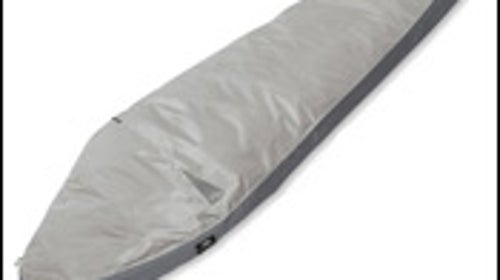
Outdoor Research MicroNight Bivy
 MicroNight Bivy
Certainly, taking some sort of bivy bag or sleeping bag cover wouldnt hurt. But I wouldnt get a fully bivy bag; its too heavy and expensive. Outdoor Research (outdoorresearch.com) makes just the right thing: the MicroNight Bivy. Its made with Pertex Endurance fabric, which is very light, breathable, and water repellent. Itll nicely shake off any snowflakes that find their way into your tent. Cost is $119, and weight is less than 20 ounces. REI (rei.com) also makes a no-frills bivy, called the Minimalist Bivy. Its made from REI Elements, a proprietary waterproof-breathable material, so it would offer a lot of moisture protection. Price is $89.
Myself, Id worry a bit more about temperature than moisture. Its gonna be chilly in that well-ventilated EOS 1, particularly seeing as its a solo tent so theres no one else generating any body heat. Id pack an extra sleeping pad (a lightweight foam pad such as Cascade Designs $35 Z-Lite is perfect). And certainly, use a sleeping bag with a rating that matches your anticipated low temperatures.
Check out the new 2007-2008 Winter Outside Buyers Guide, packed with reviews of more than 300 new gear must-haves. Its available on newsstands now.