Updated November 11, 2025 08:44AM
If you buy through our links, we may earn an affiliate commission. This supports our mission to get more people active and outside.Learn about Outside Online's affiliate link policy
The Best Hatchets for Camping, Homesteading, and Backcountry Survival
These are our favorite tools for stoking the flames—whether you're enjoying a backcountry campfire or your wood stove at home
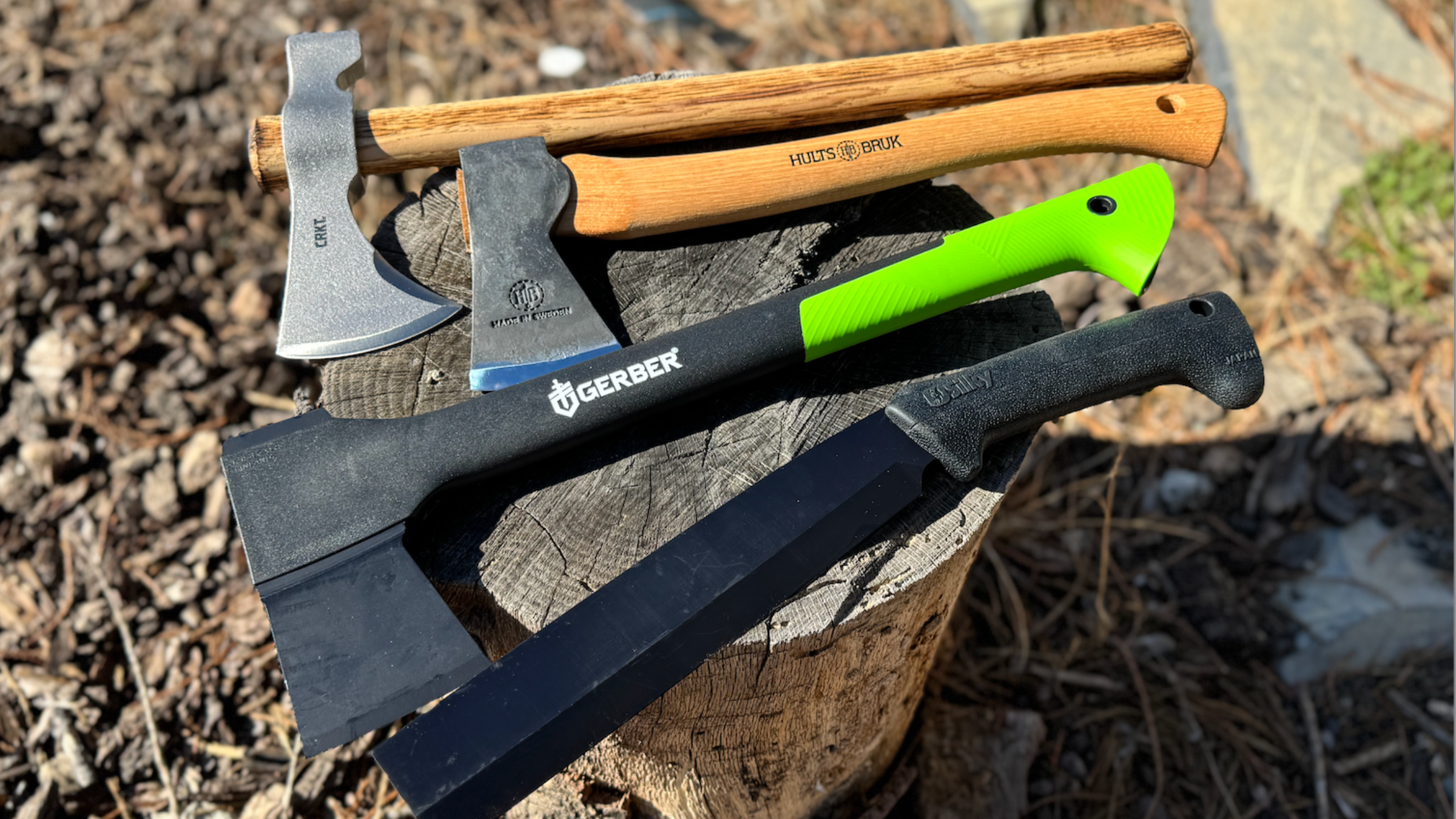
(Photo: Joe Jackson)
Table of Contents
I am not a bushcrafter or survivalist, but in my heart, I feel like I’m just as obsessed with hatchets as people in those communities. Even though I have central heating in my home and don’t depend on my fireplace solely for heat in the winter, I still have a deep love of the utility of a well-built hatchet and find any excuse to build up mounds of kindling for my wood stove-owning friends. It’s a fine motor skill that feels equal parts thoughtful and macho. The best hatchet strikes (yar, yar) the perfect balance between a tool and a toy and can come with you on just about any road trip, unlike its big sibling, the axe. To help you find the best hatchets for your needs, I tested some of the top-rated models on the market.
Best Hatchets: At a Glance
- Best Value: CRKT Chogan Hatchet ($40)
- Best for Wilderness Survival: Gerber Bushcraft Hatchet ($70)
- Best for Camping: CRKT Woods Chogan T-Hawk ($68)
- Best Composite Handle: Gerber Freescape 17.5″ Hatchet ($65)
- Best for Precision Cutting: Silky Nata Professional 240 mm Outback Edition ($132)
- Most Ergonomic: Hults Bruk Almike Hatchet ($199)
- Lightest: Montana Knife Company Hellgate Hatchet ($375)
The Reviews
Best Value Hatchet
CRKT Chogan Hatchet
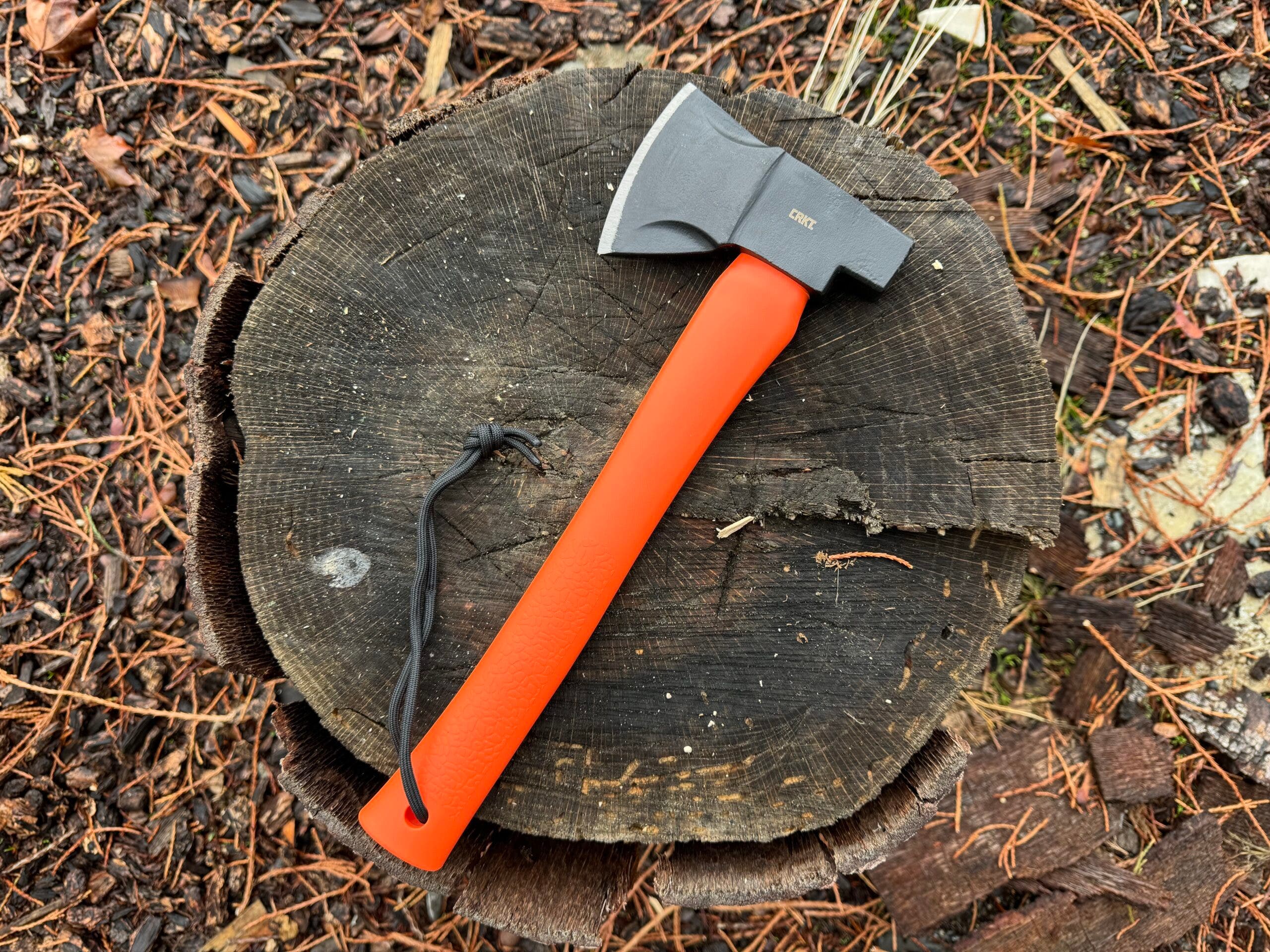
Weight: 1.5 lbs.
Overall Length: 13.2 in.
Pros and Cons
+ Insanely capable
+ Extremely affordable
– Not powerful enough for most hardwoods
This one-and-a-half-pound, sub-14-inch hatchet proved small but mighty. The head is made from one solid piece of 1055 carbon steel—known for its durability and edge retention—which was heavy enough in relation to the glass-reinforced nylon handle to provide a hefty swing. This concentration of weight behind the blade allowed it to work its way through softer woods like cedar and fir, but it did find its limitations with the harder woods like madrone and oak. While I could get through the heavier woods, it typically took me at least a dozen strokes, with some feeling dangerously taxing on the nylon handle. It was a heck of a little hammer on the stakes, though, and I found it particularly easy to swing accurately; in fact, it’s about the same size and weight of the hammer I keep in my toolbox back home.
Best Hatchet for Wilderness Survival
Gerber Bushcraft Hatchet
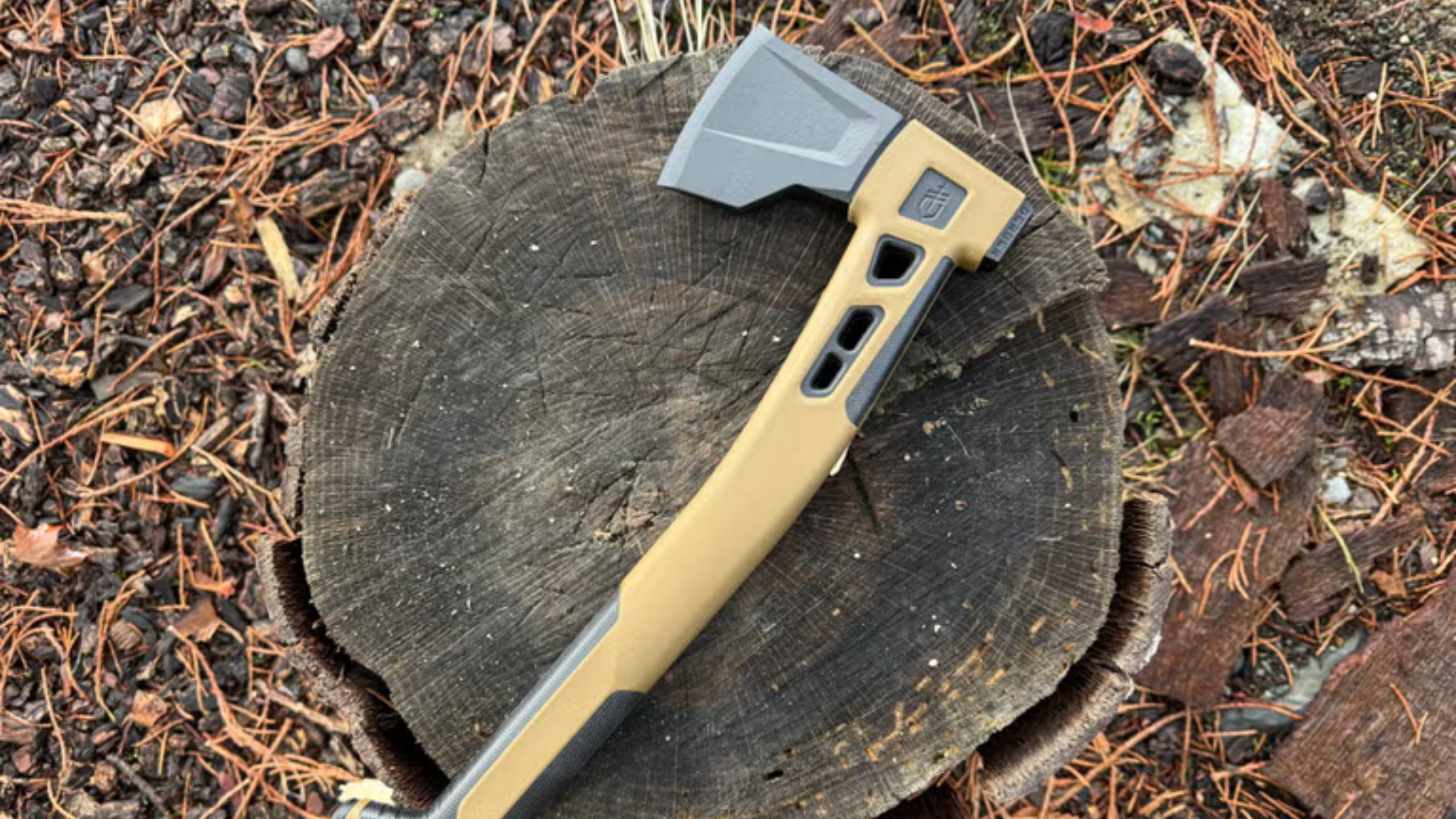
Weight: 2.4 lbs.
Overall Length: 15.3 in.
Pros and Cons
+ Handle doubles as waterproof match storage
+ Heavy enough for hardwood
– Rubber gets mangled if you miss a strike
– Blade is small compared to rest of hatchet
My wilderness survival game is relatively tight, but I would by no means call myself a bushcrafter. (In other words, I can reliably make a good fire with a single match, but can’t use a bow drill for shit). Still, I found this hatchet a blast to play with, even with my novice skills. There are five feet of ever-useful paracord in the handle, which contains a hollow, waterproof compartment big enough to store five waterproof matches and half a handful of wood shavings. The Bushcraft’s hefty two-and-a-half-pound weight and more than 15-inch length allowed it to work through oak and madrone quite easily—when it came to hardwoods, it felt more like a small ax than a hatchet. For all the advantages that extra weight gave for the Bushcraft in terms of swing, its heft didn’t do it any favors in the carrying test. This would be my last pick to take on a long hike. It also lacked some blade length compared to the Ono and James Brand options. That made it harder to get through the thickest pieces of wood. The back of the head was a proper hammer that drove even the toughest stakes. The rubber insets around the back of the handle felt good in the hand, but it did get pretty mangled after a few missed strikes on the stakes. While this didn’t hurt the overall performance of the hatchet, it did become a bit unsightly.
Best Hatchet for Camping
CRKT Woods Chogan T-Hawk
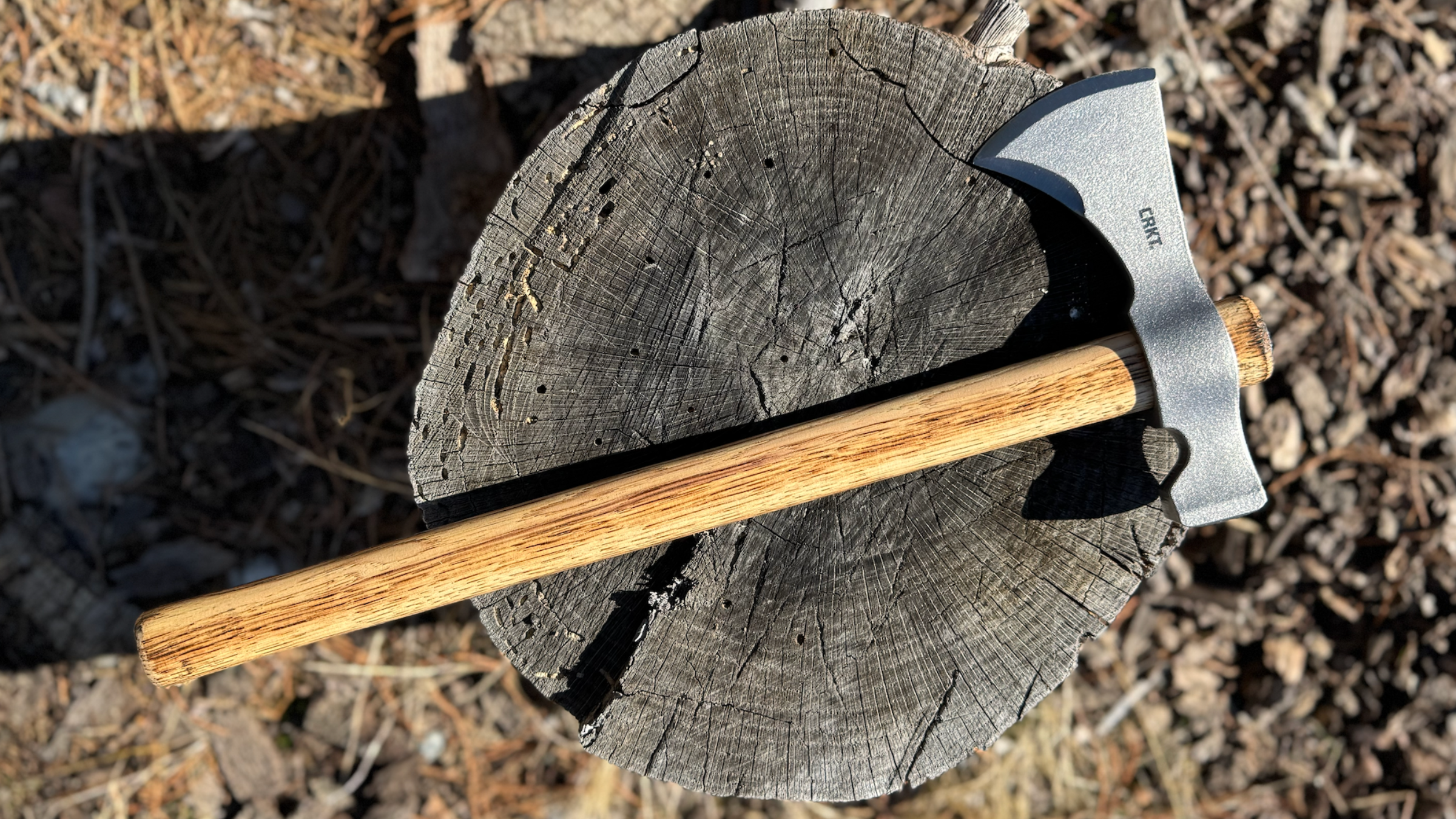
Weight: 2 lbs.
Overall Length: 19 in.
Pros and Cons
+ 1055 carbon-steel head and hickory handle deliver serious momentum and control
+ True multi-tool utility at camp
+ Excellent price-to-performance ratio
– Overkill if you’re not tackling thick hardwood or heavy camp chores
The Woods Chogan was designed by RMJ Tactical’s Ryan Johnson and is a hatchet workhorse that borders on small-axe territory due to its solid swing and usability. Its 1055 carbon-steel head and Tennessee hickory handle deliver serious swing momentum that made me feel comfortable chopping thumb-to-hot-dog-sized kindling out of hard madrone. Those impressive cutting chops mitigated any fears I had of embarrassing myself when attacking the hard woods early in my testing process. The two-inch long hammer face proved ideal for pounding solid rebar stakes into variable hard dirt during a camping trip in Crescent City, and the long handle gave me leverage to process stubborn oak logs that were too much for other hatchets I tested. It’s heavier and less compact than some other models, but that’s the price one pays for solid materials at a low price point.
Best Composite Handle
Gerber Freescape 17.5″ Hatchet
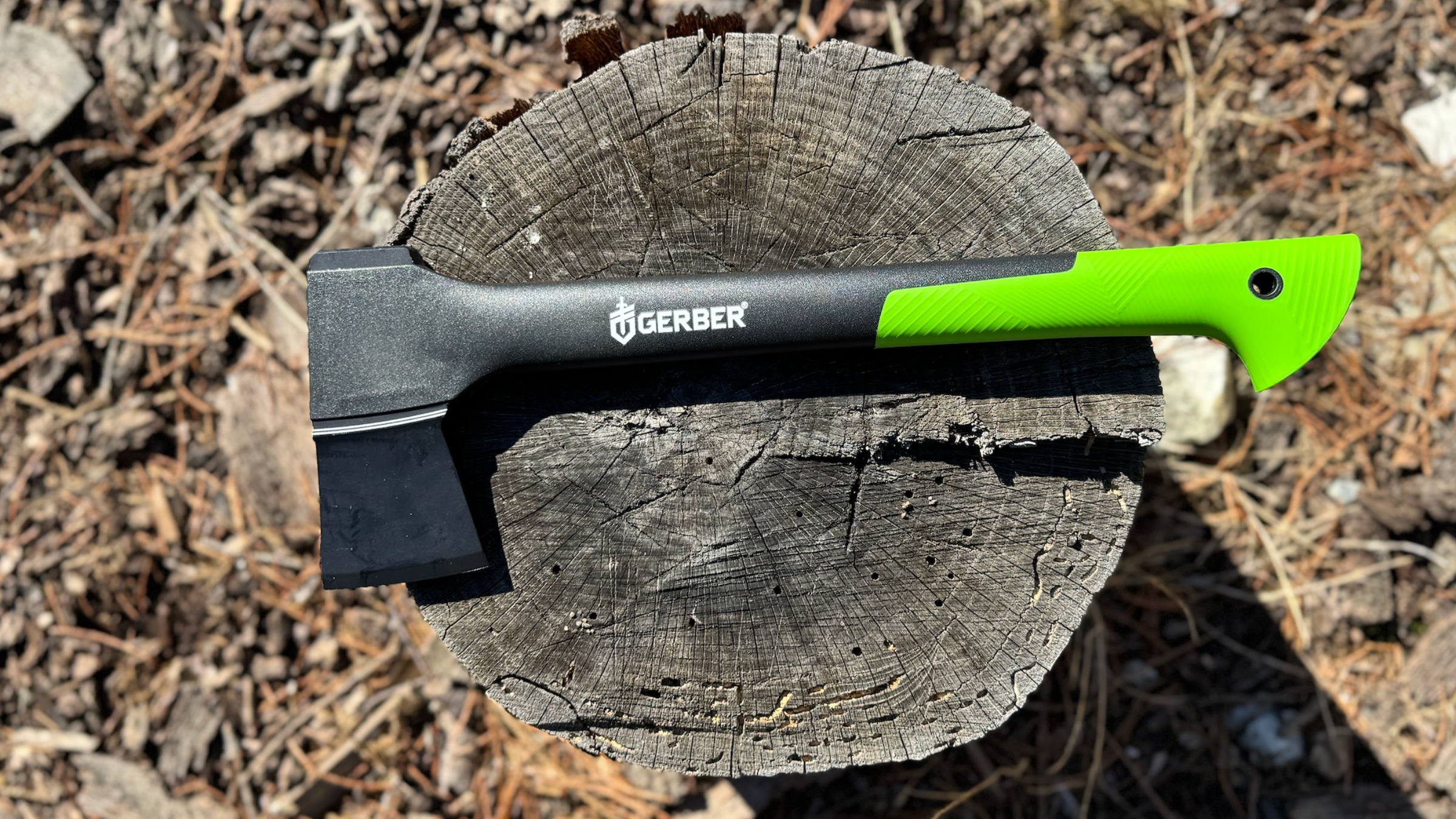
Weight: 2.2 lbs.
Overall Length: 17.5 in.
Pros and Cons
+ Textured grip feels secure, even with wet hands
+ PTFE-coated forged-steel head bites deep into fir and oak with powerful, confidence-boosting swings
+ Less worry about moisture, rot, or splitting compared to wood handles
– Lacks the satisfying feedback of a traditional wooden handle
The Freescape’s 15-inch composite handle was sturdy as hell. That hardiness coupled with the deeply textured grip (“3D,” in their terms) made this hatchet swing like an absolute beast. The Freescape’s forged steel head has a PTFE-coated blade that bit deep into mid-size quarters of doug fir with minimal friction. The bright green handle felt stable and confidence-inspiring even in wet gloves, which was good news because I found myself swinging this thing recklessly thanks to how strong the swing movement felt. When the hatchet landed, it didn’t have the same sweet dampening feel as the wooden hatchets I tested. But to my surprise, the composite proved super hardy—I was less stressed about leaving this hatchet out on a misty camping trip in the Siskiyou mountains.
At just over two pounds, it’s heavier than some of the ultralight hatchets I’ve tested, but that heft pays off in cutting power. I found that I could split oak and fir cleanly in a couple of well placed, albeit wildly swung, strokes.
Best Hatchet for Precision Cutting
Silky Nata Professional 240 mm Outback Edition
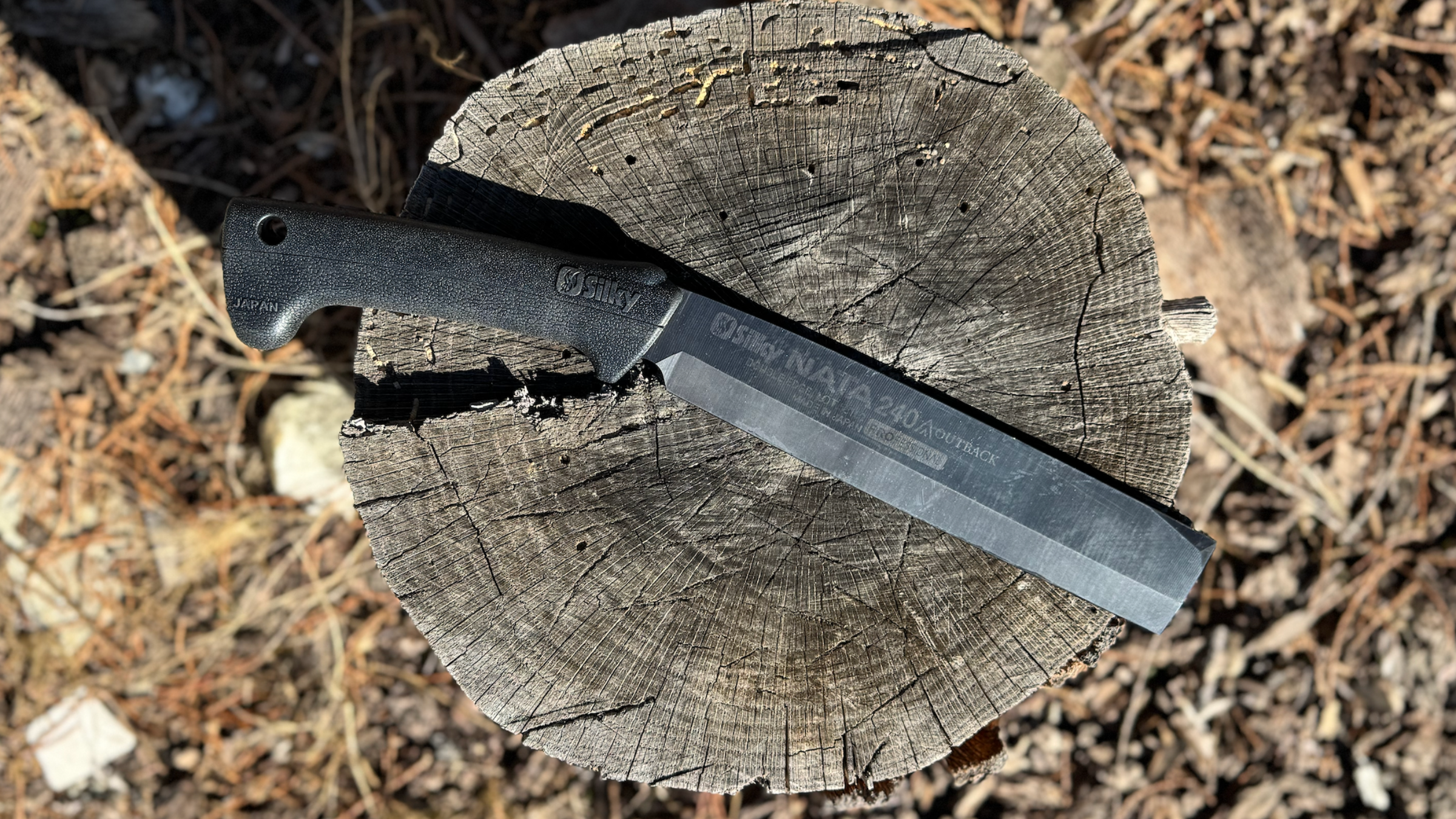
Weight: 2.1 lbs.
Blade Length: 9.5 in.
Pros and Cons
+ Ridiculously sharp mono-steel blade makes fine, clean cuts
+ Ideal for shaving kindling or light limbing
+ Rubberized handle offers superb grip and control even when wet or cold
– No hammer face, so you’ll need another tool for pounding stakes or nails
– Lots of edge to sharpen and maintain
Okay, so to be completely fair, the Nata isn’t a traditional hatchet. It’s a Japanese “nata-bocho,” or field hatchet/machete hybrid. While it doesn’t fit cleanly into the article title, I’d be remiss to leave this gorgeous kindling-making machine out of this update. The Outback Edition features a black-oxide coated mono-steel blade that was so sharp, I could shave off cheese-like slivers of madrone and fir for firestarter along the entire 10-inch blade.
It wasn’t all surgical precision though; the two-pound monster blade could baton through kindling, limb trees, or slice through rope and brush. The rubberized handle delivered excellent grip even with my hands were wet and cold after a day of fishing on the Scott River in far Northern California. The balance feels ideal for controlled swings on smaller cuts of wood. The downside? There’s no hammer face, so you won’t be pounding stakes or driving nails with it. But for fine kindling work, bushcraft, or campsite carpentry, the Nata was killer. Its versatility and long blade length would also make it my number one choice on this list to bring with me in the case of a Zombie-apocalypse.
Most Ergonomic Hatchet
Hults Bruk Almike Hatchet
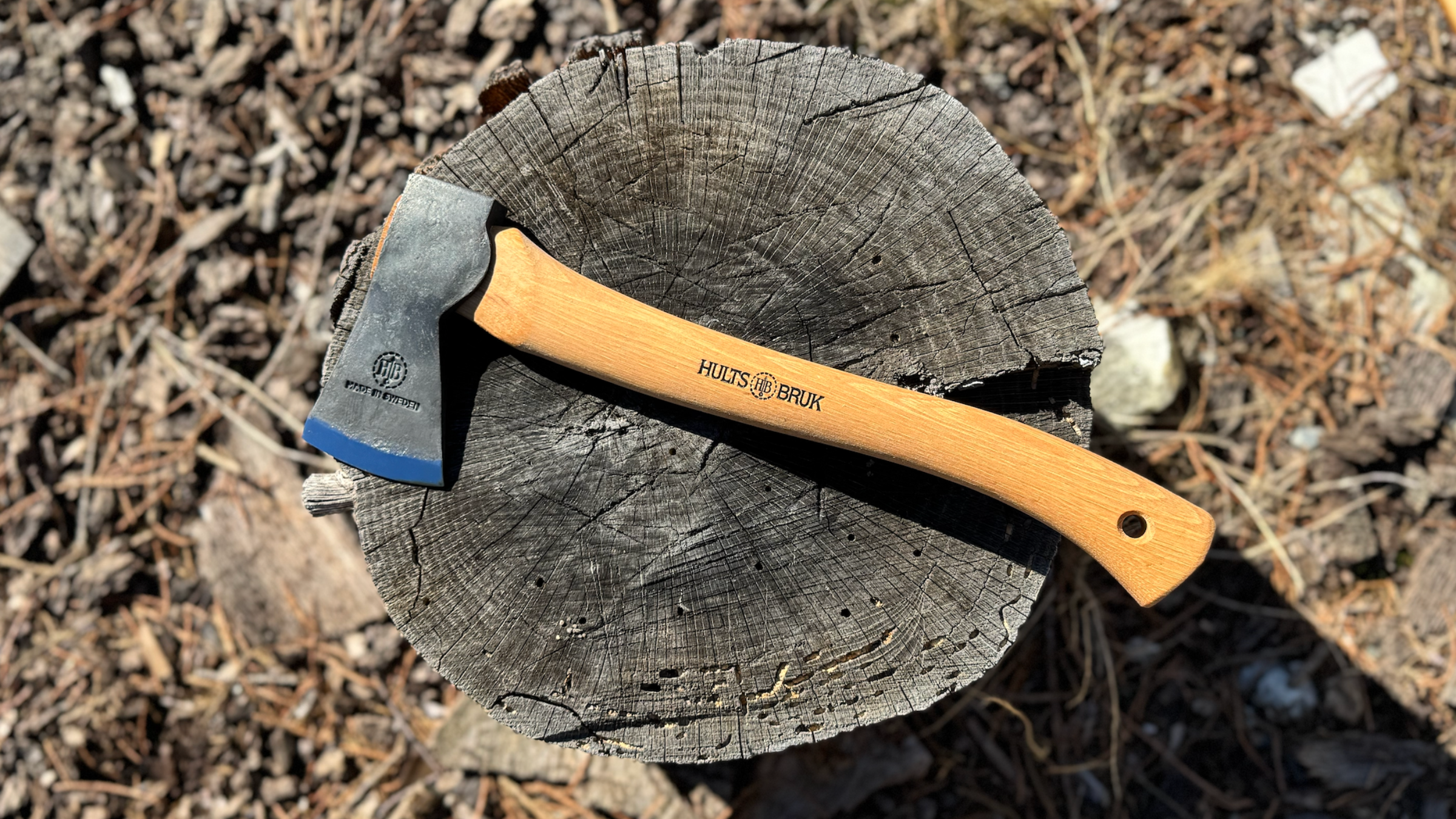
Weight: 1.8 lbs.
Overall Length: 16 in.
Pros and Cons
+ Hand-forged Swedish steel and curved hickory handle combine craftsmanship with ergonomic comfort
+ Light yet impressively efficient
+ Minimal hand-fatigue during long chopping sessions
– Pricey compared to other models
– Premium aesthetics make it almost too pretty to rough up at camp
The rest of the hatchets I tested are utilitarian bruisers in contrast to the Almike’s piece of art feel and look. It was hand-forged at Hults Bruk’s 300-year-old foundry, and that pedigree genuinely can be felt the first time you pick this beauty up. The curved American hickory handle sits both ergonomically and (if I dare say) handsomely in the hand between swings. When swung, the one-pound head offers a sweet spot between power and control for making finger-sized kindling from firs, oak, and madrone alike. The Almike was the lightest hatchet in this test, but the ergonomic curve of the hickory handle and the super sharp blade made it incredibly efficient at making kindling. This is the hatchet I would go to if I was staring down a giant pile of madrone to process; I found my hand and arm barely fatigued after 30-plus minutes of sustained chopping. The polished blade is gorgeous but also bites cleanly into wood, and the included leather sheath is almost too nice to use. Yes, it’s pricey, but it’s also the kind of tool you could pass on in your will.
Lightest Hatchet
Montana Knife Company Hellgate Hatchet
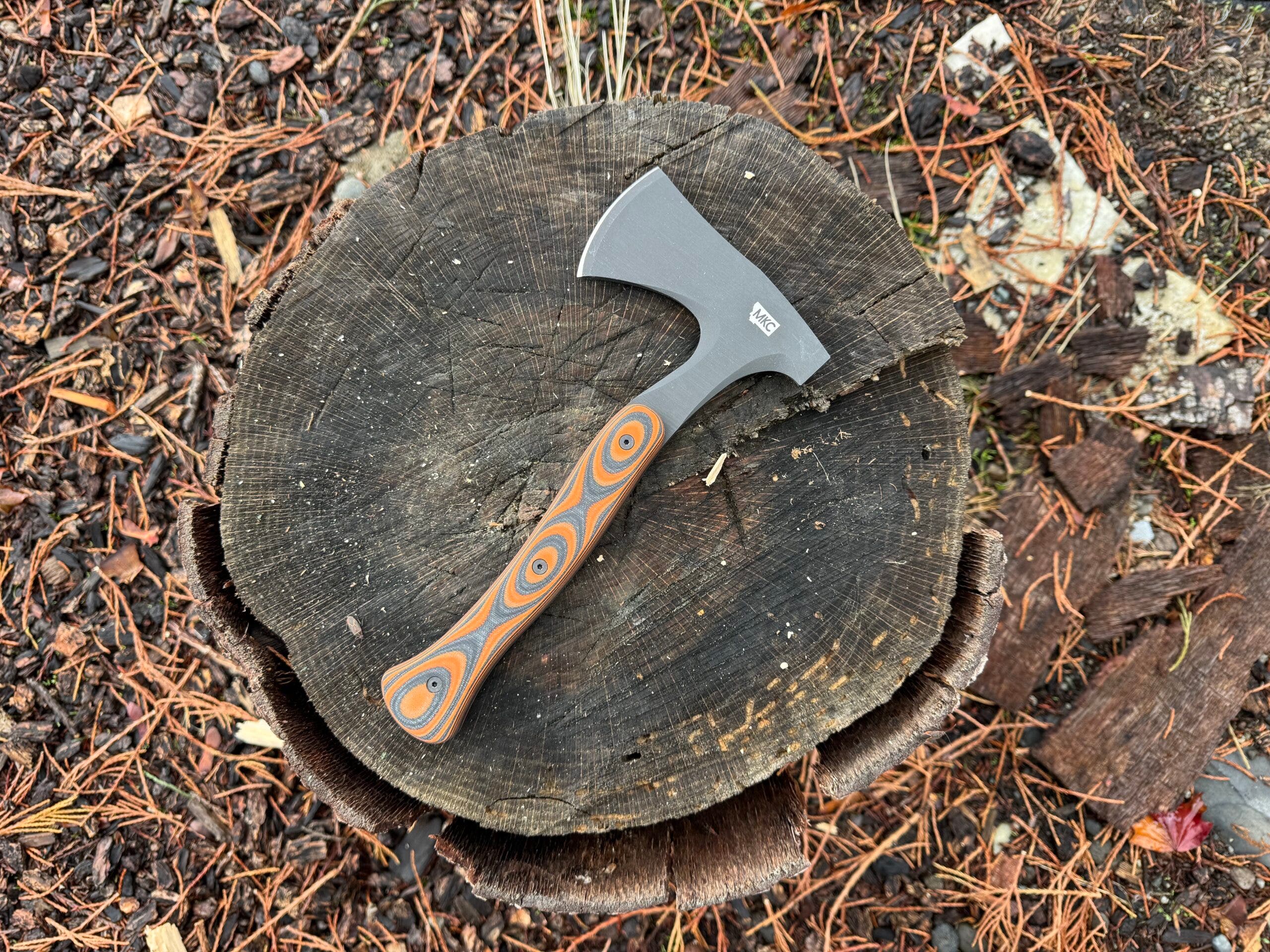
Weight: 0.9 pounds
Overall Length: 10 inches
Pros and Cons
+ Beautiful craftsmanship
+ Perfectly balanced swing
+ Portable and lightweight
– More than twice the price of most competitors
I know that comparing this hatchet to the others on this list is inherently unfair: It’s like bringing a gun to a proverbial hatchet fight. Or, perhaps more accurately, comparing a cottage-built ultralight thru-hiking pack to a clunky, big box-brand backpacking pack. Here’s the thing, though: I couldn’t leave this truly beautiful tool off this list because it was so remarkably capable.
It weighs less than a pound but was still able to cut through softwoods like butter, thanks to its razor-sharp blade and perfectly balanced swing weight. The lack of swing weight meant that hardwoods like madrone put up a hell of a fight, usually taking half-a-dozen hits or more to split, but I wasn’t complaining about the reps thanks to the Hellgate’s aforementioned balance. The lightly textured handle has a slight curve on the back that made it feel like it was made for my palm. This is a very subtle detail that delivered a notable amount of comfort over extended use. I found myself using it consistently for 20- to 30-minute increments without really thinking about the fact that I had a hatchet in my hand. On top of that, the Hellgate was made for hiking. While walking the 60-acre property during my portability test, I barely noticed I was bringing it along.
ADVERTISEMENT
The biggest bummer: The $375 price tag is certainly worthy of sticker shock. Still, I stand behind it: It hit like a heavy weight in a bantamweight package. Worth noting, this hatchet also sells out quickly, so be ready if you see it available.
How I Tested the Best Hatchets
I made an absolutely obscene amount of kindling for this test. Over the past three weeks I have offered my kindling-creating services to all the wood-stove users in my friend group (there are four) and invited myself over to chop away on their wood piles for as long as it took to get a feel for each axe. I also took these hatchets on an annual fishing and camping trip with friends. While my buddies fished, I stayed back at camp and played with the hatchets.
ADVERTISEMENT
I tested each blade on five different kinds of wood (pine, cedar, fir, oak, and Oregon madrone) and created all different sizes of kindling, from curly-gossamer shreds to solid thumb-size chunks. I used the backside of each hatchet to hammer in tent poles at the beginning of the trip. I also carried these hatchets around the 60-acre campsite we stayed on to gauge portability, and I weighed them on a kitchen scale (when I got home of course) to compare each one’s weight to its manufacturer-listed specs. Here are the results.
