

Eh, another victim of running. Im increasingly convinced that running is inherently bad for you, regardless of how often you change your shoes, watch your stride, stay off concrete, etc. I love runnings low equipment factor and the notion that you can get in a good workout in an hour or less. But your knees pay the price.
Black Diamond Contour Trekking Poles
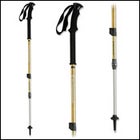 Black Diamond Contour Trekking Poles
Anyway, thats an editorial aside, spoken by a reformed (meaning, former) marathoner.
Otherwise, yeah, Im a HUGE proponent of trekking poles. In my mind there is no downsidethey reduce shock to knees and ankles, help with balance, create a natural hiking rhythm, and more. I dont go on any trail without poles, almost regardless of the load.
These days, there are two main decisions when buying poles. The first is whether to get two-section or three-section poles. Three-section poles collapse to a smaller size, which can be handy when traveling or when you dont want half-pole lengths sticking out of your pack. But they also add another joint, so have a slightly higher chance of mechanical failure while offering slightly less structural strength than two-section poles. To me its sort of a matter of personal preference, and today, three-section poles are most common.
The other main choice is whether to get aluminum alloy or carbon fiber poles. Carbon costs more but Im completely behind it. Poles made with carbon seem weightless, the stuff is extremely strong, and carbons natural ability to flex renders unnecessary add-ons such as built-in shock absorbers.
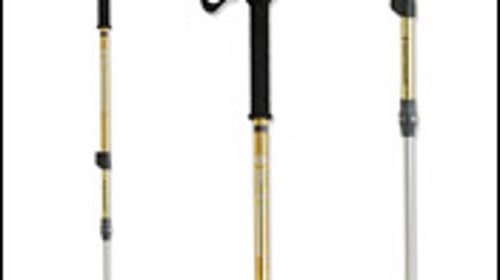
A classic pair of three-section aluminum poles would be Black Diamonds Contour Trekking Poles ($100; bdel.com). These have excellent grips with 15-degree angles for natural hand position, easy-to-manipulate adjustment locks, and low-profile trekking baskets that dont snag easily on underbrush. If youre less than five feet, eight inches in height, then try the Compact version ($80). Lekis Tour Ergosoft poles ($80; leki.com) are another excellent example of a three-section, aluminum-shaft trekking pole. Lekis handles arent angled to quite the degree as Black Diamonds, and you might find the difference to your advantage.
REIs Peak UL Carbon Compact Trekking Poles ($130; rei.com) are an excellent buy in poles made with this material. Ive been using a pair this summer and really like them. Theyre incredibly light (11.2 ounces per pair), seem very strong, and have a nice balance of flex and stiffness. Ive had occasional problems getting the shafts to lock, but once theyre tightened, they stay put. It may be an operator-error issue. Lekis Ultralite Carbon SLS Trekking Poles offer a higher-priced alternative at $200. Thats pretty steep for a pair of glorified walking sticks, but theyre light, tough poles.
Rim-to-rim is a big hike. Hope it goes well!
Youve seen our picks for 2007 Gear of the Year, and now the entire
Outside Summer Buyers Guide is online. Check out this years more than 400 must-have gear items, including trekking poles.