Published April 4, 2026 04:00AM
Jeep’s Newest Concepts Are a High-Octane Fever Dream
To celebrate the 60th anniversary of the Easter Jeep Safari, the iconic brand brought a fleet of drivable, trail-ready machines to the desert. From a retro 1980s resto-mod to a HEMI-powered military beast, these are the three that stole the show.
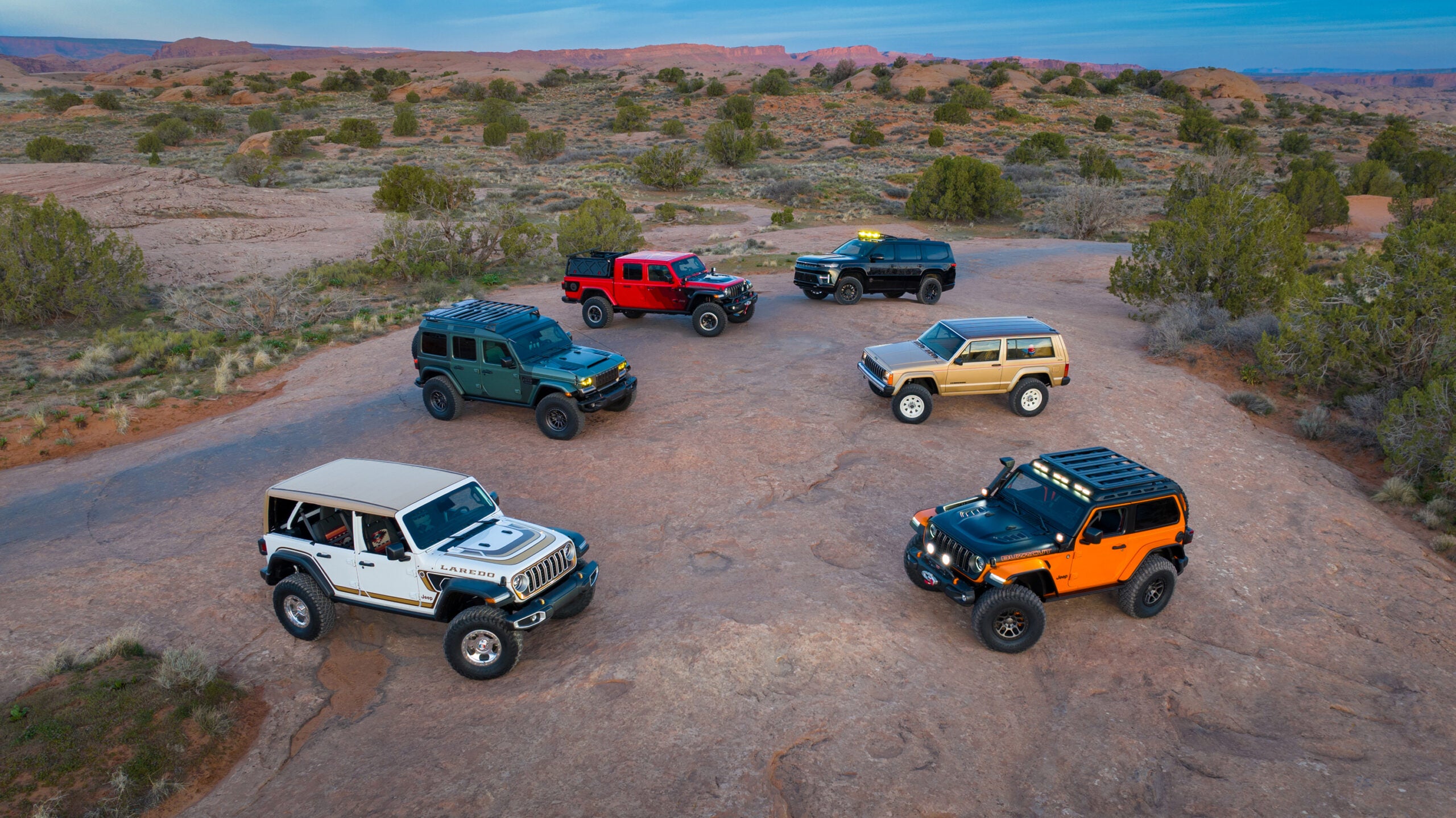
“What are all these Jeeps doing in town?”
That’s what a mom and her daughter who were passing through on a national parks tour which included Arches and Zion, asked me by the fire pit at our hotel one evening. It’s a fair question. Moab, population 5,000, swells to around 15,000 people over the week leading up to Easter, and if you roll in not knowing what’s happening, you might think you’ve stumbled into some kind of Mad Max off-road convention. Lifted rigs everywhere. Lines at the car wash of drivers rinsing away the dirt that has gathered on a long day at a trail. Grown adults debating axle ratios over cold beers.
This year was Easter Jeep Safari’s 60th anniversary, and Jeep showed up with a fistful of concepts—not the auto-show kind that exist only to be photographed, but actual driveable, trail-ready machines. We took them out on Fins and Things, one of Moab’s classic OHV trails in the Sand Flats Recreation Area, and came back with opinions (and lots of dusty clothes). Here are the three that stuck.
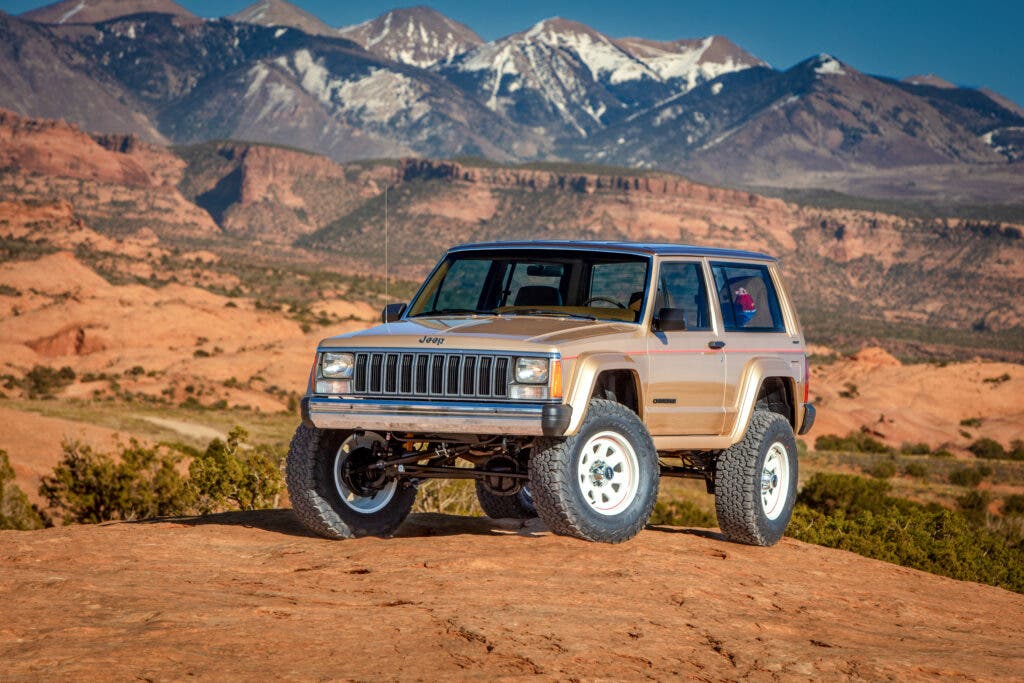
Jeep XJ Pioneer
Yes, it looks very eighties. But, oh man, I wish Jeep could bottle that scent: aged rubber, old carpet, and something vaguely petroleum-adjacent is an olfactory time warp to childhood road trips. The XJ Pioneer is built on a first-generation 1984 Cherokee, considered by many to be the original compact SUV. It’s the most vibe-heavy concept Jeep had at Easter Safari this year.
ADVERTISEMENT
It’s a thoughtful resto-mod: a 2-inch lift, custom carbon fender flares, 33-inch BFG All-Terrains on 17-inch wheels, rock rails, and a quick-disconnecting sway bar. But the soul is in the details. The interior has been left almost entirely intact. Chris Piscatelli, Jeep’s lead design manager who presented the car, had a great line about that: “Those of us who actually grew up in the eighties, remember that realistically, it was Fifty Shades of Brown.” To bring home the retro-tastic interior, beaded ergonomic covers adorned the seats, as well as a Rubik’s cube on the dash. To top it off, a Moonie—those window figures that moon passing cars—stuck to the rear glass.
Behind the wheel, the thing that left the most lasting impression was the steering wheel itself: thin, almost alarmingly light, nothing like what you’d find on a car today. You could drive it with two fingers, and one arm out of the window. Piscatelli cut up what he admitted was a genuinely pristine donor car. “I had a little crisis of conscience,” he said. “But I still cut it up.” This concept is a proper send-off to that legacy, timed to coincide with the return of the Cherokee nameplate. They nailed the tone.
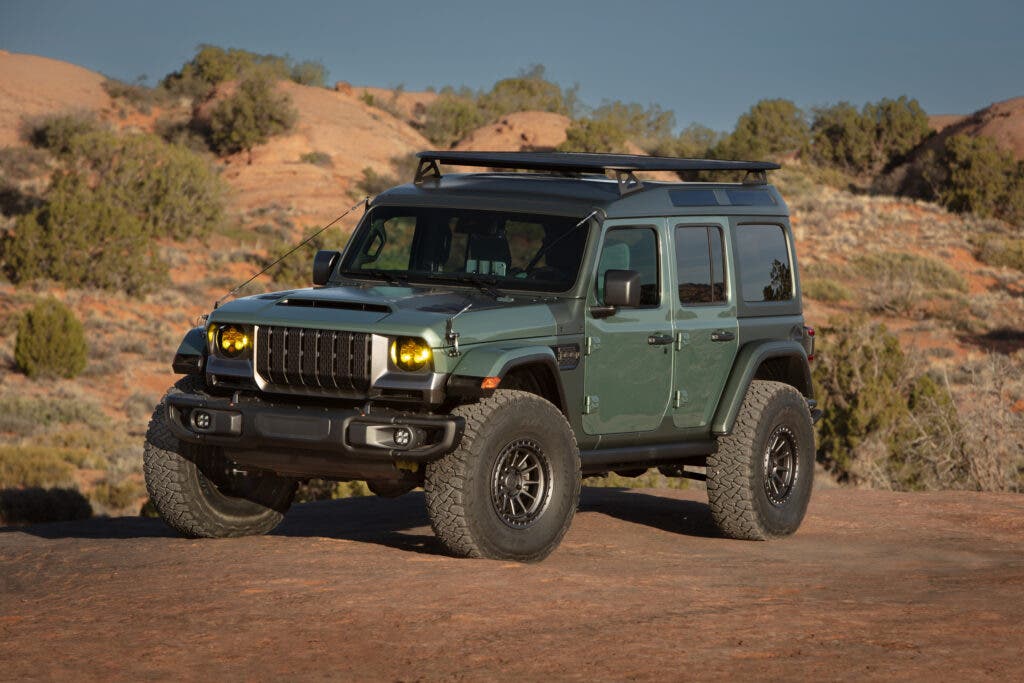
Jeep Wrangler Anvil 715
If the XJ Pioneer exuded chill, the Anvil 715 is all aggression. Built on a Wrangler 392 (translation: it’s got a 470 horsepower 6.4-liter HEMI V8 under the hood), this thing looks like it was designed to drive across continents in any weather. The name comes from its shape, which has a blunt, shark-nosed face inspired by SJ-series military Jeeps from the sixties, and the 715, one of Jeep’s older military vehicles.
ADVERTISEMENT
The mods include several overlanding upgrades like steel bumpers, rock rails, and a non-removable roof with skylights and an integrated rack. There’s also an onboard air system with quick-disconnect fittings for trail-side tire adjustments. That old-school front end isn’t just for one-upping G-Wagens. Those wires that stretch from hood to roof are called limb risers and designed to keep branches from hitting the windshield.
On the trail, the 392 is absurd. The thing could idle up a 40-degree rock face with basically no drama. The wires on the hood to protect the windshield from brush and branches, the safari windows, the iPad mount for navigation. Just build it. Please?
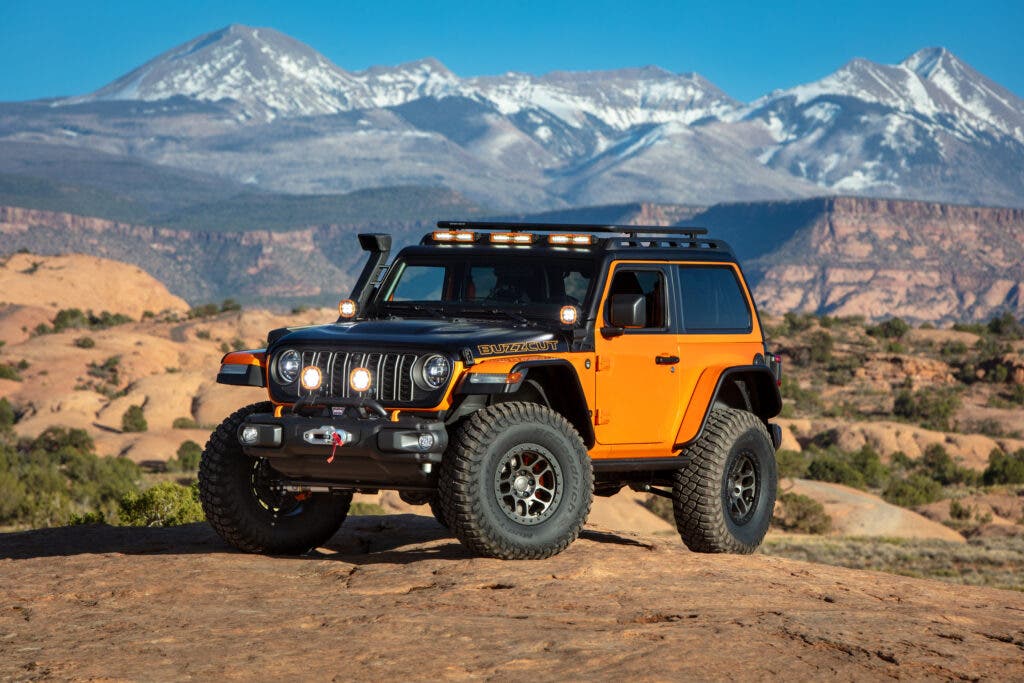
JPP Buzzcut
The Buzzcut comes from Jeep’s Mopar/JPP accessories arm, and it clearly looks like it’s having more fun than anyone else on the trail. Chop the roof by two full inches, paint the whole thing Vitamin C Orange, pull out the rear seat and replace it with a lockable drawer-storage enclosure, and you have the ultimate little weekend off-roader.
It’s a two-door Wrangler built around the idea that less can be more—less weight and height, more attitude and off-road capability. The fastback roofline gives it a squatted silhouette that makes the Wrangler look a bit sleeker and ready to party. But it’s serious, too: there’s a Rhino-Rack platform up top, orange-ringed TYRI lights everywhere. The interior seats are high-back custom performance units in black leather and suede from, with orange stitching throughout.
On trail, a two-door Wrangler is already the purest expression of the formula. Short, light, and practically flickable. This one just underlines that. Point and go. It’s the serious Wrangler for those who don’t want to appear too serious.