Published January 24, 2024 11:25AM
Why I Abandoned Wool and Down to Embrace a Synthetic Fiber Future
Transitioning away from natural fabrics may involve a leap of faith into modern technologies, but it’s one that can net you more comfort and safety in virtually any condition

(Photo: Beyond Clothing)
It was minus 35 degrees here in Montana the other night. When I went outside to give the dogs their bathroom breaks, or spent 45 minutes shoveling snow off of the driveway and sidewalks, I didn’t do it in merino base layers or down insulation. As I was standing there, nice and toasty, I realized every single item of clothing I was wearing was made of synthetic fibers.
That moment was a revelation, a total one-eighty from my previous attitudes on clothing. I remember buying my first pair of synthetic base layers 20 years ago—I was too broke to afford the merino alternatives at the time—and dreading their scratch and stink every time I needed to put them on. When I donned my first synthetic puffy jacket on a visit to Detroit in January in the early 2000s and I can’t shake the memory of how cold I felt the entire time I was there.
It’s no surprise that I viewed the ever-advancing performance claims about new synthetic fibers’ odor fighting and sweat wicking with a big dose of skepticism ever since, and kept wearing wool and down—materials whose performance benefits are so established they need no superlatives.
ADVERTISEMENT
Wool is breathable, and provides a lot of warmth without a lot of thickness, and strongly resists odor-causing bacteria growth. Some varieties like merino or cashmere are also soft when worn next to your skin, or like alpaca or yak are extra insulating thanks to more space inside wool’s hollow fibers.
Down is lightweight and compressible, allowing you to pack loads of insulation without much penalty.
But both materials share the same debilitating weakness: water. While wool is good at wicking sweat away from your body and actually generates a small amount of heat as is breaks down H2O’s molecular bonds, its hollow interior can absorb up to 30 percent of the material’s weight in water if you really get it soaked. Get wool sopping wet, and it takes a long time to dry. Get down wet, and it doesn’t just take forever to dry out, all of its ability to trap air, and provide that insulation instantly disappears. Various treatments and potions have been devised to shorten the time it takes down to dry, but none of them do anything to enable it to work while wet.
ADVERTISEMENT
Synthetic materials like nylon and polyester are only capable of absorbing as little as 0.4 percent of their weight in water, which has always made them safer. But achieving that safety meant sacrificing comfort, and often the outright amount of insulation you were able to wear or bring along too. Go back a decade or more, and synthetic base layers were scratchy, fleece was about as basic a material as you could imagine, and lofted synthetic insulations just weren’t all that warm, and definitely weren’t lightweight.
But synthetic materials have one more major advantage over their natural competitors: development. Fur and feathers evolved their capabilities over millions of years. They probably aren’t changing much for a few million more. Meanwhile, there are scientists in labs working day and night to try and take synthetic materials further at this very moment.
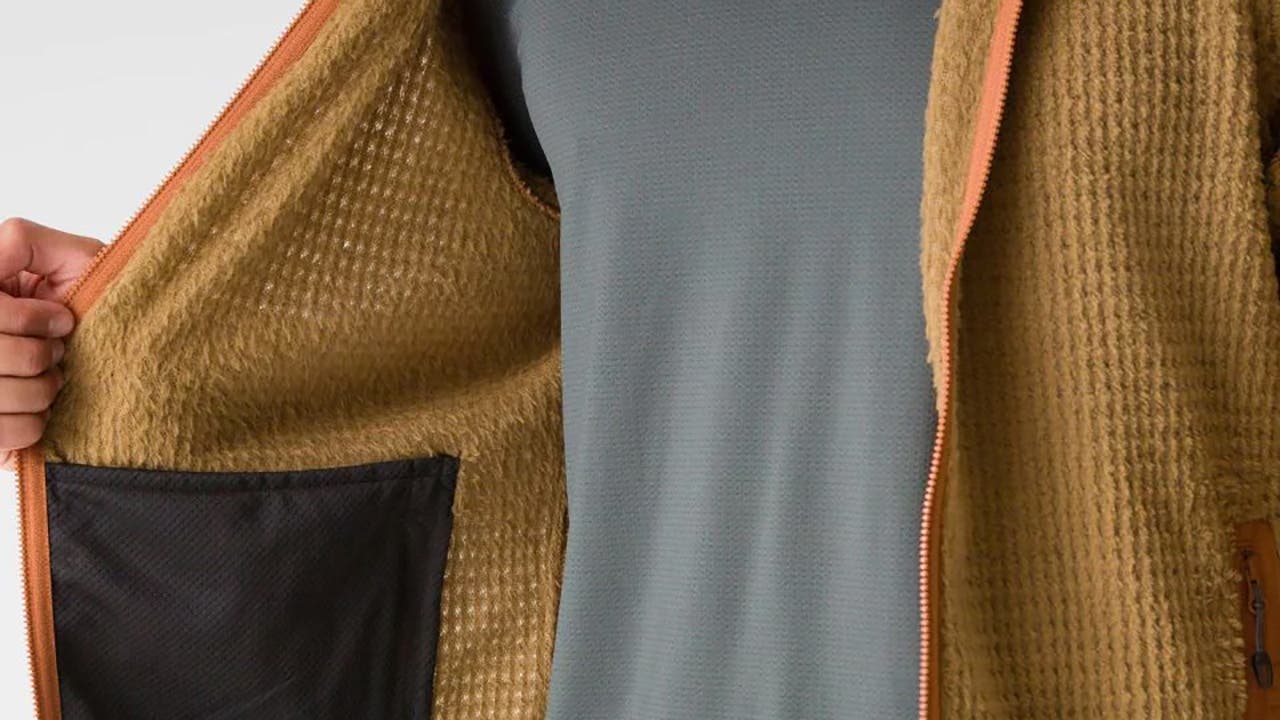
My first synthetic epiphany came around 2017, when I opened up a box from Rab to find an odd-looking fleece top called the Alpha Flash. Furry, and full of holes, its breathability was obvious, but could something this open actually trap air, and provide insulation? I was skeptical, but gradually started wearing it in place of a wool sweater. Starting with inconsequential activities like dog walks, I began relying on it for more and more severe conditions until I reached such a level of confidence with it that I even packed it in lieu of a down puffy for a summer backpacking trip to a lake at 11,000 feet. A hard shell layered over the 125 grams of Polartec Alpha Direct material turned all those holes into giant pockets of trapped air, and kept me warm even through afternoon thunder snow.
Seven years later, I’ve still got that same Rab piece. It might look fragile, but I’ve worn it under backpacks, and through everything from skiing to hunting, to the exclusion of virtually all other mid-layers. And its Polygeine anti-odor treatment really does seem to work—despite years worth of sweat evacuating freely through the material, it smells more like dogs and campfires than it does like my body odor. I’m not even sure where my old wool sweater is these days, or if I still have it.
ADVERTISEMENT
But you can’t take full advantage of the driest, most breathable mid-layer ever made without base layers capable of the same performance. So I started wearing synthetic base layers too. The latest ones aren’t just quick drying, but soft, reliably stretchy, and odor-fighting. And, like my wool mid-layers, all my merino stuff rotated first to the bottom of a drawer, then into Rubbermaid totes in the basement. Who knows where they are now.
So why am I so quick to abandon wool and down? It’s all about moisture management. When you sweat, all that moisture moving outward from your body has to go somewhere. And if that’s into down feathers, you’ll be impairing its ability to insulate by working up a sweat, something you’ll then feel in the form of a damp chill once you slow down. Anyone who’s ever gotten chilly on a chairlift should be able to relate. Down has another disadvantage in a layering system—the bulk it must loft into to achieve genuine warmth makes it hard to fit under a shell. Down makes a ton of sense in your backpack, and much less once you put it on.
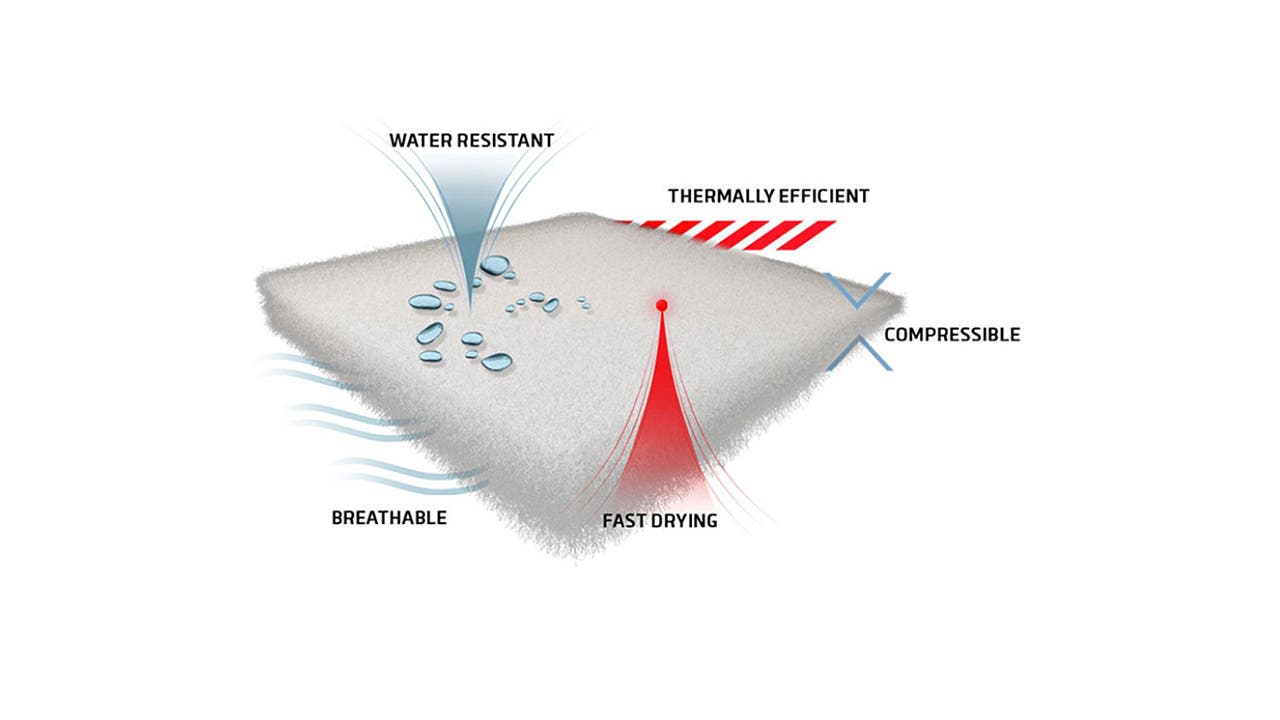
And like mid and base layers, synthetic insulations have come a long ways too. In the case of one like Primaloft Gold, you can achieve warmth equivalent to a humungous down parka from a material that’s less than half an inch thick. Compare like-for-like performance, and that synthetic insulator is going to pack up smaller and lighter than that giant parka too, while offering much more versatility as part of a layering system. Other forms of insulation made by Primaloft add the ability to insulate while compressed. Something that works as well under a backpack as it does pressed into that chairlift.
All of this had me feeling pretty prepared when I was getting ready to spend two weeks living aboard a boat in the Prince William Sound last May, traveling the area by skiff, then hiking inland to look for bears. But with an ever-present risk of said sound coming over the top of my hip waders, or just getting soaked in the all-day every day rain and constant sea spray, there were two outstanding clothing items that I hadn’t yet converted from natural to synthetic material: socks and underwear.
And this is where we can talk about one final benefit synthetic materials bring. Compared to high performance natural materials assembled into technical garments, synthetic alternatives usually cost way less money. I’ve been paying about $21 per pair for the lightweight Icebreaker merino socks I’d worn every day for a decade or so. But these thicker, warmer synthetic-blend boot socks from Under Armour are half that price. Loading that bear into the skiff as it bounced around in big waves, I lost my footing and went down on one knee, filing one of my hip boots with ocean water. But during the hour-long cruise back to the ship, that leg was nearly as warm as the dry one. More practically, wearing these I can step out onto a snowy porch to grab a dog bowl without putting on shoes, and step back inside to dry feet just moments later.
When it comes to undies, I’ve always struggled to find a good option. I prefer the control offered by briefs to the fashionable nature of boxer briefs. A $40 Speedo has been my go to ever since swim team, and works fine in cooler temperatures. But, in every day life or hot weather they’re just not breathable enough. Every pair of merino briefs I’ve ever tried has stretched out in under a day, grown holes in the wash, and proved unable to keep things as controlled as I like. Enter REI Co-Op’s $20 Everyday Brief. They’re thin and breathable, soft and stretchy, and hold up to repeated washings while also holding their shape. I took three pairs on that hunt in May and liked them so much that I replaced my entire underwear drawer with more as soon as I got back.
That was just a logical move into a better solution at the time. But on that minus 35 degree night over the weekend, I understood it as the culmination of a journey I didn’t realize I was on: the transition into fully synthetic outdoors clothing. I didn’t set out to get here, but I’m glad I did. I’m reliably drier, through conditions both extreme and mundane, with less bulk from fewer, more versatile, more affordable layers.
