Updated September 12, 2025 10:58AM
If It Feels like Prices on Outdoor Gear Are Higher, That’s Because They Are
As the U.S. imposes steep import duties on China and other countries where outdoor gear is made, prices are in flux—but experts believe that the worst is yet to come

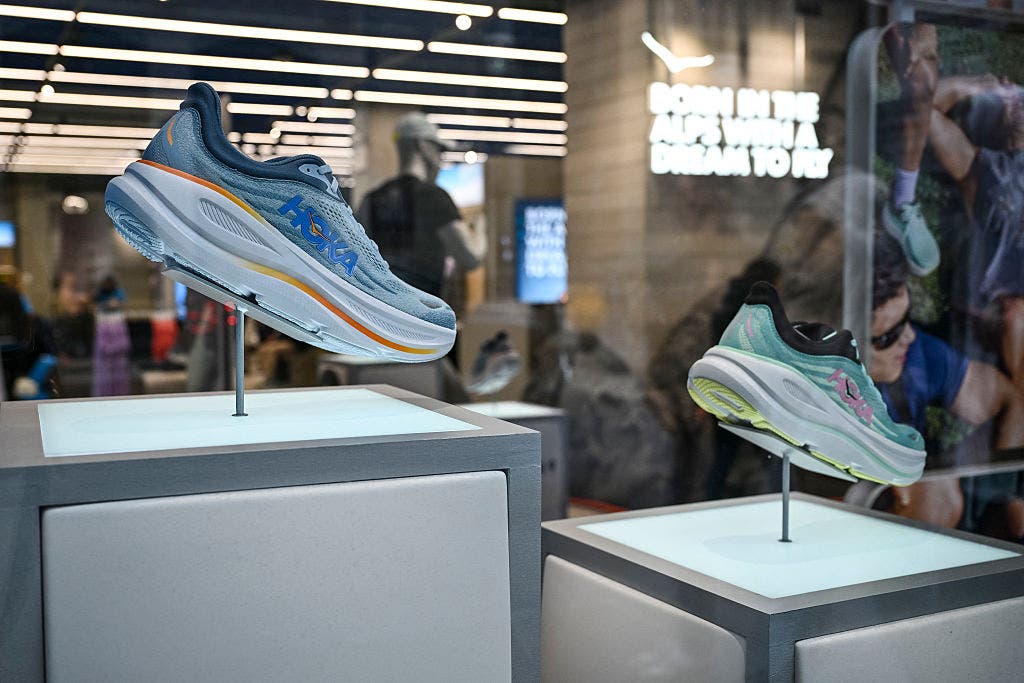
Hoka is one of many shoe brands that manufactures overseas (Photo: NurPhoto / Getty Images)
Editor’s Note: We updated this article in September 2025 to reflect the latest updates from our sources and address the end of the de minimis exemption.
If talk of tariff hikes has started to sound like a boy-who-cried-wolf story, take heed: Prices are still far from peaking, according to experts who spoke to Outside.
Since the first threat of tariffs in April 2025, many outdoor brands have shielded buyers from price increases by absorbing costs, while others only slightly raised prices immediately. But come winter and spring, we’re about to feel a greater financial squeeze as a result of America’s burgeoning trade war, sources say.
ADVERTISEMENT
Tariffs Hit the Outdoor Industry
“I’m quite concerned,” says Wes Allen, owner of Sunlight Sports, a specialty outdoor retailer at the gates of Yellowstone National Park in Cody, Wyoming. “Just because it didn’t happen yet, doesn’t mean it’s not coming.”
Under the current tariffs, economists estimate that the average U.S. household may face up to $1,300 in additional tax burden in 2025 and $1,600 in 2026, according to the Tax Foundation—and that includes everyday essentials like groceries and household items, not just discretionary goods like outdoor gear.
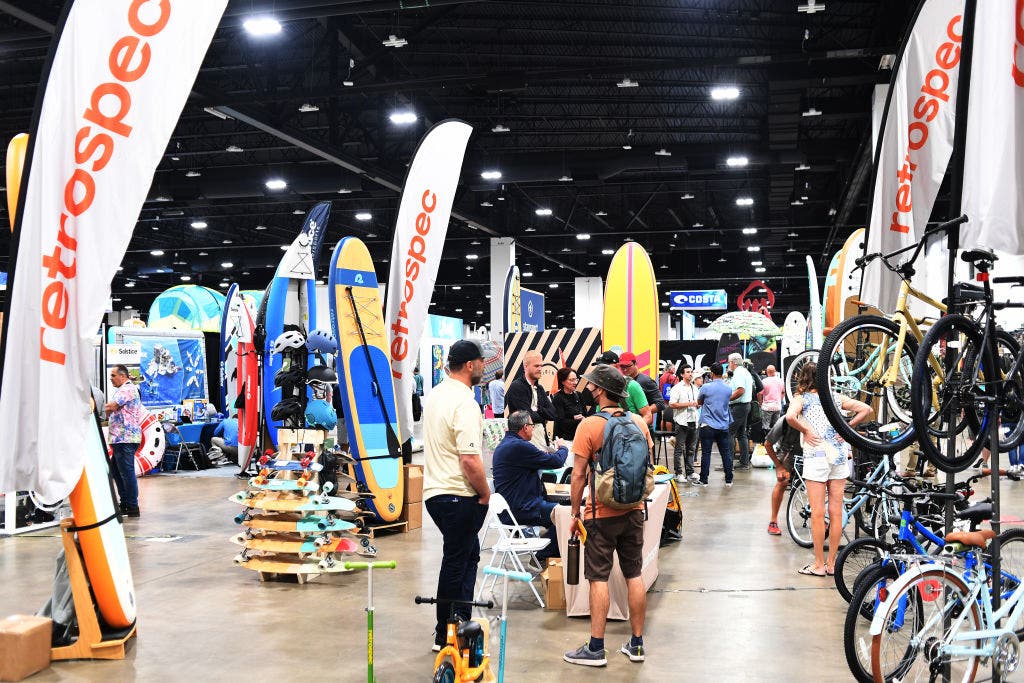
If the cost of eggs and milk rises, American buyers will be less likely and have less money to spend on recreational items such as paddleboards and camping equipment. One harbinger of the outdoor industry’s health, Allen said, is the recent closure of iconic Arizona retailer Summit Hut after 27 years. In a letter to customers, owners Dana and Jeremy Davis cited “rising costs, brands selling direct, new big-box competition, the push for lower prices, shifts toward online shopping, and a changing customer base” as reasons for shutting down.
ADVERTISEMENT
Unstable Markets and Rising Costs
As of early September, imports to the U.S. from all foreign countries are still subject to a ten percent baseline tariff. (Tariffs are taxes levied on goods imported from another country, paid to the home country’s government by the importer.) Some countries face even higher tariffs, such as India (50 percent), Canada (35 percent), China (30 percent), and Mexico (25 percent).
However, the imposed rates have been in constant flux since this spring, causing uncertainty and instability in the market, and debilitating brands’ ability to plan.
ADVERTISEMENT
The unexpected, knee-capping costs are a main concern. During an earnings call in early August, Columbia Sportswear reported that, despite mitigation measures, the tariff changes will cost the business $35 to $40 million in 2025 as they absorb impacts rather than pass them on to consumers.
But businesses can only hold the floodgates for so long. The vast majority of spring and summer inventory arrived before tariffs were relevant, said Eoin Comerford, the former CEO of Moosejaw who now works with many emerging outdoor brands through his company Outside Consulting. Then businesses rushed shipments of fall and winter inventory to avoid tariffs, some of which were delayed.
“The real increases will come early next year,” Comerford wrote on LinkedIn. “It won’t be pretty.”
The End of the De Minimis Exemption
To avoid the mess altogether, some foreign-based outdoor brands have reevaluated doing any business with the U.S. For instance, Swedish footwear maker Icebug has paused shipping all orders to our shores—a direct consequence of the end of the “de minimis” tariff exemption on international shipments.
ADVERTISEMENT
For decades, the de minimis rule allowed shipments under $800 to enter the U.S. duty-free, whether buyers purchased directly from a seller on eBay or retailers placed an inventory order. Under Trump, the exemption was fully eliminated for all countries at the end of August. Now even low-value parcels face full duties.
Katie Douglas, owner of San Francisco store Running Wylder, wrote in her newsletter that she has paid thousands of dollars in tariffs over the last few months stocking foreign brands in the shop. “A more recent order of $1065 from another Danish brand came with a $221.87 bill due upon delivery,” she wrote.
Two courts—the U.S. court of international trade in May and the U.S. court of appeals in September—challenged that the Trump administration’s tariffs are illegal, but final decisions are being delayed. Meanwhile, the White House has taken the case to the U.S. Supreme Court.
The administration argues that the tariffs will level imbalances with the countries who exact charges on American imports as well as supposedly bring back domestic manufacturing. But some representatives from outdoor brands told Outside that this change will be impossible without added infrastructure, due to the outdoor industry’s reliance on imported goods and materials.
ADVERTISEMENT
Brands Are Forced to Adapt—But Not Without Struggles
Cassie Abel, the founder of women’s technical apparel brand Wild Rye, tried to manufacture products in the U.S.—but doing so almost killed her business. Delivery delays, poor communication, production flaws, and labor costs made it impossible to produce in the U.S.
So she moved production to a factory in China that has a Vietnamese satellite. After growing the direct-to-consumer side of the brand by 75 percent over last year, announcing a rebrand, and collaborating with ski helmet and goggle retailer Smith Optics, the tariffs are overshadowing any wins. She and her team are figuring out how to reduce expenses because cash is about to become scarce.
ADVERTISEMENT
Brand leaders have been forced to become overnight experts in trade policy, an incredibly nuanced and complicated topic, says Jacylyn Levy, senior director of advocacy and government affairs at Outdoor Industry Association (OIA). In a recent report, OIA found that 84 percent of member businesses surveyed said they will be impacted by new tariffs, resulting in millions of dollars in financial losses and affecting hundreds of outdoor products.
Since April, outdoor industry professionals have been negotiating with manufacturing and retail partners to share some of the tax burden. Manufacturers from Asia who spoke to Outside at the April 2025 Functional Fabric Fair in Portland, Oregon said they also have little to no margins to absorb costs. “It’s a question of how do you spread the pain of that incremental tax,” said Travis Campbell, the owner and CEO of Eagle Creek.
In a letter to lawmakers in April, Campbell said Eagle Creek has an outstanding purchase order of $1.8 million on imported goods from Indonesia, which would normally accrue $260,000 in duties. With the reciprocal tariffs though, the company would have to pay a total of $840,000 in duties. “Our business simply cannot afford this cost,” Campbell wrote.
Ultimately, as hard as businesses may try to avoid it, a portion of that cost will get passed onto their customers. Every source who spoke to Outside said that prices on outdoor products are inevitably going to rise and, in some cases, rise drastically.
“Even though we may see some brands and retailers shutter their doors, the big loser here is the consumer,” said Matt Powell, a longtime outdoor industry data analyst and founder of Spurwink River Consulting.
ADVERTISEMENT
Prices are already on the rise. On April 16, bike brand Specialized informed retailers that it will add a 10 percent surcharge for the new Turbo Levo 4 e-bike starting on May 1. On April 17, Trek bicycles emailed its retail partners saying it was also raising prices.
Missy Park, the founder of women’s activewear brand Title Nine, broke down the math in an April 12 Instagram video using a $100 pair of elasticated pants as an example. Before tariffs, the business made $2 in net profit on each pair. After the latest round of tariffs, the business now owes $20 to the government on each pair sold.
“You get the same pair of pants,” Park says in the video. “Right now, we really don’t know if the prices are going to go up. But one thing you can count on is that we’re scrambling to make the math work for you, and for us, and for our whole community of suppliers.”
ADVERTISEMENT
Abel is in the same boat. When Outside spoke to her in September, she said some items will see no cost increase while others will rise by as much as 30 percent. On average, Wild Rye products will increase in cost by “a little under 10 percent,” she said. “There is no world in which we can afford to stay in business and not raise prices,” she said back in April.
Brands that over-ordered product during the pandemic in anticipation of high demand and finally sold through the surplus inventory aren’t necessarily excited to fill their shelves again. But if they don’t expedite inventory from abroad, they may be left empty-handed.
“If you’re managing a business here, the amount of uncertainty is just soul-crushing,” Comerford said in April. “It has paralyzed the industry.”
An Uncertain Future
As of right now, Gloria Hwang, founder and CEO of helmet maker Thousand, told factory partners to hold off making two entirely new products: a helmet and a bike lock. She says they’ve rarely raised prices in their decade in business but have few options at the current tariff rate, which, for Thousand, ranges between 30 percent and 60 percent.
ADVERTISEMENT
At the time, a shipping container of Thousand products was on the water, set to arrive at a U.S. port. Had the U.S. not delayed the reciprocal tariffs two days later, she would have had to pay an extra six figures in duties that she had not forecasted, she said.
Those costs have the potential to ruin her business.
“Unfortunately, it’s gonna thin the herd,” said Mike Lewis, CEO of Texas-based Bison Coolers, which manufactures domestically in Tennessee and Colorado and overseas in China. “Any business that was in distress before you got to this point, they’re gonna go out of business because they’re like, we can’t compete.”
Already, the outdoor industry was experiencing hardship and recovering from the boom-and-bust repercussions from the pandemic. The turbulence has resulted in layoffs and staff downsizing, revenue shortfalls, product inventory imbalances, and snarled supply chains.
Tariffs are the cherry on top of the teetering sundae.
ADVERTISEMENT
If there was ever an upside of the continued instability, it’s that business leaders have learned to be nimble, said Steve Bick, CEO and owner of Boundary Supply. The travel pack brand sources fabrics and other supplies in the U.S. but sends products to Cambodia for assembly. “My gamble is that this will be resolved relatively shortly,” he said. “This is a temporary blip.”
Even if he’s right, perhaps the worst impacts of the trade war are the uncertainty for long-term planning and the stunting of innovation. “It’s very hard to make any business decisions when policy continues to change month after month,” Hwang said.
Lewis added: “One bad decision or one calculated risk could really come back to haunt you.”
Whether the economy stabilizes soon or not, the damage to consumer confidence has already been done, Campbell says. They’re either grabbing up items before prices go up and inventory wanes or they’re not buying anything at all out of fear of recession.
“It’s gonna be ugly for a while,” Abel said.
ADVERTISEMENT
Amelia Arvesen is a journalist living in Portland, Oregon. In January, 2025 she wrote a feature story about the women’s outdoor apparel brand Youer and its founder, Mallory Ottariano.
