Published February 24, 2026 09:22PM
If you buy through our links, we may earn an affiliate commission. This supports our mission to get more people active and outside.Learn about Outside Online's affiliate link policy
The Only 3 GoPro Mounts You Need for Skiing
These three proven camera mounts deliver stable footage, easy access, and angles that don’t all look the same.
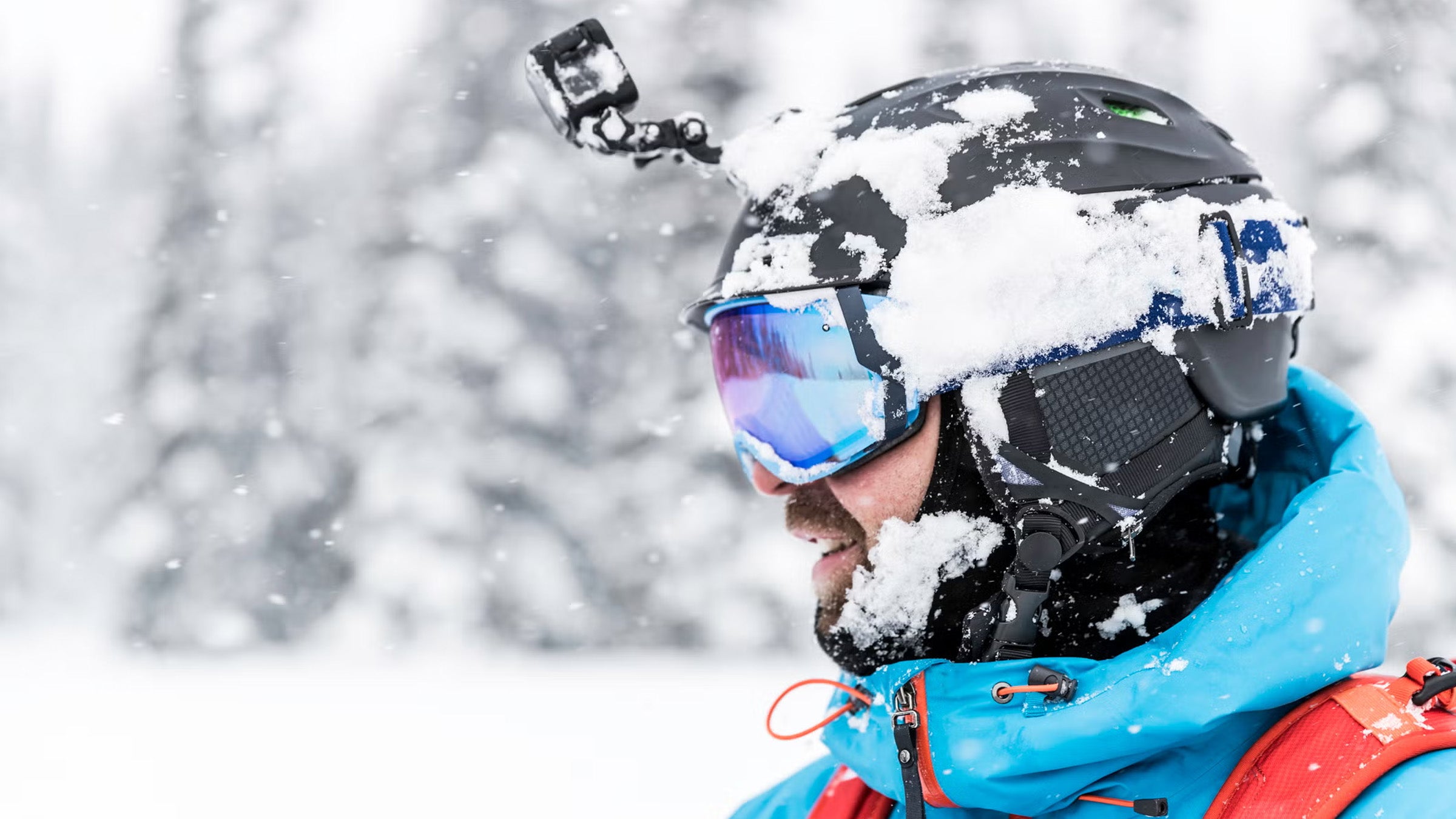
We tested a pile of GoPro mounts so you don't have to. Here are our three favorite for skiing. (Photo: Getty Images)
Winter finally showed up, and with it came the annual urge to document every powder turn like you’re filming a ski movie instead of dodging tourists at the resort. That usually means strapping a GoPro to something—your helmet, your chest, your ski pole, your teeth. I carry a GoPro almost everywhere I go these days (occupational hazard), and I’ve learned two things as my job has evolved to include “cameraman” in the description. First, my voice sounds weird on video. It just does. And second, your GoPro footage is only as good as the mount holding the camera.
There are endless mounting options for these small action cameras, from small suction cups designed to fit on cars to full-sized gimbals that stabilize footage. GoPro makes a variety of mounts, and several third party companies make options that are compatible with GoPro’s unique finger attachment system. Most technically “work.” Far fewer work well for skiing—when you’re wearing gloves, moving fast, and navigating tricky terrain.
Over the past month I tested a pile of GoPro mounts while skiing in Utah, cruising nordic trails near home, and chasing the occasional East Coast powder day. Chest mounts, bite mounts, pole extensions, clamps, suction cups—you name it, I’ve tried it. Only a few work well in the demanding ecosystem of winter sports, and only three have earned a permanent spot in my ski kit. Each mount gives me a different angle, and switching the camera between these three options provides a dynamic variety of footage.
ADVERTISEMENT
I’ve also upgraded my setup with GoPro’s magnetic mounting system and the new Max2 360 camera. The 360 lens is basically insurance against user error—it captures everything, so you can focus on skiing instead of framing. Editing takes a little more effort, but the payoff is footage that doesn’t miss the moment. The magnetic latch, meanwhile, is the real everyday hero, letting you swap the camera between mounts in seconds thanks to the magnetic clips that secure the base of the camera without having to thread a bolt through multiple rings. It’s not bulletproof—I wouldn’t use it while surfing—but it’s held tight through several run-of-the-mill ski crashes over the last month. I also really like the Magnetic Latch Ball Joint ($49.99), which uses the same quick release system but adds a swivel ball joint so you can finetune the angle of the camera.
But if you only make one upgrade to your GoPro system this season to help you capture exciting skiing footage, let it be one of these camera mounts.
Best GoPro Mounts for Skiing
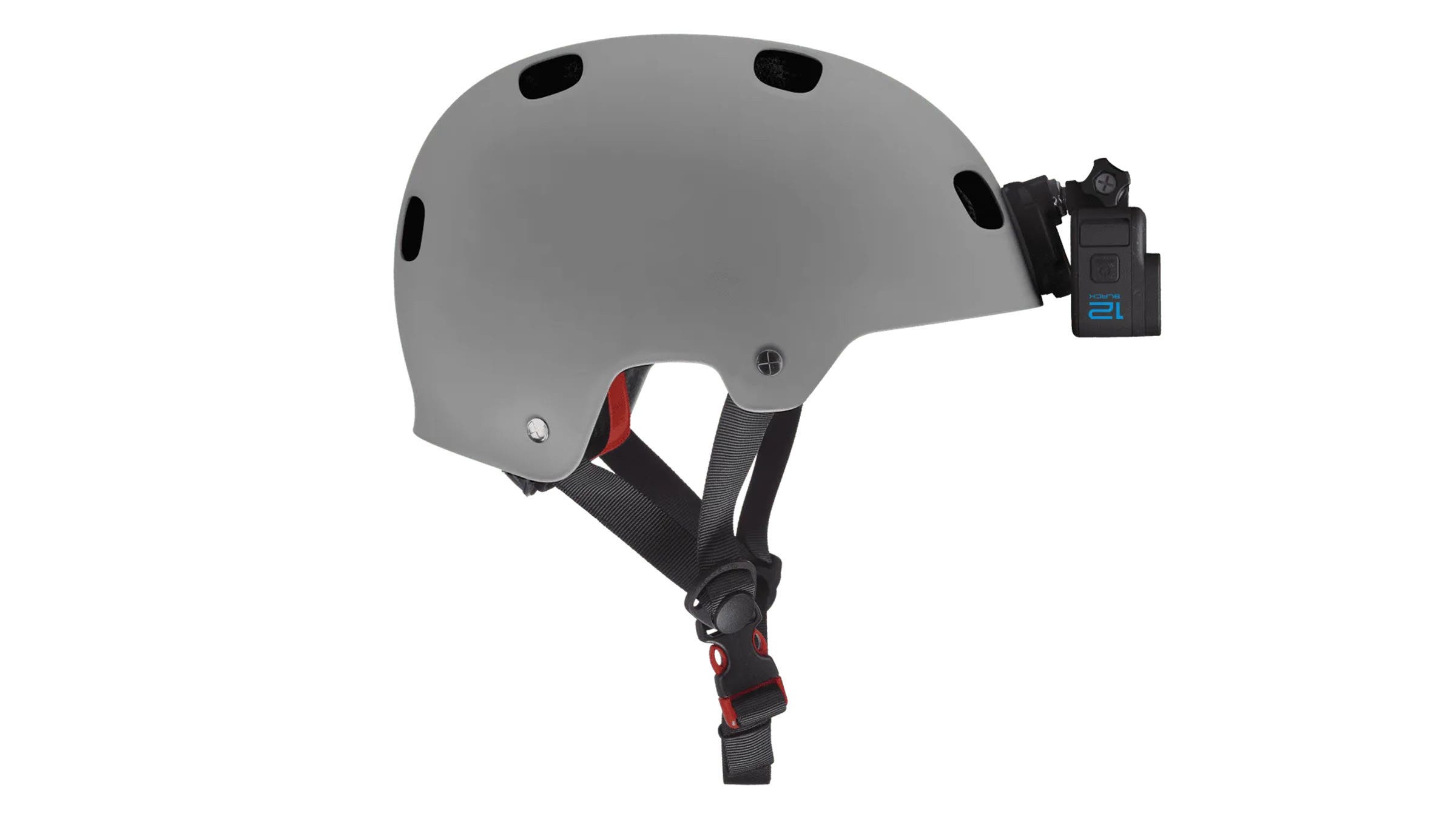
Helmet Front + Side Mount
Pros and Cons
+ Great POV or follow-cam footag
+ Secure mount
– Difficult to access camera on the go
– Can feel top-heavy
This is the classic GoPro mount. Helmet cameras have dominated action footage for decades because they deliver consistent POV shots regardless of what you’re doing. The full Helmet Mount has a swivel that lets you switch between vertical and horizontal orientation whether it’s on the side or top of your helmet. I kept it simple with a Curved Adhesive Mount ($8.99 for a multi-pack) on the crown of my ski helmet, which gives me a vantage point I really like—especially with the Max2. The 360-degree view lets me capture the skier ahead of me and the skier behind me in the same take.
I don’t love being the guy in the lift line with a camera stuck to his helmet, though. It feels a little showy for my skill level, and I’m always second-guessing whether I actually turned the camera on, which sometimes means taking my helmet off to check. The Max2 is also bigger than the Hero13, so it can feel a bit top-heavy up there. Still, the shots are hard to beat, which is why I end up using this mount during most ski days.
That said, many skiers shoot everything from the helmet. I think that’s a mistake—which is why I always carry the next two mounts as well.
ADVERTISEMENT
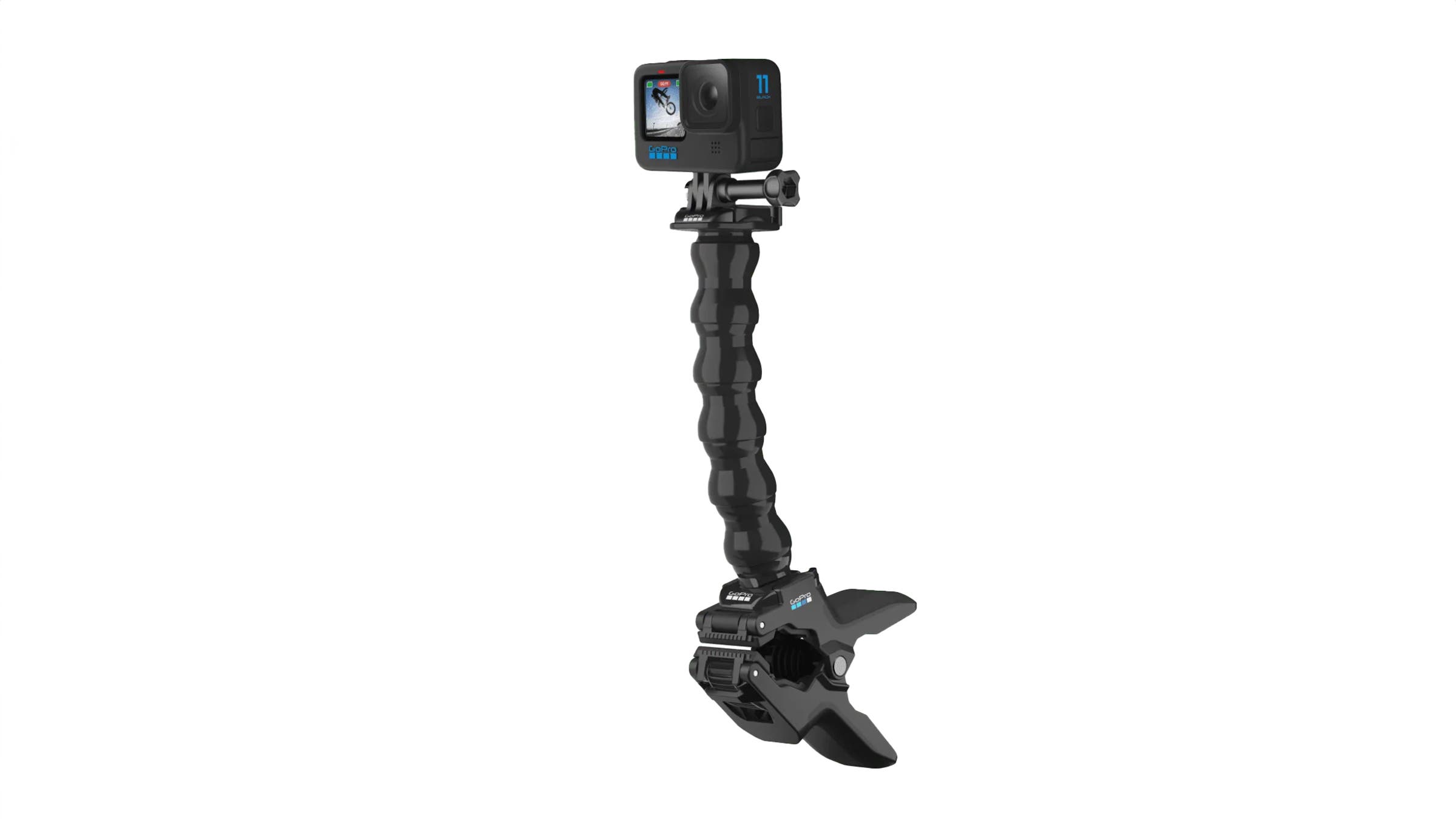
Jaws Camera Clamp Mount + Adjustable Neck
Pros and Cons
+ Versatile
+ Secure
+ Allows you to capture unique angles
– Not the best for capturing ski action
The Jaws isn’t specifically designed for skiing, and at first glance you might question how it would come in handy, but I’ve found it to be surprisingly versatile on the mountain. The clamp is strong enough to grab the tip of a ski for ground-up action shots, a sled for POV runs, a roof rack for road-trip footage, or even a tree branch for drive-by ski shots. In a pinch, you can clamp it to a pole handle and turn it into a makeshift selfie stick.
The clamp and flexible arm are small and light enough to live in my jacket’s stash pocket, so I can deploy it when something interesting presents itself. You can also remove the arm and mount the camera directly to the clamp to slim things down further. You won’t film every clip with the Jaws, but it’s perfect for adding dynamic, unusual angles that keep your footage from looking like everyone else’s helmet-cam reel. It might be the most versatile mount I own.
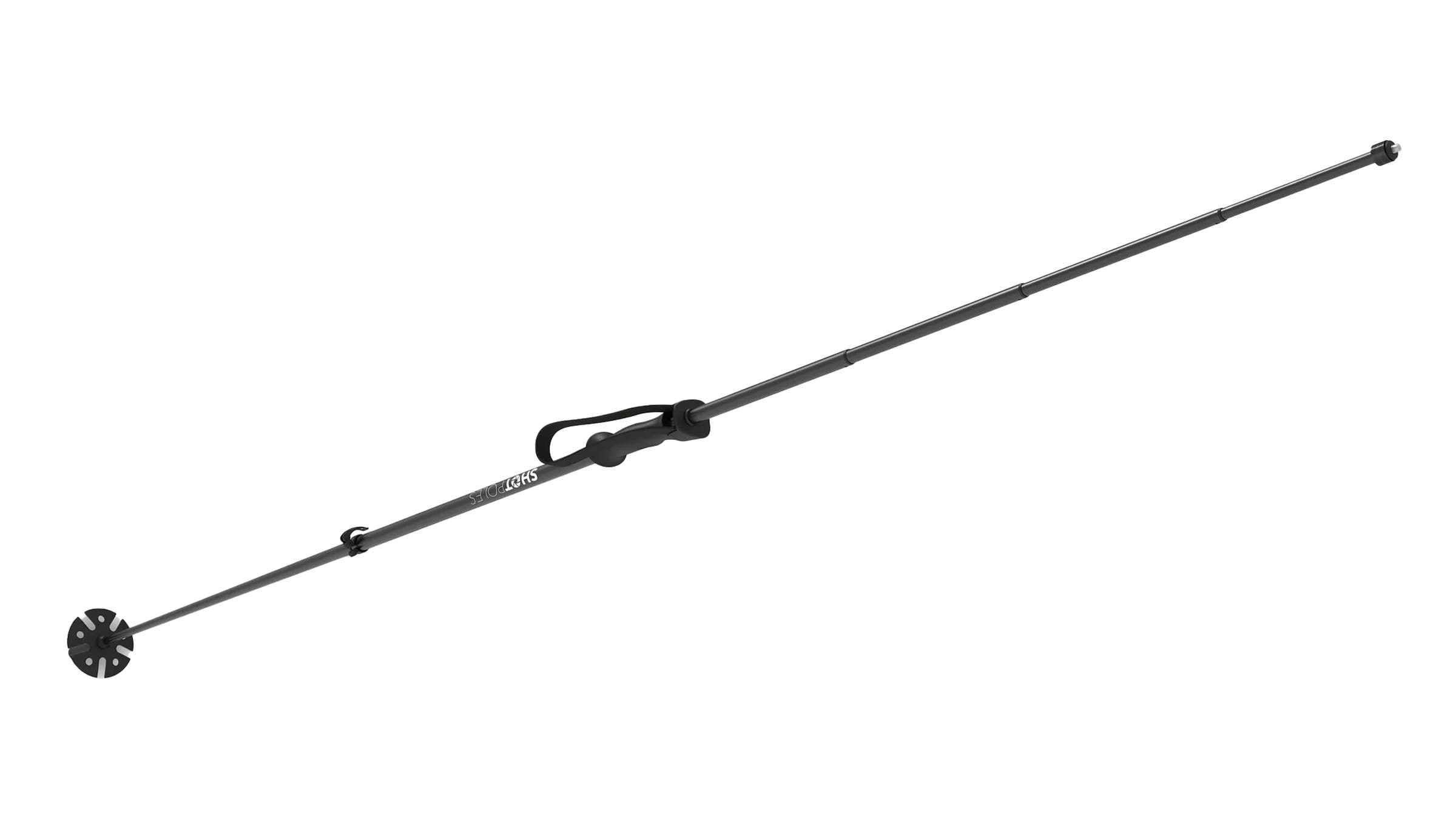
ShotPoles 365
Pros and Cons
+ Fully functional ski pole with built-in selfie stick
+ Great for capturing follow-cam or Vlog style footage
+ Keeps GoPro handy at all times
– Pole can feel cumbersome when fully extended
I used to carry my GoPro on a small handheld tripod, which meant skiing with poles in one hand and a camera rig in the other. It worked, but I had to stash the camera and tripod in a pack when I wasn’t using them, and I couldn’t access them quick enough to film action mid-run. ShotPoles solves that problem with a telescoping ski pole with a built-in selfie stick that extends from the top of the handle. Mount the GoPro on the handle and it’s there when you need it, offering an elegant, no-fuss solution to capturing footage on the fly.
The pole works with standard GoPro mounts or the universal ¼-20 screw found on most cameras, and you can fine-tune the angle for true selfie-stick framing. It took me a few runs to get comfortable with it. Fully extended in pole mode, the tip kept snagging in the snow. Shorten the telescoping section and hold it below the handle, though, and it works beautifully. Having the camera at the end of your pole makes it easy to grab quick clips mid-run.
ADVERTISEMENT
GoPro makes a ski-pole specific mount, which attaches to the body of your existing pole and telescopes out at an angle, but I found it to be too heavy and awkward. The ShotPole is a much more streamlined option. It’s especially good for follow-cam footage, vlog-style shots, or planting the pole in the snow as a makeshift tripod for group photos. I used it exactly that way on a recent family trip to Brighton.
Put all three of these mounts together in a single, streamlined kit, and you have endless options for GoPro footage when you’re shredding your favorite hill.
