Published January 18, 2016 12:00AM
If you buy through our links, we may earn an affiliate commission. This supports our mission to get more people active and outside.Learn about Outside Online's affiliate link policy
Gear for New Ski Mountaineers
Aiming to summit some peaks in the new year? We can help get you outfitted.
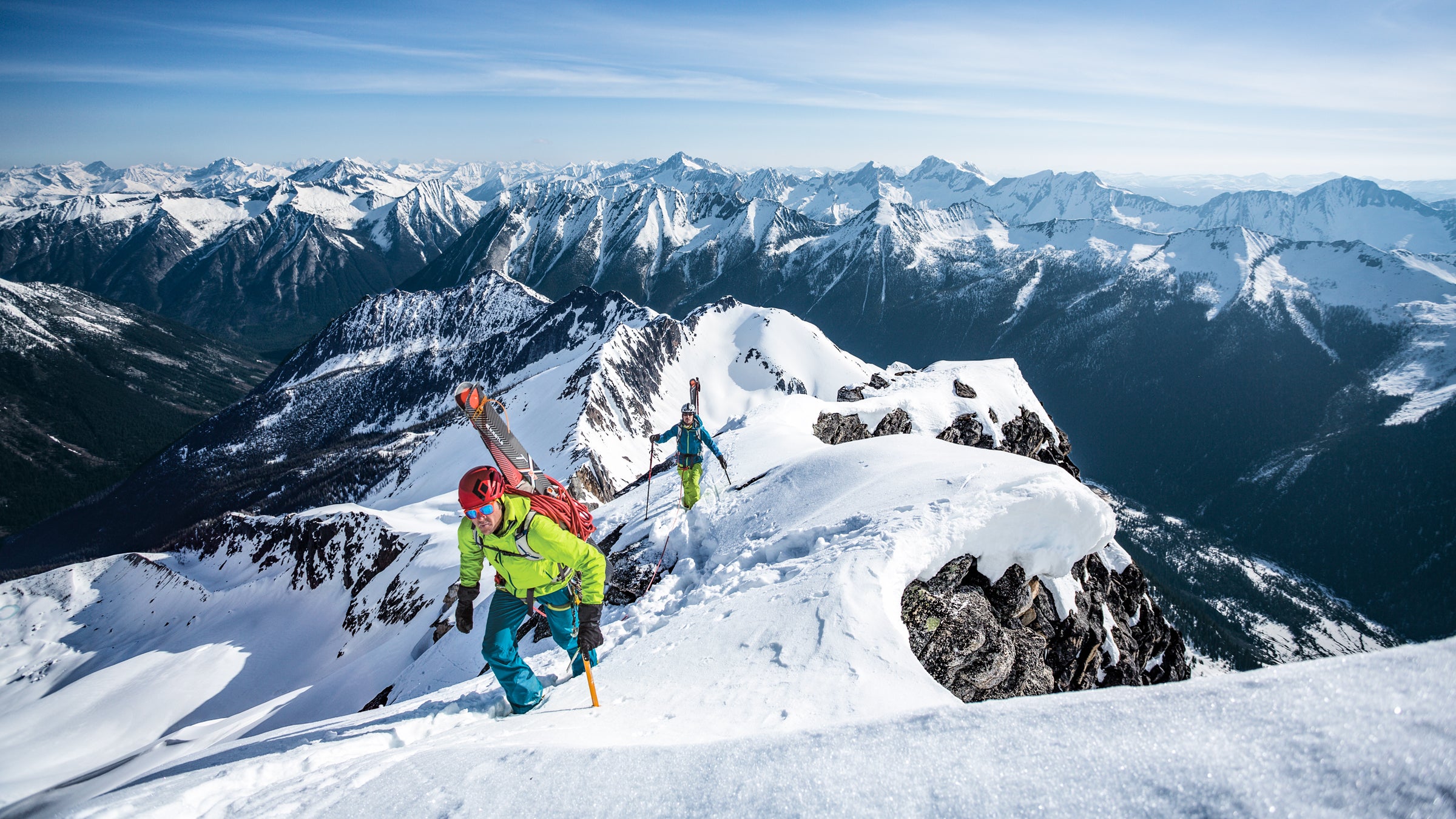
With the perfect setup, you’ll be tagging snow-covered summits in no time
Ski mountaineering is a gear intensive sport—you need the right stuff, and only the right stuff. It’s a sport where every gram matters, and you can't skimp on quality. You don’t want gear breaking down at 14,000 feet, trust us. With the perfect setup, you’ll be tagging snow-covered summits in no time. We asked Utah-based ski mountaineer Noah Howell, who has climbed peaks everywhere from Alaska to Antarctica, for his picks on what you need to get started.
Voile Vector Ski ($575)
“The Voile Vector ski is a really good balance between weight and performance,” Howell says. “I skied them in New Zealand and they were a nice all-around ski for steep, technical turns and for the little bit of pow we found.” The Vector comes in three lengths (160, 170, and 180 centimeters) and hovers around 96 millimeters underfoot. It’s lightweight, thanks to carbon fiber and a feathery aspen wood core, and built for long backcountry tours.
ADVERTISEMENT
Dynafit TLT Speed Radical Binding ($400)
“The Dynafit TLT Speed Radical is my binding of choice,” says Howell. “It’s light, simple, well tested, and proven.” The TLT is all about cutting weight—it tips the scale at less than a pound. But it doesn’t sacrifice performance. You can still trust this binding on the steepest, longest descents.
ADVERTISEMENT
Scarpa Maestrale Boot ($599)
ADVERTISEMENT
You want a boot that’s lightweight and comfortable for logging lots of vertical feet uphill but also shines on the descent. “The Scarpa Maestrale boot does great downhill and has a good range of motion for touring,” Howell says. “Plus, it takes a crampon really well.”
Black Diamond Venom Ax ($150) and Sabretooth Crampon ($180)
You’ll need an ice ax or two, plus crampons. “For ice axes, I’m a big fan of the Black Diamond Venom if you’re going to encounter real ice or the Black Diamond Raven Ultra if it’s going to be just firm snow,” Howell says. “And for crampons, for snow use only, the Camp XLC 390 ($150) is a great lightweight option. If you encounter ice, you'll want a steel crampon—try the Black Diamond Sabretooth.”
ADVERTISEMENT
Arc’teryx Gamma AR pants ($199)
“Softshell pants are ideal for ski mountaineers, and thankfully they’re not as tight as they used to be,” Howell says. “I’d recommend the Arc’teryx Gamma AR pants.” The pants, made with a stretchy softshell fabric, offer abrasion resistance from rock and ice and ample mobility for moving up and down the mountain.
ADVERTISEMENT
Mountain Hardwear Stretch Ozonic Jacket ($200)
ADVERTISEMENT
“For a jacket I’d go with the Mountain Hardwear Stretch Ozonic Jacket,” Howell says. “It’s a nice lightweight weatherproof shell that’s more for spring skiing, not full-on blizzards, but it breathes really well.” The Stretch Ozonic Jacket has pit zips for ventilation, a hood for storm protection, and a 40-Denier exterior shell for long-lasting durability.
Patagonia Ascensionist Pack ($179)
Stash all your gear in a large, lightweight backpack. “My recommendation would be the Patagonia Ascensionist pack,” Howell says. “You want a 40-plus-liter pack so you can fit your ropes, helmet, first aid and repair kit, extra layers, and more.” The Ascensionist pack is lean and tough, carries skis easily, and has 45 liters of space.
ADVERTISEMENT
Black Diamond Couloir Harness ($60)
You could find yourself skiing amongst glaciers and crevasses, so get a harness. “Black Diamond Couloir harness is the standard and it’s good for easy on and off, it’s lightweight, and it can hold a small rack. Plus, it’s durable,” says Howell.
