Published January 3, 2026 03:00AM
If you buy through our links, we may earn an affiliate commission. This supports our mission to get more people active and outside.Learn about Outside Online's affiliate link policy
Originally posted onSKI
Stop Stuffing Your Gear Inside Your Car. Here’s How to Choose the Right Ski Rack.
From roof mounts to hitch racks, we break down the best ways to haul your skis this winter.
On the way there, stashing your dry and clean skis in your car isn’t such a big deal. But after a full day (or more!) of making turns, your skis are going to be dripping with dirty snow, and who wants that all over your car’s interior? Or maybe you need the extra space for other things … like friends or family members.
In other words, you need a ski rack or similar contraption to haul your skis on your car rather than inside of it. There are really only two places on the outside of your vehicle where carrying skis and snowboards make sense: the top or the back. There are pros and cons for each and the best option for you will depend on your priorities and situation. (Unless you have a truck, in which case, why are you reading this?)
Read on for a quick primer on the various types of ski-hauling mechanisms on the market right now, and what to consider when choosing the right one for you.
7 Options for Hauling Your Skis to the Slopes
Best For Gear Protection: Rooftop Box
The best way to protect your gear both from theft and grime is to use a rooftop box like the Thule Force 3. The Force 3 comes in five sizes and opens from either side. The interior hinge mechanics are designed to stay out of the way so you can maximize the available storage space. This isn’t such a big deal for hauling skis or snowboards, but it does apply to the year-round versatility of a rooftop box—our family of four, with a GMC Terrain (medium-sized SUV) absolutely needs the rooftop box storage when we go camping to fit all of our gear.
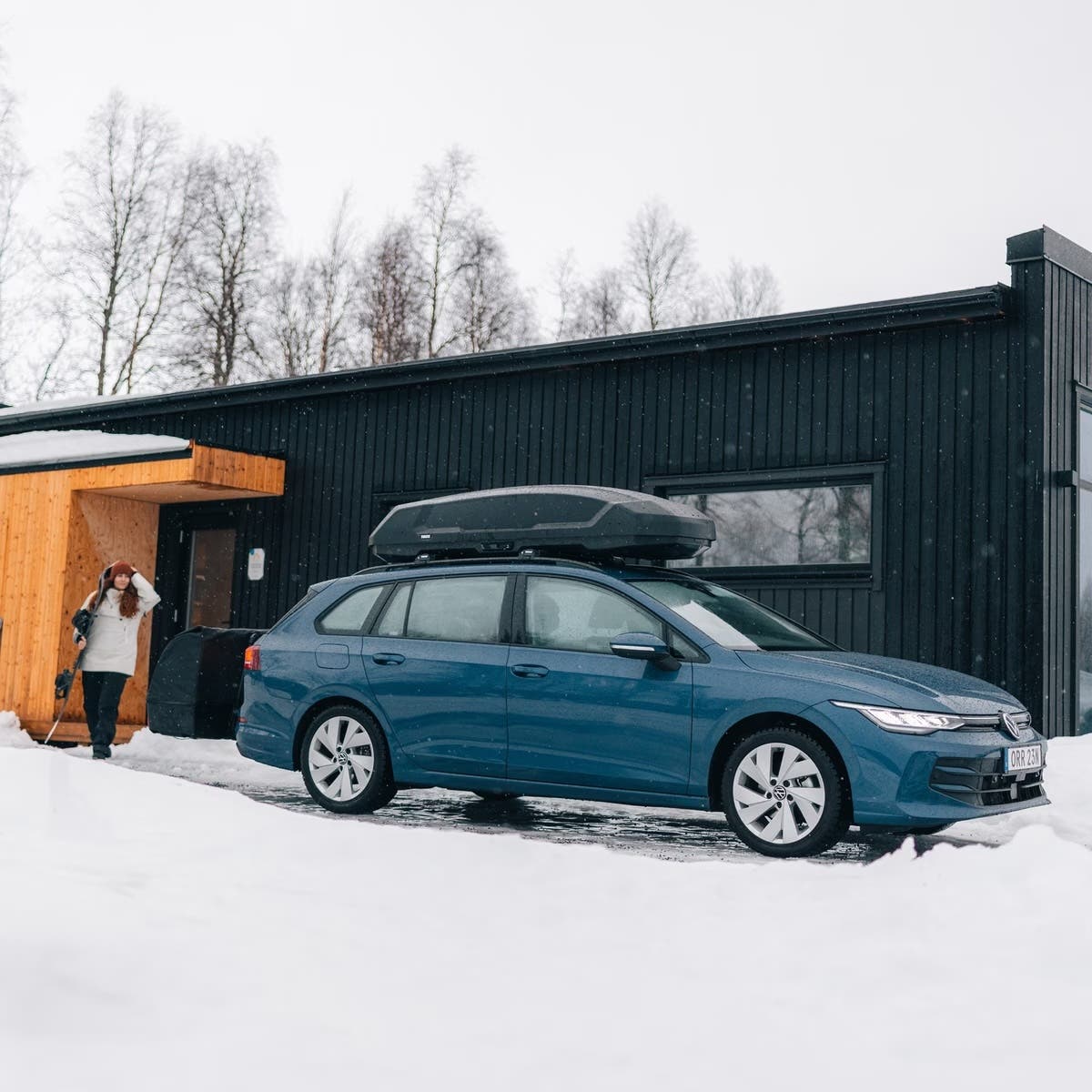
The rooftop box option isn’t the cheapest way to go to haul skis or snowboards, but the year-round use makes it easier to justify the $500-$1,000 price tag.
ADVERTISEMENT
Best For The Wallet: Rooftop Racks
The most economical option is the SeaSucker Pallavicini Ski Rack. It has the lowest overall cost ($399) since there’s no need to invest in any rails or crossbars on your vehicle. These will stick to the rooftop or a large, sloped rear window. Security is worth considering as there’s not a native way to lock the rack to the vehicle, but there are after-market options (albeit a little clunky) to mitigate this. The suction technology is incredible and when done correctly (yes, there’s a chance of user error) they will not come off of your vehicle while driving. And, for broader use, it’s easy to move the SeaSucker to another vehicle. They also offer a Classic Ski Rack ($450) as well as crossbars for multi-season use.
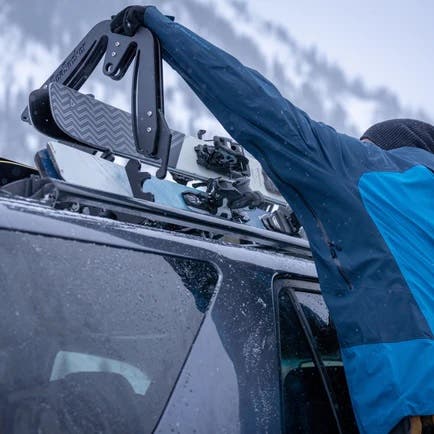
If you already have rails or crossbars, most clamp style racks are universally compatible, but it’s worth checking with the brand of crossbars you already have to see if there is a good proprietary compatible option.
ADVERTISEMENT
For those who already have crossbars, the Rhino Rack Ski and Snowboard Carrier is my favorite economical option. It comes in four sizes, and prices range from $160 to $230. Like most other options, these lock in place, are easy to use while wearing gloves.
My favorite rack that’s compatible with most round, square, or aero crossbars is the Küat Grip (two sizes, $429-$498). It’s not the cheapest on the market, but it does have a handy feature: it slides out from the top of the vehicle to make it easier to unload and load the rack without having to climb on the tires or lean against the grime on the side of the vehicle. This isn’t the only model that does this, but most models don’t, which is fine for rooftops that aren’t so high.
Best for Easy Access: Hitch-Mounted Racks
Commercial transportation companies taking skiers and riders into the mountains have long used a bucket or cage system in which skis and snowboards can be placed at the rear of the vehicle. It’s only been in the last few years that systems like this have been made for private vehicles.
ADVERTISEMENT
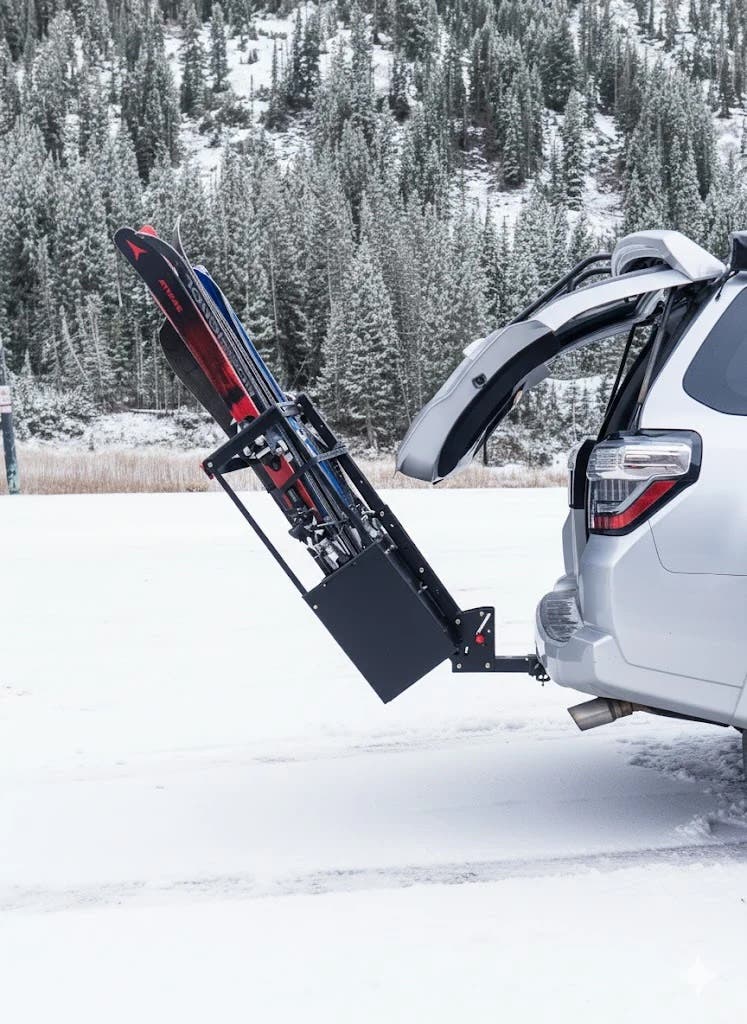
One is the Chuck Bucket (one size, $875) from Chuck Racks, which most-closely resembles the commercial mountain shuttle style. The beauty of the Chuck Rack system is it breaks down to smaller pieces so it’s not very heavy when putting it on or removing it from the vehicle. The bucket offers use beyond heading to the slopes as you can also use it for hauling lumber or even a Christmas tree. The downside is skis or snowboards need to be strapped to the stem so they don’t bang around while driving. It also has the option to use the base stem and convert it to a bike rack.
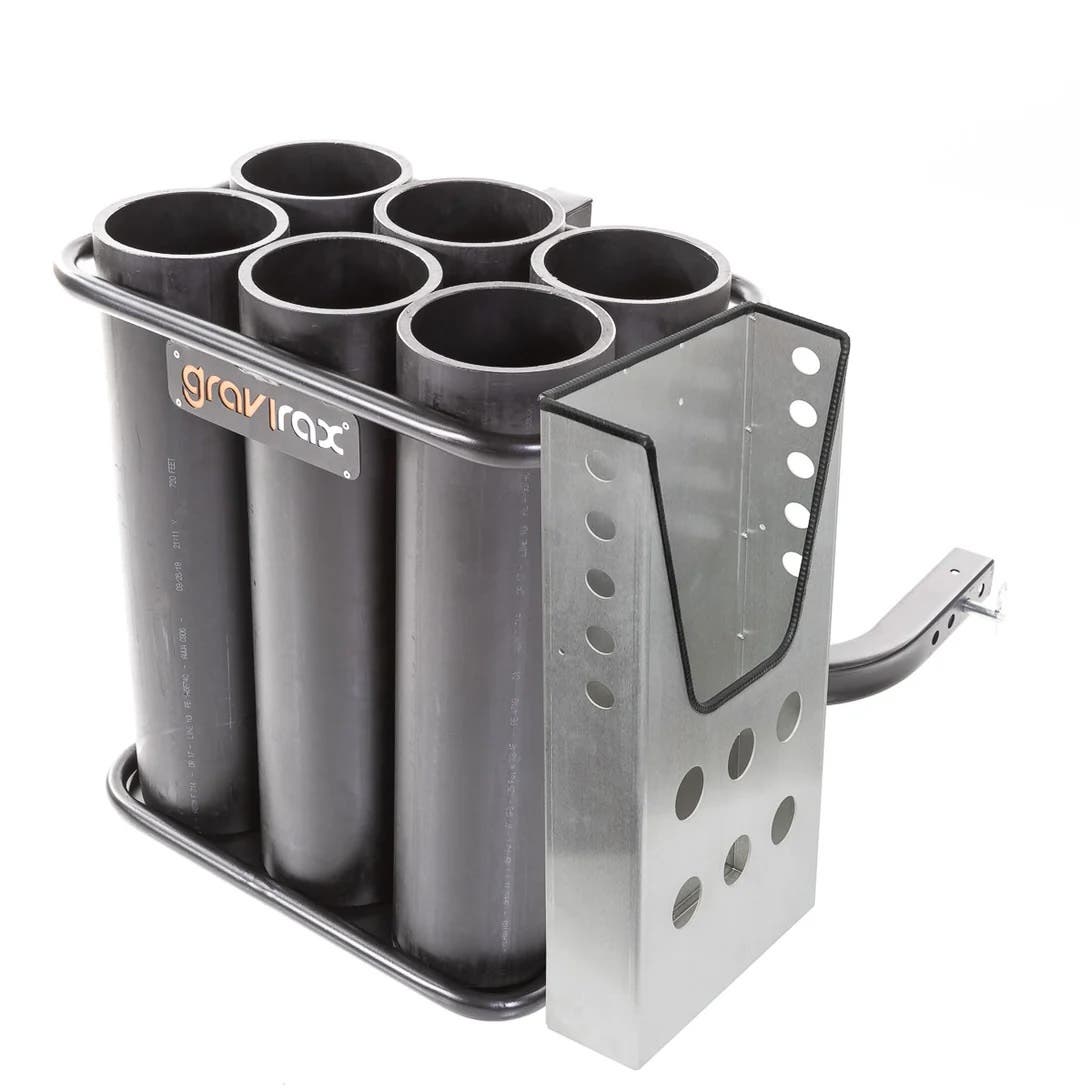
Another is the Gravirax (three sizes, $999-$1,499). This system uses a series of 150mm-diameter tubes in a bomber frame. No need to strap the skis down as the tubes are deep enough to offer stability; we’ve never had any of our gear bounce out of them. (Snowboards require the purchase of the Snowboard Sleeve for $200.) One key feature of the Gravirax system is the wide range of adjustability (72 positions, according to the company) of how the rack is positioned behind your vehicle: favor the driver side, passenger side, vertical height, and rear reach (to get around a rear-mounted spare tire or hatchback clearance).
Both of these systems attach to the tow hitch, will tip away for rear hatch or tailgate access, and can carry skis and snowboards.
ADVERTISEMENT
The beauty of both of these systems is that even when my kids were very young—like, three-years-old—they could unload and load their own skis. So when we got “beach” parking at our local hill, Eldora, once they were suited up I never had to touch their skis and they could grab them and head for the lift.
A downside for both of these systems is neither has a native locking system to secure the gear. A solid option is a cable lock which can wrap around all of your skis as well as the hitch. Both brands offer covers to protect from grime accumulation.
Best for Year-Round Use: Yakimo EXO
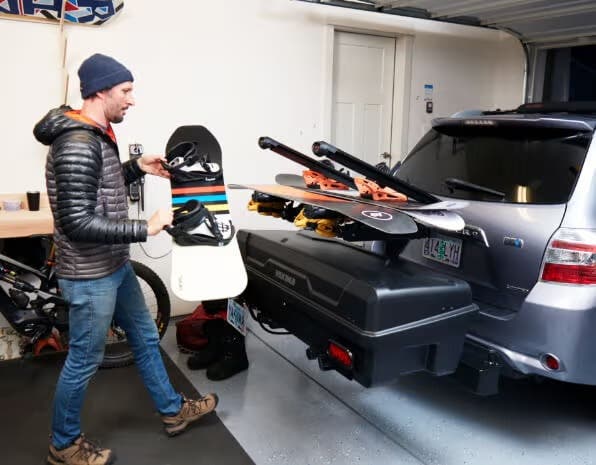
In a category of its own due to its modularity, the Yakima EXO System is a hitch-mounted rack system that offers both a clamp style ski/board rack called the Snowbank, and a rear mounted box, the Gear Locker. The box is too short for adult skis, but kids skis fit great. The pros of this system is it will serve all year with a bike rack option, gear cage, and more. The major cons are the heavy weight and huge base cost. The foundational Swing Base is $699, the Snowbank racks are $379, the Gear Locker box is $619, and if you want to carry the Snowbank and Gear Locker at the same time, you’ll need the EXO Top Shelf for $479.
It’s a commitment, for sure, but for active folks looking for a true one-stop shop for all of their gear-hauling needs, the Yakima EXO is worthy of consideration.