Published November 21, 2025 02:47PM
A Skier and Snowboarder’s Guide to Kirkwood Mountain Resort
An often overlooked gem of the Sierra and a renowned freeride hub, Kirkwood’s low-key vibes and high-octane terrain make it a bucket list destination
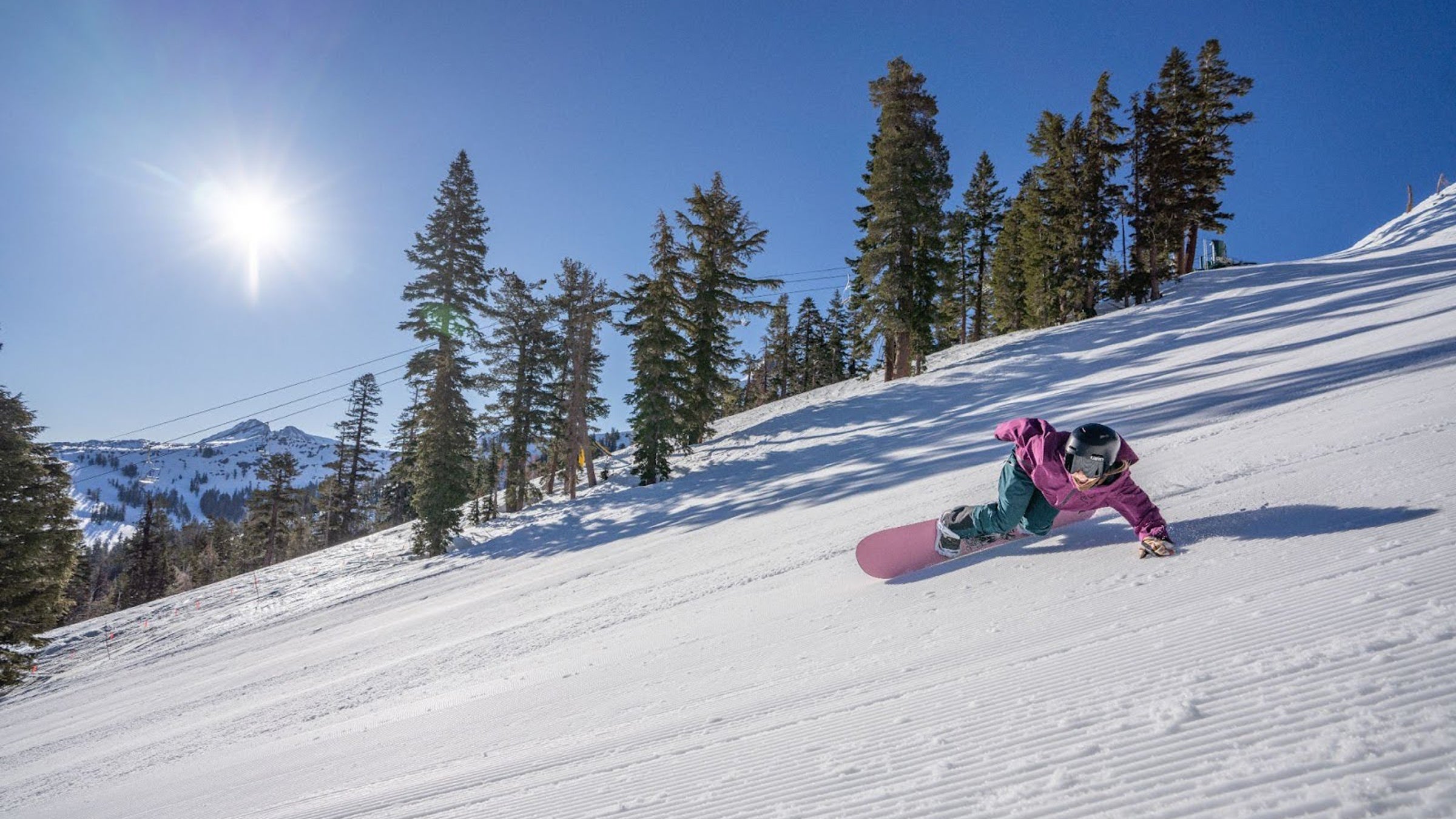
Outside snowboard tester Jenna Shlachter lays a turn on one of Kirkwood’s immaculate groomers. The riding and the views are both as good as it gets. (Photo: Katie Botwin)
Before we extoll the many virtues of South Lake Tahoe’s Kirkwood Mountain Resort, a word of warning: If you require Gucci and Prada stores lining an Instagrammable main street, Kirkwood isn’t for you. If you must dine at Michelin-starred restaurants serving up prix fixe menus only decipherable by dictionary, Kirkwood isn’t for you. But if the most important aspect of a ski trip is the skiing itself—a novel concept!—and you appreciate a low-key, down-to-earth resort vibe that’s increasingly difficult to find in 2026, then yes, absolutely, put Kirkwood on your radar.
Located 45 minutes south of Stateline, Nevada, and 1.5 hours from Reno International Airport, this gem of the Sierra is more remote than most Tahoe resorts. The only way to get there is via the avalanche-prone State Route 88 between Carson Pass and the Carson Spur, which deters fair-weather visitors and keeps liftlines manageable or even non-existent. There’s no full-blown, mountain town metropolis at the base area either, but rather an unassuming, quiet village with a few dining options and clusters of cozy condos that provide easy access to world-class skiing.
On the slopes, the vibe is similarly old-school—nothing like a three-seater chairlift to spark the nostalgia—and the terrain is as varied as it is phenomenal. If you’re learning to ski or ride, Kirkwood’s mellower slopes are ideally situated for beginners, with separate zones and lifts that flatten the learning curve. If you’re learning to fly, the cliff-dotted steeps range in spice from jalapeno to ghost pepper. In between those two extremes, swooping, panoramic groomers and fun off-piste options speak to cruisy carvers and aspiring intermediates. Not to mention, an open resort boundary policy allows powder-hungry skiers and splitboarders to explore adjacent backcountry zones.
ADVERTISEMENT
If we sound smitten, it’s because we are. This past March, we held our annual snowboard test at Kirkwood, and it was a smashing success (see our behind-the-scenes photo gallery for proof). Local testers were stoked to share their home mountain with our test crew, and first-time visitors were quickly indoctrinated by Kirkwood’s undeniable magic. All told, in an era of overbuilt ski areas, Kirkwood seems a refreshing relic of yesteryear. It’s the magnetism of the mountain itself, not its fancy frills, that keep Kirkwood’s faithful—our snowboard testers included—coming back. Here’s everything you need to know to plan your own trip to this top-tier Tahoe destination.
Exploring the Mountain
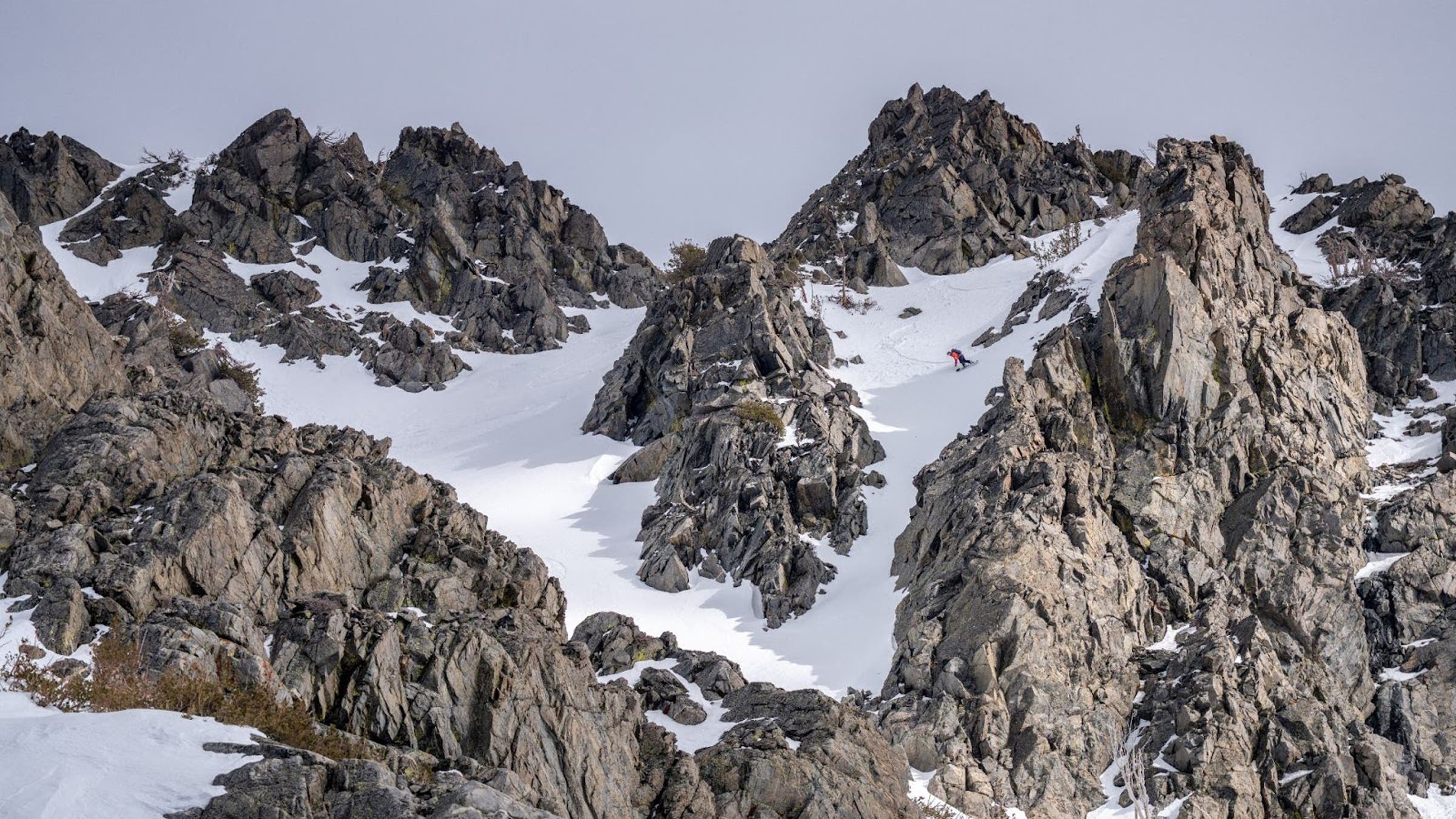
Home to over 2,300 acres of Tahoe’s finest terrain, Kirkwood is most famous for its steeps. In fact, over half the mountain is classified as black or double black. But the beauty of the resort is that there’s something for everyone, says Syd Schroder, an eight-year Kirkwood snowboard instructor, freeride competitor, and one of our snowboard testers. “We have it all, and you can really choose your own adventure,” she says. To help you do just that, we’ll quickly break down the mountain into three zones: the Timber Creek base area, the Mountain Village base area, and the backside.
Timber Creek: Perfect For Beginners, Families, And Park Rats
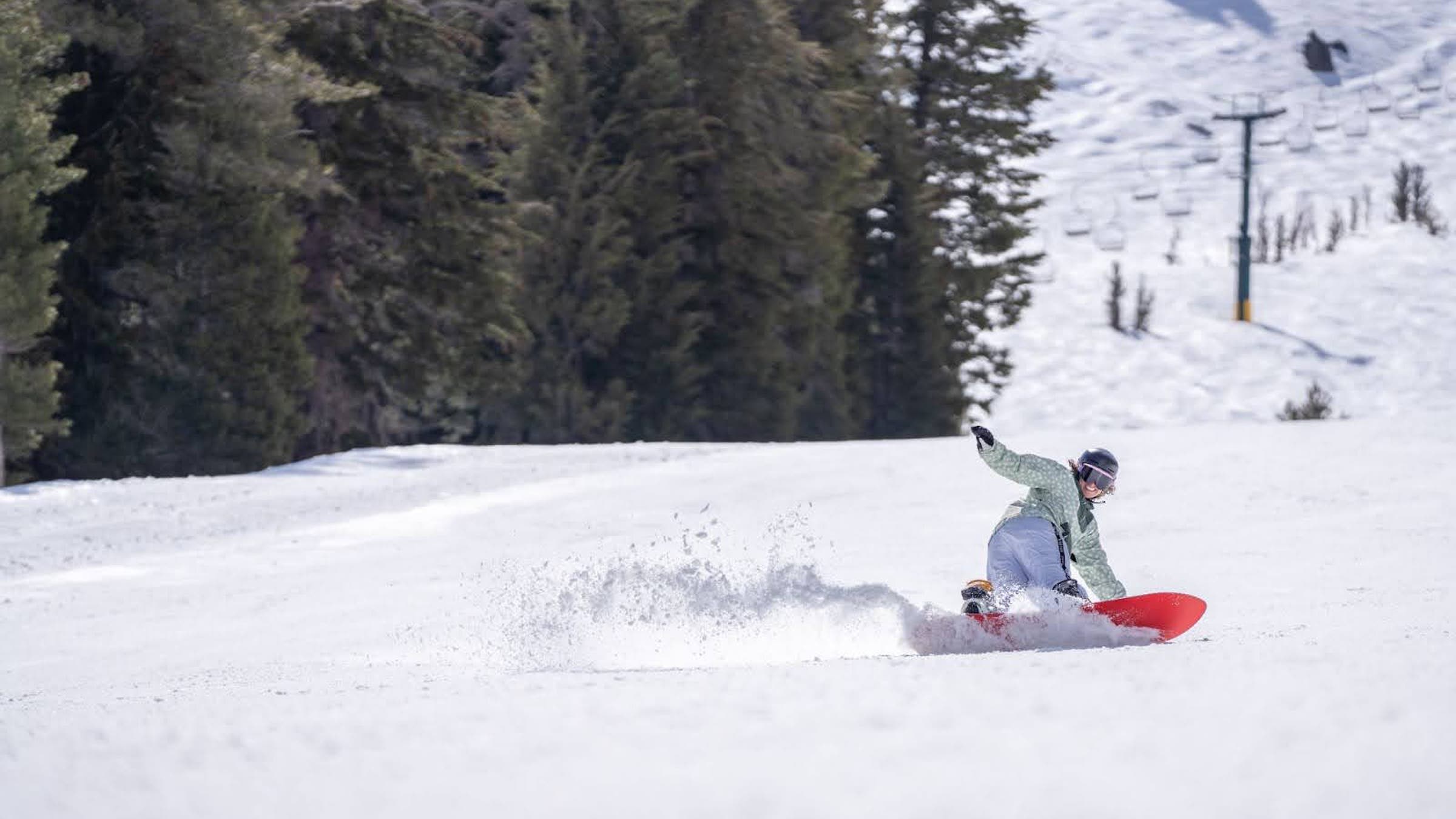
Whether you’re learning to ski as an adult or introducing your groms to life on the slopes, Timber Creek is low consequence and highly rewarding. It’s the first base area you’ll see as you pull into the Kirkwood parking lot, and home to four lifts that provide access to ideal terrain for skills progression. “If you’re a first-timer coming out, that terrain is extremely amenable and really geared toward that learning process. It has amazing green runs,” says Schroder. She also points out that the Timber Creek zone is fairly removed from the resort’s more aggressive terrain, mitigating the chances for beginners to get lost, accidentally stumble into steep territory that’s beyond their skill level, or get spooked by straightlining speed demons.
ADVERTISEMENT
Justin Hartwell, Kirkwood’s director of skier services, oversees the resort’s ski and ride school, which is based in Timber Creek. “I really look at that as where we’re introducing people to the sport. We’re getting them into skiing, teaching them some skills, and then we get a lot of people that connect really closely with the valley.” Hooked youth often progress from ski school to Kirkwood’s Junior Expedition Team (JETS for short), he says, a year-long program that continues to evolve skills and explores Kirkwood’s steeper terrain. JETS athletes interested in the competitive side of things can step up into Kirkwood’s freeride team, which consistently develops top talents. The seeds, though, are planted in Timber Creek.
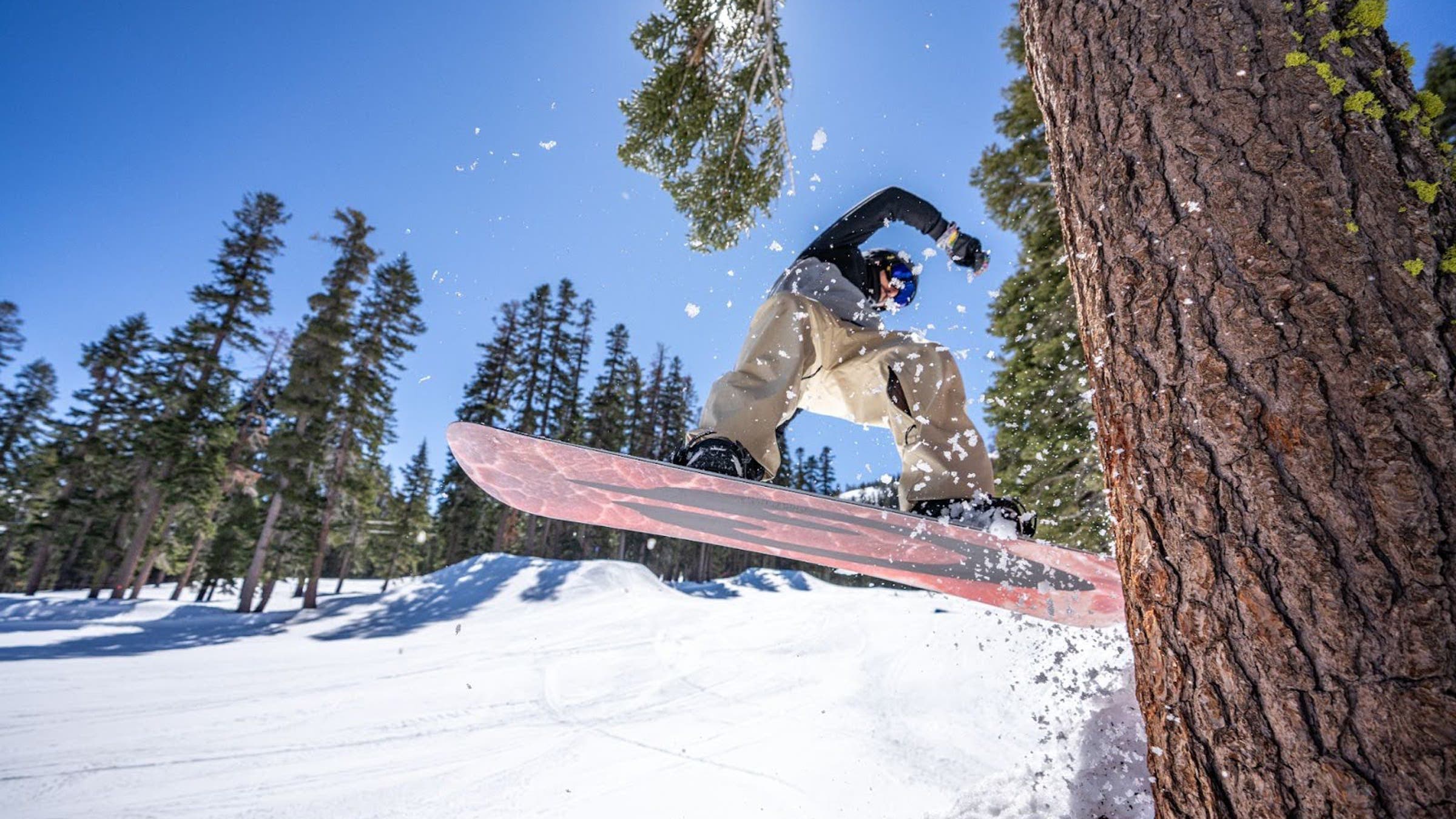
Last but not least, while you won’t find black diamonds here, the Timber Creek Express chair (Chair 7) provides access to fun blues and tree skiing, enabling skiers and boarders to progress gradually. The chair also gives way to Bandit Park, Kirkwood’s mellower terrain park, where our snowboard testers spent countless hours jibbing playful rails and hitting small- to medium-sized jumps.
Mountain Village: A Smorgasbord of Stellar Terrain
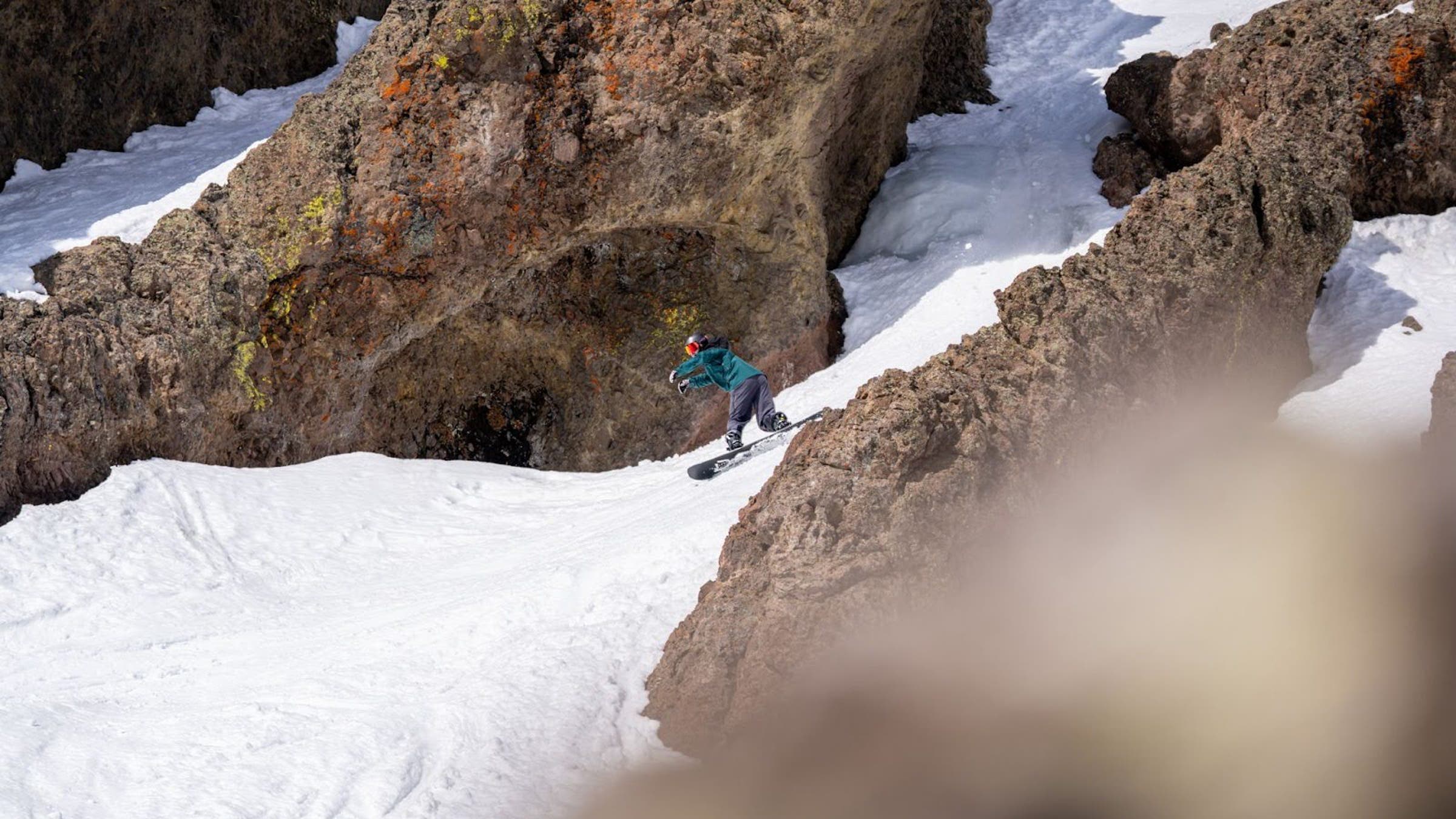
To access the meat and potatoes of Kirkwood, head to the Mountain Village base area. Schroder says it’s the go-to starting point “if you’re looking for that rush of adrenaline—steep off-piste terrain, jumping off cliffs, and chutes.”
ADVERTISEMENT
The Solitude chair (Chair 5) bumps up to mid-mountain, and is a good choice for intermediates, cruisy skiers, and park rats who want to rip mellow groomers or lap Kirkwood’s bigger, gnarlier Outlaw terrain park. Cornice Express (Chair 6), a lightning-fast six-seater, runs parallel to Solitude, but it brings you to the top of the ridge where the options are endless. Beneath the chair, you’ll find steep, sustained groomers, gullies, and tree runs. Traverse to your left off the top, and the cliffs, chutes, and glades of Sentinel Bowl get the heart pumping. Traverse even farther left, and you’ll bump into Palisades Bowl and Reuter Bowl—sweet stashes to score powder turns later in the day. Head to your right off Cornice Express, and you can drop into Wagon Wheel Bowl, home to Kirkwood’s iconic in-bounds “Fingers” and a handful of raucous chutes. Unsurprisingly, Cornice Express is where our snowboard testers spent the bulk of their time at Kirkwood: The chair’s speed allows you to maximize vertical feet, and terrain options are boundless.
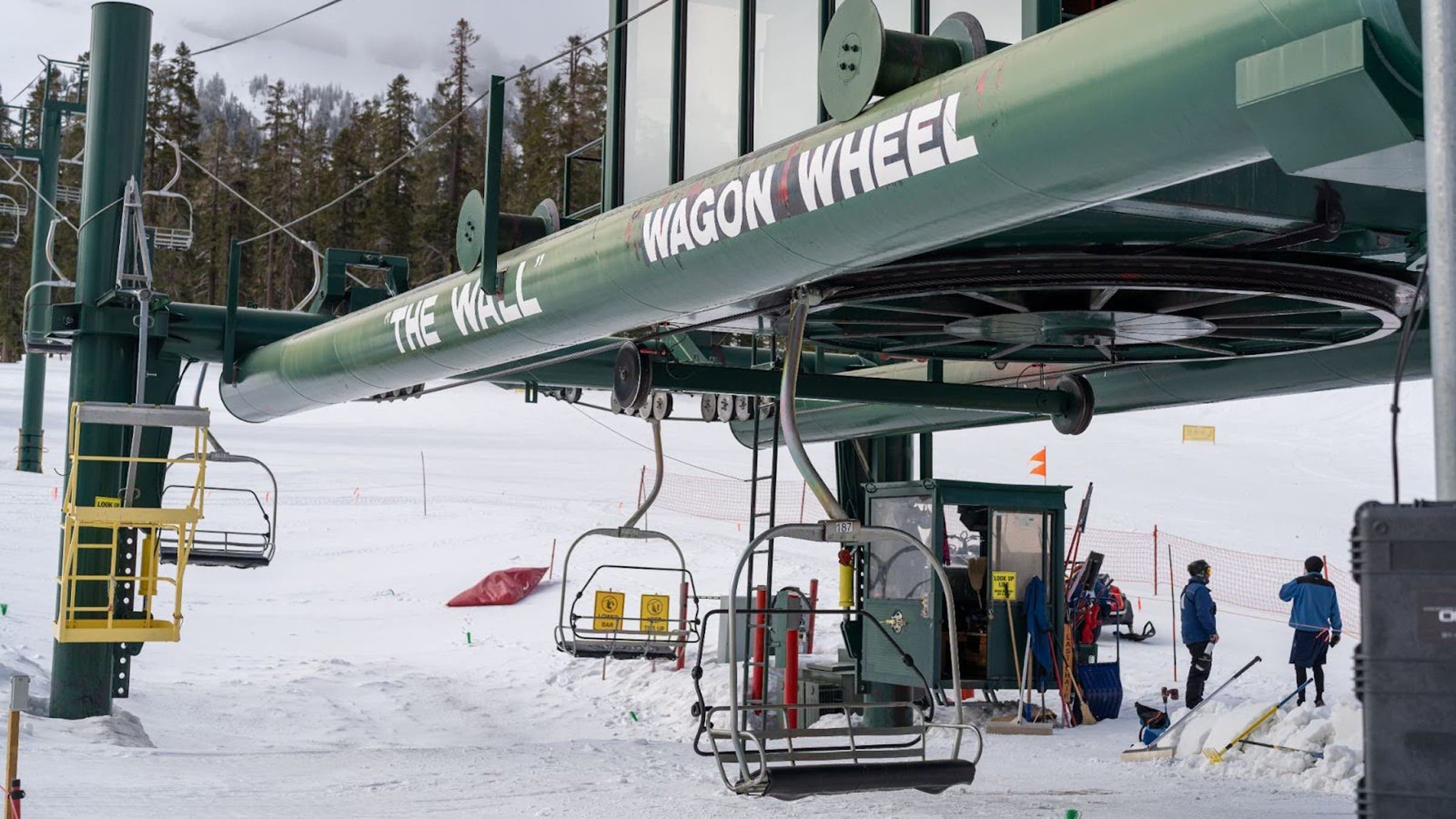
Looker’s left of Cornice Express and Wagon Wheel Bowl, you’ll find The Wall (Chair 10): Kirkwood’s notorious three-seater chair. The lift isn’t breaking any speed records, but the terrain alone is worth the trip to Tahoe. As the name “The Wall” suggests, you’ll find a precipitous bowl that flows into stellar tree-skiing and tubular gullies beneath the chair. Looker’s right off the ridge, you can poke into double-black chutes off The Sisters peak (9,400 feet).
The most jaw-dropping terrain you’ll find on the mountain is looker’s left of The Wall: a near-vertical behemoth of rock, ice, and snow dubbed “The Cirque.” This no-fall-zone terrain is unfortunately closed to the public, although Kirkwood ski patrol mitigates avalanches and occasionally opens the venue for freeride competitions. However, fear not, freeriders. Beneath and alongside the Cirque you’ll find steeps and cliff drops aplenty, with lines on the looker’s right flank of the Cirque like Eagle Bowl and Norm’s Nose accessible off The Wall.
ADVERTISEMENT
The Backside: Powder Day Bliss
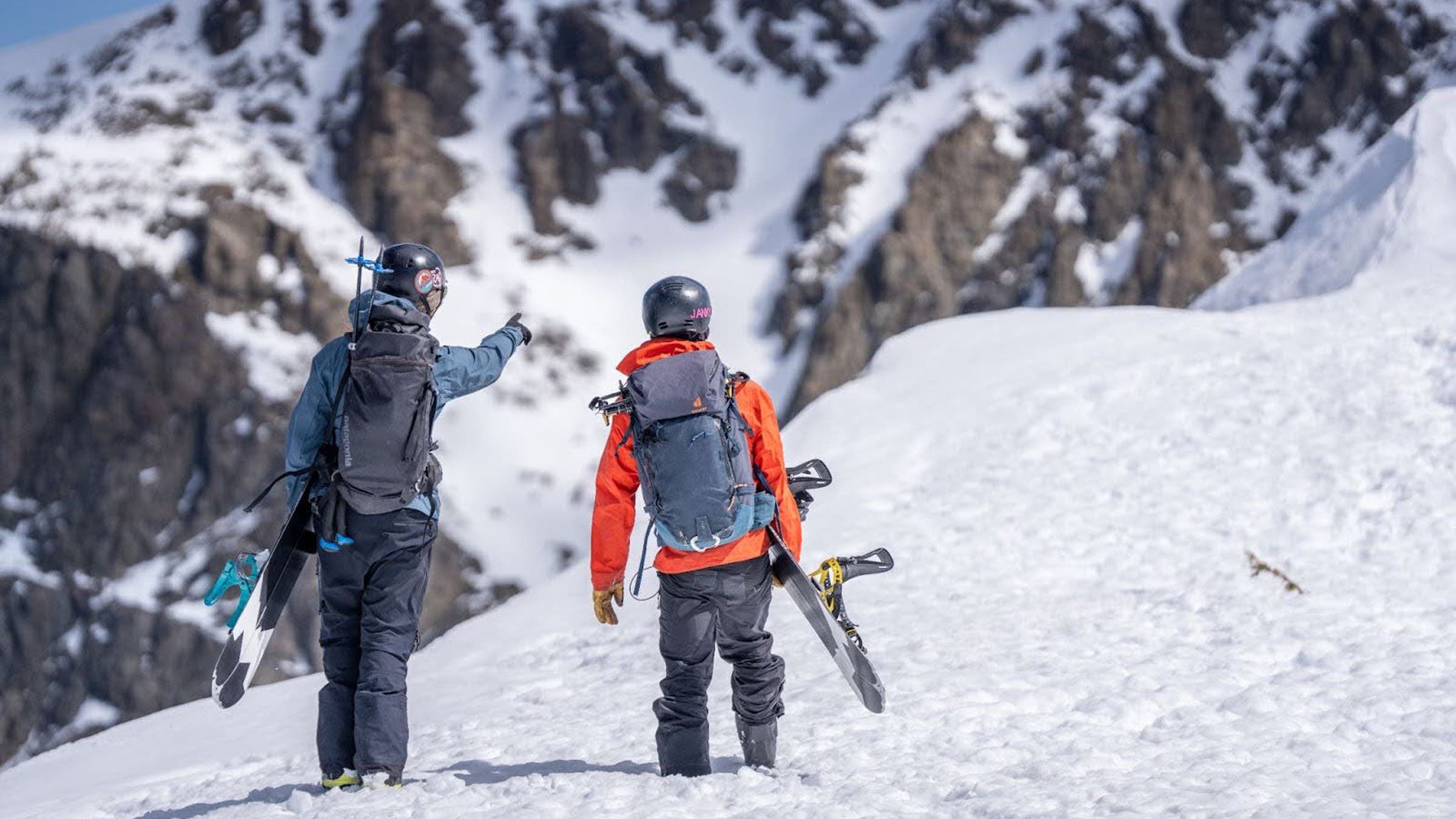
The looker’s left flank of the Cirque, also referred to as Thunder Saddle, is rife with more technical chutes and spicy freeride terrain, including Y-Spine, an infamous, stepped spine that keeps experts on their toes. (Must-watch stoke fodder: Natural Selection’s snowboard duel that took place in the zone last winter).
This drool-inducing freeride venue is accessed via the Sunrise Chair (Chair 4), a four-seater located skier’s right of the Cirque that isn’t visible from the main village. While the Sunrise chair allows advanced skiers and riders to get as gnarly as they’d like, beneath the chair are welcoming, open blues and blacks that are hard to beat on a powder day. To be honest, we had some of the best turns of our season right underneath the Sunrise chair last winter.
ADVERTISEMENT
Another popular play? Hiking up Covered Wagon Peak (9,565 feet) for more steep powder stashes and cliff drops that funnel into the undulating glades of Fawn Ridge. This is also a popular exit point for sidecountry skiers and riders, but we’ll touch base more on that below.
To explore the backside, bump up the Snowkirk chairlift (Chair 1) from the Mountain Village base area, hop on Caples Crest (Chair 2), and then race down to Sunrise.
Backcountry Access: Open For Business
Our splitboard testers’ favorite aspect of Kirkwood was no doubt the resort’s backcountry policy, which allows backcountry skiers and riders to leave resort boundaries at designated exit points. Obey signs that demarcate closed terrain, and when in doubt, check with ski patrol to ensure you’re complying with resort rules. Of course, backcountry-bound skiers and riders should travel with a partner, carry necessary avalanche safety equipment (and know how to use it), and be aware of the local avalanche forecast.
While we won’t completely divulge where to find the sidecountry goods, chiller options include a popular mission to the Red Cliffs zone, a quick tour from the top of Iron Horse (Chair 3) or Caples chairlifts, which drops back to the Red Cliffs Day Lodge. Those looking for spicier lines or longer adventures can explore off Sunrise Bowl, venturing toward the aesthetic chutes in the looker’s left bowl of Peak 9795. This drainage had our test team’s stoke levels through the roof.
ADVERTISEMENT
Pro Tip: If you’re eager to explore the area with a knowledgeable local guide or improve your own avalanche safety skills, check out Expedition Kirkwood, the resort’s big-mountain arm. It offers guided tours, avalanche safety courses, and more, so you can explore and get educated.
Travel Tips and Logistics
Where to Stay
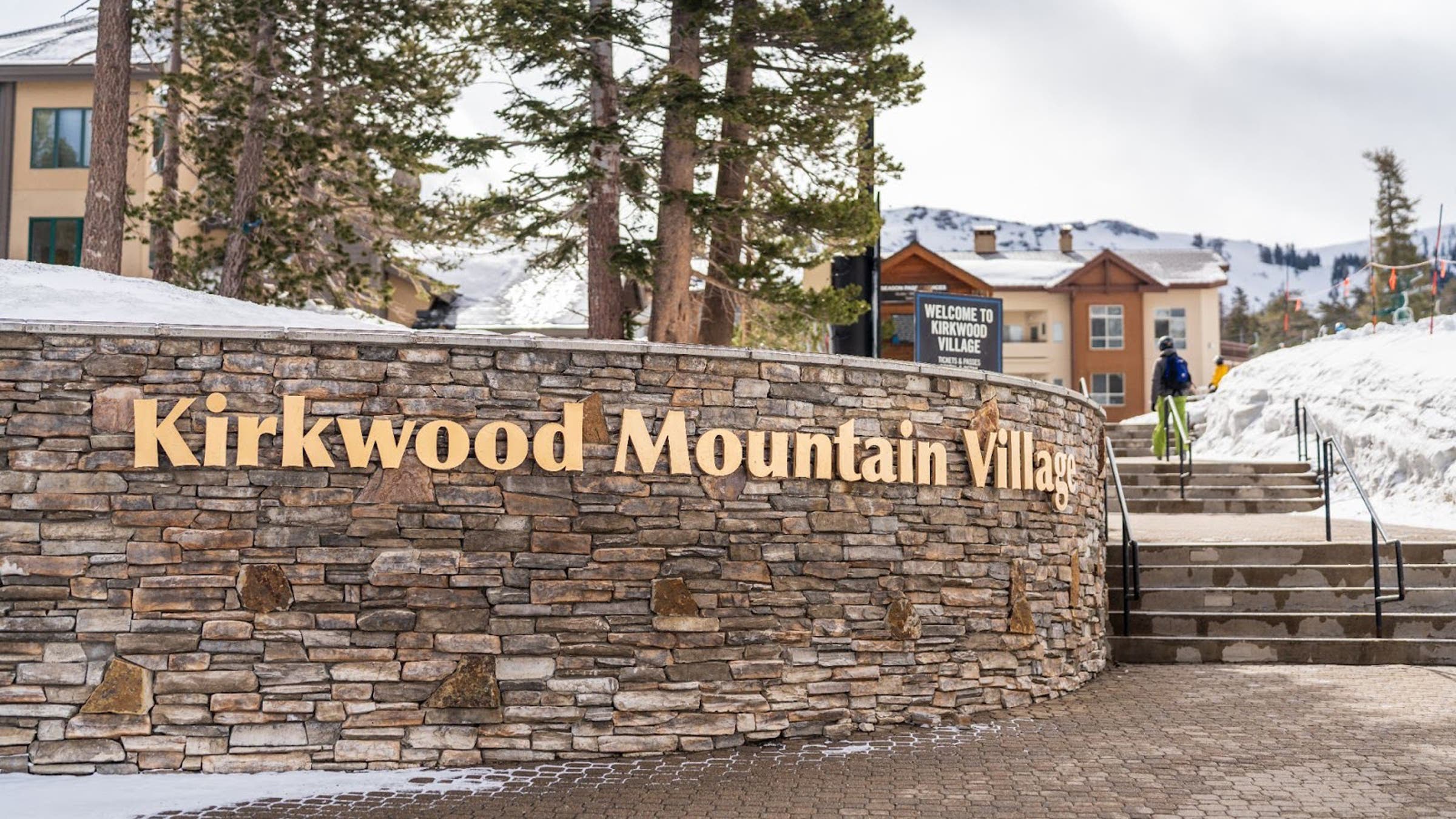
Due to Kirkwood’s remote location and mountain roads that sometimes close during the winter, we highly recommend staying slopeside. After all, nothing beats waking up a snowball’s throw from the chairlifts to a fresh foot of snow. And nothing’s worse than sitting in bumper-to-bumper traffic waiting for the road to open on a powder day, especially when you know folks who spent the night at the resort are already getting the goods.
The resort has both hotel rooms and condos. At the Mountain Village base area, just a quick walk to Chair 5 and 6, rooms at The Lodge and The Mountain Club hotels are perfect for couples and small families. If you’re traveling with a bigger crew, check out the condos and townhomes at Sun Meadows, Timber Ridge, The Meadows, and The Sentinels. We’re big fans—they’re spacious and comfy, with full kitchens that allow for healthy, home-cooked meals on longer trips. For our snowboard testers, they instantly made Kirkwood feel like home.
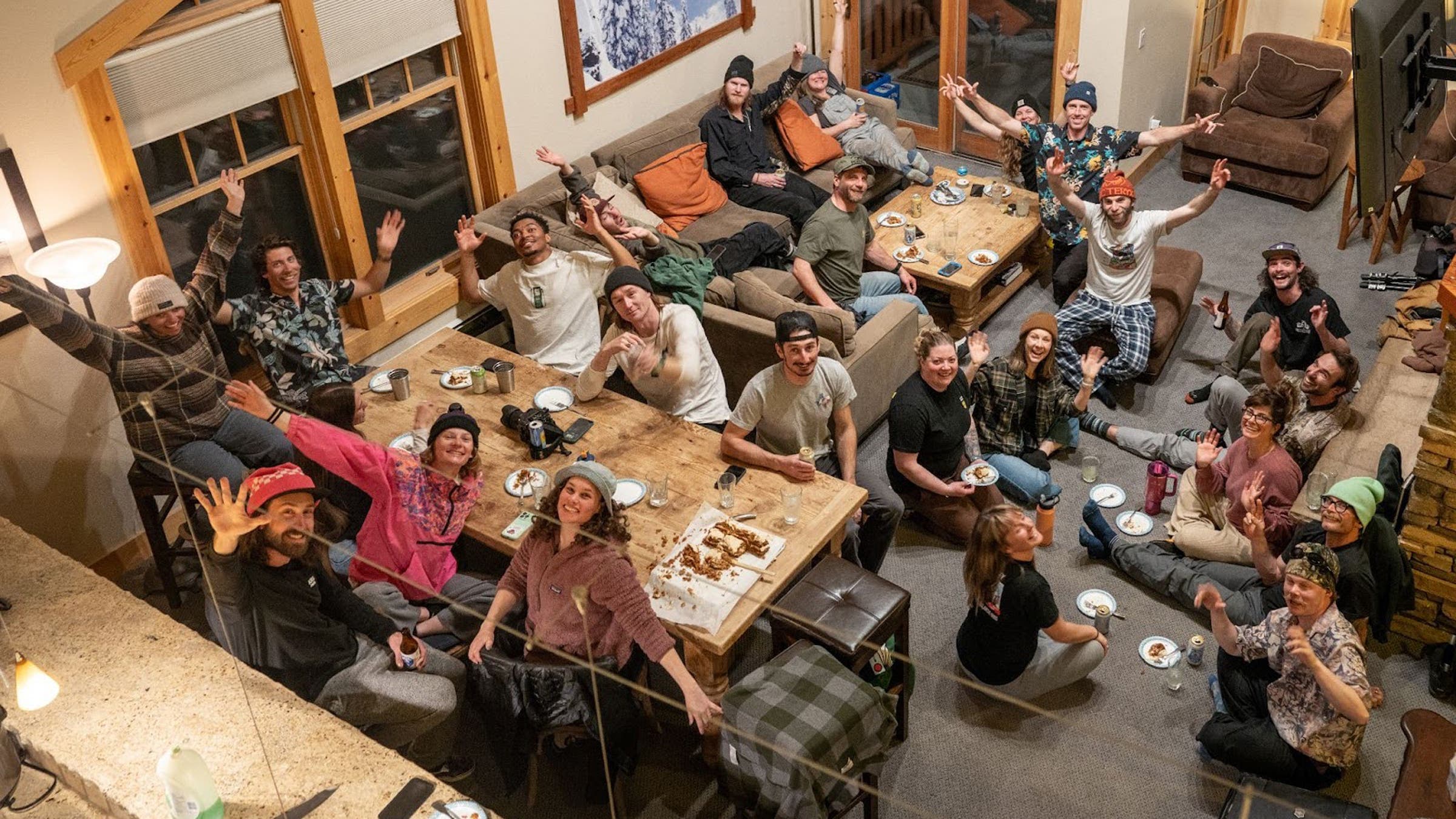
It’s certainly possible to stay farther from Kirkwood and commute up to the mountain each day. If you’re an Epic passholder, you might want to stay in Stateline, Nevada, and visit Heavenly Ski Resort as well. Heavenly has its own lodging on site, and in Stateline, you’ll find lively casinos, more dining options, and a variety of lodging options across all budgets. But if your focus is on skiing and riding as much as possible and making the most of any powder days, hanging at Kirkwood is the veteran play.
ADVERTISEMENT
Where to Eat
Kirkwood has a variety of dining options, ranging from the laid-back, grab-and-go deli and hearty cantina at Red Cliffs Lodge to the sit-down Wall Bar in Kirkwood Village that serves up wagyu smash burgers and sirloin French dips.
If you’re lapping the backside, swing by the Sunrise Grill for casual burgers and brats, beers or hot cocoa. For après, check out the K Bar, also in Kirkwood Village. Or go to our testers’ favorite spot to chill: the Cornice Grill, where pizza and pitchers flow like spring snowmelt during happy hour (3 to 6 p.m., Monday through Friday).
ADVERTISEMENT
If you’re up for a quick drive, check out Caples Lake Restaurant, a lakeside lounge serving up a bacon-and-blue-cheese-topped CLR Burger that’s a real treat after a day on the slopes.
Lift Tickets
Kirkwood is on Vail’s Epic Pass, and a season pass is by far the most cost-effective way to enjoy the resort. If you’re only planning to ski in Tahoe, you can look into a Tahoe Local Pass, which saves you a significant chunk of change compared to the full Epic Pass and provides access to Heavenly and Northstar in addition to Kirkwood. Another option? A multi-day pass. Scoop one of these online ahead of your trip, and you may save up to 65 percent compared to window lift ticket prices.
More Travel Tips
Road Conditions: As mentioned, remote mountain roads can make getting to Kirkwood a challenge. More specifically, State Route 88, which accesses Kirkwood from both the east and west, can close due to snow and avalanches on Carson Pass and the Carson Spur. Always check weather and road conditions before your trip, and if you’re renting a car, it doesn’t hurt to request an AWD or 4WD vehicle with snow tires or chains.
Air Travel: Kirkwood is about a 1.5-hour drive from the Reno International Airport, and a slightly longer mission from the Sacramento International Airport (if the road conditions are favorable and traffic isn’t an issue).
Parking: Kirkwood requires parking reservations on weekends and during peak periods. If you’re planning a day trip far in advance, jump on reservations to secure your spot. If you’re staying at one of the base area condos or hotels, parking is often included with your accommodations, but it’s worth double checking upon booking.
