Published February 26, 2026 05:00PM
If you buy through our links, we may earn an affiliate commission. This supports our mission to get more people active and outside.Learn about Outside Online's affiliate link policy
The Best Skimo Backpacks for Faster, Lighter Backcountry Days
You don't need to race to appreciate Olympic-level efficiency. From easy access for faster transitions to ingenious pocket systems, these skimo backpacks help you save energy for the down.

A dedicated skimo pack allows you to save energy on the ascent so you can focus on the descent. (Photo: Anthony Walsh)
Table of Contents
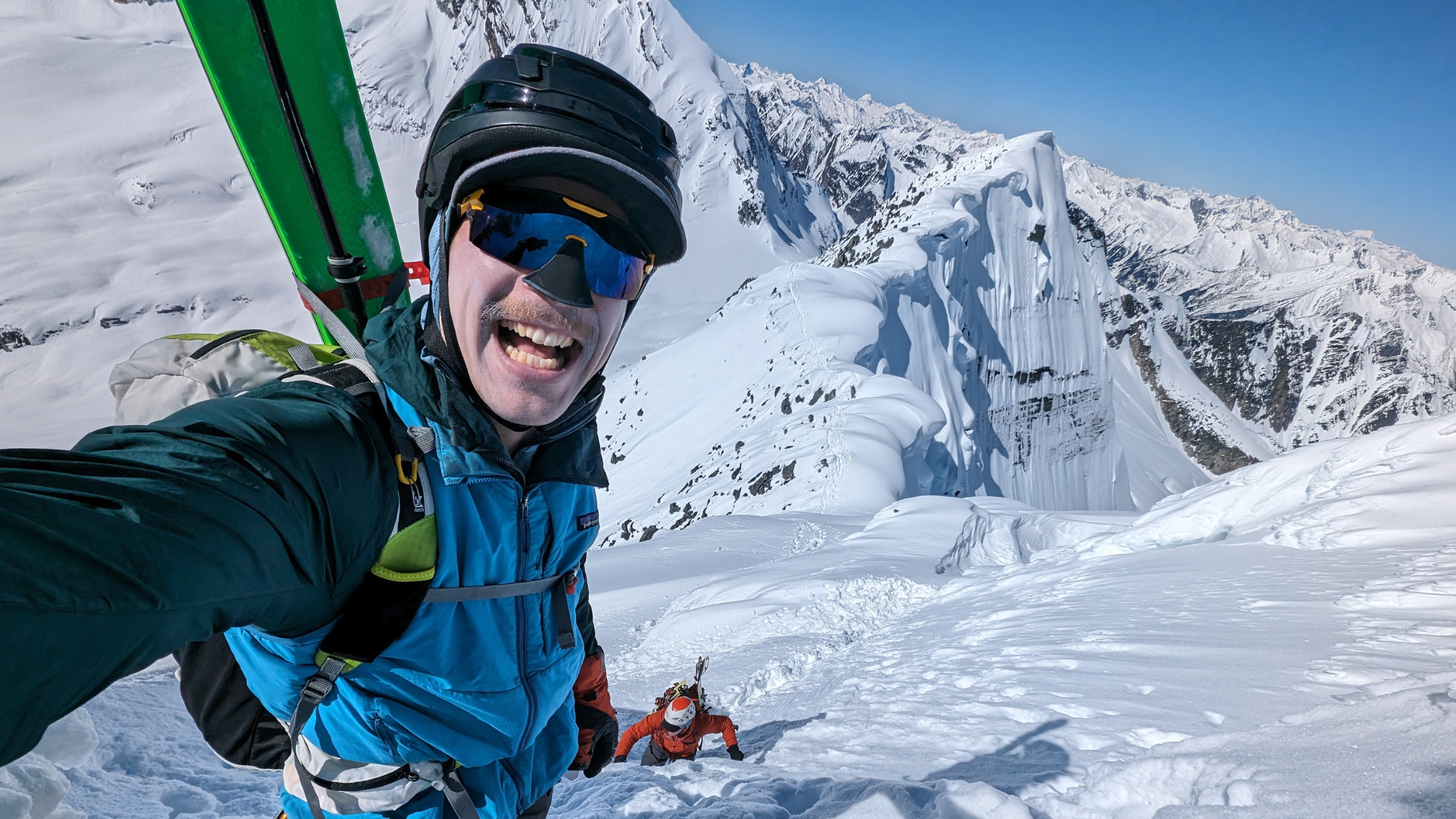
After skimo’s Olympic debut last week, the weird sport of running uphill in ski boots—then barreling downhill in children’s skis—is basking in a glow of cultural relevance that only the world’s biggest competition can provide. Eagle-eyed viewers will note that skimo looks a lot like ski touring—except there are fewer IPAs, Kinco gloves, and unironic mustaches, and way, way more spandex.
I‘ve been a fan of both skimo and traditional ski touring for years. And while my first backcountry sticks were essentially waterskis (126-millimeters underfoot, a total dream in Canadian cold smoke), I have swung hard left into the ultralight world, realizing that a skinny skimo set-up allows me to knock off multi-day ski traverses in just a fraction of the time. (Tailgates can never happen too soon.)
But be warned, dear reader. If you identify as a casual ski tourer, do not purchase the skimo setups you saw in the Olympics last week. You will 1) likely go into carbon fiber-induced debt, and 2) may want to quit skiing forever. Compared to four-buckle boots and buttery powder skis, those glorified running shoes and accompanying ski blades are just no fun to shred. The one item the skimo-curious should check out, however, is a skimo backpack.
What to Know About Skimo Backpacks
Compared to your granddad’s unwieldy ski touring pack, a skimo pack is sleek. Simple. Featherlight. Fast. You can still choose to stuff it with small-batch beer and charcuterie, but either way, you’re shaving serious grams for the uphill. In the Olympics, lightweight gear allows you to achieve your full athletic potential. Out at the local touring zone, lighter gear lets you save some energy on the up so you can have more fun on the down. Both approaches are valid.
Olympic skimo racers carry nothing inside their pack. The pack is simply a vessel to carry their skis hands-free during the “bootpacking” section, where athletes run up a flight of slick, snowy stairs that seem destined to claim at least one face-plant casualty per race.
The Skimo Pack I’ve Tested (and Recommended) for 5 Years
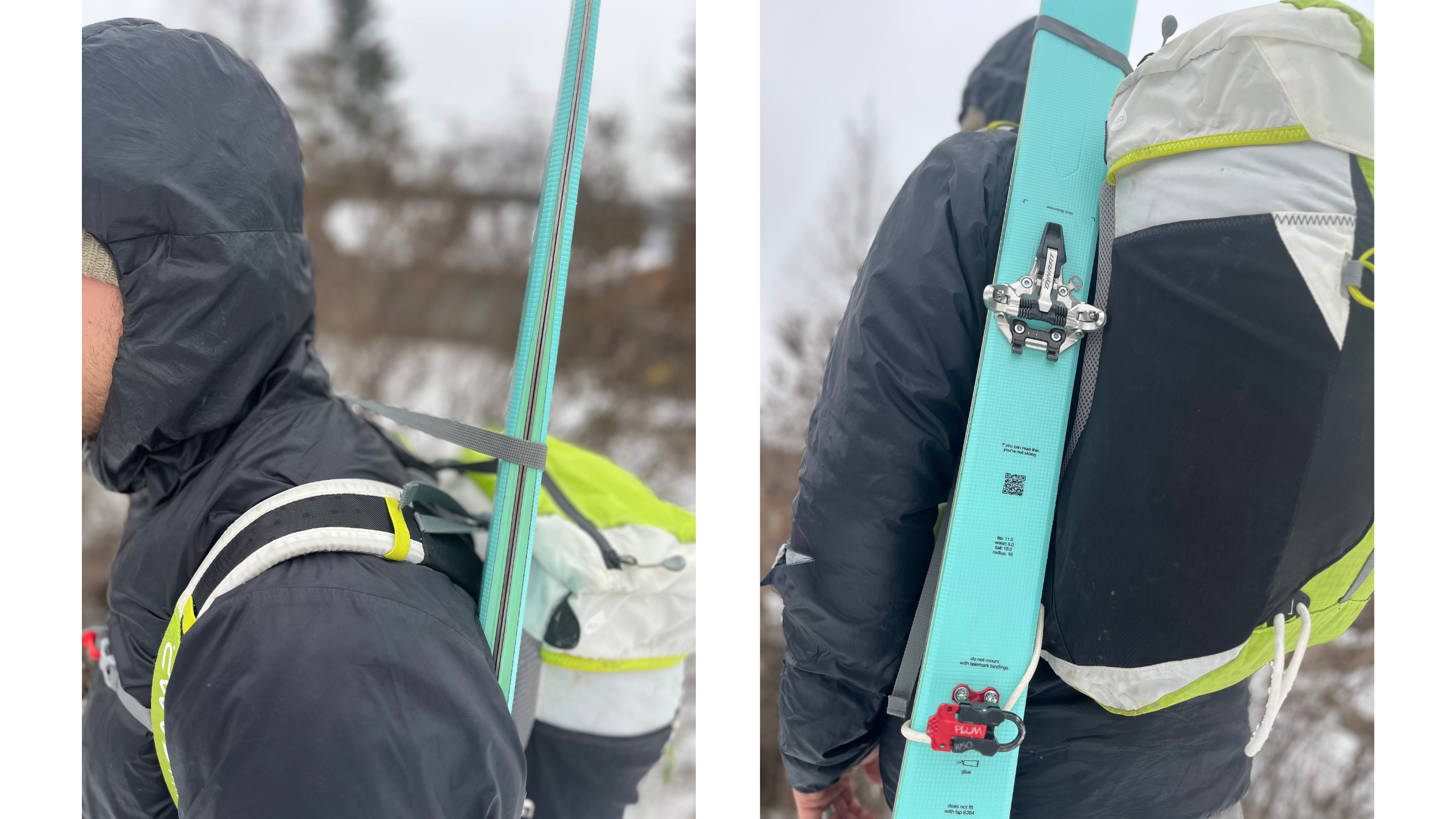
Personally, my go-to skimo-inspired pack is Camp’s X3 Backdoor 30L. Like those body-suit wearing Olympians, I too can begin a bootpack without removing my backpack; simply slot the skis through a large, textile loop sewn to the bottom corner of the pack, then secure the tips via an integrated webbing strap and metal hook. A “normal” ski touring pack typically forces you to remove it from your shoulders and strap the skis individually to either side in an A-frame configuration. While this method is fine, in windy, Arctic conditions, I’d much prefer to transition in a matter of seconds rather than minutes and keep moving to stay warm. They don’t call us Lightweight Weenies for nothing.
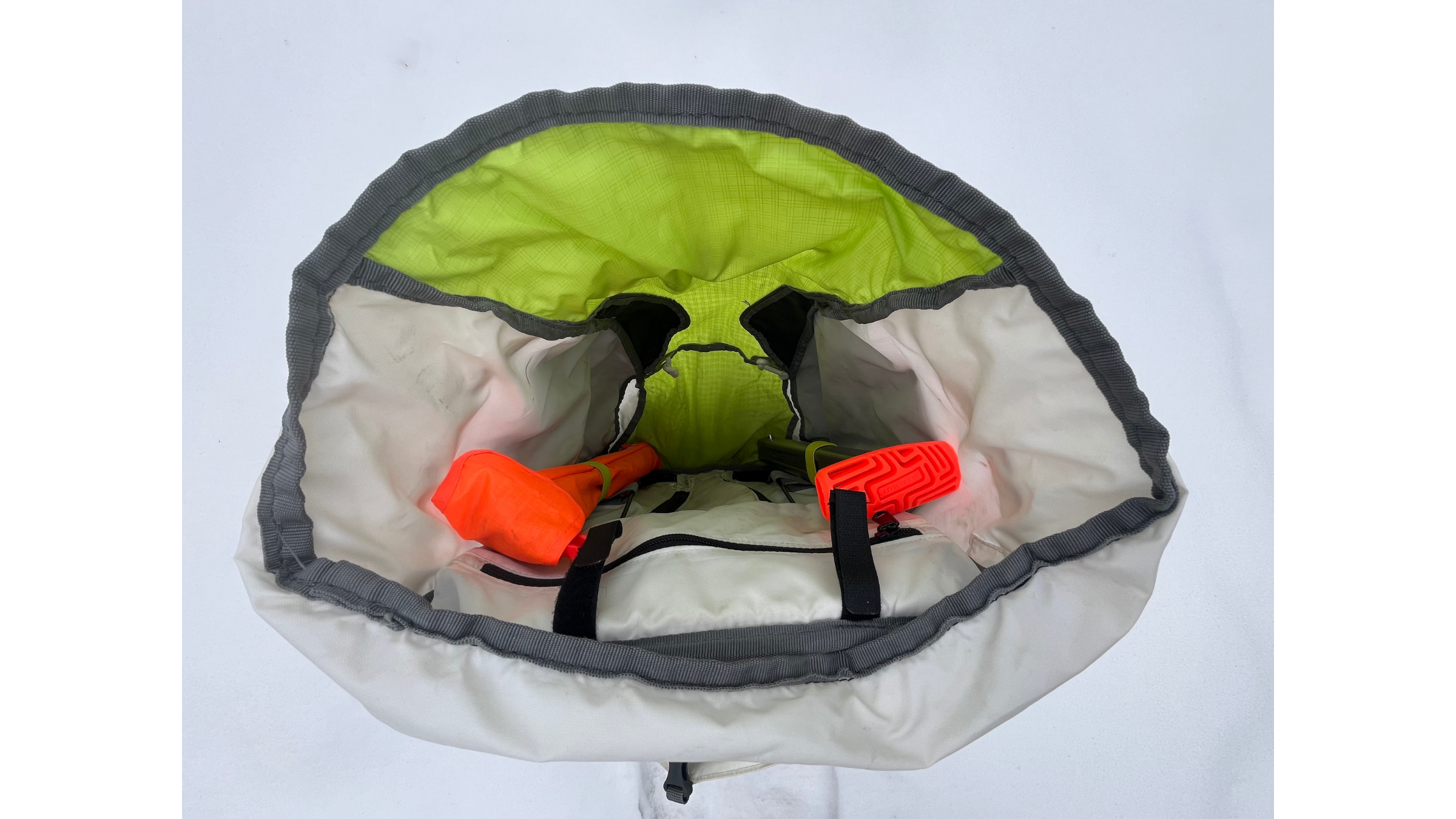
Another key feature of skimo packs is a place to organize avalanche-rescue equipment. Many skimo races require athletes to carry a shovel, beacon, and probe—even though the Olympics let their skiers run wild on hardpack ice and OSHA-doomed staircases. Camp’s X3 Backdoor pack has the ideal amount of organization for my preference; rather than a dedicated pocket (read: extra material, extra zipper, one more finicky toggle to break when it counts), the X3 Backdoor simply has two elasticized loops sewn into the inside back panel. One loop belongs to the shovel handle, the other to the probe. Once my bag is packed full, the shovel blade sits on top of everything else. This organizational design is as light as you can make it (more snacks!) and completely foolproof.
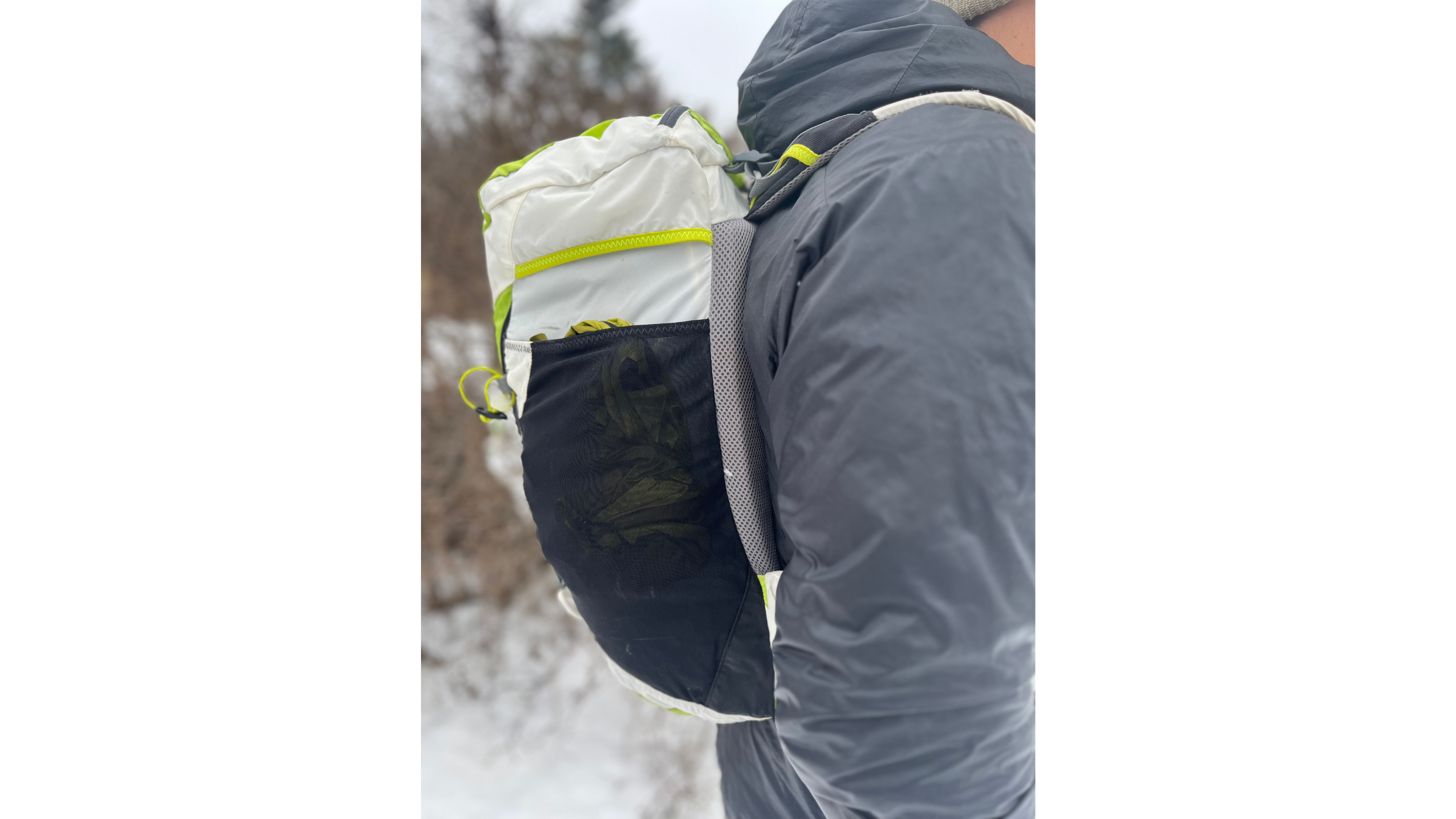
Every second counts for skimo racers, and a skimo pack lets us mortals co-opt some of that need for speed. The X3 Backdoor has two stretchy exterior pockets so I can dump a layer or skins while on the move. It also has running-vest inspired shoulder-strap and hip-belt pockets for stashing snacks when I’m flirting with a bonk. My favorite feature is the “backdoor” access through the pack’s back panel, allowing me to quickly grab tea or a puffy jacket without undoing the pack’s lid and drawcord.
Clearly Camp didn’t know I’d be writing this fawning review of the X3 Backdoor, as I’m sure they wouldn’t have discontinued it otherwise. But you can still find models kicking around online. Skimo.co is selling it for $70 off, Cripple Creek has one left in stock, and OutlandUSA is selling at a discount too.
3 More Skimo Packs to Try
While the X3 Backdoor is plenty light and low-profile for my taste—I have no qualms packing it for a full day of ski mountaineering (ropes, crampons, ice axe, etc.) or a quick after-work hit of cardio—the skimo world has definitely blessed us with even lighter and more aerodynamic options. I have not tested the following packs as extensively as the X3 Backdoor, but I recommend checking them out nonetheless.
Arc’teryx Alpha SL 30 Backpack
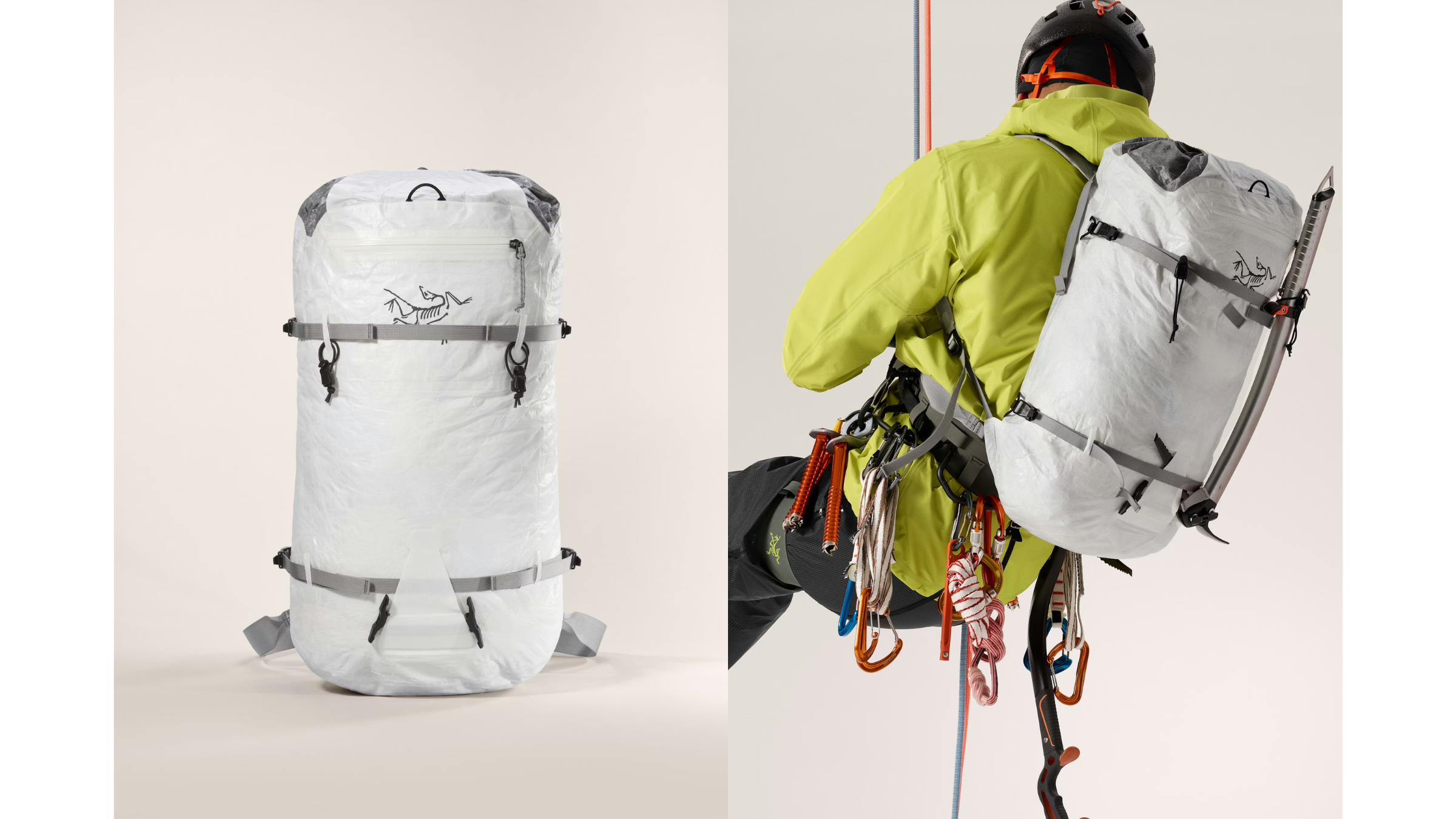
If you really want to put the Mo in skimo, Arc’teryx’s minimalist alpine climbing pack may be the tool for the job. While the Alpha SL may not have any of the useful ski features I’ve listed above, it absolutely abides by the core tenet of skimo: light and fast. Last weekend, I took this pack for an attempt of a 2,500-foot 50-degree couloir in the Canadian Rockies with sections of roped, vertical ice climbing. Although conditions weren’t on our side to ski from the summit, the Alpha SL’s 15.5 ounces felt negligible compared to the two ice axes, rope, crampons, pitons, and ice screws I carried up the mountain, all while wrapped in a durable, waterproof package.
Blue Ice Taka UL
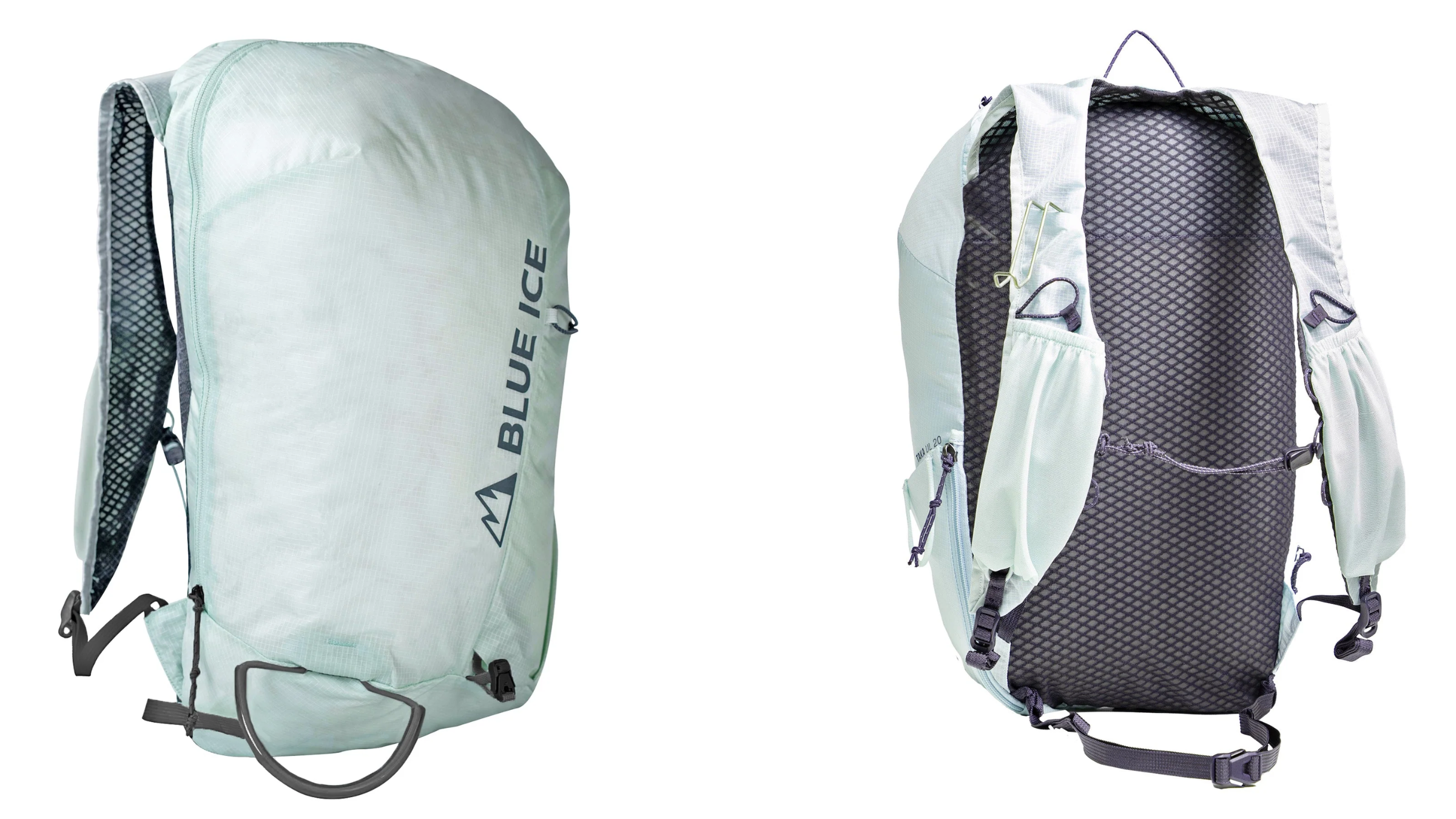
This space-age pack was literally designed for Skimo races before recreationalist ultralighters picked up on the magic. The Taka UL weighs just 14 ounces, has a lockable ski-carry hook for added security on exposed bootpacks, and allows you to grab an ice axe and crampons without actually removing the pack.
Camp Rapid Race Pack
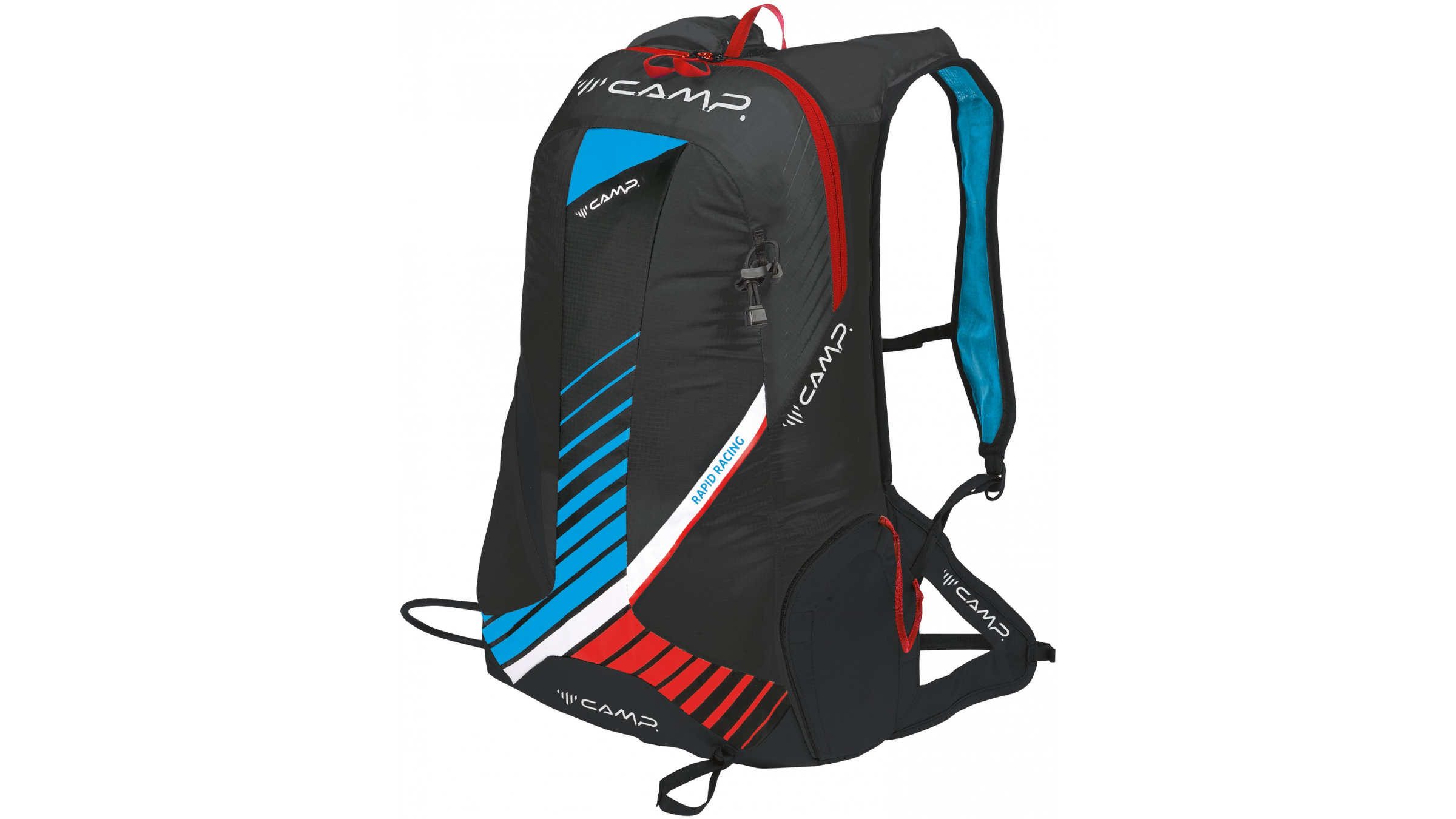
This is the nerdy, spandex-clad cousin of the X3 Backdoor. The Rapid Racing has a smaller volume, a figure-hugging chassis, and an even sleeker ski-carry system (a metal hook lashed to a bungee cord clips the skis and holds them close). The Rapid Racing is lighter than the X3 Backdoor and the Taka UL: 10.6 ounces!
