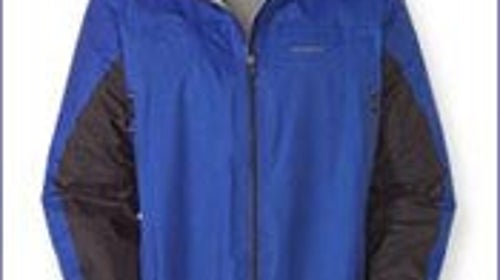


Yeah, these days you can get by with a much lighter shell then the behemoth, three-layer, four-pound armored coats that were common four or five years ago. As I said not long ago when answering a question about soft shells, today you can wear a piece that has a wider tolerance to rain than a fleece jacket, and you can leave the rain shell in your pack until the downpour gets pretty heavy.
Patagonia Grade VI Jacket
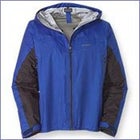 Grade VI Jacket
One shell to consider is Patagonias Grade VI Jacket ($299; www.patagonia.com). Its a lightweight, fairly minimalist piece thats tough enough to withstand mountaineering, skiing, and other abusive activities. Patagonia makes it with their proprietary H2No coating, a treatment I rate as very good in the waterproof-breathable department. It has a hood, chest vents, water-resistant zippers, and three-layer construction that helps it layer very well with a soft shell.
Mountain Hardwears Swift Jacket ($260; www.mountainhardwear.com) offers a good buy in a piece made with Gore-Tex. In this case, its Gores PacLite, a thinner version of regular Gore-Tex XCR that nonetheless offers excellent wet-weather performance. The downside is that its a bit less durable. But the Swift is designed as a mountaineering piece, and the notion that youll need it less when using a soft shell should help extend its life.
Finally, I really like REIs Taku ($199; www.rei.com). Its an all-purpose jacket, trimly cut for skiing, climbing, and the like, that combines three-layer nylon material on the shoulders and arms, with a lighter, more breathable material around the torso. Its very light, and very comfortable.
The votes are in: Check out the winners of Outside‘s 2006 Gear of the Year awards, including the year’s hottest shell.