Published August 29, 2019 12:00AM
If you buy through our links, we may earn an affiliate commission. This supports our mission to get more people active and outside.Learn about Outside Online's affiliate link policy
Review: Black Diamond Iota Headlamp
Goodbye AAAs
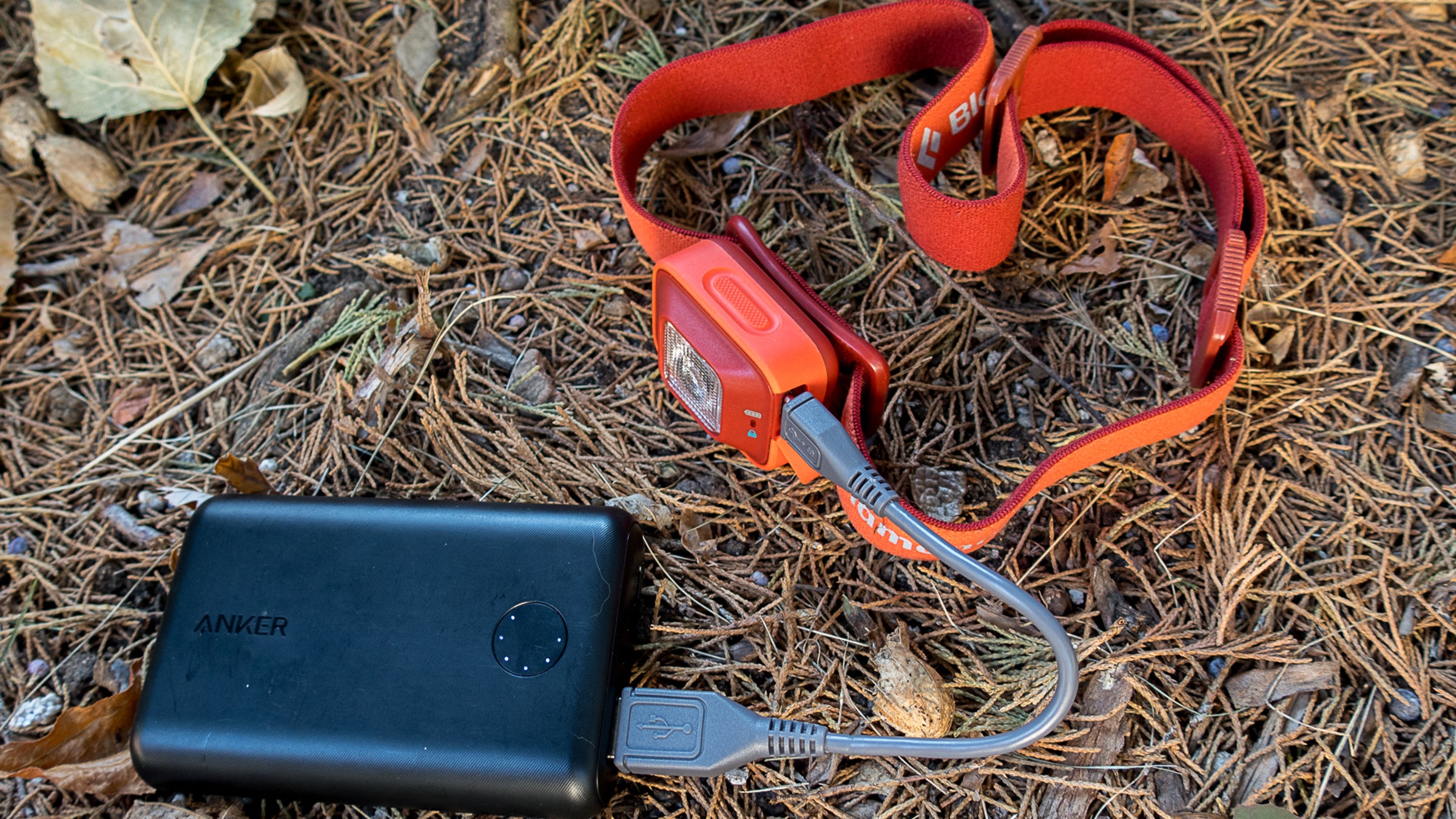
The standout feature of the Iota is its lithium-ion battery, which can be recharged via a mini USB using a wall charger, car adapter, or portable battery.
For nearly a decade, my go-to lights for summer backpacking trips have been the index-finger-size Fenix LD01 and second-generation Fenix LD02 ($30, 0.8 ounces), which clip to my hat brim and are impressively bright (up to 100 lumens) for their size and weight, given the LED technology at the time of their release.
But while guiding trips in Yosemite National Park last month, I experimented with the Black Diamond Iota ($40, 1.9 ounces).
The Iota is a small, light, and reasonably priced headlamp that offers acceptable brightness for in-camp use and occasional night hiking. Overall, few backpackers will feel as if they need more from a headlamp. My only gripe is that it lacks a red night-vision LED, a much appreciated feature on my Black Diamond Spot, although that would wreck the Iota’s size and price point.
Key Product Specs
- 1.9 ounces (54 grams)
- One LED bulb with a nonadjustable oval beam
- Up to 150 lumens of light output
- Rechargeable lithium battery
- $40 MSRP
- More information
ADVERTISEMENT
Standout Features
Battery
The Iota is powered with a lithium-ion battery, not disposable AAAs like most other headlamps. To recharge it, plug the included mini USB cord into a wall mount, car adapter, or portable battery. (Personally, I carry an Anker PowerCore II 10000 and mini USB cord already, to recharge my smartphone and InReach and sometimes my satellite phone). A full recharge takes three hours. For high-use owners, the Iota’s rechargeable battery will be a huge economic and environmental win; for more occasional users, it’s simply more convenient.
Size and Weight
Versus the more powerful and fully featured Black Diamond Spot and Revolt models, the Iota is about three-fifths the weight and one-half the size. It feels more appropriate for summer trips, when a light is rarely needed, and it fits in smaller spaces, like day-hiking packs and vests, whether for intended or just-in-case use.
Familiar Features
If you have used other Black Diamond headlamps, several nice features of the Iota will be familiar.
ADVERTISEMENT
Lockout
This prevents the Iota from being accidentally turned on inside your pack, draining the battery. With the Iota off, simply hold the power button for six seconds. I use this feature every morning when I remove the Iota from around my neck (where I keep it at night) and pack it away.
PowerTap Technology
Generate maximum brightness (150 lumens) instantly by tapping the side of the Iota, then tap it again to return the brightness to its former level. This buttonless adjustment beats the alternative: holding the power button while it revs up or dims down.
Memory
By default the Iota turns on at 60 percent output—it does not remember its setting when it was last turned off. For camp use, I found 60 percent to be blinding and wished it would start up at a lower level. There is a way to reprogram it (watch this video), but unfortunately, these directions were omitted from the user manual.
ADVERTISEMENT
Shortcomings
For a 1.9-ounce headlamp with a rechargeable battery and $40 MSRP, it’s hard to find fault with the Iota. But it does leave me wanting more sometimes.
Brightness
With a max output of 150 lumens, the Iota is sufficient for camp use and occasional night hiking. For faster-paced and more extended uses (e.g., biking, trail running), look for a more powerful light with a longer burn time. Within the Black Diamond line, I’d point you to the Revolt ($60, 3.4 ounces), which is also rechargeable and has a max output of 300 lumens (but beware: its advertised burn time is overstated, per comments).
Red Night Vision
In the summer, I use the red night-vision LED on my Spot as much as (if not more than) the white light. The aforementioned Revolt has one but at a cost of $20 and 1.5 ounces more. The Spot has one, too, but that would mean going back to disposable AAAs, which I’m now hesitant to do.
