Published December 15, 2025 11:50AM
If you buy through our links, we may earn an affiliate commission. This supports our mission to get more people active and outside.Learn about Outside Online's affiliate link policy
Coros Pace 4 Review: A True Runner’s Watch
If pounding pavement is your main hobby, your search for the best sports watch is over.
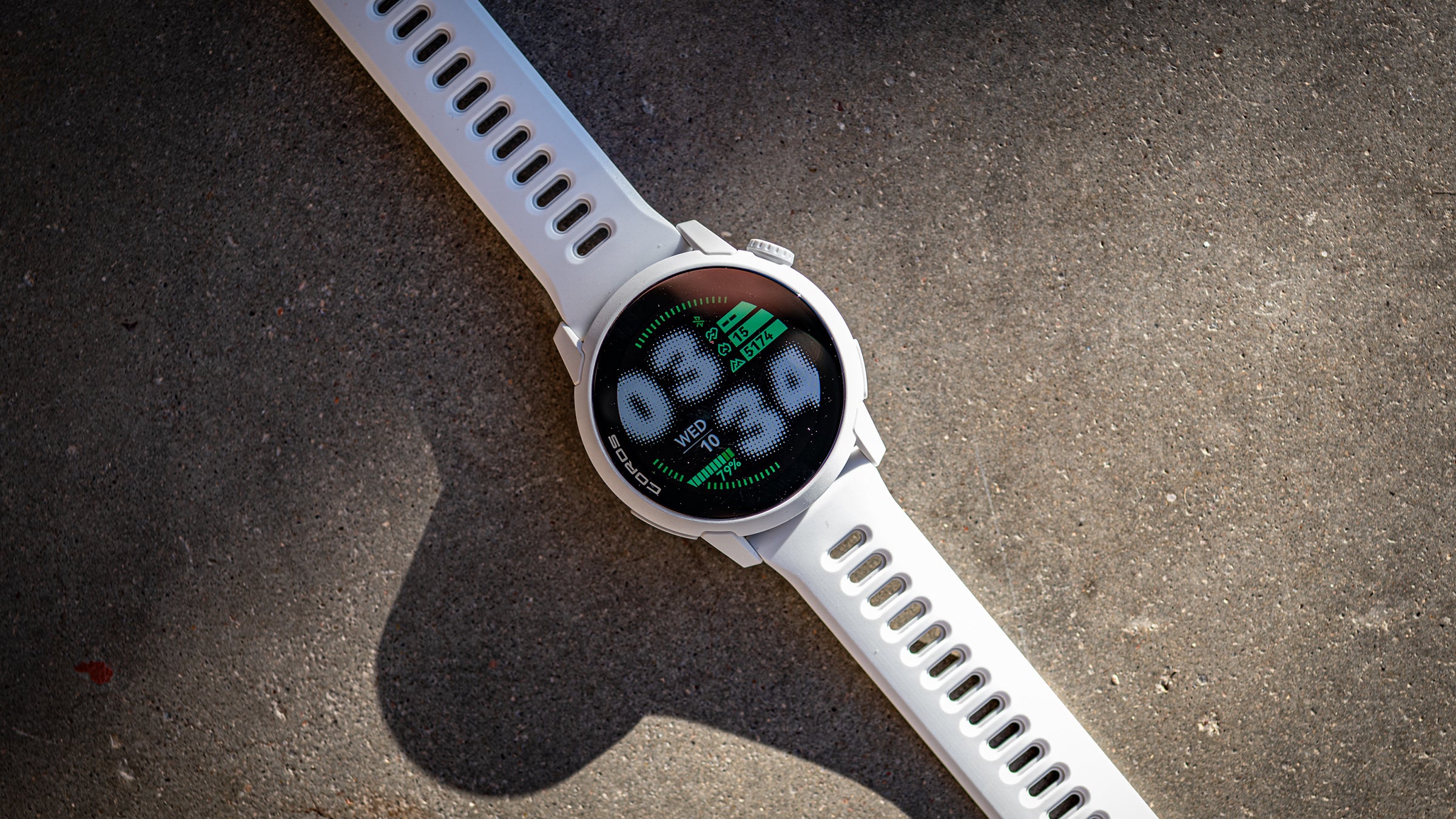
Light, small, and affordable: the Coros Pace 4 is a runner's dream. (Photo: Jakob Schiller)
When I first joined a local run club, I looked around to see what kind of gear everyone was wearing (once a gear nerd, always a gear nerd). Brooks dominated the footwear, Rabbit was the kit of choice, and nearly everyone had a Coros watch. When I asked my fellow runners what they loved about these brands, they mentioned that all three are reliable, affordable, and don’t include any unnecessary flash. Or in other words, they’re made for people who care more about running than they do about showing off or fitting in.
Coros Pace 4
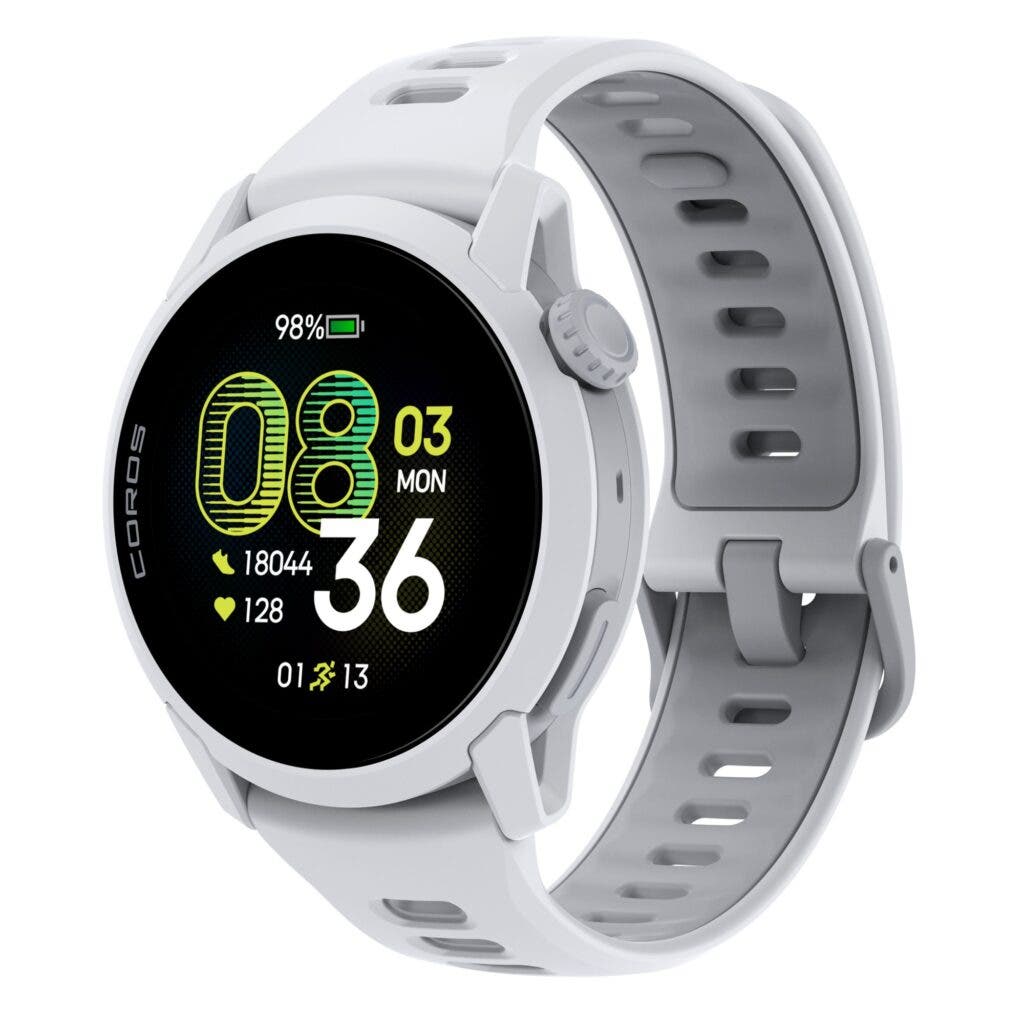
The new Coros Pace 4 exemplifies those qualities: It’s clearly designed to be the committed runner’s best friend. Immediately noticeable is the tiny weight and size for a sports watch—a feathery 40 grams, including the nylon band, with a face diameter of only 1.2 inches. Just like a pair of high-cut race shorts and a ventilated singlet, the Coros Pace 4 is supposed to function invisibly, freeing you up to concentrate on the run instead of your gear.
Our Coros Pace 4 Review
I was initially leery of the small watch face, but I discovered it has plenty of space to deliver important running metrics (more on that below). Besides staying out of the way and disappearing on the run, it was nice to have a more diminutive build that didn’t call attention to itself, unlike large watch faces that shout “I’m a bonafide adventurer.” And that all-white color matched with the all-white band? Killer.
ADVERTISEMENT
Inside the Coros app you can create nearly infinite customizations for what data you want delivered on each watch face (which you scroll through by swiping). The first face comes out of the box with heart rate, pace, distance, and time elapsed, but you can customize that screen, or any other screen, to deliver data on anything from cadence and elevation gain to max speed and outside temps. The watch measures all the basic data a runner expects; calculates advanced metrics like VO2Max, lactate threshold, and race predictor; and offers an intuitive workout builder.
While I usually prefer the older MIP screens on watches because of their lower energy draw, the AMOLED screen on the Pace 4 was a pleasure to look at in all light conditions—from blinding afternoon sun to pure darkness on early-morning jaunts.
Battery life on the Pace 4, like all top-end fitness watches these days, is phenomenal. Coros says the watch will last 19 days with normal use (notifications, some workouts) and will get you up to 41 hours using continuous GPS. While the Pace 4 didn’t last as long as some of the larger adventure watches I’ve tested, it held enough juice for several weeks’ worth of continual use and didn’t make me feel like I had to keep an eye on the power level all the time.
ADVERTISEMENT
Any adventurous explorer who loves the mountains more than pavement will be disappointed that the Pace 4 doesn’t come with offline maps. Backcountry trail runners, backpackers, hikers, and skiers will want to look elsewhere. Road runners can get turn-by-turn directions if the watch has an uploaded route, and I found that the GPS was always accurate and quickly acquired a signal.
New Features and Slight Misses
Coros is touting a new feature in the Pace 4 that allows users to record a location-based voice pin during a run. When you’re done with the workout, that pin shows up on a map in the app and clicking plays the audio message. At the end of your run, you can also record a voice memo about the overall workout that is transcribed into the app’s workout summary. Some people might record info about effort and route features while on the trail, but the only time I used the location pin feature was to note good ideas about work projects that popped up once I got into the flow of my run. I didn’t record any end-of-workout memos because I found the measured workout details were complete enough. Overall, the voice memos felt more like a marketing gimmick than an essential add-on.
ADVERTISEMENT
A few other downsides: There’s a built-in “flashlight,” but it’s just the screen in an all-white mode, which doesn’t compare to the brightness of the LED flashlights on Garmin watches. The Pace 4 will store music, but you have to upload MP3s instead of just syncing the watch with a music provider like Spotify. I love running with music, but not enough to track down MP3s and upload them to the watch. To be honest, it surprised me that Coros used such an antiquated way to manage music—it feels very 2005.
Those niggles might point some people to another watch, but all the other features (including the small, light design and the very friendly $250 price) will make the Coros Pace 4 an easy sell for every runner from the weekend warrior to the aspiring Olympic qualifier.
