

Accurate pedometer” is one of those phrases that ranks up there with green SUV,” low-fat hamburger” and military intelligence.” There just aint any. The technology is so imprecisepedometers basically take a guess at your stride length, and otherwise just count the number of times you jiggle up and down as you hikethat they have a hard time coming within 200 yards over a 1,000-yard walk.
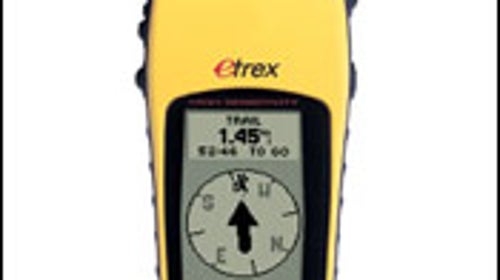
Garmin eTrex H GPS
 eTrex H GPS
Besides, pedometers are just so pre-digital. Sort of like comparing my old IBM Selectric to the 24-inch iMac I now use (and, it must be said, love dearly). What you need is a small GPS unit. Accurate to a few feet, easy to use, and reliable.
You could, for instance, purchase a Garmin eTrex H GPS. At $100 its a real bargain. And its super-compact, clipping easily to a belt or backpack. Yet it has lots of good features, such as the ability to track up to 12 satellites for better accuracy, peer through (fairly) deep forest canopy, and resist rain. Two AA batteries keep it going for up to 17 hours.
Garmin also makes a wrist-wearable GPS unitthe Forerunner 205 ($199, but currently $125 at REI). It has all the capabilities of a bigger unitability to track waypoints, measure calories burned, and morein a smaller size. The only real drawback is that it takes a rechargeable battery that needs to be plugged in after ten hours. So you cant pack extras.
Or, take a look at Magellans Triton 200, a quality basic unit that shows you where you are and how far you have gone, and comes with a color screen. Its $120.
Time to dump the pedometer, I think.
The 2008 Summer Outside Buyers Guide is now on newsstands. Look for it online soon.