Updated January 15, 2026 02:15PM
If you buy through our links, we may earn an affiliate commission. This supports our mission to get more people active and outside.Learn about Outside Online's affiliate link policy
The Best Saltwater Fishing Gear Built for Sun, Salt, and Spray
Two veteran captains share the durable reels, rods, and apparel that can actually survive a season of corrosive spray.
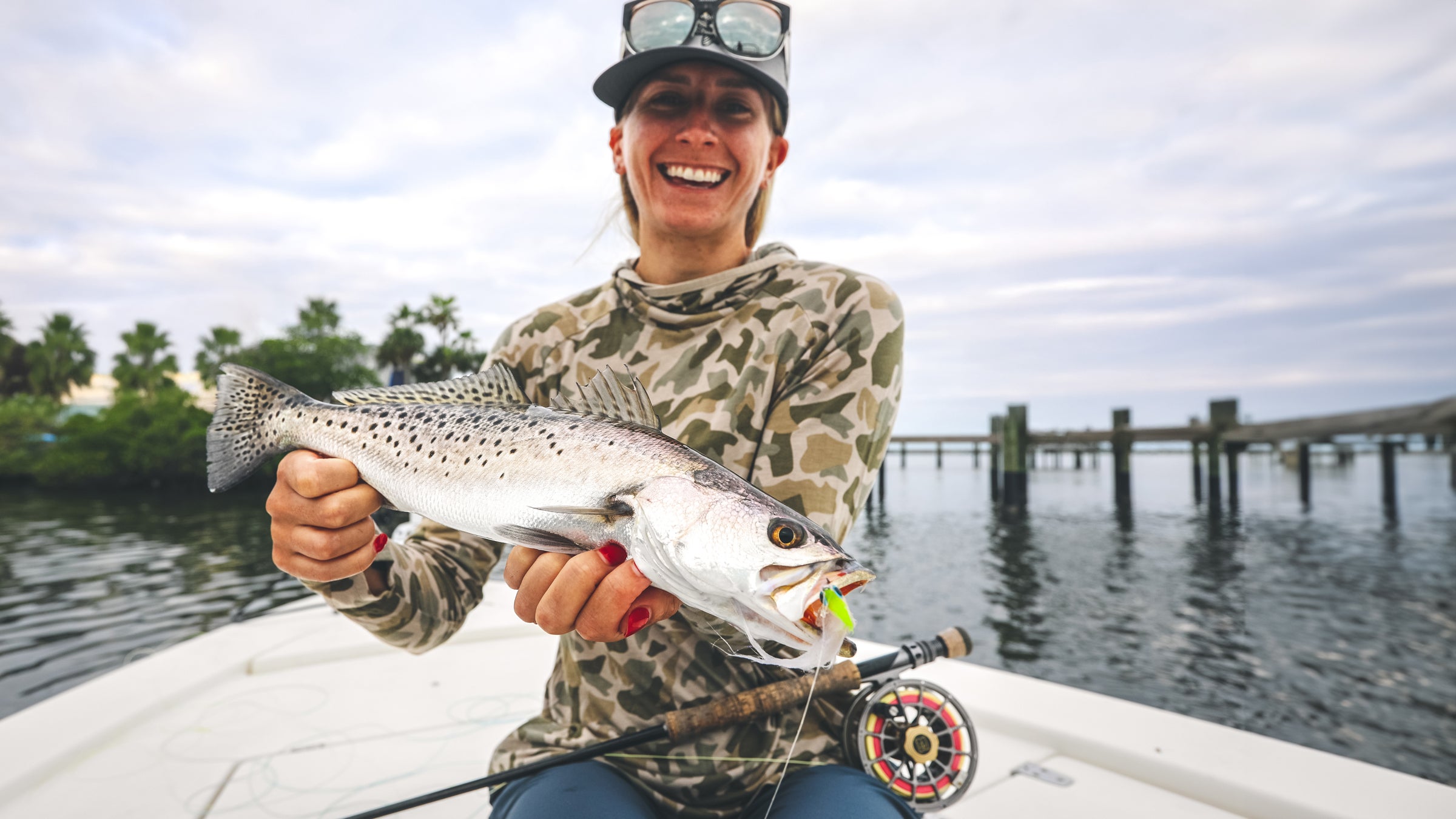
The essential gear you need for salt water fly fishing. (Photo: Cody Rubner)
Table of Contents
While freshwater fishing is often calm and meditative, saltwater fishing can feel like a contact sport. Between wading or boating into choppy surf, baking in the hot sun, and getting doused in salty spray, the elements are brutal on the human body and the gear meant to withstand them. The fish are typically bigger too, which makes the stakes higher if gear stops working.
“Salt is ruthless,” says Cody Rubner, United States Coast Guard (USGC) Captain of High Roller Guide Service in Stuart, Florida. “Being strategic with your choices not only protects your wallet long term but also reduces your chance of gear failure while fighting the fish of your dreams.”
Not only is salt corrosive and all-around tough on gear, but the larger fish add strain as well. “Saltwater fish pull harder, pull faster, and pull longer,” says Rubner of the massive tarpon, 40-pound jack crevalle, and elusive trophy permit he often guides in the turquoise waters of Florida’s Southeastern coast. “Because of that, saltwater gear has to be built for strength, longevity, and abuse—whether that’s in the reel internals, drag systems, rod construction, or terminal tackle.”
We asked Captain Rubner and USGC Captain Joe Gugino of Fish Boston to share their recommendations for building out your own saltwater setup and ensuring it’s durable enough to withstand days of salt, sun, and sand. Keep reading for their guide-approved saltwater fishing gear picks.
Best Saltwater Fishing Gear: At a Glance
- Hardy Fortuna Regent Fly Reel 1000 ($875)
- Quantum Benchmark Spinning Reel ($230)
- Redington Predator Salt 1190-4 ($400)
- Toadfish Carbon Elite Surfrod Combo ($398)
- Van Staal Titanium Pliers ($400)
- BKK LoneDiablo Single Hook Pack ($12)
- Free Fly Breeze Pant ($98)
- Free Fly Bamboo Lightweight Hoodie II ($74)
- Bajio Darien – Glass Lens ($269)
- OluKai Ahi Marine Shoe ($150)
- Yeti Panga Backpack 28L ($300)
- Nomadix Mini Towel ($38)
- Owala FreeSip Insulated Water Bottle 40 oz. ($40)
A Quality Saltwater Fishing Reel
Our Pick for Fly: Hardy Fortuna Regent Fly Reel 10000 ($875 at Hardy)
Our Pick for Spin: Quantum Benchmark Spinning Reel ($190 at Amazon)
“The drag system matters more than almost anything else—and that applies to both spinning and fly reels,” says Rubner. “New saltwater anglers almost always underestimate how much stopping power they need. Underpowered setups make it far harder to land fish efficiently, which is frustrating for the angler and significantly worse for the fish—especially if you plan to release it.”
For spin gear, brands usually advertise drag ratings on saltwater fishing reels in pounds, but keep in mind smoothness under pressure, heat resistance, and consistency, too. Look for the same characteristics in saltwater fly reels, with one non-negotiable addition: a sealed drag system that keeps sand and salt from destroying the internals.
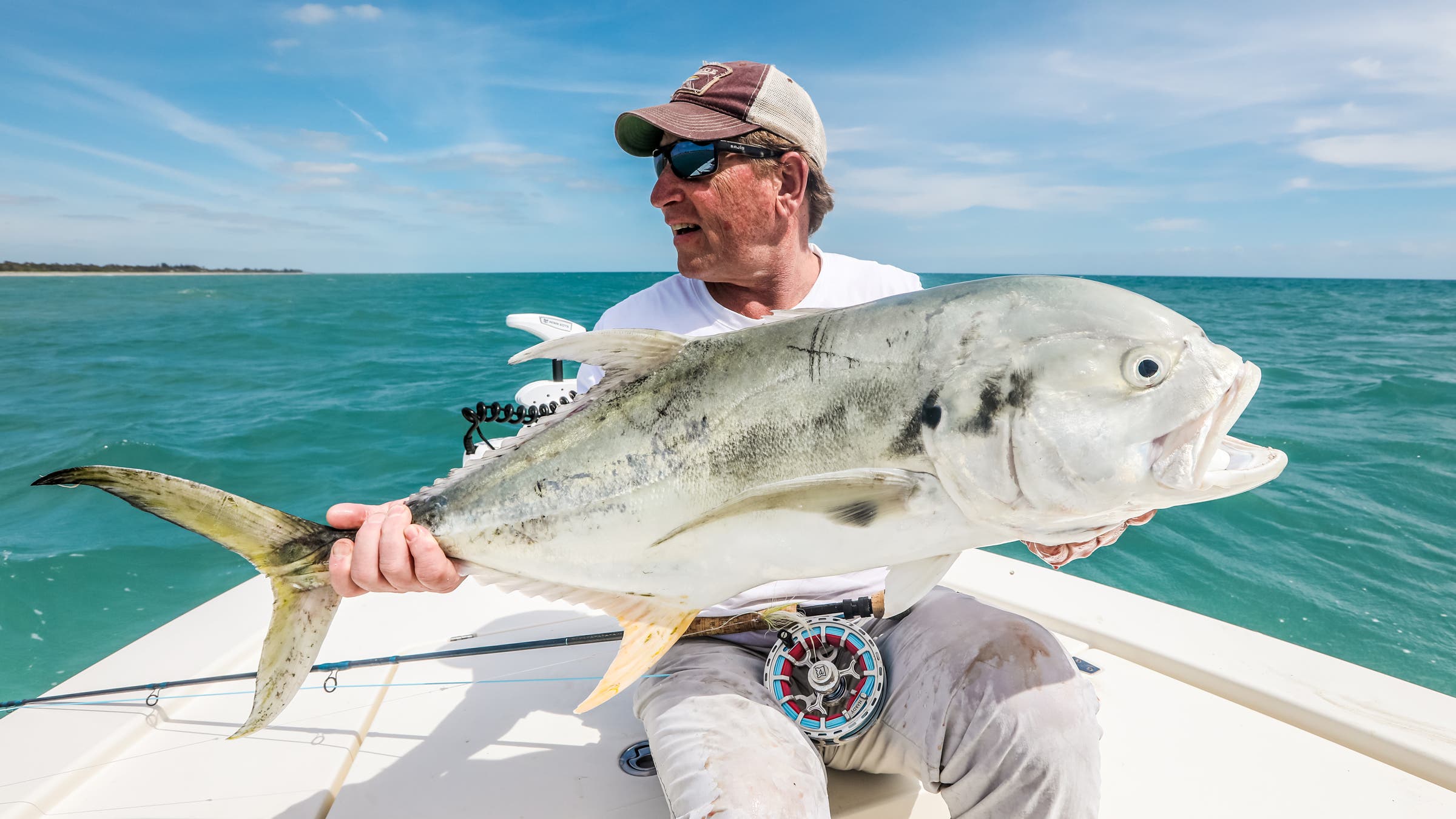
Given how vital they are to the sport, reels can be expensive, but they don’t have to be. “I’ve fished reels across a huge price range—from around $200 up to $1,200—and what I’m seeing now is a real shift in the market,” says Rubner. While he recommends splurging on fly reels for reliable stopping power and a balanced hand-feel—even a little extra weight from a reel can get tiring after casting all day, he says, “For spinning gear, I’ve actually lowered the price point on many of the setups I run on my boats and haven’t seen any change in performance. Some lower-price reels, like those from Quantum, are starting to genuinely compete with high-end models in terms of performance and durability. You no longer have to break the bank to get a reel that can handle serious saltwater fishing.”
A Lightweight, Fast-Action Saltwater Fishing Rod
Our Pick for Fly: Redington Predator Salt 1190-4 ($400 at Far Bank)
Our Pick for Spin: Toadfish Carbon Elite Surfrod Combo ($398 at Toadfish)
Whether you’re fishing spin or fly, the goal is the same: a saltwater fishing rod that feels light in the hand, recovers quickly, and won’t wear you out over the course of a long day. Fast-action rods are the go-to on both sides because they generate higher line speed, cut through wind, and give you more control when casting heavier lures or big flies. In fly fishing. particularly, the higher-weight rods (10 wt. and up) can get tiresome quickly. Prioritizing lighter materials and a responsive rod blank makes a noticeable difference in comfort, accuracy, and overall performance, whether you’re working the surf or casting from a skiff.
Premium Pliers
Our Pick: Van Staal Titanium Pliers ($400 at Cabela’s)
Gugino, who guides striped bass and bluefish around Boston Harbor, and Rubner never leave the dock without a premium pair of pliers. Between cutting line, removing hooks from angry fish, and pinching hook barbs, needle-nose pliers with built-in line cutters are essential for saltwater fishing.
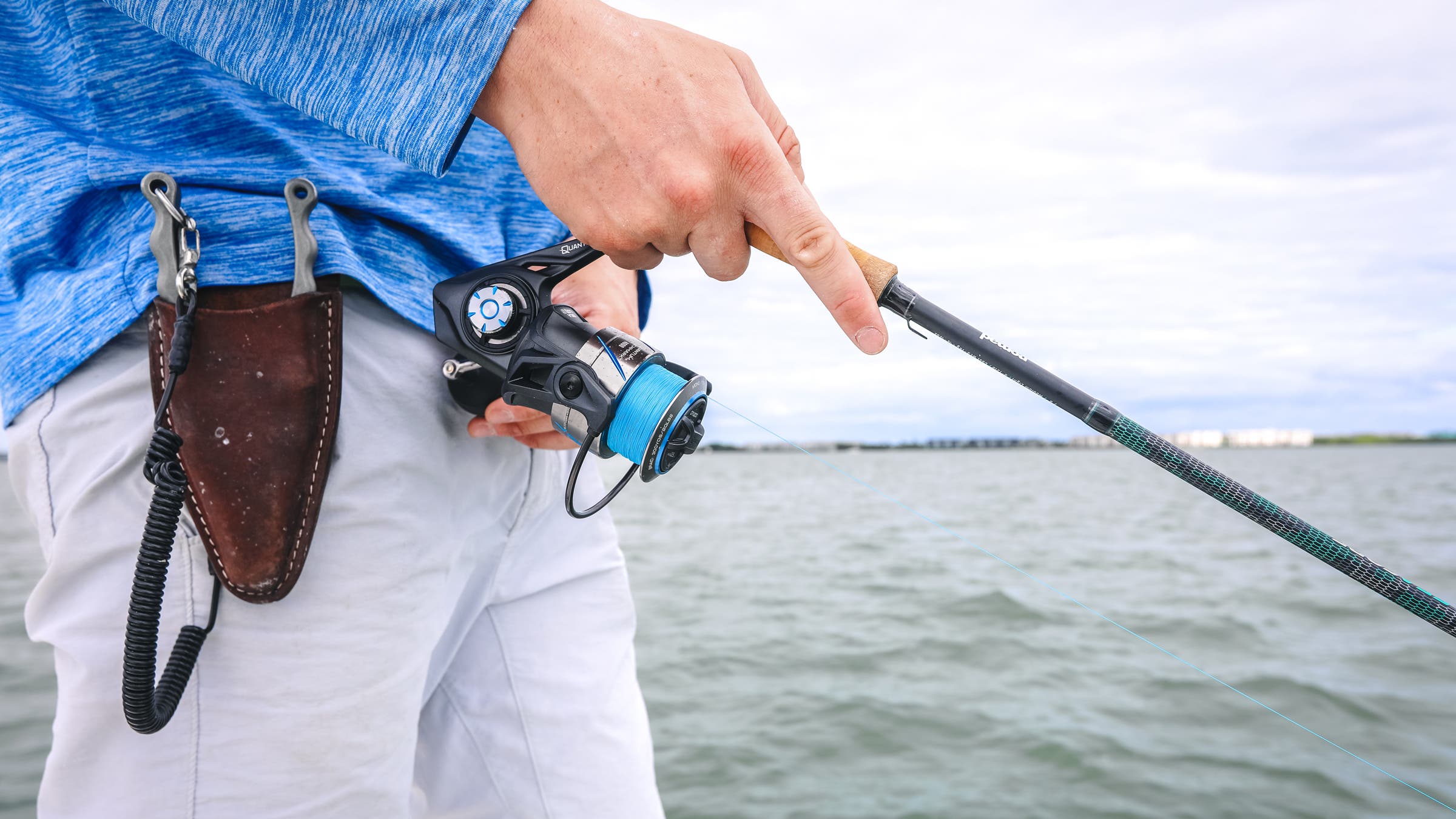
You can get away with a cheaper tool for a bit, but be prepared for rust. If you fish in salt a lot, it’s worth splurging on corrosion-resistant titanium pliers. “My Van Staal pliers were expensive, but they’ve been worth every penny,” says Rubner. “I’ve owned them for five years and have only replaced the cutters once for about $40. I wear the extra-large version because when you’re trying to remove a seven-inch topwater plug from a toothy critter every day, freshwater nippers or cheap small gas station pliers simply won’t cut it.”
Extra Hooks
Our Pick: Bkk LoneDiablo Single Hook Pack ($12 at Amazon)
Whether you’re jigging down deep or throwing topwater plugs, hooks inevitably bend, rust, and break, which can cost you missed fish. Gugino recommends carrying backups, especially since hooks may corrode at a faster rate in saltwater. He prefers hooks by fishing brand BKK, which he interchanges onto lures straight out of the box. “Their LoneDiablo Single Hook is my favorite for replacing double treble hooks on lures,” he says. “Double single hooks on lures (vs double treble hooks) are not only better on the fish, but also safer for anglers.”
Quality UPF Clothing
Our Pick for Tops: Free Fly Breeze Top ($74 at REI)
Our Pick for Bottoms: Free Fly Breeze Pant ($98 at REI)
“Sun protection is number one—especially in the Southeast and the tropics,” explains Rubner. “Full coverage is critical. You might want to fish in a tank top, but your skin won’t survive 6 to 8 hours in the sun.”
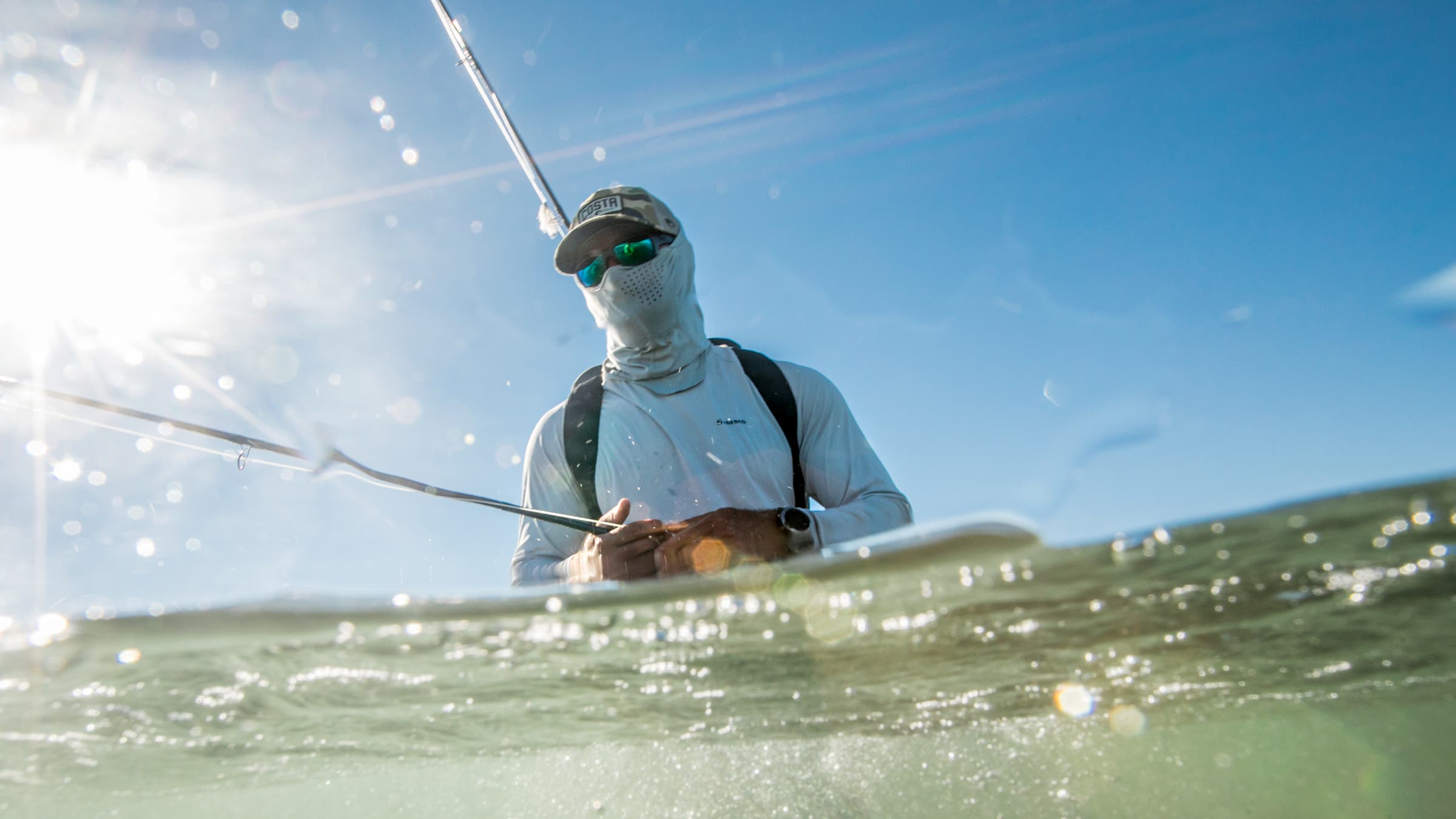
There’s a lot of UPF clothing out there, but for saltwater fishing, Rubner swears by Free Fly apparel from head to toe. “Its performance pants are the biggest standout for me—lightweight, breathable, and comfortable for long days,” he says. The gear can be pricey, but he says Free Fly is worth every penny and will lead to safer, more comfortable days out on the water.
Polarized Sunglasses
Our Pick: Bajio Darien – Glass Lens ($269 at Bajio)
Whether you’re fishing saltwater or freshwater, polarized sunglasses are a non-negotiable for cutting glare and beating eye strain. “If you can’t see fish, structure, or what’s happening around the boat, you can’t perform—whether you’re fishing solo or with a guide,” says Rubner. “Get yourself a pair of premium shades, [like] glass lenses with a green mirror and copper base for increased contrast.”
Fishing Shoes
Our Pick for Warm Weather: OluKai Ahi Marine Shoe ($150 at REI)
Our Pick for Cold Weather: XTRATUF Ankle Deck Boot Sport ($140 at XtraTuf)
In warm weather, it might be tempting to go barefoot, but guides recommend having proper fishing footwear to protect your feet. Loose hooks, toothy fish, a slippery deck—these are all risky when fishing without the right fishing shoes.
“In colder weather, ankle deck boots like XtraTufs are what I wear, but this past summer I lived in OluKai’s newly launched Ahi boat shoe,” says Gugino. “They have great grip and are super comfy. They’re also breathable and easy to clean.”
A Waterproof Pack
Our Pick: Yeti Panga Backpack 28L ($300 at Backcountry)
Whether you’re wading or on board a boat, you’ll want a waterproof pack to keep your valuables dry when saltwater fishing. Keep an eye on design and look for durable materials that won’t degrade quickly from the salt. Zippers fail first, so if you’re getting a product that utilizes them for access, they better be ‘Yeti-level’ zippers,” says Rubner. Both he and Gugino swear by the brand’s Panga series packs. “It’s also worth making sure you don’t oversize your bags,” adds Rubner. “There’s something to be said for staying lean and mean when fishing out of small vessels or walking long distances on the shore.”
A Quick-Dry Towel
Our Pick: Nomadix Mini Towel ($28 at REI)
It’s always nice to have quick-dry towels handy for wiping off spray. “One for cleaning sunglasses and electronics, and the other for your hands,” Gugino says. He uses Nomadix towels, which pack down small but are super absorbent. Best of all, they dry quickly, so they’re ready to use again when you need them.
A Reusable Water Bottle
Our Pick: Owala FreeSip Insulated Water Bottle 40 oz. ($40 at Amazon)
Finally, don’t ever leave for a fishing journey in the salt without proper hydration. Get yourself a high-quality water bottle, preferably one with a hands-free straw for easy access. For long days wading or boating, opt for a large volume—you don’t want to get caught dehydrated.
Final Thoughts on Saltwater Fishing Gear
In saltwater, the conditions are more intense, plain and simple. The gear that earns a place in your saltwater fishing kit is the gear that holds up longest and keeps performing when conditions are at their worst.
No matter what equipment you go with, both Gugino and Rubner agree on one thing: always clean your saltwater fishing rods and reels when you get off the water to ensure it holds up over time. No exceptions. “Even high-end gear will fail if it isn’t rinsed, dried, and cared for properly,” says Rubner.
Maintenance isn’t optional. Clean your tackle properly and you’ll successfully fight fish with it for the long haul.
