
New perk: Easily find new routes and hidden gems, upcoming running events, and more near you. Your weekly Local Running Newsletter has everything you need to lace up! Subscribe today.
If you’ve never heard of sweet potato bark, don’t worry because before we met Shannon Leader, an outdoor lifestyle writer and Washington Trail Association Guide Correspondent, we hadn’t either. Leader lives in the Greater Seattle area in Washington and tackles hikes across the Pacific Northwest. This, of course, requires plenty of on-the-go fuel, like Leader’s favorite dried sweet potato bark.
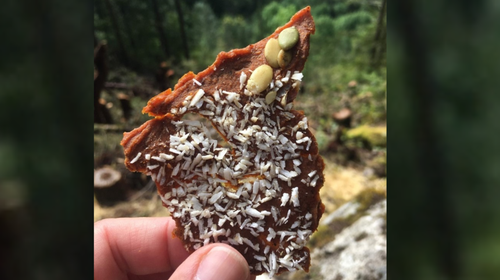
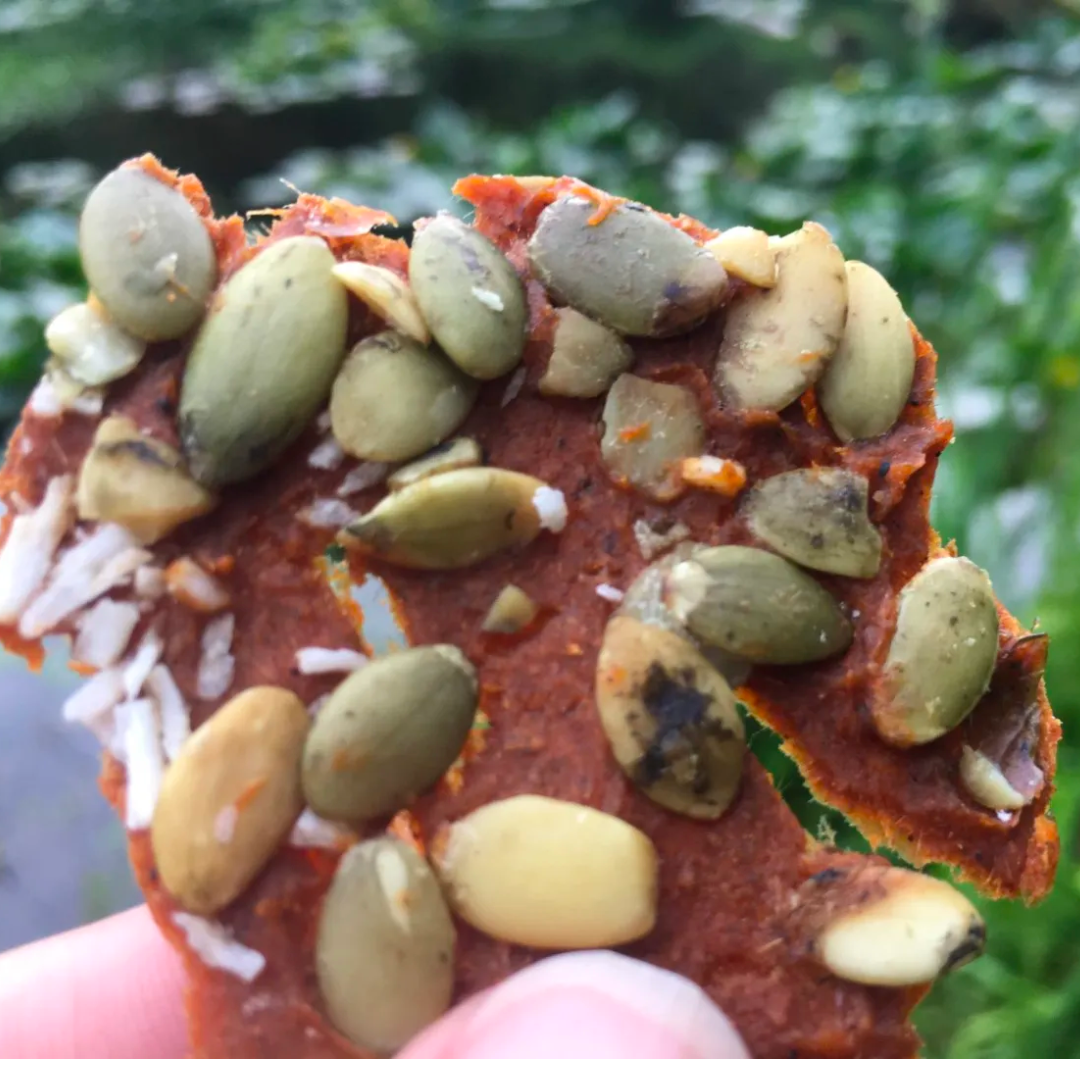
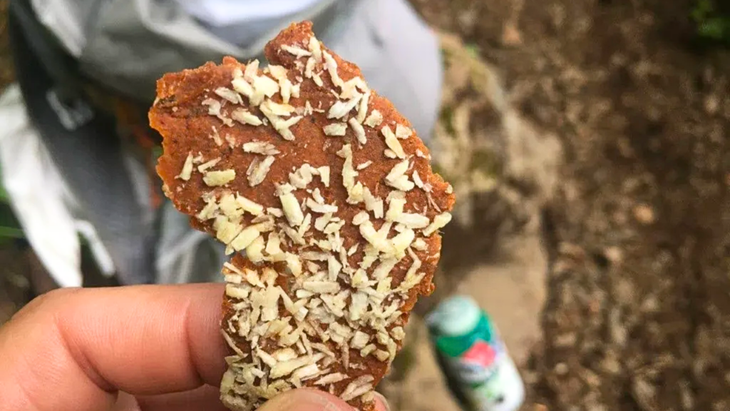
The bark is dehydrated sweet potato puree that’s spread onto parchment paper into thin pieces and sprinkled with spices. It’s sweet, salty, and highly nutritious. “A sweet potato makes a great trail food because it’s a basic ingredient packed with fiber and vitamins,” Leader says. “Plus, you can eat it both as bark for a snack or rehydrate it back into hot water for mashed potatoes or soup.”
Leader’s bark recipe came about when she became fixated on ras el hanout, a North African spice blend. In Arabic, ras el hanout roughly translates to “head of the shop,” because in places like Morocco, Algeria, and Tunisia where it’s regularly sold, this blend is made of the best spices the store has to offer. There’s no single recipe for the blend, but the most common flavor profile includes cardamom, cumin, coriander, peppercorn, sweet paprika, dried turmeric, and cinnamon. Traditionally, ras el hanout is used for stews and grilled meats, but it can be used for about anything, including sweet potatoes.
“Once you make a batch of ras el hanout, you’ll find yourself sprinkling it on everything!” Leader says. “I even gave it away as Christmas presents one year.”
Ras El Hanout Sweet Potato Bark
Ingredients
Ras el hanout
- 2 tsp. salt
- 2 tsp. cumin
- 2 tsp. ginger
- 1 ½ tsp. cinnamon
- 1 tsp. coriander
- 1 tsp. allspice
- ½ tsp. cloves
- ¼ tsp. nutmeg
Sweet potato bark
- 5-6 medium sweet potatoes
- 2 Tbsp. ras el hanout
- Optional: almond slivers, dried red onion, coconut shreds, pumpkin seeds
Preparation
- Mix all the spice ingredients in a small glass jar, and set aside.
- Wash sweet potatoes, then peel and cube. Place the cubes in a large pot, cover with water, and let come to boil on medium-high. Once boiling, reduce heat to medium-low, cover with a lid, and let simmer until the sweet potatoes are soft and can be pierced easily with a fork. Remove from heat and drain. Tip: Make sure your sweet potato cubes are boiled until soft; soft texture allows for easier processing into puree.
- Add sweet potatoes to a food processor and let cool for about 5 minutes until they stop steaming. Sprinkle with the ras el hanout (don’t skimp!) and puree until smooth.
- Spread puree evenly on dehydrator trays lined with parchment paper. Spread to a thickness of about 1/4″. The thinner the layer, the more brittle and crunchy the bark. Sprinkle with toppings, if desired.
- Set the dehydrator to the fruit/vegetable setting (125-135° F) and let dry for 12-14 hours. Check near the end of the time and flip the dried sweet potato over if possible. Let dry a few more hours until completely dry but still flexible. There should not be any tacky spots.
- Let cool completely and then break into pieces. Store in an airtight container until ready to eat.
Don’t Have a Dehydrator?
Though it’s suggested you have a food processor and dehydrator, you can use substitutions. In lieu of a processor, use the “pulse” button on your blender until the sweet potato is smooth. If you don’t have a dehydrator, you can set your oven at the lowest temperature (this is usually around 170° F, which is considered the “warming” setting). Because the oven runs a little higher temperature than the dehydrator, however, it’s suggested you keep an eye on the bark through the drying process. Everyone’s ovens are different, so just peek in (without opening the oven door) to check on the bark’s consistency.