Published February 29, 2020 08:03PM
Comeback Kid Jake Riley
Jake Riley ran 2:13 in his debut marathon 5 years ago in Chicago. Then the wheels started to fall off. Healthy again, he finished ninth last fall in 2:10:36.
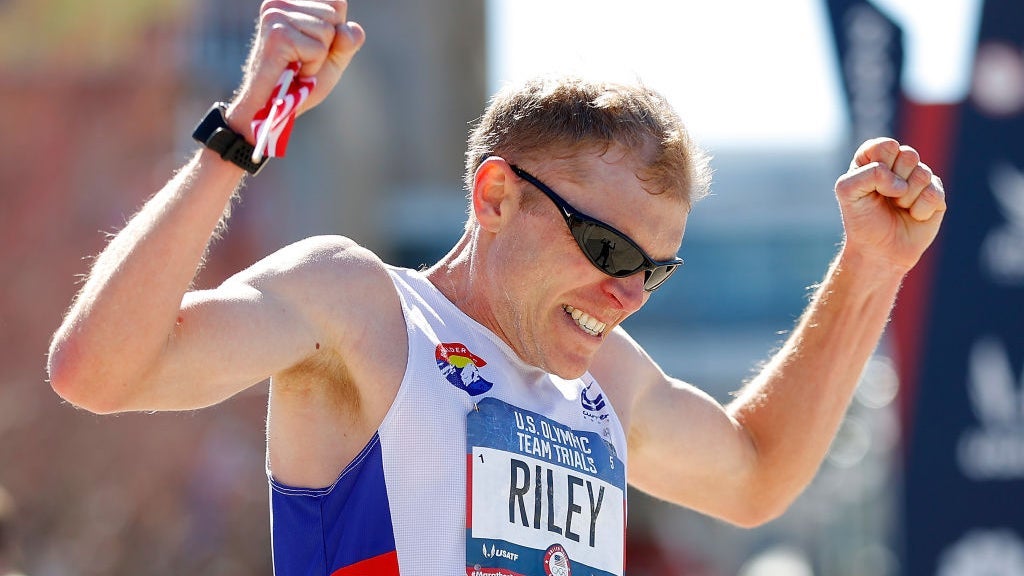
Jake Riley after finishing 2nd in the 2020 Men's U.S. Olympic marathon team trials (Photo: Kevin C. Cox/Getty Images)
Everyone running in last year’s Chicago Marathon had an arduous path to the starting line. But Jake Riley’s journey to return to the race where he set his 5-year-old PR was especially challenging.
History is littered with names of former elite runners who got hurt, went through life changes, felt the pull of needing to pursue a real career, or just gave up in their late 20s—and were never heard from again. The 31-year-old Riley could easily be one of them. He’s gone through the ringer since running his last marathon in the 2016 U.S. Olympic Trials in Los Angeles, but he’s fought through the trials and tribulations to be in position to challenge the 2:13:16 PR he set at the 2014 Chicago Marathon.
On his long road back to the marathon, Riley ended a successful, five-year stint with the Hansons-Brooks team, quit his job as a part-time running store clerk, went through a divorce, moved to Boulder, Colo., started training under Lee Troop, had surgery to repair a nagging Achilles injury and began pursuing a master’s degree in mechanical engineering.
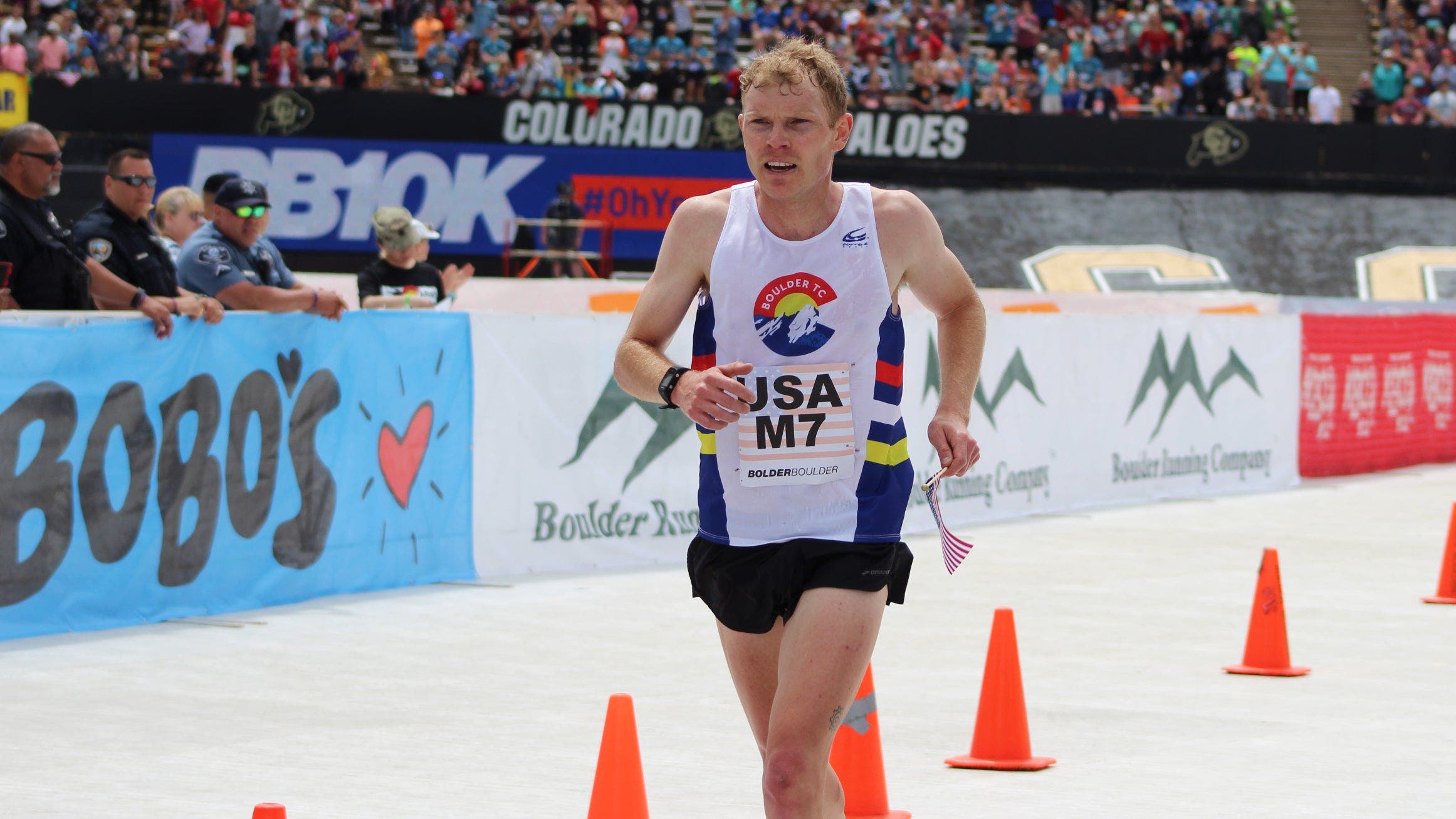
At the moment, he’s an unsponsored runner who’s juggling training with a busy class, teaching and tutoring schedule. But he admits that it was only with the complete life reboot that he was able to really focus on—and appreciate—serious training again.
ADVERTISEMENT
“For me, the biggest thing has been kind of learning how to compete again,” Riley said over coffee in Boulder. “I kind of forgot how much it hurts to try cover moves in a race than to stay with a pace. I didn’t think it was going to be as much of a learning experience coming back, and I’m just starting to get back into a rhythm of racing.”
Riley was locked into that rhythm in the fall of 2014 when he made his marathon debut in Chicago. He placed 11th overall in that race and finished as the second American. From there, he went on to place second in the 8K race at the Great Edinburgh XC International challenge and second at the USATF National Club XC Championship.
Ignoring His Achilles Heel
Turns out his challenges with his lingering injury might have actually been a sign of an psychological Achilles’ heel in a broader sense. As his life grew more and more frustrating and started to unravel, he thought about giving up on running. But he knew he had to make changes so he could move forward if he had any chance of being competitive again.
ADVERTISEMENT
He moved away from Rochester, Mich., where he had lived, trained and worked since he concluded his All-American career at Stanford and eventually settled on continuing his education in Boulder and training with Troop.
“Running has been a huge part of who I am and has defined just about every life choice I have made since high school, and the thought of not being part of this community was scary, sad and depressing. I didn’t want to do that,” he says. “Competitive running is really fun, and the satisfaction and the drive and the structure of it is really rewarding, especially when it’s going well. It feels like everything else seems to fall into place around it.”
Racing Off the Rust
After the surgery, he trained for almost a year before Troop had him enter a local community 5K race as a rust-buster. From there, his next challenge was going to be the citizen’s race of the Bolder Boulder 10K. But then a spot in the competitive pro field opened, and Troop threw him into the fire, even if he knew he didn’t have the legs.
ADVERTISEMENT
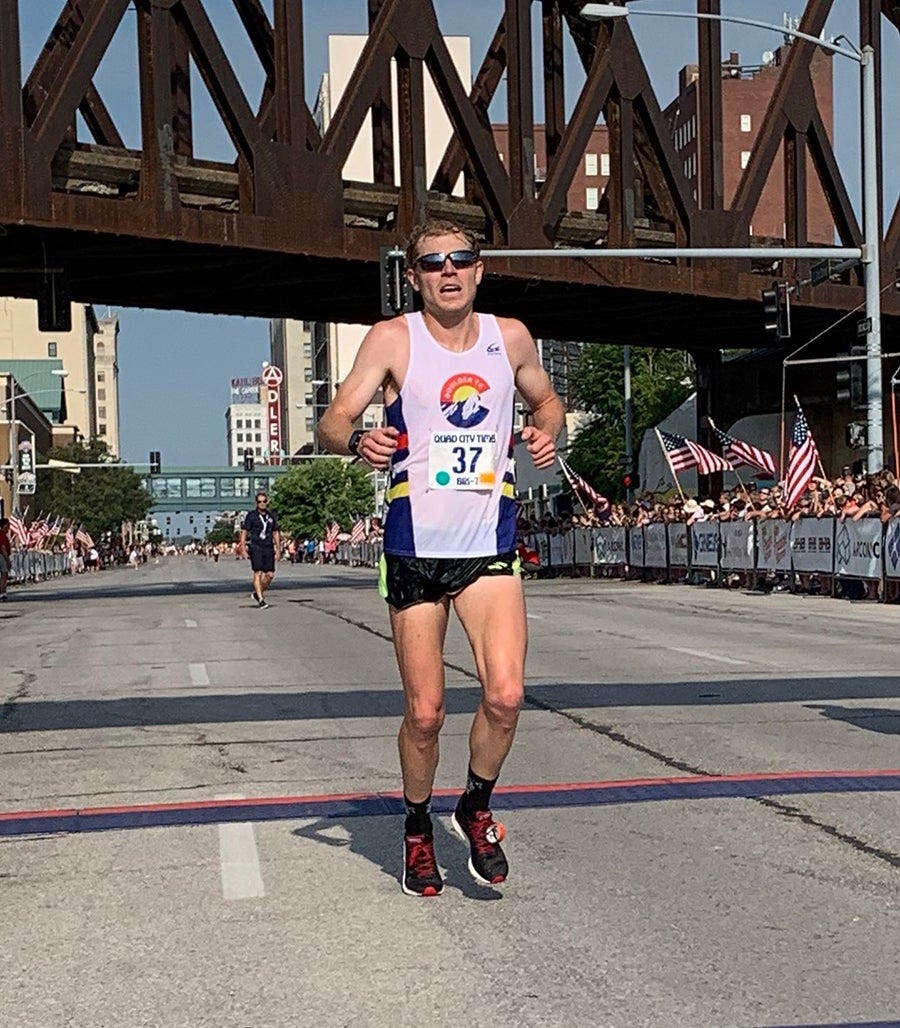
Riley held his own, finishing 25th out of 36 in 31:19, a result that served as a motivational spark as he started his Chicago Marathon training block. He ran well at the Bix 7 in late July in Davenport, Iowa, where he finished 10th overall and the first among Americans (34:11, or 4:53/mile pace). Things didn’t go quite as well at the U.S. 20K championships last month in New Haven, Conn., where he was 15th (1:01:59 or 5:00/mile pace), but it wasn’t a huge setback either.
“Race pain is so much different than workout pain,” Riley admits. “In my attempts to come back, I had done some hard workouts and you can gut it out a little bit. But gutting it out when you know you are finishing a rep versus knowing you have 10 laps or 10 miles to go in a race is much different than I remember. So one of my focuses is learning to get into that mental headspace I need to be in late in a race.”
Resurrection Through Balance
With focus, purpose and good health, Riley says he has trained as well under Troop in recent months as he ever has. He’s only averaging about 105 miles per week, but he’s also doing more strength work than he has in the past. Plus, his master’s program has reinvigorated his career goals, which is now focused around an interest in doing research and design for a running shoe company.
ADVERTISEMENT
Riley finished ninth in Chicago in a PR 2:10:36. The big difference, Troop, a three-time Australian Olympian with a 2:09:49 PR says, isn’t necessarily training, but an improved life balance.
“I think he’s always had that burning desire, and even if there wasn’t a burning flame that was firing, there has certainly been something flickering within him,” Troop says. “It’s just been awesome to see him resurrect himself as an athlete, but I think more importantly to come out of this as a better person, a hungrier athlete and more determined to achieve success.”
