Published June 2, 2021 05:02PM
Four Keys to Cole Hocker’s Breakout Track Season
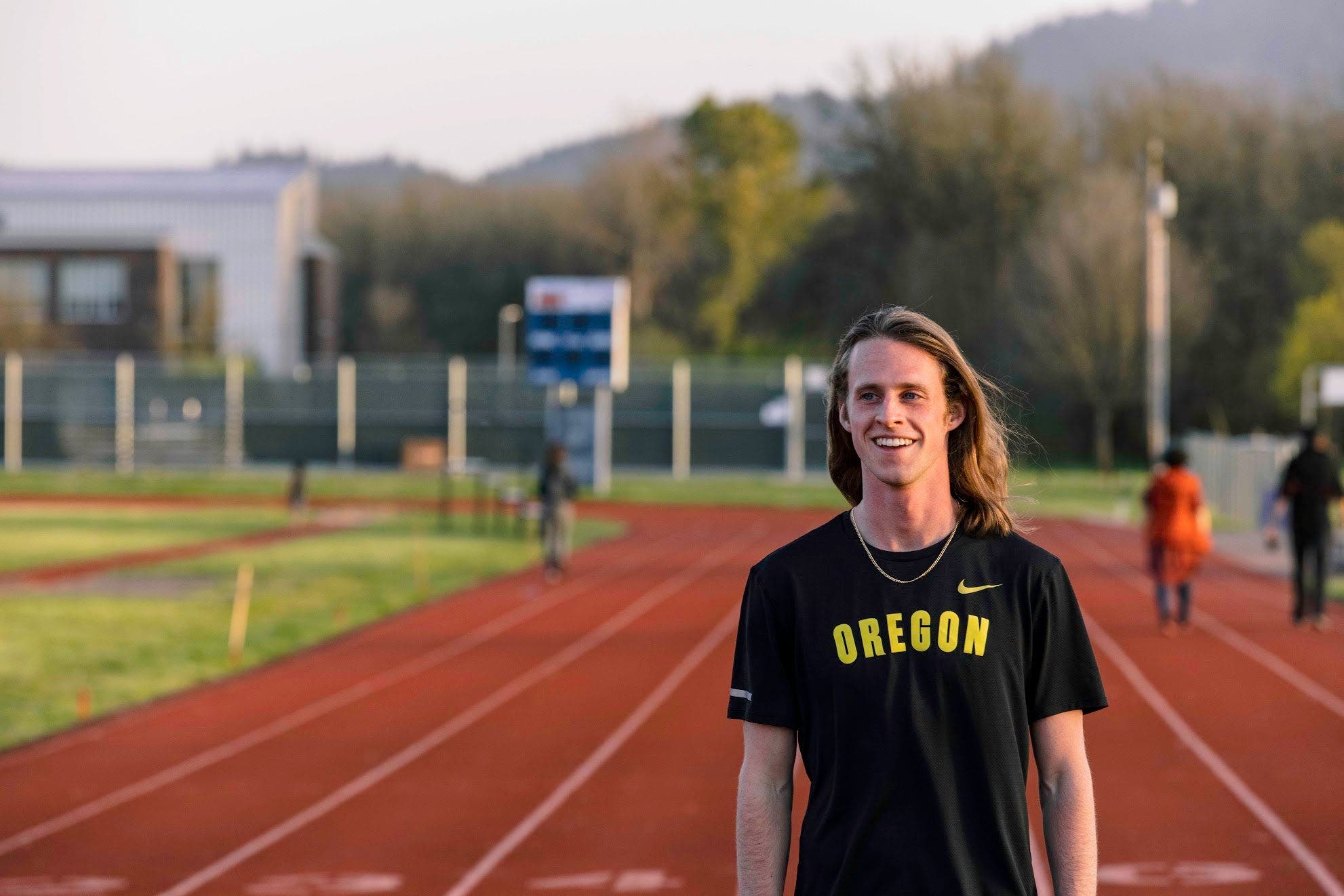
Hocker, Oregon standout and Olympic hopeful, shares training principles and perspectives that every runner can use.

(Photo: Luke Webster)

Keep Mileage Low
The question of mileage is always a topic of contention. Which doctrine is correct: the church of quality miles, or quantity? Each school of thought can point to gurus and role models professing the benefits of their strategy. The question of mileage becomes even more of a challenge for high school coaches, as they look to develop young talent while still keeping an eye on the future health and career of their athletes.
For Hocker’s high school coach Jim Nohl, the answer was low mileage. According to Hocker, he was only running 30 or so miles a week for most of high school, and cites this as one of the main reasons he was able to develop into the runner he is today.
ADVERTISEMENT
“I didn’t get injured all four years of high school, and I don’t think that was by chance,” Hocker says. “It was because of our mileage…. our coach was cautious with our mileage and even believed that 60 miles a week, was way too much. His focus was on getting us to run at our desired college, and that required us to stay healthy.”

Focus on the Next Race
Mental training for racing has become more widely acknowledged in recent years, with most accepting it as an essential aspect of running fitness, even equally as important as physical training. Hocker cites mindful focusing as a key practice that helps him keep a good perspective and fight burnout.
“Our coach does a really good job at helping us focus on the next race and nothing more; and so right now all my focus is only on my next race.” Hocker says. “When you start thinking about the entire season, you can get mentally burned out. You’re like, ‘I gotta race how many times?’ And yeah, it takes a toll for sure.”
ADVERTISEMENT
While 5-year goals are vital, it’s also important to maintain perspective, focussing only on the next task, run or race. Cole admits that the Olympic Trials are never far from his mind this year, but he keeps his focus dialed in on his next race and tries not to think too far ahead.
Take a Rest Day
Hocker points to a unique aspect of the Oregon training plan that also helps avoid burnout: a scheduled day off.
“Having Sundays off is a big component of our training,” he says. “I think knowing you have a day completely off is super helpful, and that’s not real typical with a D1 Program. I think it’s working flawlessly with our program. We know how to rest while still keeping training in mind.”
Very few programs or even runners take an entire day off from training, and yet, as with his high school training mileage, sometimes less is more. For Cole and the rest of the Duck runners, having Sundays as a rest day gives them both the mental and physical freshness to attack each week of training.

ADVERTISEMENT
Embrace Your Competitiveness
“I like to win,” Hocker says, with a chuckle, when asked what he likes most about running.“That’s what keeps me coming back. I mean, every race I’m in, I want to win.”
Every great athlete, regardless of the sport, has the same mindset. From Michael Jordan to Leonel Messi to Steve Prefontaine — they all approach each day as an opportunity to win. Not only an opportunity, but an expectation that they will excel. It is this expectation, this almost idealistic viewpoint, that pushes them to truly compete at their best.
ADVERTISEMENT
And, while winning is the end-goal, it is the competing that brings the thrill. “When you finish a race,” Hocker says, “Even if you don’t win but you run a fast time that you’re happy with, you to have a feeling of gratitude that’s hard to match in doing anything else.”

Will we see Hocker at the Olympics? It’s anyone’s guess, but he’ll certainly compete. For now, it’s safe to say he is just beginning to hit his stride, and, with his guiding principles and perspectives, is poised for a long, successful career.