Published April 26, 2019 02:52PM
Kipchoge Returns to London: Another Marathon Masterclass?
The preview of Sunday's London Marathon men's race can be written in one word: Kipchoge.
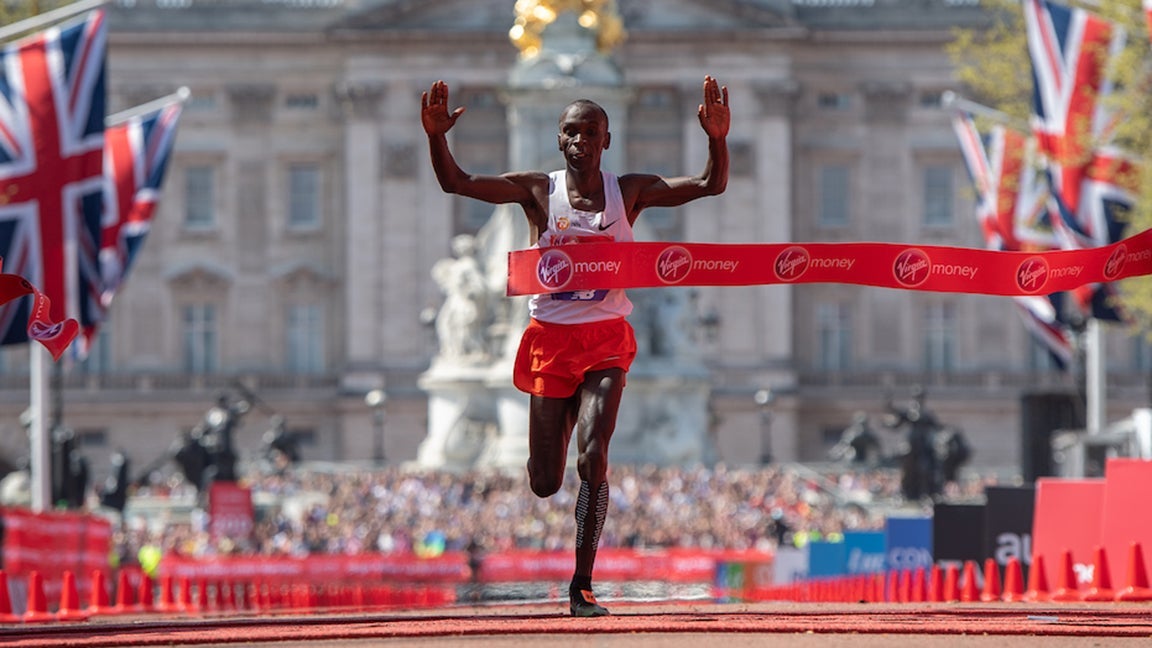
Eliud Kipchoge KEN crosses the line to win the Elite Men's Race. The Virgin Money London Marathon, 22 April 2018.
It is a measure of Eliud Kipchoge’s mastery that his name can sum up everything important about a major race. Kipchoge: The word means epoch-making excellence, it means a unique combination of record-breaking pace and tactical versatility, it means adaptability to conditions and competition, it means deep understanding of the science of training and the practice of racing, it means one of the most wise and intelligent men ever to be sports star, it means the world record, the Olympic gold medal, winning ten out of eleven major marathons, not coming close to defeat since 2013, and having a PR 1min 18sec faster than anyone else in history.
Highly unlikely.
ADVERTISEMENT
We might think that a man of 34 who has been racing hard since he won the world championship 5000m at eighteen, has run peak marathons for six years, and who subjected himself to the extreme stress of 2:00:25 in the “Breaking Two” project time-trial in 2017, must soon begin to decline. But Kipchoge’s last race, at Berlin last September, was a PR by almost two minutes. The world record, 2:01:39 (it seems presumptuous even to type those figures), was run on a hot day, run in great part alone, after his pacers were fried soon after halfway. He cavorted like a roguish kid after the finish line, and cracked jokes at the media conference. That didn’t look like decline.
It’s always worth listening to Kipchoge himself. He tells it straight.
With any other defending champion, London’s stellar field of challengers would have us anticipating a classic. The Brits are optimistically promoting the race as a match-up between Kipchoge and their adored Mo Farah, superlative for a decade on the track (four Olympic, six world gold medals), and an impressive winner at the Chicago marathon last October in a European record 2:05:11. The publicity photos show Kipchoge and Farah forehead to forehead.
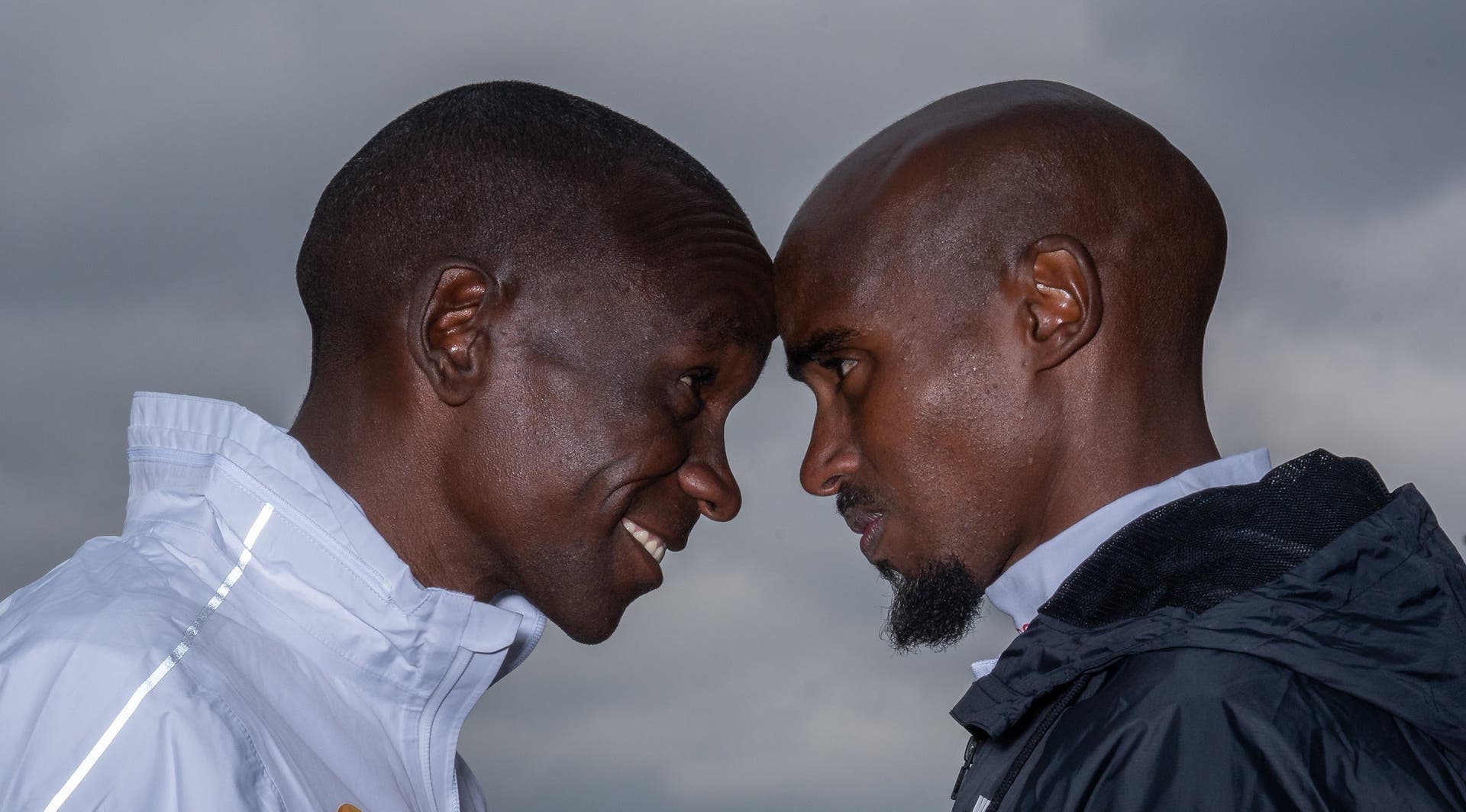
Photo: Bob Martin for Virgin Money London Marathon
Three factors count against that tennis-final interpretation. One, Farah seems to be having a more fervid head-to-head with Gebrselassie, trading embarrassingly public accusations of theft, assault, and misconduct during a stay in Gebrselassie’s Addis hotel. It does not sound calming three days before a big race.
ADVERTISEMENT
Two, Farah’s 2:05:11 looked good at Chicago, but Kipchoge’s three London wins have all been much faster, and the last time he won in a time outside 2:05 was in the steamy hot Rio Olympics. Kipchoge praised Farah’s Chicago win as “tactical,” and for learning the marathon so quickly. Both could be interpreted as encouragement from the master.
With Kipchoge seemingly still the name that says it all, the podium is most likely the best any of the others can hope for.
