Published January 7, 2019 11:22PM
Three Hip Abductor Exercises for Every Runner
Target the hip abductors with these exercises to improve your stride, prevent injury and increase your running performance

(Photo: Getty Images)
Strong runners are typically faster, more efficient runners. But you can’t get better at running by solely hitting the pavement alone. You need strength training and more specifically, you need to target certain zones to improve your performance and prevent injuries.
When you run, your muscles and connective tissues take a beating. Those tissues must withstand frequent impact and the demands of aggressive training and racing. Strength training builds strong muscles and connective tissue, which in turn, enables you to absorb impact and transmit energy better. One area that can help you become a better runner is by focusing on strengthening your hip abductors.
Abduction is the movement of a limb away from the midline of the body. Lift your leg to the side of your body and you’re performing hip abduction. All the glute muscles—maximus, medius, minimus and tensor fasciae latae—play a crucial role in hip abduction and successful running.
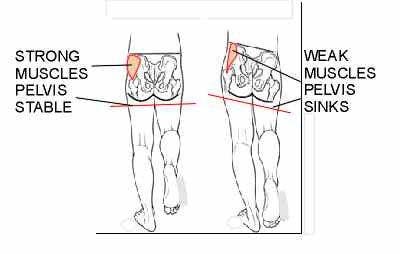
In gait, hip abduction doesn’t involve lifting your leg out to your side but rather the stance leg abductors lifting up the non-stance side of the hip. To illustrate, stand on one leg and keep your pelvis level. Can you do it? If you’re successful then your stance leg hip abductors are doing their job. Tune into the muscles on the outside of the stance hip. Can you feel them working?
ADVERTISEMENT
When those muscles are weak, it can lead to injuries such as Achilles tendinopathy, patellofemoral pain syndrome (runner’s knee), IT band syndrome, hamstring tendinopathy or plantar fasciitis. Strength training works well to reduce pain, while strong muscles and tissues protect against injury. If you’re not injured, then strength training will help keep you that way. If you are, then strength training will help heal you. I’ve seen several clients improve their low-back pain with hip abductor strengthening.
Exercises
Hip abduction and hip abductors are easy to overlook until you’re hurt and can’t run. In many cases, weakness is the problem and strength is the cure. Use these exercises to prevent or overcome injury and increase your running performance. These workouts target the hip abductors in ways that squats and deadlifts don’t. All exercises should be done in good control and to the point of exertion but not total exhaustion. Always maintain precise form and repeat 2-3 times per week.
Side plank progression
This exercise targets abs, shoulders, and hip abductors. You may hold side planks to meet a certain time or move up and down three times to complete one full rep. Repeat a few more times. Keep your leg aligned with your trunk as you do these. A common mistake is allowing the leg to migrate forward. You’ll miss the target if that happens. The video progresses from easy to more difficult planks.
Hip hike
Hip hikes work the hip abductors along with the quads, lower leg and foot muscles. Stand on a box or step. Reach the non-stance leg down toward the ground then reverse direction and lift the non-stance leg up as high as you can as if you’re sprinting. Use a wall or something similar for support if you need it but use the least amount of support you need.
ADVERTISEMENT
Offset walking lunge
Hold a weight in one hand. Perform an alternating walking lunge to the point of exertion. Turn around, hold the weight in the other hand, and walk back. Stay balanced and in control at all times. The hip abductors are worked most when the weight is opposite the lunging leg. Tune into your glutes and feel them work.