Published July 17, 2020 05:18PM
Ask Pete: Is High Mileage Necessary for Fast Race Times?
Mileage isn't a training plan, just the sum of the workouts you need to train for your goal race. Here's how to figure out what you need.
(Photo: 101 Degrees West)
Have a question for Pete? Shoot us a note.
QUESTION
Some coaches say that high mileage isn’t necessary for fast race times, while other coaches and elite runners swear by it. How much mileage do I need to run my best times? – Alejandro
ANSWER
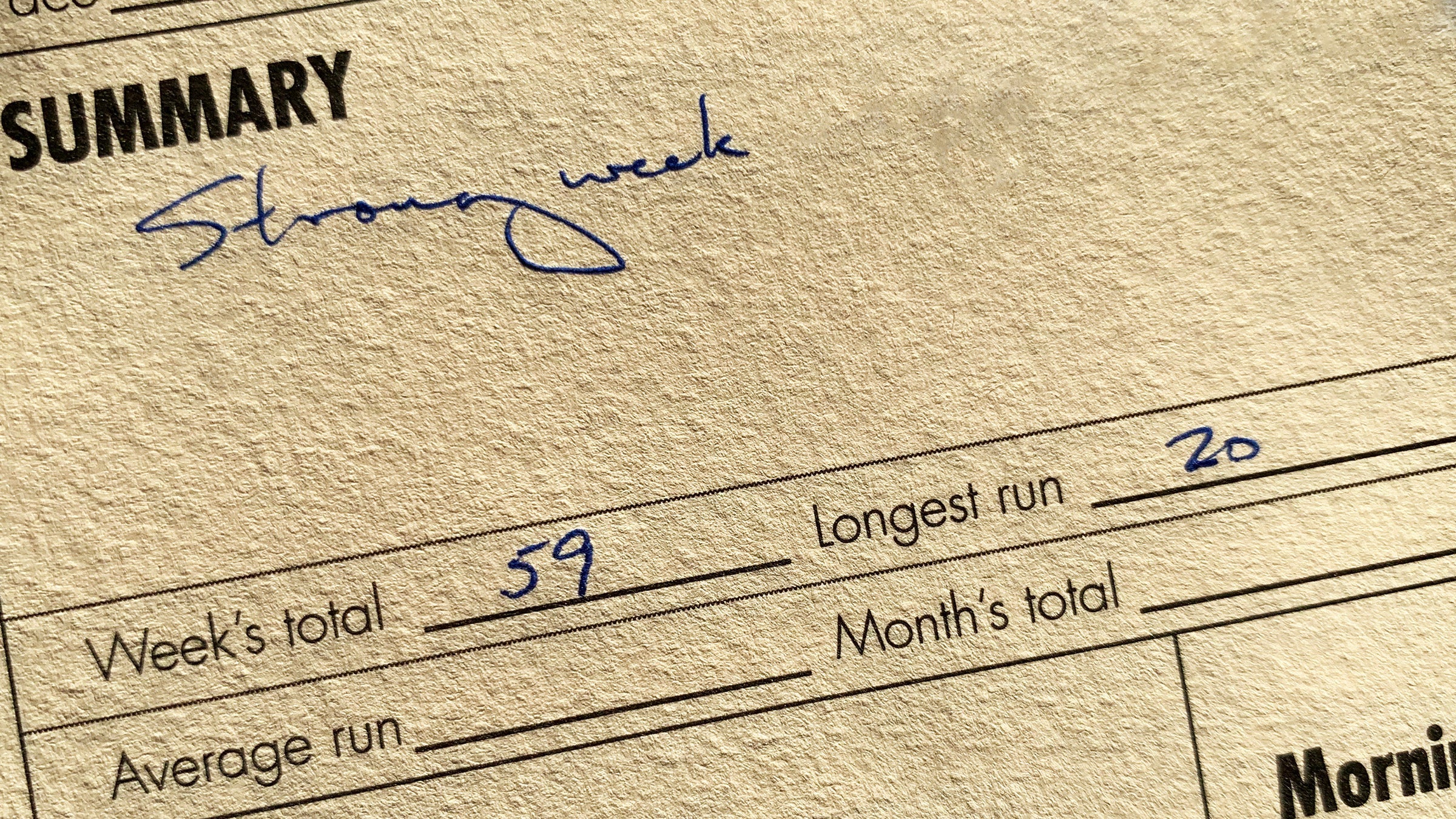
Mileage isn’t a training plan. It’s an after-the-fact accounting of the total distance you jog and run during a week’s workouts. Your training goal should be to complete the correct workouts associated with your race goal(s). For a marathoner, that approach will eventually yield higher mileage. For a miler, not necessarily so. Step one, understand the demands of your race. Step two, schedule workouts to meet those demands. Step three, add up your mileage.
Mileage is a tricky topic for runners. Most of us track it. Many of us believe it holds the key to success in the sport (more is better, less is bad). And quite a few of us have adopted it as our go-to greeting when we meet other runners: “So, what’s your mileage these days?”
But mileage is also this: a number that says almost nothing about the effectiveness of your training program. I know, when you ask, you expect the answer to be “25 miles.” Or, “50.” Or, “100.” But that’d be wrong, or at least a gross simplification. Miles come in all kinds of paces, reps, inclines, and terrains.
ADVERTISEMENT
A mile of easy distance isn’t the same as a mile of 200-meter reps at 800-meter pace — not in its training effect nor in the recovery you’ll require post-workout. And runners are just as hard to categorize. You are a unique blend of age, physiology, fitness, and experience, among other factors. Just because the top marathoner in your club logs 100 miles/week doesn’t mean you should — that much volume might just break you in two.
While I can’t address all the unique factors you bring to your running, I can break down some of the other considerations you’ll need to make when setting up your overall program.
Muscle Fibers
Planning your training begins with muscle fibers (i.e., muscle cells). Different races recruit different muscle fiber contributions, and you’ll have to run workouts that target those same recruited fibers. Let’s quickly review the three muscle fiber types:
- Slow-twitch: Your smallest fibers, these produce the least amount of force and are fueled almost exclusively by aerobic energy.
- Intermediate fast-twitch: Bigger fibers, these produce more force and are fueled by both aerobic and anaerobic energy — proper training can increase their ability to run on aerobic energy, which translates to greater endurance.
- Fast-twitch: Your biggest fibers, these produce the most force and operate on a diet of almost all anaerobic energy.
Here’s what you need to remember about muscle fibers: You use only as many fibers as are required for your running effort. Easy efforts recruit slow-twitch fibers. As the intensity of your effort increases, you add intermediate fibers, then fast-twitch fibers. Think of carrying furniture up a flight of stairs. You can handle a lamp by yourself (slow-twitch). You need a friend’s help to carry a table (slow-twitch plus intermediates). And you’ll need a crew to lug up a refrigerator (slow-twitch, intermediates, and fast-twitch).
ADVERTISEMENT
So if your race is a “lamp,” you can get by with workouts that mostly target slow-twitch fibers. But if your race is a “refrigerator,” you need to sacrifice some of the slow-twitch training (e.g., distance runs) to make room for more intense workouts (e.g., VO2max repetitions) that target faster fibers.
Check out the chart, “Muscle Fiber Recruitment,” to get a rough idea (actual recruitment percentages will vary) of the fiber types/fibers you’ll use during your goal race(s). You’ll have to include at least some workouts at race pace (or faster) to train those fibers.

Energy systems
You have three energy systems — two anaerobic and one aerobic — that work together continuously to provide the energy you need to run. Let’s review:
- Phosphagen (anaerobic): Your first responder, this system is like a nitro blast in a drag race, providing a surge of energy that can last 10-15 seconds at top-end speed.
- Fast glycolysis (anaerobic): This is the system most runners think of when they think “anaerobic,” and it uses carbohydrates (i.e., glycogen and glucose) to provide another fast-acting-but-short-lived source of energy.
- Aerobic: This system takes 30–40 seconds to ramp up — the amount of time it takes to deliver an increased oxygen supply to muscle fibers — and uses carbohydrates and fats to provide long-term, high-volume energy for your muscles.
Here’s the main thing you should know about your energy systems: Each of your muscle fibers generates its own energy. You don’t have one big gas tank. Instead, each fiber has its own microscopic aerobic energy generators (i.e., mitochondria) and creates its own anaerobic energy.
ADVERTISEMENT
And how does that help you to set up your training? First, look at the chart, “Aerobic/Anaerobic Energy Contribution,” to find the energy requirements for different races. Then remember that you’ll need to develop those energy systems within the muscles fibers you’re recruiting for your goal race(s). For example, a 5K is 90-plus percent fueled by aerobic energy. But a fast 5K requires a big contribution from intermediate and fast-twitch fibers. So it’s not enough to do aerobic distance runs, which target slow-twitch fibers; you’ll have to schedule workouts that improve the aerobic function of intermediate fibers — workouts such as tempo runs, 3K–5K-paced reps with short recovery intervals, 30–90 second hill reps, etc.

Fatigue and recovery
In a perfect world, you could run any workout and any amount of mileage you wanted, recover overnight, and never get injured, sick, or overly fatigued. In the real world, you have to carefully balance training, fatigue, and recovery.
- Muscle fibers: Running damages recruited muscle fibers. The faster you run, the more fibers you damage. Also, if your distance run stretches past 90 minutes, your slow-twitch fibers begin to run out of fuel, forcing you to recruit more slow-twitch and some intermediate fibers. So while you can bounce back quickly from an easy distance run, a faster or longer effort requires 48–72 hours before the next demanding workout.
- Connective tissue (CT): Bones and tendons take longer to adapt than muscle, so you need to limit major increases in volume/intensity to every 3–4 weeks.
- Energy systems: Your phosphagen system resets in three minutes. Your aerobic system needs about a day to restock muscle glycogen. But your fast glycolysis system is trickier. While fatigue isn’t well understood, the negative consequences of anaerobic training can include acidosis, leaky calcium channels, depolarization, and inorganic phosphate accumulation, among others. You’ll need at least 48 hours to recover from a significantly anaerobic workout — maybe a day or three more depending on how you feel.
- Nervous system: Activating intermediate and fast-twitch fibers requires increased signaling from your brain to the fibers’ associated neurons. You’ll also utilize more neural pathways. All this leads to nervous system fatigue. Fit runners can require up to ten days to fully recover following an exceptionally hard outing (e.g., a race).
Ultimately, your mileage isn’t determined by how far or hard you’re willing to run. It’s limited by the recovery required between workouts.
Bottom line
Which brings us back to you — Alejandro — and to all distance runners. The late Dr. George Sheehan wrote, “We are each an experiment of one. A unique never-to-be repeated event.” There is no pat answer for “correct mileage,” because what’s right for another runner might not be right for you.
So identify the workouts that target the muscle-fiber and energy-system requirements of your goal race(s).
ADVERTISEMENT
With that as your guideline, do as much training for each fiber type and energy system as you can without breaking down.
And then, and only then, add up the miles.
That’s your perfect mileage.
Have a question for Pete? Shoot us a note.
ADVERTISEMENT
Pete Magill is a running coach, world-class runner, and author. As a coach, Magill has led his masters clubs to 19 USATF National Masters Championships in cross country and road racing and has worked with athletes of all ages and abilities. He holds multiple American and world age-group records and is a 5-time USA Masters Cross Country Runner of the Year. Magill is author of Fast 5K, SpeedRunner, Build Your Running Body, and The Born Again Runner.
