Published November 14, 2018 09:12PM
How to Run Your Fastest 10K Ever
The 10K doesn't just take endurance, it also takes speed. Here's how to prepare yourself.
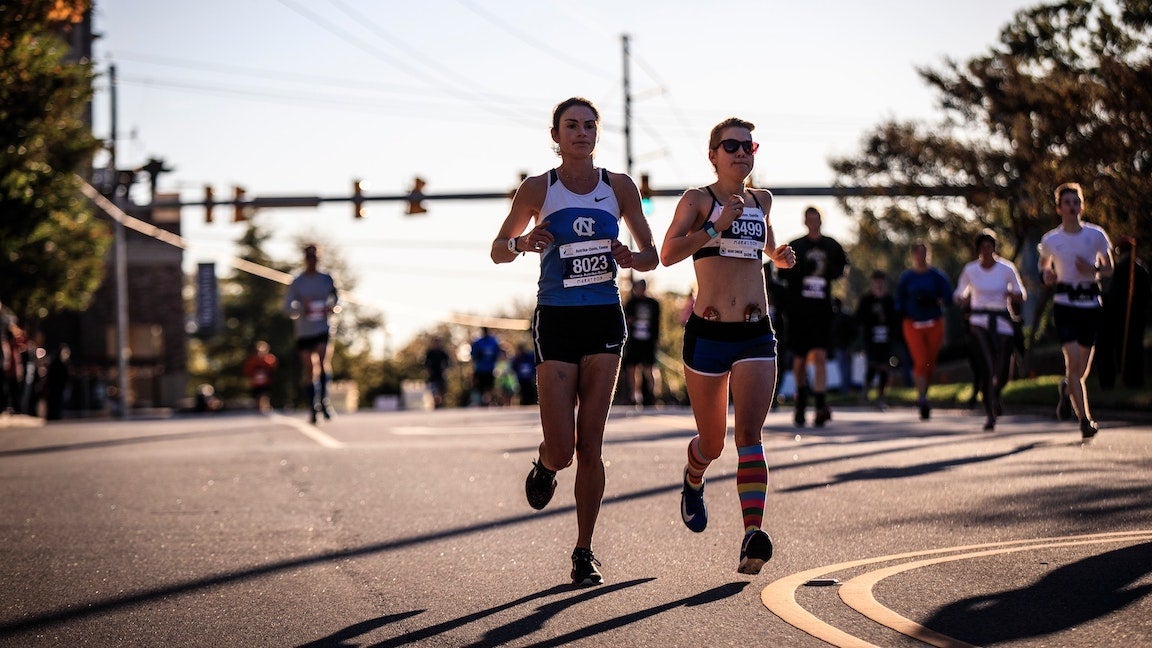
(Photo: Capstone Events / Unsplash)
The 10K is like the 5K’s ugly step-sister: it’s often used as a tune-up race, but rarely do runners focus on it. So why is the 10K ignored as a race distance to earmark as a “goal race?”
I don’t have the answer. But I do know that at 6.2 miles, it’s long enough to demand the resiliency of a trained distance runner but short enough to require the speed and kick of a mid-distance runner. If you’ve struggled with the 10K, you may be focusing too heavily on the long run and overall weekly mileage (like many marathoners rightly do). Or, you may be putting too much emphasis on speed.
Successful runners know that a new 10K personal best needs both: each must be developed to record a strong finish. Today you’ll learn a three-pronged approach to training for the 10K that will help you run a new personal best.
ADVERTISEMENT
First, Build General Endurance
To run a fast 10K, you first have to be able to run a slow 10K. Covering the race distance frequently during training is necessary—and required—if you want to see how fast you’re capable of running 6.2 miles.
Building this level of general endurance can be done in several ways:
- Weekly Mileage: Run more! Mileage in the 30+ range is a great start for intermediate runners.
- Long Run: Run at least 10 miles as your peak long run, but preferably a lot more (16+ for advanced runners)
- Tempo Runs: These workouts are run at your “lactate threshold,” or the pace that you could run for about an hour. Start with 2 miles for your tempo run and build to 5 miles once per week over the beginning and middle phases of your training cycle.
These are tried and true methods for increasing endurance. They work for both beginners and professionals—and they’ll work for you too. These strategies help you maintain a given pace for a longer period of time, but there are two more valuable strategies for racing a fast 10K.
ADVERTISEMENT
Run Fast (Frequently)
The 10K requires a lot of leg speed. To maintain a challenging pace and finish strong, you must develop speed. After all, if you want to race fast, you have to run fast in training.
Fast running has two important benefits. First, it helps promote better running economy so you’ll expend less energy to run faster. Second, it develops muscular strength that will help you produce more force, resulting in a more powerful stride.
There are many ways of developing speed, but here are three of the most effective:
- Run Strides: These 100-meter accelerations bring you to about 95 percent of your maximum speed. Start with four strides after easy runs 2-3 days per week.
- Hill Sprints: Doing short, steep uphill sprints in the range of 10-15 seconds 1-2 times per week will develop strength just like heavy lifting in the gym, but with more specificity to running.
- Short repetitions: Running 200m–400m at a pace at your 1-mile race pace or 5K race pace will help improve your turnover.
You’ll see that this strategy helps make 10K pace feel easier. Building the fitness necessary to run a challenging 10K pace is more successful when you run workouts that are slower and faster than race pace. Of course, you also need to run at race pace. That’s the last missing puzzle piece.
ADVERTISEMENT
Build Race-Specific Endurance
Once you have a foundation of general endurance through relatively-high mileage, long runs and tempo runs—plus the leg speed from regular strides, hills prints and short repetitions—you can get more specific.
Ultimately, the goal is to run 6.2 miles at goal 10K race pace. We’ve practiced running slower and we’ve practiced running faster, so now it’s time to practice the exact pace we’ll be running on race day. Regularly running race pace will help you not only build the specific fitness you need for the race, but the mental edge of knowing what it feels like is too important to ignore.
Race-specific workouts are not only done at the same pace as the goal race, but they also have about the same volume as the race itself. So for a 10K, it’s ideal to build to about 6 miles of work at goal pace.
ADVERTISEMENT
Here is a simple progression of 10K-specific workouts that you can run as you prepare for the race:
- 3 x 1 mile at goal 10K race pace with 2 minutes of easy running as recovery between repetitions
- 4 x 2,000m at goal 10K race pace with 90 seconds of easy running as recovery between repetitions
- 3 x 2 miles at goal 10K race pace with 1 minute of easy running as recovery between repetitions
Each workout gets longer and the recovery gets shorter, simulating what you’ll experience on race day. If a runner can do the final workout, he or she should be confident about running goal pace during the race itself. The race atmosphere, taper, and psychological boost of competing will close the small gap between the workout and the race.
