Published October 17, 2023 11:32AM
Backcountry Medicine Experts Recommend These Essential Five Tips to Run Safe This Fall
As popularity in trail running skyrockets, so too are wilderness medicine courses that focus on common trail running injuries. Here are some critical ways to stay safe on the trail as seasons change.

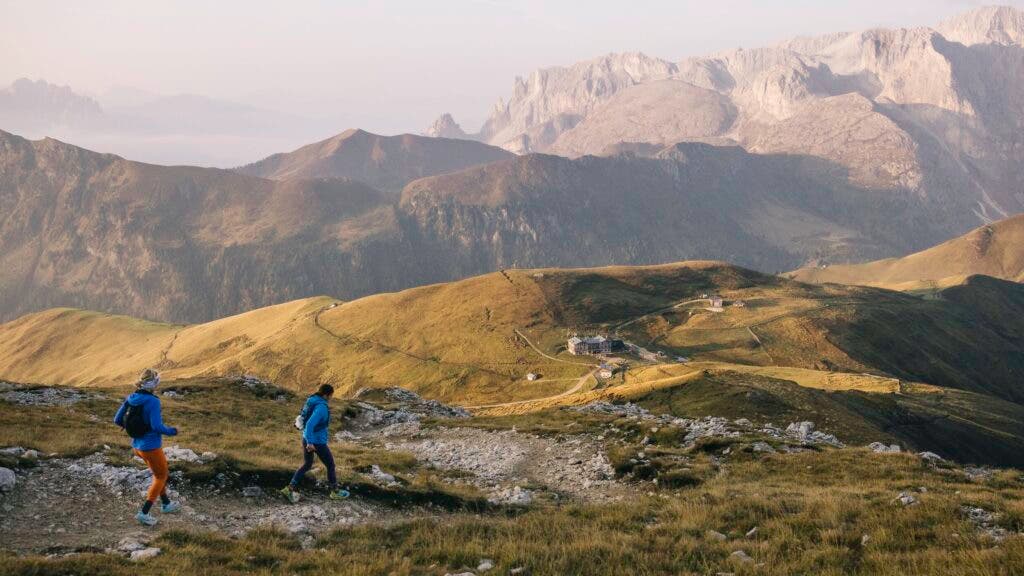
(Photo: Andy Cochrane)
Safety training is especially important as we head in the fall. With shorter days, fickle weather, and more intense conditions, the inherent risk grows exponentially. Deep in the backcountry, one small mistake can have outsized consequences. Trail runners can be prone to see technology as an ironclad insurance policy, while in reality it can be an illusion of safety without the right trail safety training and know-how paired with it.
“The need for backcountry safety classes is skyrocketing,” says Nelson, a long-time Patagonia-sponsored ultra runner who sees a need for trail running specific medical classes that focus on the most common problems in the backcountry and teach solutions using the gear you are likely to have while running.
“Everyone should take a class, especially the cohort pushing further into the backcountry on fast-and-light missions, FKT attempts, and long alpine efforts. Unfortunately, right now we’re lucky when groups have just one person with any sort of training. As a community, we need a higher standard.
“I have plenty of friends and people I care about in the trail running community who aren’t prepared for things to go sideways,” says Luke Nelson. “The ethos is, if you go fast enough you’ll be fine—but that’s not always the case. I’m most worried about super capable athletes who can go really far, really fast.”
While he wasn’t with Adam Campbell in 2016 or Gabe Joys in 2022, Nelson says these two near misses were major catalysts behind starting Alpine Endurance Medicine (AEM), his new wilderness medicine company. “These incidents, plus many others, motivated me to change the narrative,” he says. “Right now, a lot of runners are relying on luck and speed as plan A, instead of having the skills for emergencies in the backcountry.”
Fortunately, both Campbell and Joys had just enough training and relied on the right instincts to stay alive. “Both had good outcomes because of quick responses and quick rescues, but it easily could have gone another way,” says Nelson, who sees an opportunity to educate trail runners. “Our community talks about stuff like nutrition and recovery all the time. We need to include first aid in those conversations.”
ADVERTISEMENT
Who Needs Wilderness Safety Education?
Statistically speaking, World Athletics reports that participation in trail running has grown 15 percent year-over-year since the mid-90s, up to nearly 20 million people in 2022. This includes everything from neighborhood trails to remote and technical alpine terrain.
However, unlike the growth in avalanche education for winter backcountry users or swiftwater rescue training for whitewater paddlers, there has not been a trail running-specific medical training until very recently. Nelson says that because trail running is often perceived as safe and more approachable, fewer runners have invested in a safety class, even among the elite ranks.
“Everyone who ventures into the backcountry should have some sort of training,” says Campbell, who says his personal approach has changed dramatically in the years since his accident. While scrambling up a peak with two friends in August 2016, he pulled on a loose rock and rag-dolled 200 feet, suffering a broken ankle, hip, and multiple vertebrae. “Knowing how to identify injuries, stabilize a patient, improvise, and stay calm in a moment of crisis makes a world of difference,” he says.
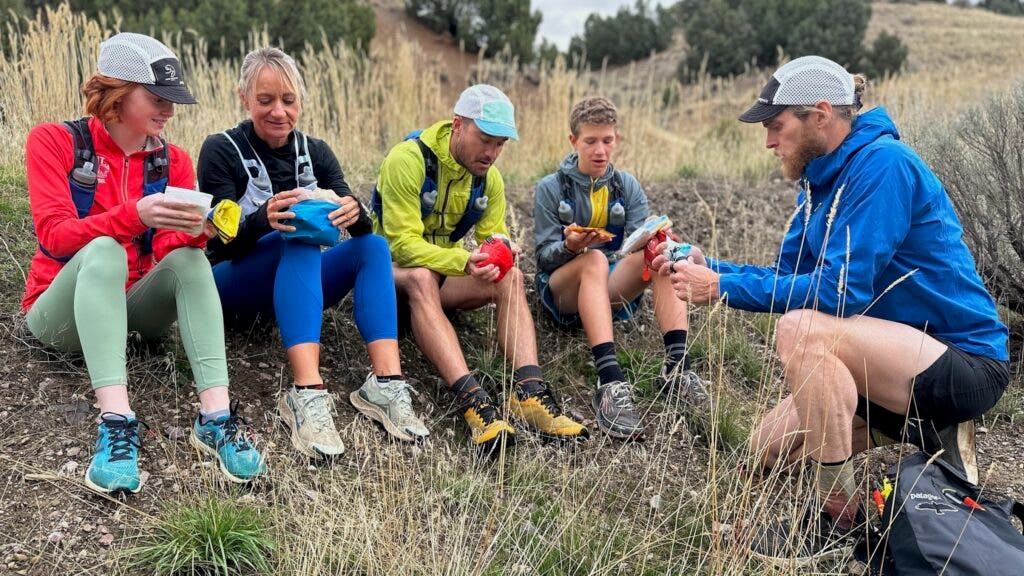
On top of the basics, Campbell says the most important thing is knowing how and when to call for help. He encourages all trail runners to bring a satellite messaging device, practice using it, and to call for help early. “The hardest rescues are when the group doesn’t know when and where to stop, so they just keep going and get into even more trouble.”
Nichelle Scoggin, who took a class with Alpine Endurance Medicine last spring, says that many trail runners, including herself, often miss the inherent risks around them. “It can be a wild place, and we have to respect that,” she says. “I used to run with just shorts and a sports bra, but not anymore. Ignorance is bliss, until it gets us in trouble. These days, I always bring a pack and a first aid kit with stuff I learned in the class.”
ADVERTISEMENT
What Safety Classes Exist for Trail Runners?
Two of the most common backcountry safety classes, Wilderness First Responder (WFR) and Wilderness First Aid (WFA), are a decent place to start. However, because they are designed for a wide variety of outdoor users and broad sampling of use cases—lightning strikes, snake bites, triage, among others— they often lack depth.
“WFR tries to teach everyone how to deal with all of the possibilities, which keeps it at a surface level,” says Nelson. “It lacks specificity and doesn’t apply directly to trail running.”
In the last couple years, trail running-specific trail safety classes have started to pop up, but are still a novelty. Backcountry Medical Guides launched a WFA class for runners based in the San Juan Islands. Run The Alps partnered with Tahoe Wilderness Medicine to create a continuing medical education class in Chamonix. Desert Mountain Medicine plans to offer a WFR trail running class in the near future. But, the biggest practitioners, NOLS, Outward Bound, and Wilderness Medical Associates, haven’t yet jumped in.
Nelson saw this opportunity and created Alpine Endurance Medicine to focus on the most common trail running risks, like bad falls, sprained ankles, and dislocations.
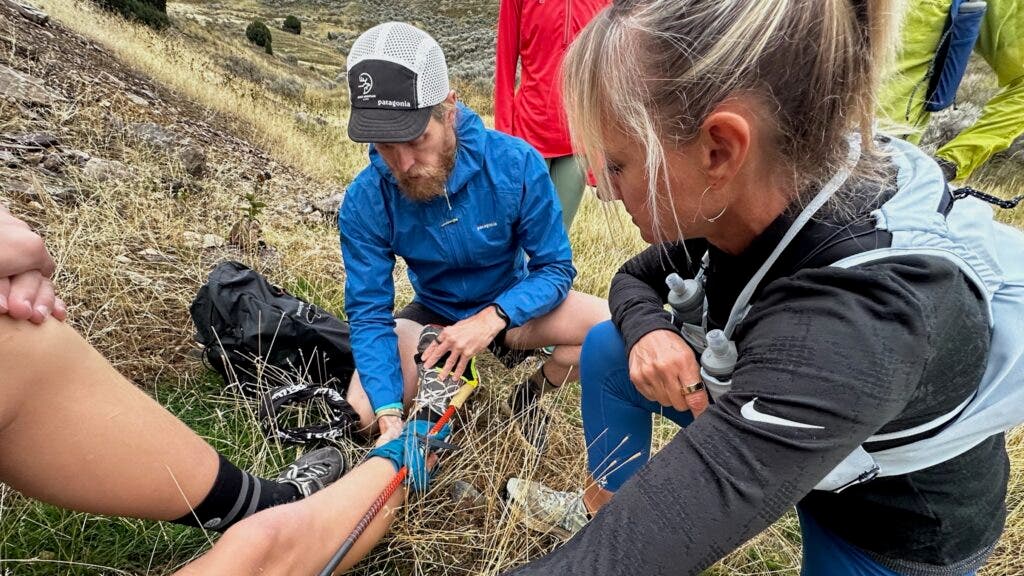
“The core idea is to go on trail runs, sometimes 10 miles or more, and then practice skills. This simulates what you’ll actually feel like when accidents happen. The general assessment part is similar to WFR, but the outcomes are often different, because you can only use what you have in your running pack. It’s much more real.”
“Knowledge is powerful,” says Scoggin. “By taking a class designed specifically for trail running, you’re better prepared for the injuries you’ll likely see.” Her course focused on risks around heat, altitude, and other environmental challenges, as well as wound care, orthopedics, and sprains. “We took turns working through scenarios in the backcountry, getting to be the leader and in a supporting role, too,” she says.
ADVERTISEMENT
Tips for Staying Safe on Trail Runs
“What’s important to remember is that wilderness medicine rarely has serious interventions,” says Nelson. “A few small tools and skills can often be the difference between life and death, buying minutes to get help.” If you don’t have the time or resources to take one of these classes and get hands-on experience and coaching, here are five small but effective tips to stay safer while on backcountry runs.
- Little Things, Big Impact: A large first aid kit is heavy and clumsy to carry on long runs, which is why it is often left behind. Nelson says that adding two safety pins affords you the ability to make a sling and swath, and take care of blisters or slivers. “For the weight, they are invaluable.” Your first aid kit should also have an emergency blanket, tape, lighter, and a whistle. These give you an extra 10 percent safety margin and fit in your pocket, so there’s no excuse not to bring them.” Scoggin says her kit, which also includes a SAM split, two triangles, tourniquet, PPE gloves, and meds for allergic reactions and inflammation weighs just 14 ounces. “Most people don’t realize how long SAR teams take to get into the backcountry and you need to be prepared,” she says.
- Match The Objective with the Group. Campbell says the most critical part of the day is before he gets on the trail. “I obsess about the weather and making sure the objective is suitable for the conditions and the group’s capabilities. Then make sure I have contingencies in place.” Nelson agrees, saying that prevention is “at least 70 percent of the battle” and encourages trail runners to always have an action plan if something goes wrong. “Ideally you’ll have training to take care of small problems that come up, but the best solution is to never get there in the first place.”
- Encourage Open Communication. After planning a route and objective, Campbell works to foster open communication among the group, checking in to see how everyone is feeling that day. He’ll continue to check in throughout the day, to see how each person is feeling, mentally and physically. This creates trust and makes hard decisions much easier. “I have a rule that if I ask myself more than three times if it’s worth it, then I pull the plug and celebrate making a good decision.”
- Dial in Comms—and Practice Before the Run. Before you head out, know the tools your group has to talk with the outside world, especially when going out of cell service. Nelson and Campbell recommend a Garmin InReach, which can text from almost anywhere. Make sure you practice using it beforehand, so you are ready in an emergency. Being able to contact search and rescue immediately will save hours of time, avoiding the worst case scenario. “It’s best to call for help early,” says Campbell, “pushing on and calling later often makes the rescue more complicated.”
- Make Time to Debrief. Both Campbell encourage groups to sit down after an adventure and discuss the good, bad, and ugly. “Did we just get away with something? Did I miss a sign?” are important questions to ask, he says. “A thoughtful debrief is one of the most underutilized tools in wilderness safety and a great way to see if you got away with something,” says Campbell, helping reevaluate your approach next run and improve margins. Scoggin agrees, saying that her class took S.O.A.P. (Subjective, Objective, Assessment, Plan) notes as part of their final evaluation, a more formal way to write up the accident and encouraged everyone to do the same. “There’s a lot to be gained from talking about mistakes,” she said.