Published June 15, 2020 09:10PM
Sleep Does the Body (and the Gut) Good
Your gut follows a circadian rhythm just like the rest of your body. Learn how improving one can bolster the other.
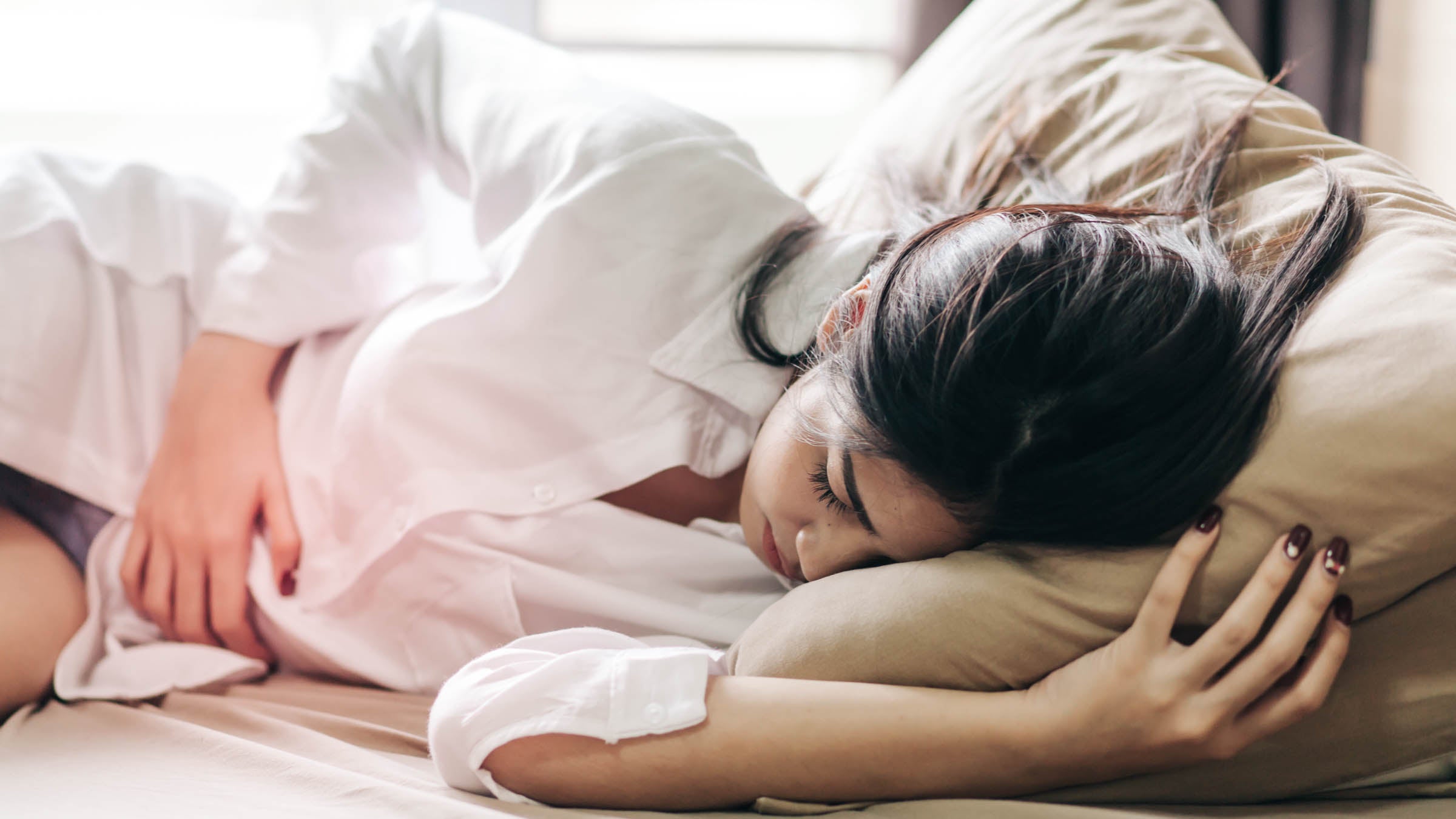
(Photo: Getty Images)
I can still hazily recall the initial few months after our son was born in 2018. The adrenaline from having our first child (and keeping him alive) got me through the first several days without feeling completely knackered, but my lack of nocturnal restoration eventually took its toll.
One of the most bothersome aspects of my sleep deprivation was a heightened sensitivity to physical pains and discomforts. My primary complaints were two that I’d wager are familiar to more than a few readers: lower back pain and an upset stomach, including indigestion. Thankfully, the void of sleep induced by rearing a newborn is a transient affair, and my issues largely self-resolved once our son started sleeping through the night.
My experience is by no means an anomaly. A lack of sleep, as it turns out, makes all sorts of aches, pains, and pangs more noticeable. And as a cumulating body of research tells us, insufficient sleep plays a major role in gut discomforts. In this article, we’ll look at some of the underlying physiological explanations for this phenomenon, discuss its relevance for athletes, and examine some basic tips to help minimize gut problems that stem from a lack of quality sleep.
Your Body Has a Built-In Clock and So Does Your Gut
Humans—much like all other animals—have biological clocks that are responsible for producing daily oscillations (a.k.a., circadian rhythms) in physical and behavioral processes. These internal, innate clocks are widespread throughout the body and its organs, including the gut. A structure in your brain, known as the suprachiasmatic nucleus, is the master regulator of your body’s biological clocks, and it’s heavily influenced by light-dark cues from your eyes. Beyond light-dark changes, other external cues like temperature fluctuations, metabolic activity (e.g., exercise), and eating influence your biological clocks.
ADVERTISEMENT
It’s been known for at least several decades that the digestive tract exhibits circadian patterns of function. Take for example saliva production, which peaks during the day with a large drop-off overnight. Similarly, a study of gastric emptying rates found that the solid components of a small meal left the stomach more slowly at 8 p.m. in comparison to 8 a.m. Another investigation found that the small intestine’s migrating motor complex (a sweeping contractile activity that helps clear partially digested foodstuffs) was much more active during than day than overnight.
These studies went to great lengths to document what many of us suspect intuitively, which is that the gut is typically much more active during the day and goes into a relative hibernation mode during the evening and while we sleep. One implication of this information is that gut problems could be worse when athletes compete and train in the evening, particularly if they ingest large amounts of food and fluid immediately before or during exercise.
Sleep Disruption and Gut Issues
Sleep problems—particularly when they last for weeks on end—can mess up your gut’s internal clock, making it more likely your digestive processes will get of whack. In one survey of Minnesota residents, for example, sleep disturbances were associated with higher odds of having irritable bowel syndrome (IBS). In a similar analysis, waking up in the middle of the night at least four times per month was correlated with more severe reports of gut pain, nausea, diarrhea, and loose stools.
It’s probably obvious to many of you that we can’t solely blame sleep disruptions for the gut troubles observed in these studies. For one, there are likely other confounding health and lifestyle factors that could be simultaneously contributing to the gut and sleep issues. Secondly, it’s also possible that the link between the gut problems and sleep is in the other direction, i.e., gut symptoms interfere with sleep. Indeed, if you are regularly suffering from gut pain, it wouldn’t be surprising if your sleep was disturbed because of it.
ADVERTISEMENT
To really show that a lack of sleep directly impacts gut symptoms, one needs to experimentally restrict sleep. There are, in fact, studies that have done this sort of thing. One such experiment found that among 10 people with gastroesophageal reflux disease, a single night of poor sleep (less than 3 hours) worsened perceptions of heartburn when their esophagi were exposed to hydrochloric acid. More as it relates to general pain perception, the results of about a dozen studies seemingly confirm that inducing severe sleep loss for a single night or several days intensifies people’s pain and lowers their pain tolerance. In total, the evidence is strong that sleep loss—especially when it’s severe or prolonged—can make all sorts of unpleasant sensations worse.
So, what are the underlying biological mechanisms linking poor sleep to gut woes and other types of pain? Of course there are many complexities to consider, but one good explanation is increased inflammation in the body, which is known to exacerbate many forms of pain. Dysregulation in the release and binding of pain-modifying chemicals in the brain (serotonin, dopamine, opioids) is also thought to play a key role.
Ways to Improve Your Sleep
First and foremost, if you are consistently having sleep problems that are causing health issues or that diminish your quality of life (including your athletic performance), then it would be prudent to speak to a healthcare provider before trying these strategies. Disorders like insomnia and sleep apnea are serious matters that warrant careful medical evaluation. The strategies I discuss here are things that you may consider discussing with your doctor, and he or she can provide better insight and context as to whether these tactics are a good idea for you personally.
- Melatonin supplementation: Melatonin is a hormone your body produces to trigger drowsiness and regulate sleep-wake cycles. Melatonin secretion ramps up in the evening and peaks in the middle of the night, and its production sharply declines with age, which may partially explain the commonness of sleep disturbances in older people. Due to its involvement in regulating sleep, melatonin supplementation has been tested as a sleep aid in numerous studies. Given the wide range of formulations and dosages used in these trials, as well as the assortment of clinical sleep conditions that have been studied, simple conclusions about melatonin’s effectiveness should be viewed with skepticism. That said, one finding that often emerges is that melatonin reduces sleep latency, basically the amount of time it takes to go from being awake to being asleep. Interestingly, melatonin use has also reduced gut pain among IBS sufferers in a few small experiments. The most frequently used dosages are between 1 and 10 milligrams, taken 30-60 minutes before bedtime. Because the quality of many dietary supplements is sub-par, it’s worth considering only buying products that have been tested by third-party organizations like NSF Certified for Sport and US Pharmacopeia. Other considerations about melatonin supplementation can be found at the National Institute of Health.
- Practice mindfulness: Although it may sound like a hippy-dippy activity reserved for hipsters, yogis, and monks, mindfulness has been slowly making its way into the mainstream. More and more athletes, including pros, have started turning to mindfulness and other forms of mediation to manage their competitive anxieties and gain a mental edge. Mindfulness is basically the practice of focusing on the present moment, keeping in mind not to judge your thoughts and feelings. Your focus can be on bodily sensations, thoughts, or things in your environment. When it comes to sleep, practicing mindfulness may lessen ruminative thoughts about the past as well as anxieties of the future, thereby facilitating the onset and sustainment of sleep. The small number of controlled studies that have evaluated mindfulness as a sleep intervention generally show that it works moderately better than nonspecific strategies like stress reduction and equally as well as other evidence-based sleep enhancers. As an added bonus, mindfulness can help ease digestive symptoms among people with gut disorders like IBS and dyspepsia. With the advent of apps like Headspace and Calm, there are guided meditation options available for just about any type of person.
- Sleep hygiene: The term sleep hygiene is believed to have been introduced in 1939 by pioneering sleep researcher Dr. Nathaniel Kleitman. Although it may sound like a strategy for dealing with “dirty sleep,” sleep hygiene simply refers to a comprehensive lifestyle and behavioral approach to improving one’s slumber. Some of the more common components of sleep hygiene programs include keeping daytime naps to less than 30 minutes, shunning stimulants like caffeine for at least 8 hours before bed, and exercising daily while also avoiding vigorous activity close to bedtime. On the environmental side of things, controlling temperature, light, and noise are priorities. Many people sleep better in a cool room (e.g., 65℉), but you would need to do some self-experimentation to find your optimal temperature. While it may be difficult to do in our smartphone-driven world, avoiding screen time within 30 minutes of when your head hits the pillow is also a good idea. And consider these other sleep hygiene recommendations. Overall, the key is setting up a consistent routine that you are able to stick with.