Published September 12, 2016 12:00AM
Kelp Is the Ocean's Most Underutilized Power Ingredient
Seaweed farmers want Americans to eat the "kale of the sea" in more than just sushi, and there's good reason to take their advice
You should be eating more seaweed.
By now you’ve probably heard the news: You should be eating more seaweed. (And if you hadn’t heard, well, now you know.)
Seaweed, or sea greens as many in the industry prefer to call it, is “hands-down the most sustainable food on the planet,” says Bren Smith, who farms kelp alongside shellfish at Thimble Island Ocean Farm in Connecticut. (Seaweed is an umbrella term for many types of algae—kelp is a larger, leafier type of seaweed.) “It requires zero inputs, no fresh water, feed, or fertilizer.” And you can grow a lot in a small space. Smith is pulling ten to 30 tons of kelp out of every acre he plants.
It’s also loaded with nutrients, which is why Smith’s farm has shirts that boast “Kelp Is the New Kale.” “Sea greens have more iron than red meat and more calcium than milk. They’re also rich in minerals like sodium, potassium, and iodine,” he says. In fact, seaweed can have so much iodine that you actually shouldn’t eat it in massive quantities. Lisette Kreischer, co-author of the forthcoming cookbook Ocean Greens, recommends eating no more than five to eight grams of dried seaweed or 50 to 70 grams of fresh seaweed per day. Also, while seaweed is high in many minerals, it’s fat-free and extremely low in calories and carbs, so if you’re an athlete, you’ll need to make sure you’re getting adequate macronutrients from the rest of your meal.
Considering that the sheets of nori girding our sushi are about all the seaweed most Americans consume, Kreischer’s warning isn’t currently something to worry about. But she and Smith really want Westerners to start eating seaweed on a daily basis. The problem? Most of us have no idea how to do it.
ADVERTISEMENT
Sure, you could just open your mouth during your next triathlon and hope for a little on-course nourishment. But Smith, who swears he’s not a foodie, says even a culinary novice can make fresh and delicious seaweed dishes. Here’s everything you need to know about buying, cooking, and serving seaweed—sorry, sea greens.
Source It Right
Smith says 99 percent of all seaweed currently available in the United States comes from Asia. There’s little in the way of quality control or regulation for these products, which means it’s hard to know how your product was farmed and treated. If possible, try to find a North American–grown crop. Thimble Island sells seaweed noodles, but it’s having trouble keeping up with demand. Other good options are Maine Coast Sea Vegetables or Maine Fresh Sea Farms.
Start with Noodles
Kelp noodles are generally pure seaweed cut into thin strips. “They are mild tasting, so they’re very versatile, easy to prepare, and turn a beautiful bright-green color when cooked,” says Smith. Plus, they’re usually gluten- and rice-free. Some don’t even require cooking; simply rinse with hot water, toss it in a sauce, and call it dinner.
Make It Your Secret Ingredient
Kreischer’s book is full of recipes starring sea greens, but you don’t have to start with them as the center of a meal. “I sprinkle seaweed over my pasta, cut it in little pieces to mix through a salad or stew, or just add it to any kind of soup I make,” she says. In fact, certain types of dried seaweed can act like bullion, delivering a hit of salt and umami flavor without anyone even knowing it’s there.
ADVERTISEMENT
Get to Know Your Varieties
Right now, Smith is growing only sugar kelp (a common variety), but he says there are more than 10,000 known edible plants in the ocean—possibly more. “Most [seaweed] species are edible, but not all algae are equally suitable for the novice ’weed-eater,” warns Kreischer. “Typically, the most edible seaweeds are the ones that live in saltwater. Freshwater algae are much less suitable for consumption.” Some varieties are more pungent than others. Beginners should start with sea lettuce, which is light, crisp, and refreshing. More adventurous types may want to try oarweed, which has strong, salty flavors. “Given the wide variation in taste and texture, it’s an adventure to find out what you like and which dishes they go well in,” says Kreischer.
Get Creative
The trick to getting Americans to eat more seaweed will likely be incorporating it into prepared foods beyond sushi rolls and miso soup. Right now, Smith is working on creating seaweed-based butters, jerky, bullion, and even ice cream. Kreischer would love to see it in more desserts. She swears sea greens pair beautifully with dark chocolate, and even included a dark chocolate and seaweed pie recipe in her book.
Follow These Recipes
“This is beginning of a whole new culinary adventure, and home cooks have a chance to hop aboard,” says Smith. Here are three ways to get on the sea greens boat right now, courtesy of Ocean Greens.
ADVERTISEMENT
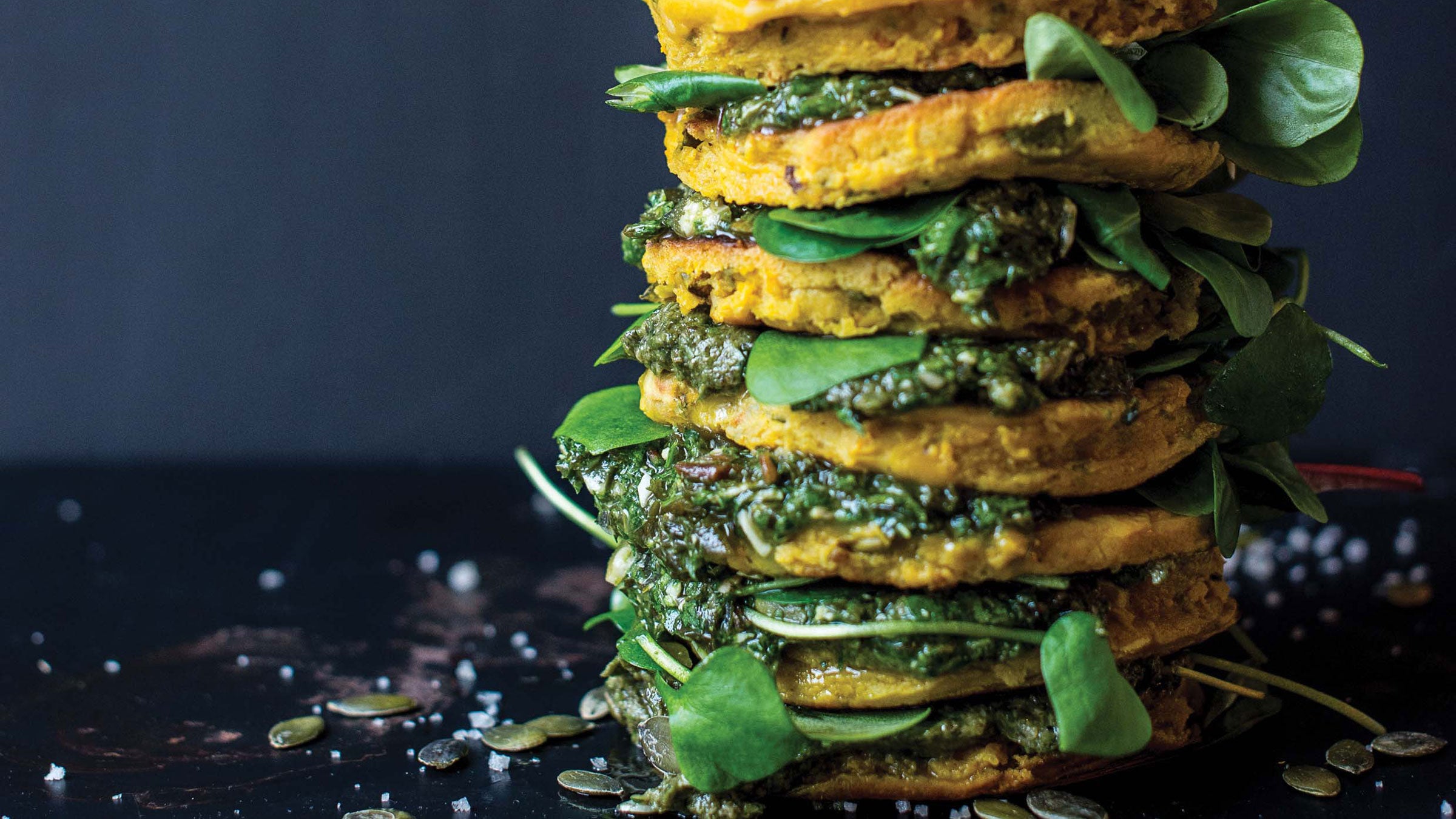
Squash and Seaweed Pancakes
Makes about ten pancakes.
These are savory pancakes, so save your maple syrup for another day. Top them with sea green pesto (recipe follows), and dig in.
Pancakes
- 0.7 ounce fresh kombu
- 1 small hokkaido squash or other winter squash
- 3 cups spelt flour
- 1 tablespoon baking powder
- 1 1/2 teaspoons dried rosemary
- 1 teaspoon paprika
- 1/2 teaspoon curry powder
- 1 tablespoon olive oil, plus more for cooking
- 1 cup warm water
- Fine sea salt and freshly ground black pepper, to taste
Extras
- 1 x Pesto from the Sea (below)
- 3 1/2 cups winter purslane, rinsed and dried
- Extra virgin olive oil
- Lemon juice
- Everything Goes ’Weed Mix (below)
- Thoroughly rinse the kombu to remove all the brine. Dab dry and chop. Peel the squash, remove the seeds, and cube the flesh.
- Bring a pot of water to a boil and add the squash cubes; boil until tender, about eight minutes. Drain and blend in a food processor into a smooth puree. Separate 1 2/3 cups of puree for the pancakes. If there’s extra, you can freeze it for later.
- Combine the flour, baking powder, rosemary, paprika, and curry powder in a bowl. In another bowl, mix the squash puree with the oil, kombu, and warm water, and then add this mixture to the flour. Whisk thoroughly until you have a thick, smooth pancake batter. Season with salt and pepper.
- Heat a splash of olive oil in a skillet, and pour some batter in the pan. Rotate the pan so you get a small, thick, round pancake about four inches in diameter. Cook until golden brown on both sides, about six minutes, flipping after three minutes. You can use a greased ring in the pan so all pancakes are evenly sized and perfectly round. Keep the pancakes warm by setting them on a plate that’s resting on a pot of simmering water.
- Top the pancakes with Pesto from the Sea and fresh winter purslane. Sprinkle the purslane with some olive oil and lemon juice, and garnish with Everything Goes ’Weed Mix.
ADVERTISEMENT
Pesto from the Sea
Makes one eight-ounce jar.
This green pesto owes its intense and powerful flavor to kombu. It’s such an easy recipe that you can experiment with the ingredients as much as you like. The arugula and basil, for instance, can be substituted with any leafy green of your choice. The pine nuts can be replaced by any other type of nut, such as cashews or hazelnuts. You can even use sunflower seeds. Serve the pesto on crackers, in a grilled vegetable sandwich, or in a bowl of pasta.
- 1.4 ounces fresh kombu (or a mix of kombu and wakame)
- 1/3 cup roasted pine nuts
- 1 small garlic clove, minced
- 1 cup fresh basil (including stems)
- 1 cup arugula
- 2 tablespoons extra virgin olive oil, plus extra for storing
- 1 1/2 teaspoons lemon juice
- Thoroughly rinse the kombu with water, making sure all pickling salt has been washed off. Dab dry and cut into pieces.
- Puree the kombu, nuts, garlic, basil, arugula, olive oil, and lemon juice in a food processor until the mixture forms a smooth paste.
- Put the pesto in a glass jar, cover with a layer of olive oil, and store in the fridge for up to two weeks. Always serve with a clean spoon to maintain freshness.
Everything Goes ’Weed Mix
Makes seasoning for 20 meals.
Mix, toss, and sprinkle: That’s what this recipe comes down to. This mix is easy to make and delicious with all sorts of dishes: spaghetti Bolognese, cauliflower soup, pizza, salads, and even a good old sandwich. The Danish smoked salt, with its distinct and deep character, gives this mix an extra boost.
- 1 cup raw cashews, peeled and unsalted
- 1/4 cup nutritional yeast
- 2 tablespoons persil de la mer or dried sea lettuce flakes
- 1/2 teaspoon Danish smoked salt
Combine all ingredients in a food processor and pulse until the mixture becomes fine and crumbly. Store in a closed container in a cool, dark place for up to one month.
ADVERTISEMENT
Recipes from Ocean Greens: Explore the World of Edible Seaweed and Sea Vegetables—A Way of Eating for Your Health and the Planet’s © Lisette Kreischer, 2016. Reprinted by permission of the publisher, The Experiment. Available wherever books are sold.
