Published June 16, 2017 12:00AM
If you buy through our links, we may earn an affiliate commission. This supports our mission to get more people active and outside.Learn about Outside Online's affiliate link policy
The Cookbook to Elevate Your Campfire Dining Game
Prepare your Instagram account—your stream is about to be filled with insane photos of glorious campfire food from Linda Ly, the Chaco Camptessa
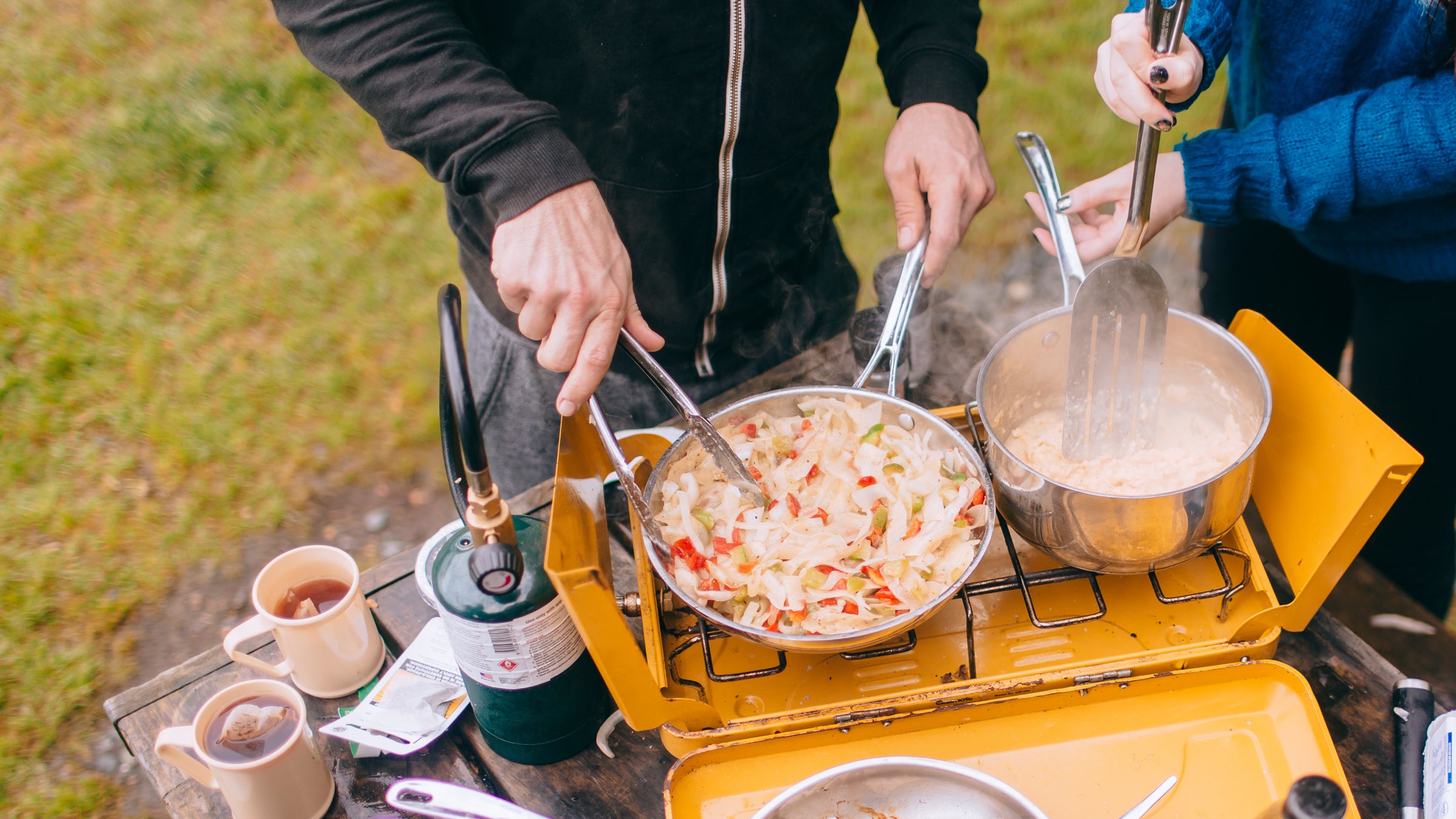
It is possible to up your campside cooking game without making it an unbearably tedious production.
Within the first eight pages of food writer Linda Ly’s just-released The New Camp Cookbook, you’ll realize that your campfire cooking game sucks.
“Whenever we’d go camping with a group, my friends would be blown away by what a production our meals were,” says the Los Angeles–based Ly. “And these are people who are great chefs at home.” But for many of them (and most of us), camping was about minimalism. That minimalism trickled into their dining, even when they were car camping.
Ly refuses to accept this norm, and if you stop by her campsite, you’ll often find a pot of citrus and maple mulled wine bubbling on a camp stove and marinated meat for tacos charring over a fire. There may even be strawberry-rhubarb cobbler baking in a Dutch oven for dessert.
ADVERTISEMENT
If this seems like a lot of extra work, it is. “Sometimes, if it’s just Will [Taylor, her husband and the photographer for the book] and I, we will try to keep it simple,” Ly says. But even that usually includes some from-scratch cooking. The results, she says, are so much better than any heat-and-eat nonsense you can buy.
Ly set strict parameters for the dishes in the book to ensure they wouldn’t be all-day hassles. First, the recipes had to be things she’d enjoy eating at home. Second, they had to use minimal dishes. Finally, most of the recipes had to be done in 30 minutes or less. “I love grain salads at home, but when I tried them out camping, I realized no one wants to sit around for 40 minutes while your grains cook,” she says.
If you stop by Ly’s campsite, you’ll often find a pot of citrus and maple mulled wine bubbling on a camp stove and marinated meat for tacos charring over a fire.
Smart preparation brings it all together. Ly spends the afternoon before a camping trip premarinating meats and organizing her coolers so the items on top are the things she’ll need first. Ly also keeps a “pantry bin” with small containers of staples like soy sauce, olive oil, and rice.
ADVERTISEMENT
Maybe I love this cookbook because Ly and I have similar tastes, or maybe it’s because I have deeply romanticized the idea of smelling blueberry skillet scones as I drowsily wriggle out of my sleeping bag. Whatever the reason, of all the cookbooks I’ve reviewed this year (more than a dozen), this is one that earned a permanent place on my crowded cookbook shelf. The recipes are all things I’d craft at home. Even better: It made me want to up my cooking ante on my next car-camping adventure.
The recipes are plenty decadent (bacon-wrapped potatoes with blue cheese and peanut butter stuffed French toast, anyone?) and come with handy suggestions for using up those oddball ingredients, like leftover thyme and buttermilk. But The New Camp Cookbook’s second-greatest feature is its long roster of tips. Ly dispenses advice on everything from how to pack your cooler (keep the rooting around to a minimum) to minimizing dishes (use Seventh Generation wipes to do quick cleans of items that are just barely dirty). As you flip through the book, you’ll likely find yourself asking, Why didn’t I think of that?
My takeaway is this: If Ina Garten is the Barefoot Contessa, Ly is the Chaco Camptessa. Just as I’ll never have a glorious house on the coast in New England where I throw elegant brunches for my friends, I’ll probably never attempt baking my own flatbread dough while camping. But knowing I could do such a thing is exactly the kind of motivation that sends me off to reserve a campsite for next weekend. And even if my chow isn’t quite at the Ly level of fancy, my cooler will be flawlessly packed.
Blueberry Skillet Scones with Lemon Glaze
Skillet scones are a campside take on Irish soda farls, the traditional quick-cooking breads made the old-fashioned way on a griddle. To make a savory version of these skillet scones, just swap the sugar, lemon zest, and blueberries for shredded cheddar and chopped scallions.
Makes 14 scones.
ADVERTISEMENT
Ingredients for the Scones
- 2 cups multipurpose baking mix (see below)
- 3/4 cup buttermilk
- 1/4 cup butter, melted and cooled, plus more for greasing
- 3 tablespoons granulated sugar
- 1 large egg
- Zest of 1 large lemon
- 1 cup blueberries
Ingredients for the Glaze
- 1/2 cup powdered sugar
- 1 tablespoon lemon juice
Preparation
- To make the scones, in a large bowl and using a large, sturdy spoon, stir together the baking mix, buttermilk, butter, granulated sugar, egg, and lemon zest until a soft, sticky, shaggy dough forms. Gently fold in the blueberries.
- Grease a large skillet with butter and heat it over medium-low heat. Using a large spoon, drop 1/4-cupfuls of dough (slightly larger than a golf ball) into the skillet. Arrange them so the sides of each biscuit are barely touching. You should have 14 scones.
- Cover and cook until the scones are golden brown on the bottom, four to five minutes. Turn each biscuit over with a spoon and continue cooking, covered, for about five minutes more, until both sides are lightly browned and the scones are fully cooked in the center.
- Meanwhile, to make the glaze, in a small bowl, whisk together the powdered sugar and lemon juice until well blended. Drizzle the glaze over the warm scones before serving.
Multipurpose Baking Mix
Makes three cups.
Ingredients
- 3 cups all-purpose flour
- 1 tablespoon sugar
- 1 tablespoon baking powder
- 1 teaspoon baking soda
- 1 teaspoon kosher salt
Preparation
- Combine all of the ingredients in a medium bowl.
- Transfer to a resealable plastic bag or lidded container, and store in a dry, cool place for up to eight months.
- Before using, stir the mix around to evenly distribute the ingredients.
Note: I use the “scoop and sweep” method for measuring flour—simply scoop a heaping cupful of flour, then level it with a straightedge. If your flour has been sitting in the bottom of a bag or canister for a while, fluff it up with a fork before scooping.
