Updated March 24, 2026 10:54PM
If you buy through our links, we may earn an affiliate commission. This supports our mission to get more people active and outside.Learn about Outside Online's affiliate link policy
How Free Diver and Cookbook Author Kimi Werner Found Comfort in the Depths
Spearfisher and free diver Kimi Werner descends more than 100 feet on a single breath. Her new cookbook traces how a life in the ocean shaped the way she hunts, cooks, and feeds her family.
(Photo: Perrin James)
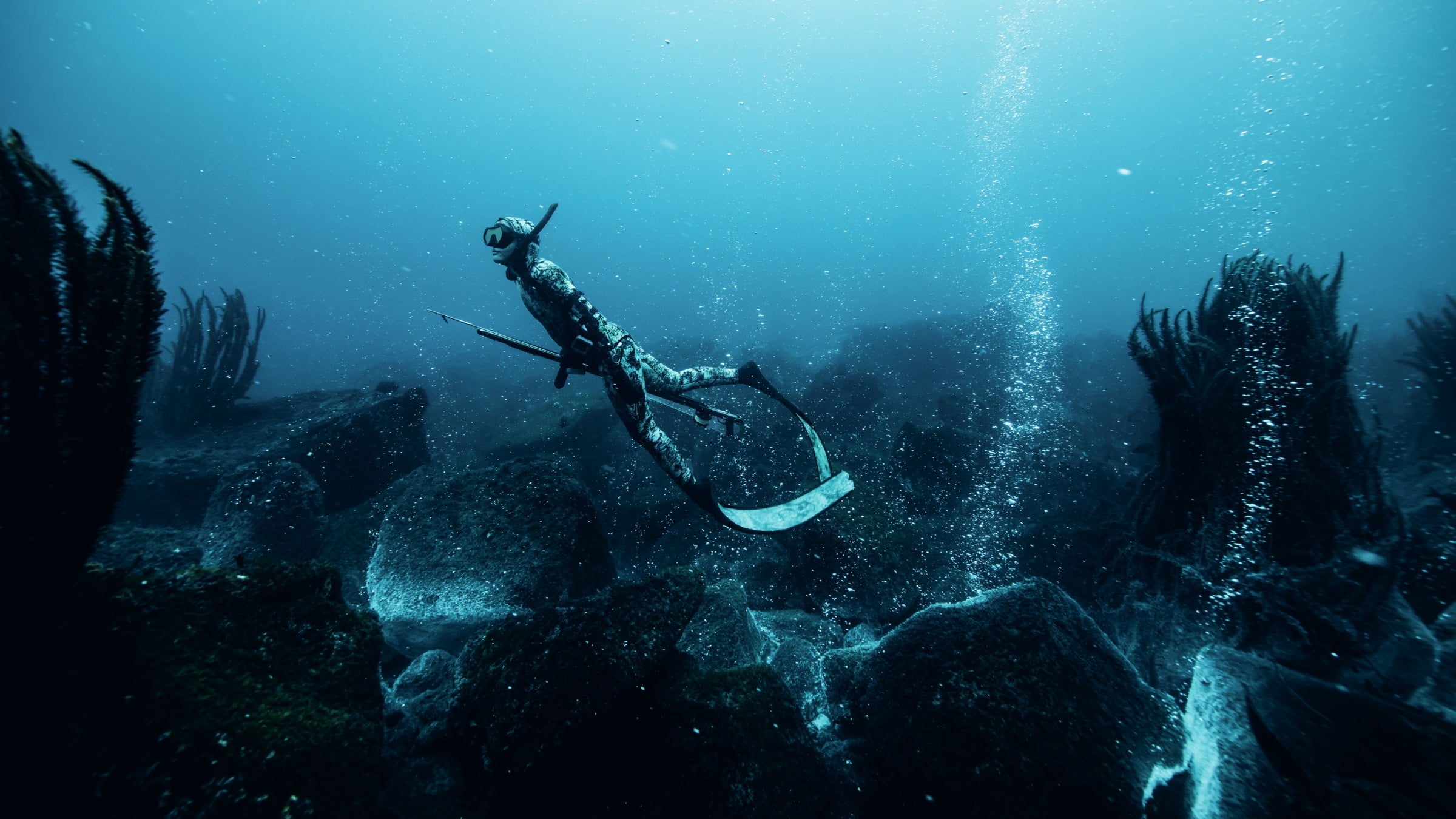
“I am lying on this amazing surface, this body of water,” Kimi Werner tells Outside, describing how she prepares to dive to depths of up to 150 feet, focusing on deep inhales and long, exaggerated exhales. “You’re on this amazing magic blanket of salt water, just let it support you, let you float.”
Many people fear the ocean and are unwilling to enter its waters. For Kimi, while wearing a wetsuit, gloves, a mask, snorkel, a dive watch—the Suunto D4i is her favorite—a knife, a weight belt, and four-foot carbon fins, she can slip into a state of relaxation while holding a speargun. As her heart rate slows, she says, “It just makes me almost feel like I’m going to take a nap. Then I take one final inhale as low as I can until I’m so filled with oxygen that I don’t even have to take another breath because I’m so full.”
She folds at the waist, raising her legs to enter the water, starting her dive with intentionally strong kicks. “Those kicks, those big fins are going to start to propel me lower and lower, and as I get a little deeper, then my kicks become more narrow and even softer.” At this point, she looks for a landing spot.
ADVERTISEMENT
The purposeful kicks counter her body’s buoyancy, bringing her down to about 30 feet, then to neutral buoyancy for 10 more feet, and, finally, to negative buoyancy—or freefall, sinking—below 50 to 60 feet. “I try to make my landing as graceful and soft as possible,” she describes, trying to melt onto the ocean floor. “Sometimes I’ll fluff a little sand,” mimicking a stingray that stirs up crustaceans, attracting fish. “And then once the fish comes in, I just try to take the best shot that I can. Then it’s back up to the surface to breathe.”
“My longest breath hold is about five minutes,” she says. “[When spearfishing,] I cut myself off at two minutes. Because to dive safely, it’s the recovery that is important.” Often, she doesn’t shoot the fish on the first attempt and must resurface and refresh—she gets one attempt per breath to shoot and kill a fish.
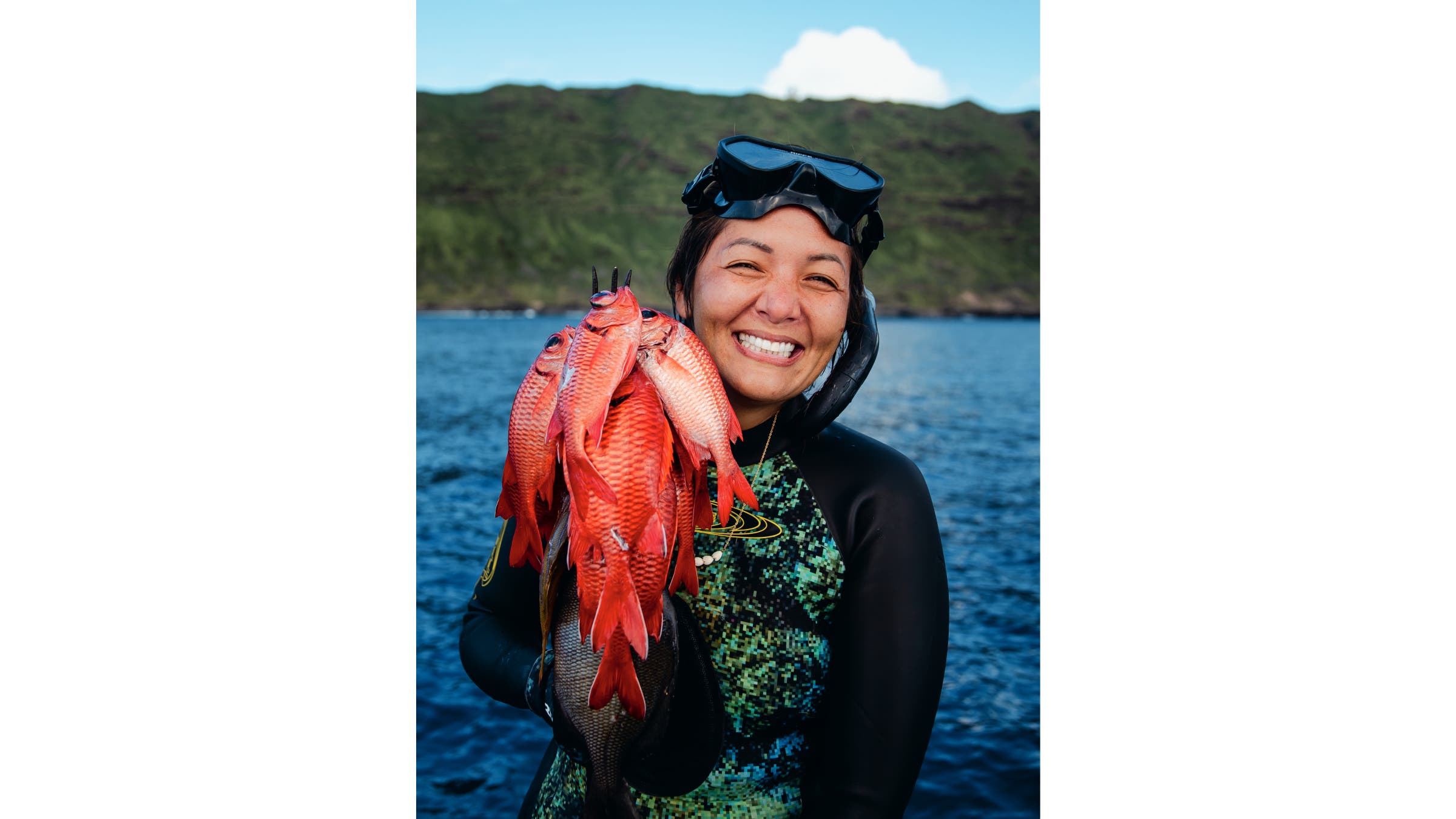
Kimi found her love of the ocean as a five-year-old, following her father, Chris Werner, on the surface waters of Maui while he free dived and hunted to feed his family. But when the sight of a turtle, for instance, would take her attention away from him, “I would feel so scared and so small floating in this huge ocean, having no idea where my dad was,” she says. “I learned that if I would just duck my head a few inches under the surface and I would scan in all directions, I could see the bubbles left by his fins on the surface, and I would swim that way.”
ADVERTISEMENT
In 2004, at age 24, she finally picked up a spear. At first, others in the sport didn’t welcome her desire to join and learn from them—they didn’t trust she had the skills to be in the water. Fed up, “I went to a dive shop and bought a three-prong spear,” she says. “I didn’t even have a full wetsuit. I just had surf shorts and a rash guard and little boogie boarding fins and weights.” She drove herself to the North Shore in O’ahu, found a beach, and dove in.
Once Kimi started catching fish, “I was taken very seriously. I started showing up with my own fish to barbecues, and all of a sudden, I was invited,” she said. “And once they saw me in the water, the phone calls never stopped coming.”
Her desire to be in the water didn’t stop, either. On her days off as an elementary school art teacher, Kimi entered the water as much as she could. She enlisted the expertise of spearfishers Kalei Fernandez, Wayde Hayashi, and Andy Tamasese, who taught her to dive better and deeper. In 2008, after honing her diving skills and learning about the life and patterns of the fish, she won the U.S. National Spearfishing Championships in Newport, Rhode Island. She continued to reign in competitions in the next couple of years, but left when she was no longer experiencing the inner joy of spearfishing.
ADVERTISEMENT
RELATED: For Kimi Werner, Spearfishing Is More Than Catching Her Next Meal
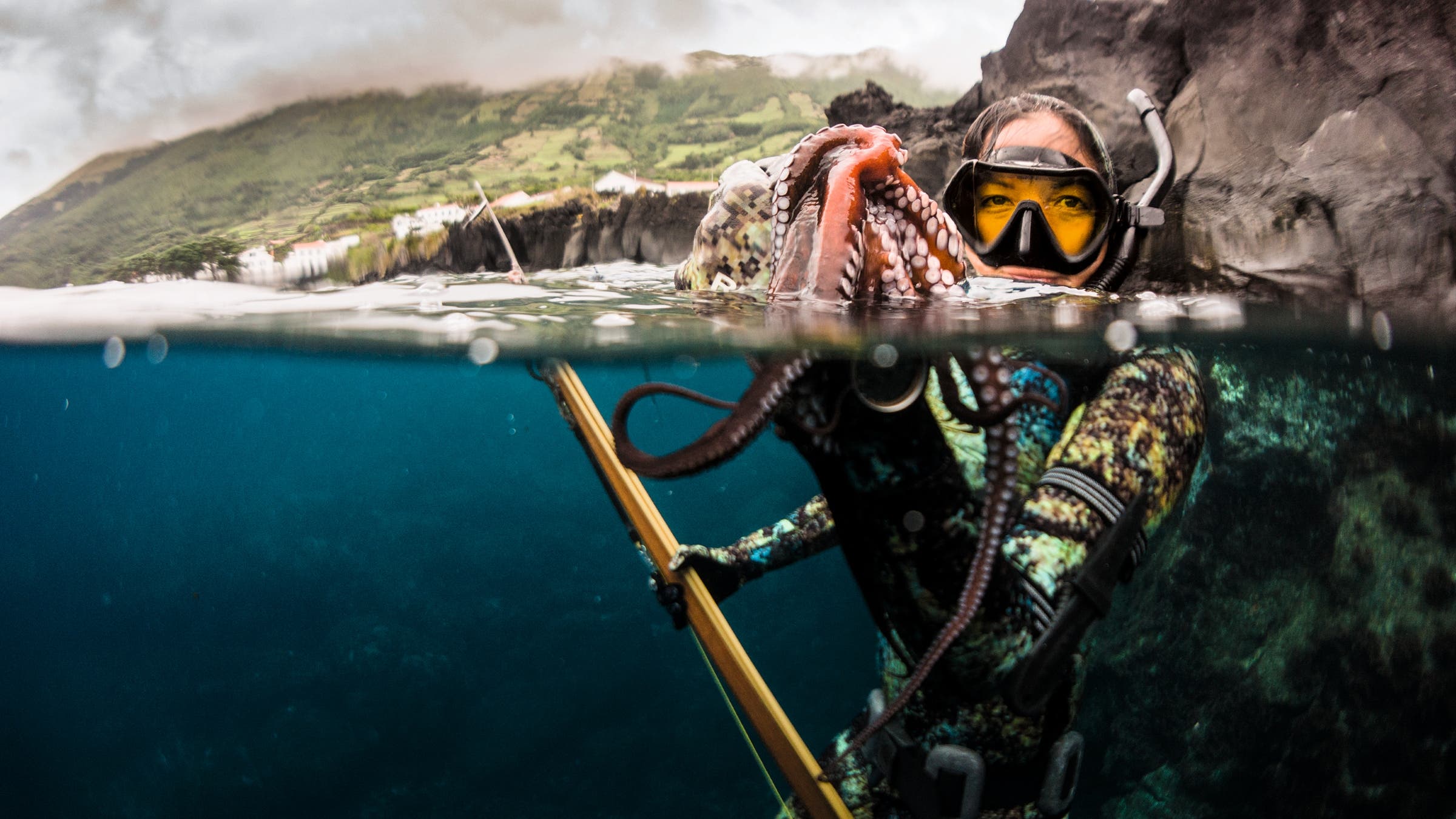
Kimi describes herself as a hippie and a hunter who comes from hippie parents. Her mother, June, “always took such pride in that because she’d always said, ‘I’m the only Japanese hippie on Maui.’”
The family survived through unconventional means, requiring resourcefulness and nonconformity. She credits her father as the one who “legitimately taught me how to hunt, the person who gave me that love for the underwater world,” but says that it was her mom who really taught her the values behind it. “She told us to ‘never take more than you need, never waste a morsel of this.’ She took her food and her resources seriously.” Her mother talked of “how we have to care for that which takes care of us,” expressing her “love for the food that we got from nature.”
ADVERTISEMENT
Her grandmother, Margaret, was a strict woman with hard edges who taught her to clean fish. “She would always tell me to take the scales, the blood, the guts, anything that came out of these fish that we weren’t going to eat, and bury them underneath her plants to be the fertilizer for them,” she shares. “She always had the best garden.”
Both her mother and grandmother inspired her passion for cooking, leading her to pursue a culinary arts degree from Kapi’olani Community College after high school. But finding a job was difficult. “I went to apply for a job as a line cook, I would always just get put into baking or salads, and that’s not what I wanted to do,” she says. “I liked the heat, and I liked the cooking, and that’s what I was trained for.”
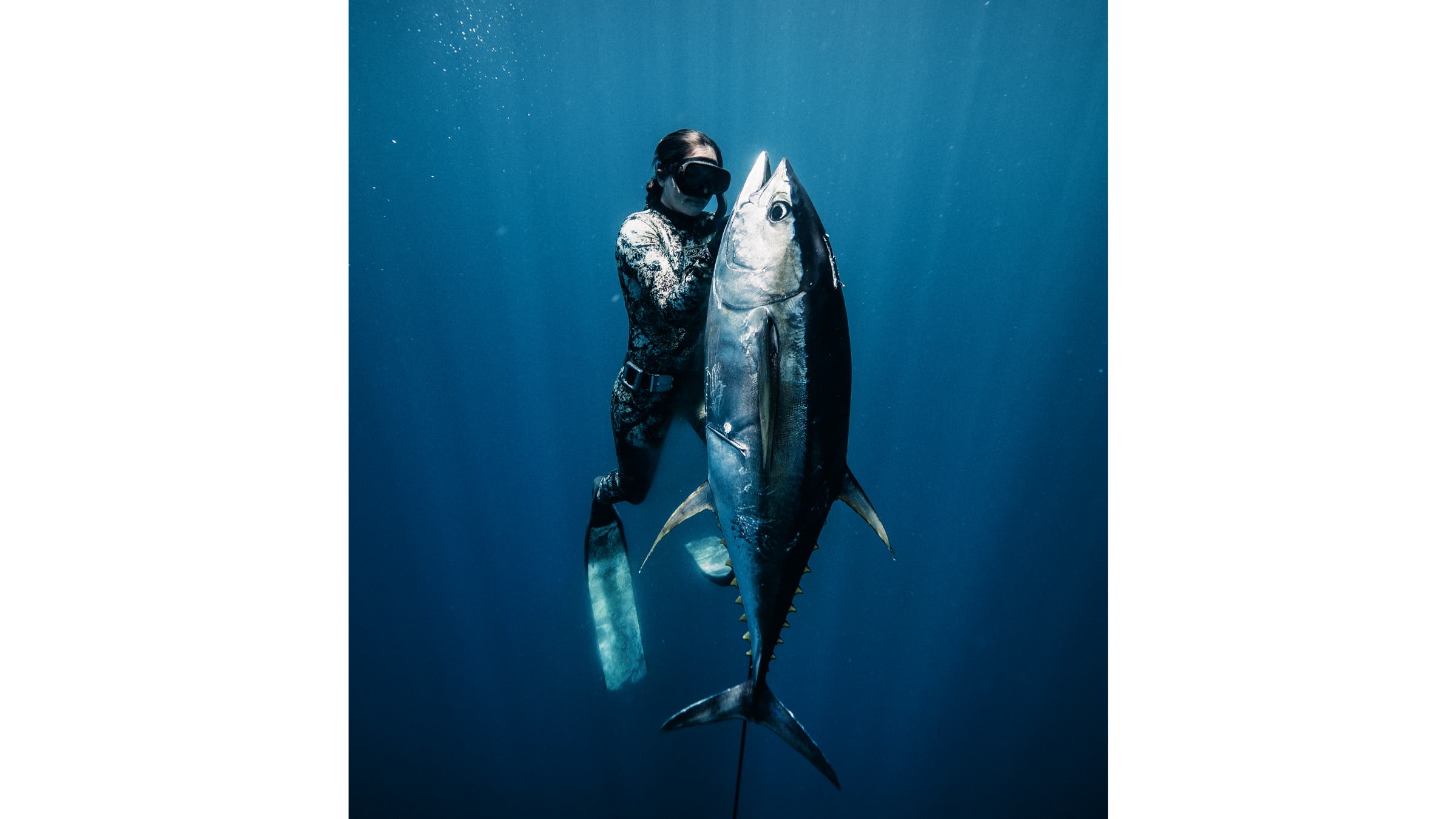
Kimi has been in the waters around the world: free diving in the Arctic, swimming with narwhals, the unicorns of the sea; and sea angels, translucent, shell-less, winged slugs in the Antarctic; as well as sperm whales in the Caribbean and orcas in Norway.
ADVERTISEMENT
In Mexico, “there was a great white shark, a 17- to 18-foot white shark just coming right at me. I just turned and swam at the shark, and as soon as I did that, she turned and veered off,” Kimi says. Then the fish came vertically up at her. Although intimidated, “I knew I couldn’t outswim this shark. I can’t escape this shark, and so then I just swam down toward her.” As soon as she did, the shark turned, and Kimi landed on top of the animal. “We swam together for quite a while, and so that was probably the most intense and beautiful experience I had with the large predator.”
Kimi met her now-husband, Justin Turkowski, an award-winning cinematographer, in 2012. Although he hailed from Minnesota, he quickly took to the coastal lifestyle. “I taught him to free dive,” she says, not knowing how a landsman would adapt to the ocean. She took him to “marine protected areas, and I would test him on every single fish’s name,” having to know both the English and Hawaiian names, along with all the rules and regulations for harvesting them. He is now a dive partner and records their underwater adventures with his cinematography skills.
Thanks to him, she took on bow hunting. She favors hunting sheep while he prefers venison. In her book, she incorporates sheep and deer bones into her bone broth and suggests these meats as a good alternative to beef shanks in her Osso Buco with Creamy Polenta recipe.
ADVERTISEMENT
“Hawaii is known as the extinction capital of the world, and we have so many beautiful endemic species that really are endangered and going extinct all the time,” Kimi says. Many of the species introduced to the island have been invasive, and with “no predators in this lush environment, the way that they take over is devastating.” Harvesting from the local food source is “better for the environment, and it’s a delicious food source, like that’s a triple bottom line win all the way across.”
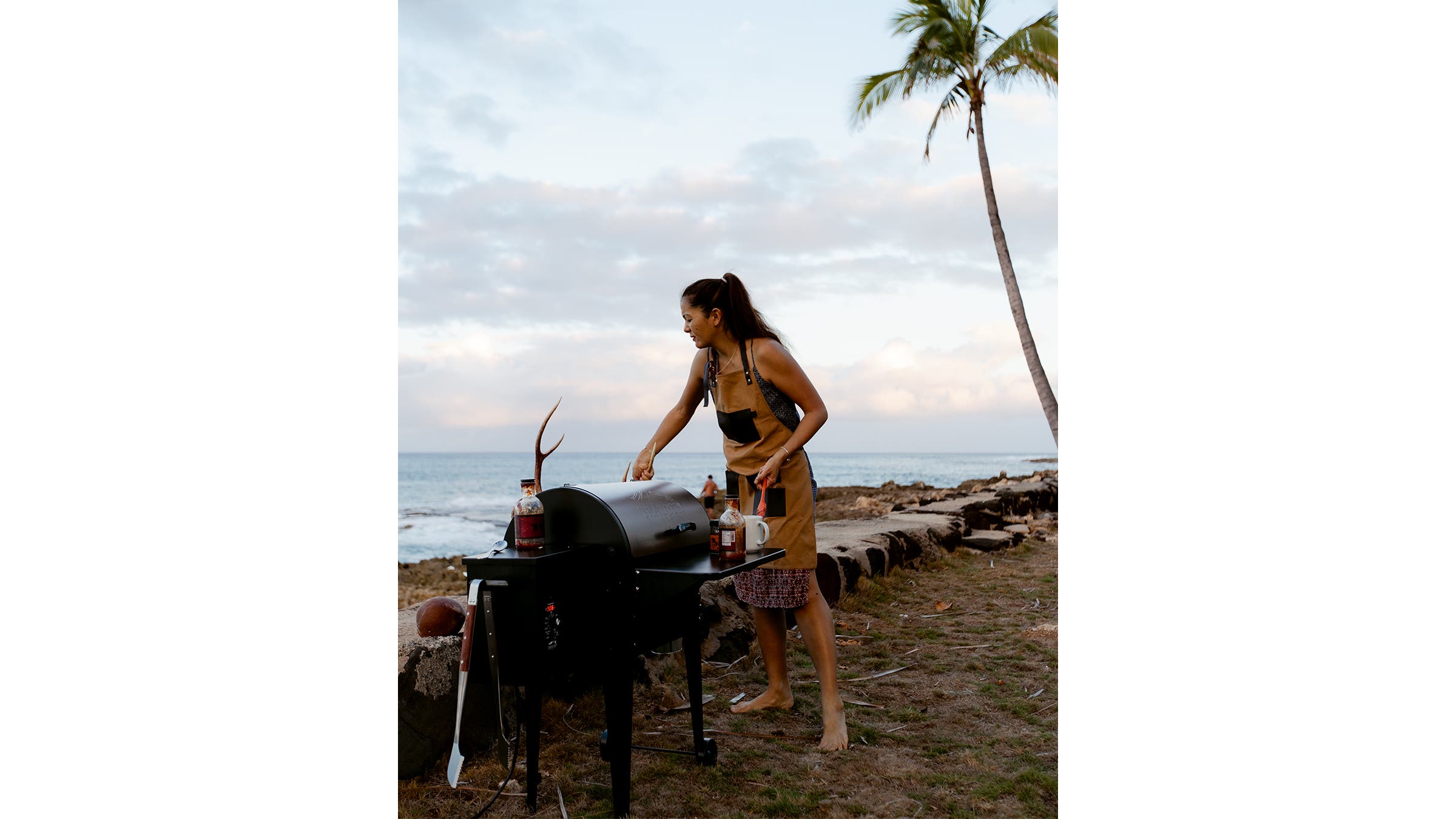
The 80 recipes in her new cookbook, Kimi’s Kitchen, out March 10, come from many places: her childhood, recipes from her friends around the world, inspirations from the Midwest and Hawaii, as well as recipes for feasting.
You’ll find recipes ranging from fried fish bones, Filipino-style poke, her mother’s lasagna, to her own kimchi. With fried fish bones, Kimi believes you’re missing out if you’re not using your hands. When frying up the nonmeat part of fish, “It’s really nice that sometimes the fins can really crisp up, the tails can crisp up, and even parts of the bones can crisp up where you’re nibbling on them like potato chips.”
ADVERTISEMENT
Kimi learned to make Kinilau (Filipino-style poke) from an old fisherman friend, Garrett Tsutomu Lee. “I really thought it was neat how the skin was left on the fish because normally, you eat poke and it’s boneless, skinless, usually made with tuna.” Lee brought a mason jar with kinilau sauce, “this beautiful, tangy, shoyu, sweet, sourish sauce.” After he caught a fish, scaled, filleted, and cubed it, the chunks of fish with skin on went into the jar. After everyone finished diving, this was the treat enjoyed by all.
“My mom just made a killer lasagna,” Kimi brags. “It was never trying too hard. It wasn’t fancy, but it was hearty, full of flavor, sauce made from scratch, and delicious. These days, I make it with venison and the meats that we hunt, and it’s just as good.”
Kimi developed her own kimchi recipe after traveling to Korea. “When it comes to fermented delicious foods like kimchi and sauerkraut, so many of us buy them,” but for her, she loved the novelty of knowing that she could make it herself, as “these things are not crazy hard to create.”
ADVERTISEMENT
The book is dedicated to her son, Buddy. At five years old, he is a good swimmer and relishes playing on his boogie board. She takes him along on her hunts, just as she accompanied her father. “He has a little pretend spear, and he’ll try to swim down and chase after the fish,” she says. She retrieves his weapon and captures a prize for him, but “anytime he has any interest in coming along with me or seeing what I do, I let him.” In the dedication, she writes, “As long as you have nature, you are not alone.”
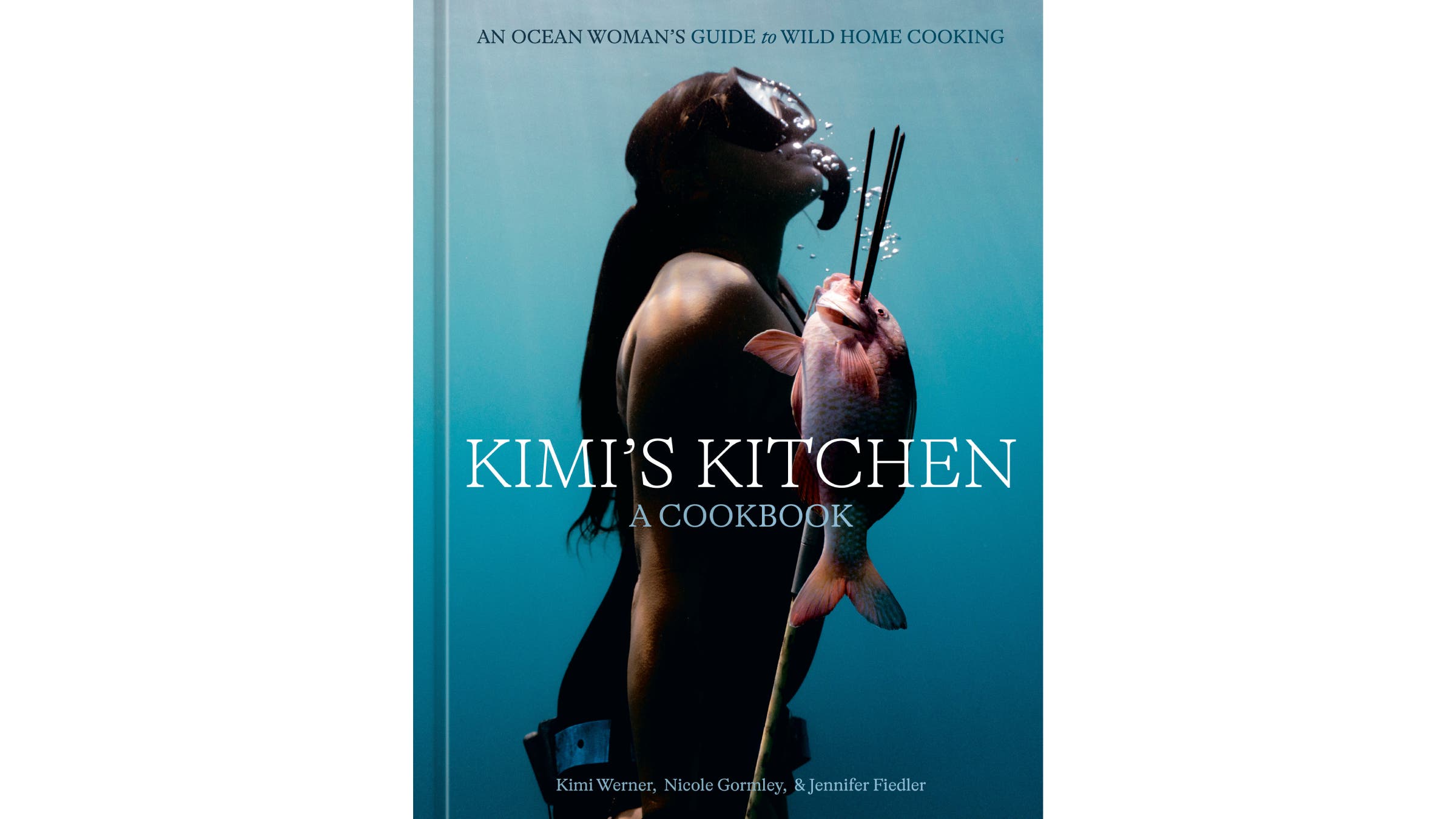
The book features a section of Buddy’s favorite dishes, like Fried Rice and Fish Musubi, so Kimi can help her son understand where his food comes from. She cooks with him and confesses that “cooking with a young child is like trying to run with a parachute on,” but it provides her “the opportunity to practice my passion and express my love.”
Beyond recipes, the cookbook shares her rules and beliefs about cooking and eating, like working with sharp knives and respecting the animals and plants that feed us, and knowing how to make a fire and understanding local ecosystems. In the pantry section, she shares her own resources and offers honest recommendations, such as using salted butter. While most chefs tout the unsalted version, Kimi grew up with a mother who was not afraid of fat or salt and wanted flavor. “I don’t believe in unsalted butter,” she writes. For seasoning, Chili Pepper Water—a common concoction on the Hawaiian table—is what Kimi calls the “Tabasco of Hawaii.”
ADVERTISEMENT
“I like it salty, tangy, and spicy,” to sprinkle on food, and she admits, “I like it to have some punch and pretty much all parts screaming.”
Writing Kimi’s Kitchen has been a “lifelong dream” for Kimi, combining her culinary and spearfishing passions. After giving birth to Buddy, she says, “I wanted to leave something behind long after I’m gone. This book feels like that piece of my heart.”
Recipes from Kimi’s Kitchen: An Ocean Woman’s Guide to Wild Home Cooking
Grilled Fish Collars
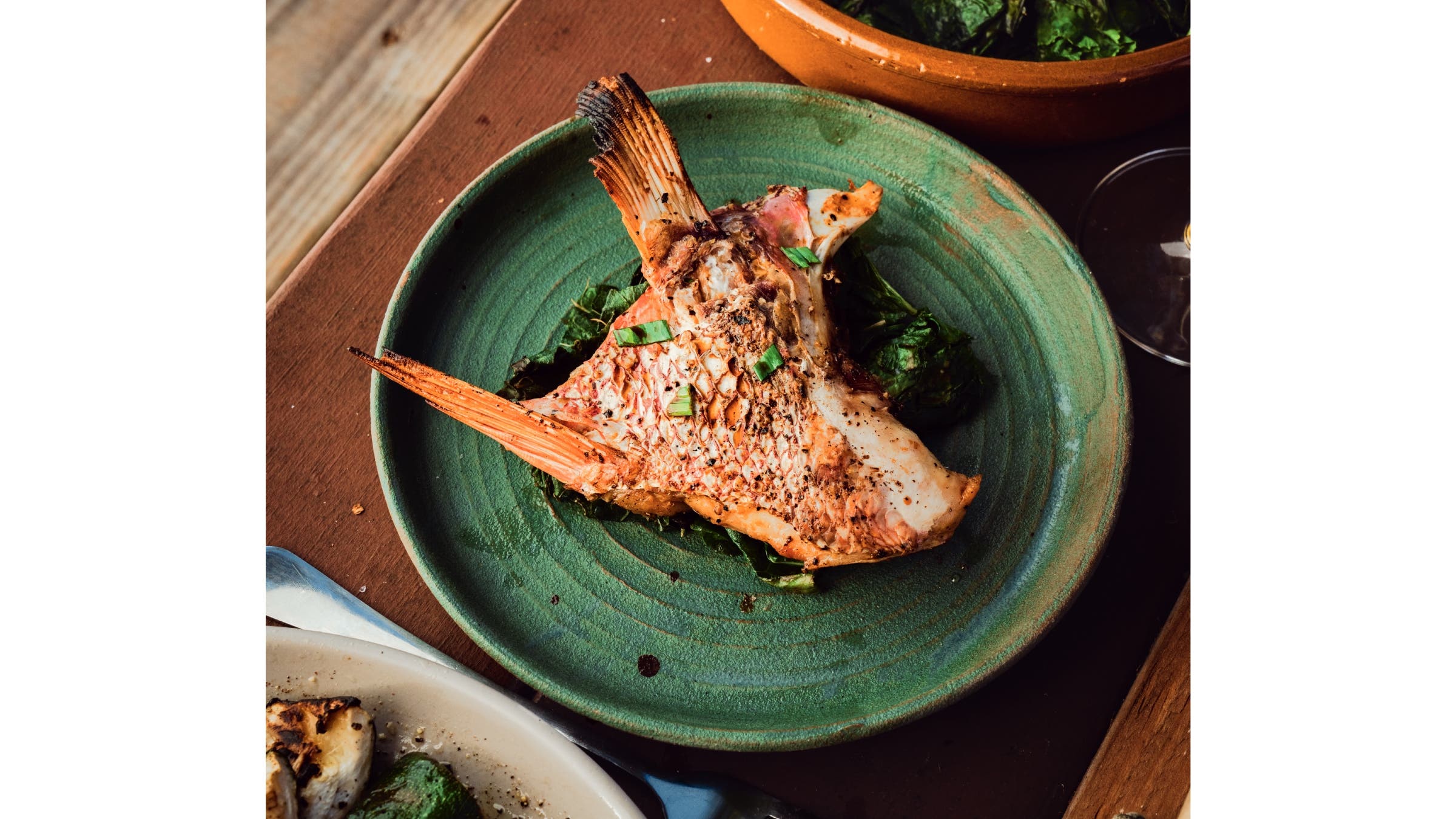
“For a long time in the United States, fish collars were a throw-away cut, but many people who catch fish consider it one of the tastiest pieces. Collars aren’t as popular as fillets because you can’t make them into a boneless piece of anything—you have to pick the meat off the bone. But the different pockets and components formed by the bone structure help steam the meat to keep it juicy. If you’re willing to work for it, it’s one of the most rewarding cuts. I like serving the collars with a quick ponzu-style sauce.”
- Preheat a gas, charcoal, or wood grill to 450°F. (If you’d rather cook indoors, you can oven-broil the collars on high heat for 3 minutes on each side.)
- In a small bowl, mix ¾ cup shoyu, juice from half a lemon, and 2 teaspoons granulated sugar until the sugar dissolves. Stir in 2 tablespoons chopped green onions (white and green parts) and reserve.
- Drizzle olive oil over 6 skin-on fish collars (⅓ to ½ pound each) from 4- to 5-pound snappers. Season with flaky sea salt and freshly ground black pepper. When the grill is ready, place the collars skin-side down on the grates, close the lid, and cook until golden brown, 3 to 5 minutes. Then flip and repeat on the other side.
- Transfer to a serving platter and drizzle the collars with the entire amount of the reserved shoyu mixture. Serve immediately.
Spicy Poke
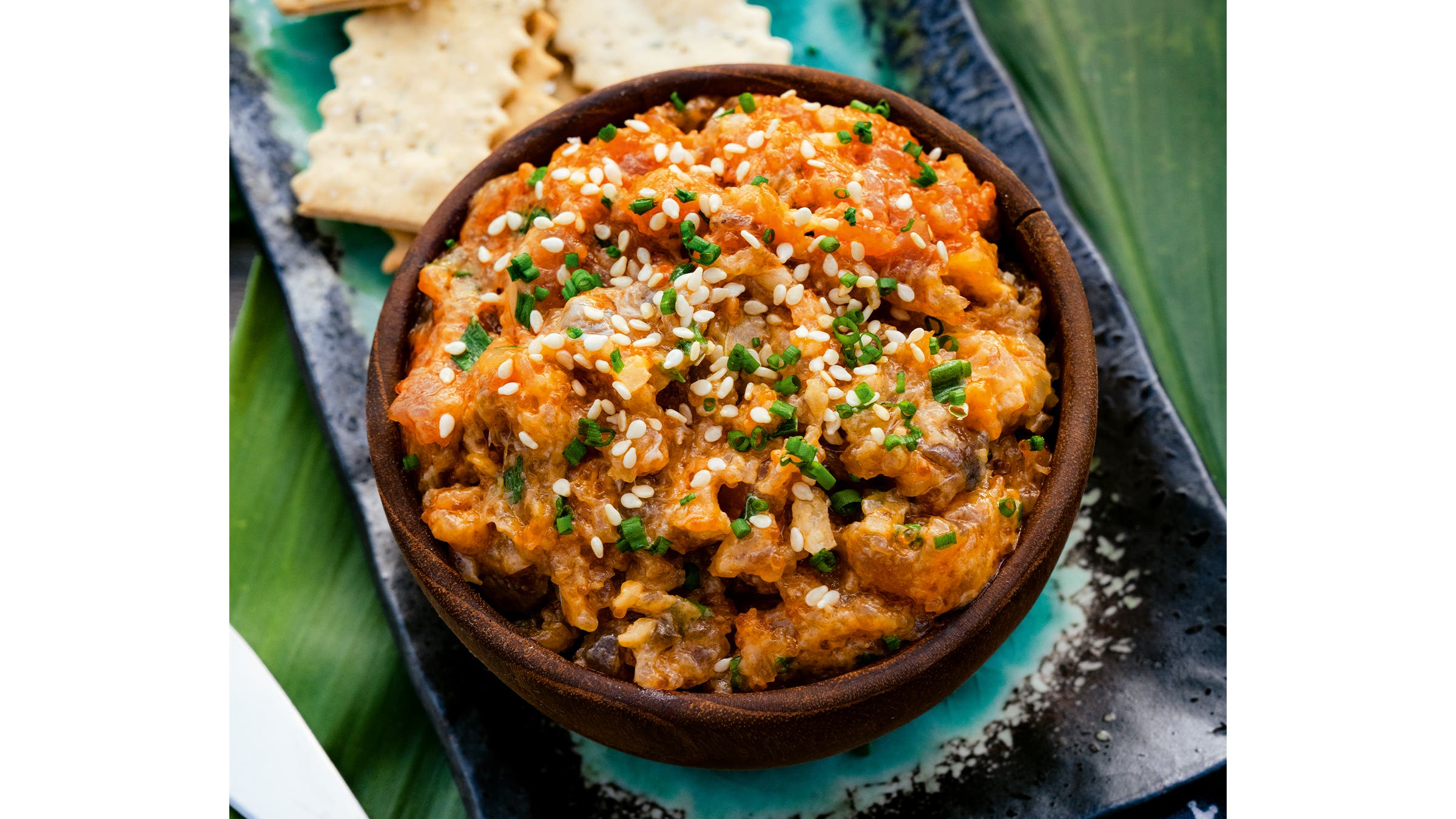
“I often find store-bought spicy poke has way too much mayonnaise for my liking and the true essence of the fish gets lost. By using less mayo but adding touches of nice oils, like sesame and chili, the poke comes out with a silky, creamy texture and a lot more flavor. Spicy poke can be used as a dip, spread, or a filling for sushi because the fish is cut into small dices (and can even be minced if preferred). The small cuts also make this recipe an absolute winner for using every morsel of fish meat available. Odd pieces that are too small or irregularly shaped to cut into sashimi can be easily minced for spicy poke. After filleting fish, I often use a spoon to scrape any bits of meat left on the bones to make this crowd-pleasing favorite.”
- In a medium bowl, add 1 pound diced ono (wahoo), 3 tablespoons diced white onion, 2 to 3 green onions (white and green parts sliced), 3 tablespoons mayonnaise, 3 tablespoons toasted sesame oil, 3 tablespoons tobiko, 3 tablespoons Sriracha sauce, 1 tablespoon chili oil, and 2 teaspoons flaky sea salt. Stir to combine thoroughly, then taste and adjust the seasoning.
- Scoop the poke into a medium serving bowl. Garnish with more green onions and sesame seeds (if using) and serve fresh immediately, or cover and chill in the fridge for 1 hour to let the flavors mingle.
This article is from the Spring 2026 issue of Outside magazine. To receive the print magazine, become an Outside+ member here.
