Published December 22, 2016 12:00AM
You Need These Evergreen-Infused Treats This Winter
The season's hottest flavors are spruce, pine, and juniper. Here's where to taste them.
Pine-flavored foods are having a moment.
Call us saps, but the smell of a fresh-cut Christmas tree eclipses all other sensory experiences this time of year. We can’t get enough of it. Thankfully, evergreen-flavored foods are having a moment, with cocktails, beer, and even ice cream making appearances on menus.
Of course, flavoring foods with spruce and pine isn’t new. Alaskan foraging chef and blogger Laurie Constantino writes that indigenous peoples have been using spruce tips in recipes for centuries. Captain Cook was famous for brewing beer with spruce. The branches are actually high in vitamin C, so the beer likely helped his crew fend off scurvy.
Maybe it’s because scurvy is no longer a prominent concern, but the evergreen has fallen out of favor on yuletide menus in recent years. Even the iconic bûche de noel, a dessert made to look like a log, is flavored with boring vanilla and chocolate—not coniferous goodness. It’s time to revive this tradition, and we’re here to help you do it.
Dogfish Head Pennsylvania Tuxedo Ale
Last spring, employees from the Woolrich Woolen Mill, the outdoor apparel company in Woolrich, Pennsylvania, shuttered the plant for a few days and headed into the local woods in search of spruce tips—the bright-green fresh ends of the branches that emerge in springtime. They gathered more than 40 large trash bags of the stuff and brought them to Dogfish Head brewery.
ADVERTISEMENT
The result is Pennsylvania Tuxedo Ale, a collaboration between Woolrich and the Delaware-based craft brewer. It’s based on a recipe that John Rich, the long-ago founder of Woolrich, mentions in his journals. Since the first batch was released in 2015, brewery founder and president Sam Calagione says the ale has become one of the company’s most beloved cult favorites.
It shouldn’t be surprising that evergreen works well in beer. “Notes of pine” is a common descriptor when talking about hops. Calagione paired the tips with Centennial hops, known for their citrusy and floral flavors, with subtle spruce undertones. Next year, he says, they’ll have to pick even more spruce tips to meet demand for the special ale.
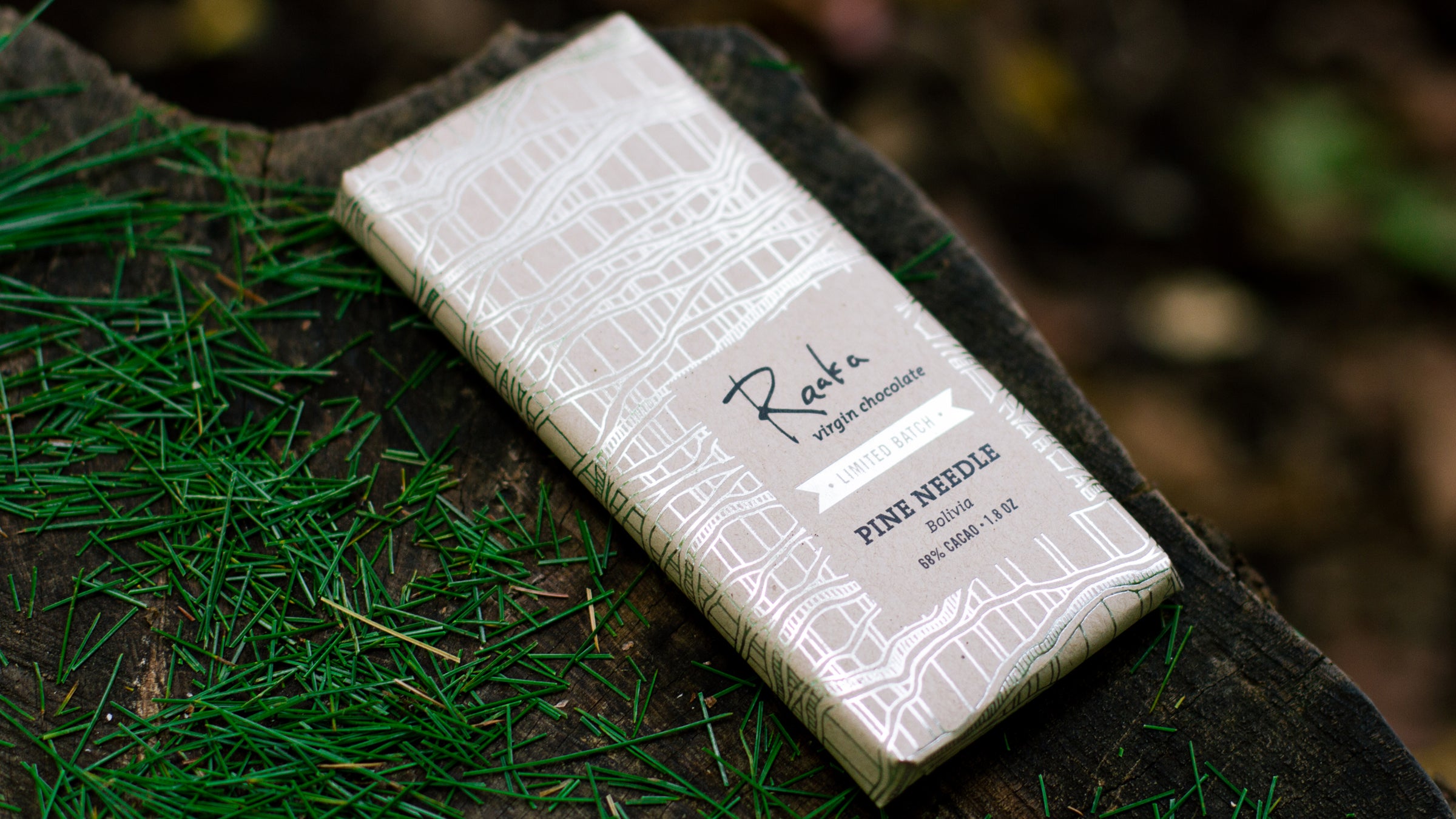
Raaka Pine Needle Chocolate
Leave it to a Brooklyn-based chocolatier to invent a chocolate bar that “tastes like a crisp winter stroll amongst snow-covered conifers.”
Raaka makes the bars using single-origin chocolate produced by the Alto Beni Cacao Company, a small co-op in the western part of Bolivia. Cacao beans are mixed with a tea made from Douglas fir tips before cocoa butter is folded in. When the company finished its first batch and passed it around for testing, feedback from testers was unanimous: more trees, please.
William Mullan, marketing director at Raaka, says the complex mix of flavors surprised everyone. It doesn’t just taste like eating a fistful of pine needles. “I think many of us didn’t expect the brighter citrus notes from the tea to really come through,” he says. The combo makes for a remarkably unique final product. For the full “dessert in the woods” experience, toss a square into a s’more.
ADVERTISEMENT
Blue Spruce Ice Cream
Alan Bergo, the executive chef at farm-to-table restaurant Lucia’s in Minneapolis, was foraging in the Midwest way before it was trendy—mushrooms and spruce tips rank among his favorite things to pluck. Even better: they’re abundant in the forests near his home. Bergo therefore ends up working spruce into both savory and sweet dishes. (Here’s a video he made showing how to brine a ham with spruce tips.)
This spruce-infused ice cream recipe is always a crowd favorite. One word of warning: not all spruce tips are created equal. “From my experience, spruce is easy to work with as long as I have a species that tastes good. As long as the flavor isn’t bitter or astringent, it’s easy,” Bergo says. In this case, a good species is blue spruce. “I go around and taste species of spruce, then I pick from a group of trees that have a flavor I like.”
ADVERTISEMENT
So put on your coat, head out into the woods, and gather an armload to try. Then bring your spoils back to the kitchen and get churning.
Makes one quart.
Ingredients
- 1 1/2 cups heavy cream
- 1/2 cup milk
- 1/2 cup sugar
- 1/8 teaspoon salt
- 6 large egg yolks
- 1/2 cup fresh blue spruce buds
Method
- In a small saucepan on low, heat the cream, milk, sugar, salt, and egg yolks, whisking constantly to prevent the egg from sticking to the bottom of the pan.
- When the mixture starts to steam and is hot to the touch but not simmering or bubbling (this should take a couple of minutes), remove it from the heat while continuing to whisk. Transfer the mixture to the bowl of a blender and allow to cool completely to room temperature.
- Add the spruce tips and puree, gradually working up the power settings until you get to high. It takes a bit of horsepower to break down the needles; for the best flavor, they need to be finely blended.
- Pass the pureed mixture through a fine mesh strainer, and then pour it into the bowl of an ice cream maker. Process for 15 minutes, then check on it. The ice cream should be smooth and thick, doubled in size, and the consistency of sour cream. If necessary, process for five additional minutes or until the desired consistency is reached.
- Keep an eye on the ice cream to make sure it doesn’t get hard on the bottom, which will make it chalky and turn dark. When the ice cream is done, transfer it to a container and freeze. The ice cream will firm up as it freezes.
- Two notes from Chef Bergo. First: “Having the ice cream mixture at room temperature is key. Pureeing cold cream will create butter in the blender and break the emulsion, while pureeing hot cream with the spruce tips will react with their acidity and change their color swamp green.” And second: throw in some tiny chocolate chips for a play on mint chocolate chip.
Holly Jolly Cocktail
Gin has always had a pinelike flavor, thanks to the juniper berries used in the distilling process, but bartenders have recently started infusing other liquors and liqueurs with evergreens. This one, created by Nico de Soto for Miracle on Ninth Street, a holiday pop-up bar in New York, relies on both gin and pine liqueur to get you in the, ahem, Christmas spirit. (That’s the last pun, promise.)
1 1/2 ounces gin
1/2 ounce pine liqueur
3/4 ounce vanilla syrup
3/4 ounce lime juice
3 mint leaves
Dash of soda water
In a shaker, mix all ingredients except the soda. Shake well. Strain into a Collins glass. Top with soda and serve. Feel jolly.
