Updated October 1, 2025 12:52PM
If you buy through our links, we may earn an affiliate commission. This supports our mission to get more people active and outside.Learn about Outside Online's affiliate link policy
The Best Running Shirts and Tank Tops for Women (Fall 2025): Field and Lab Tested
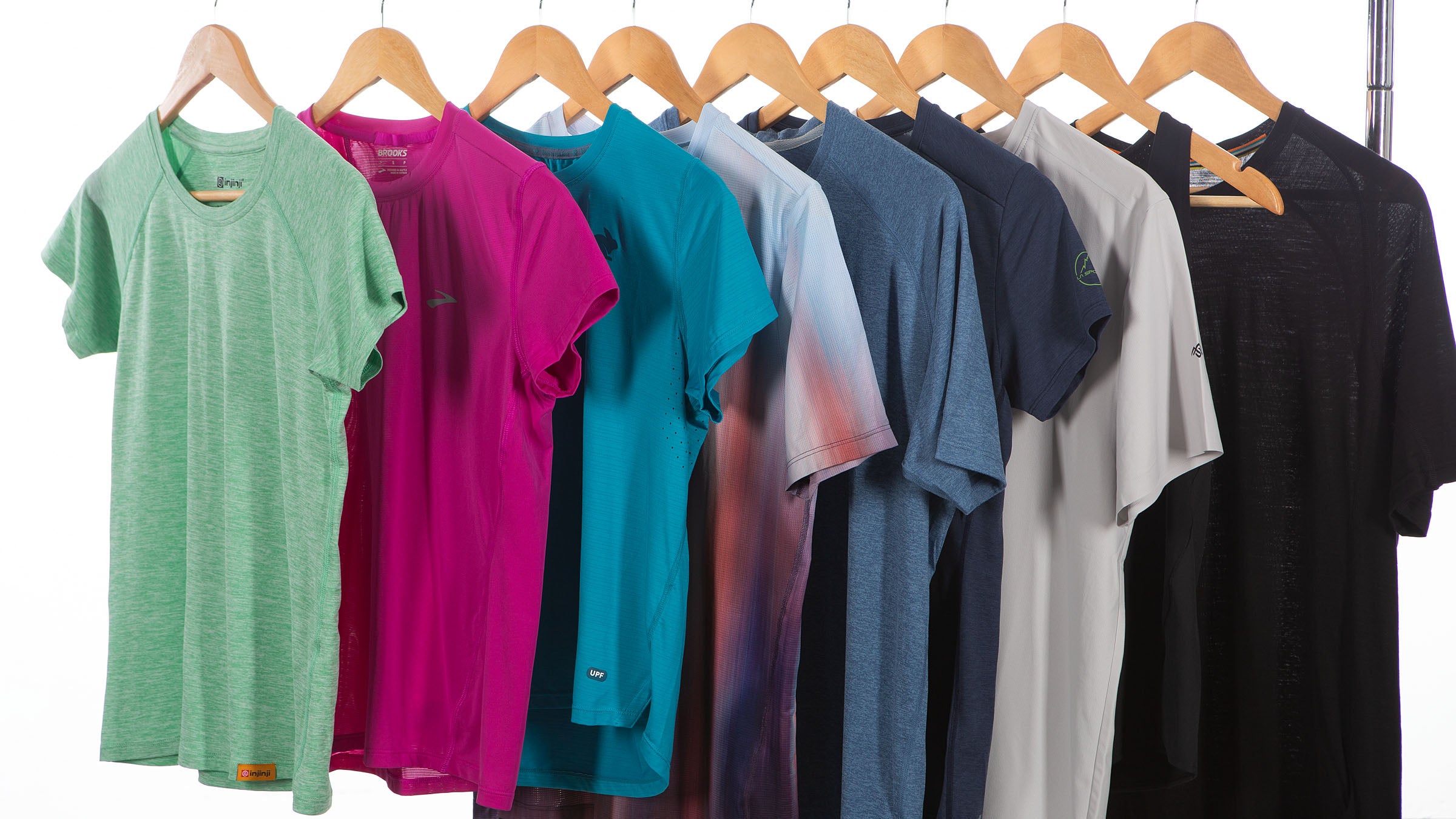
These 14 best women's running T-shirts and tanks will keep you cool, dry, comfortable, and stylish
(Photo: Brad Kaminski)
Table of Contents
The start of fall delivers a mixed bag of conditions. It can mean ideal running weather, but, just as often, one day might feel like summer and the next like early winter. The best running shirts can keep you comfortable in any weather, all year long, either on its own or under layers as temperatures cool. And a good running tank takes you from the warm days of fall to indoor treadmill workouts to warm-weather running vacations.
Our team of testers put the season’s new styles of running tees and tanks up against each other and the top-rated running tops we tested earlier in the year. On runs long and short, road and trail, we paid attention to comfort, function, and style. We had zero tolerance for irritating seams and awkward fits, and we placed high value on breathability, mobility, and how a top made us feel. Here are our winning picks.
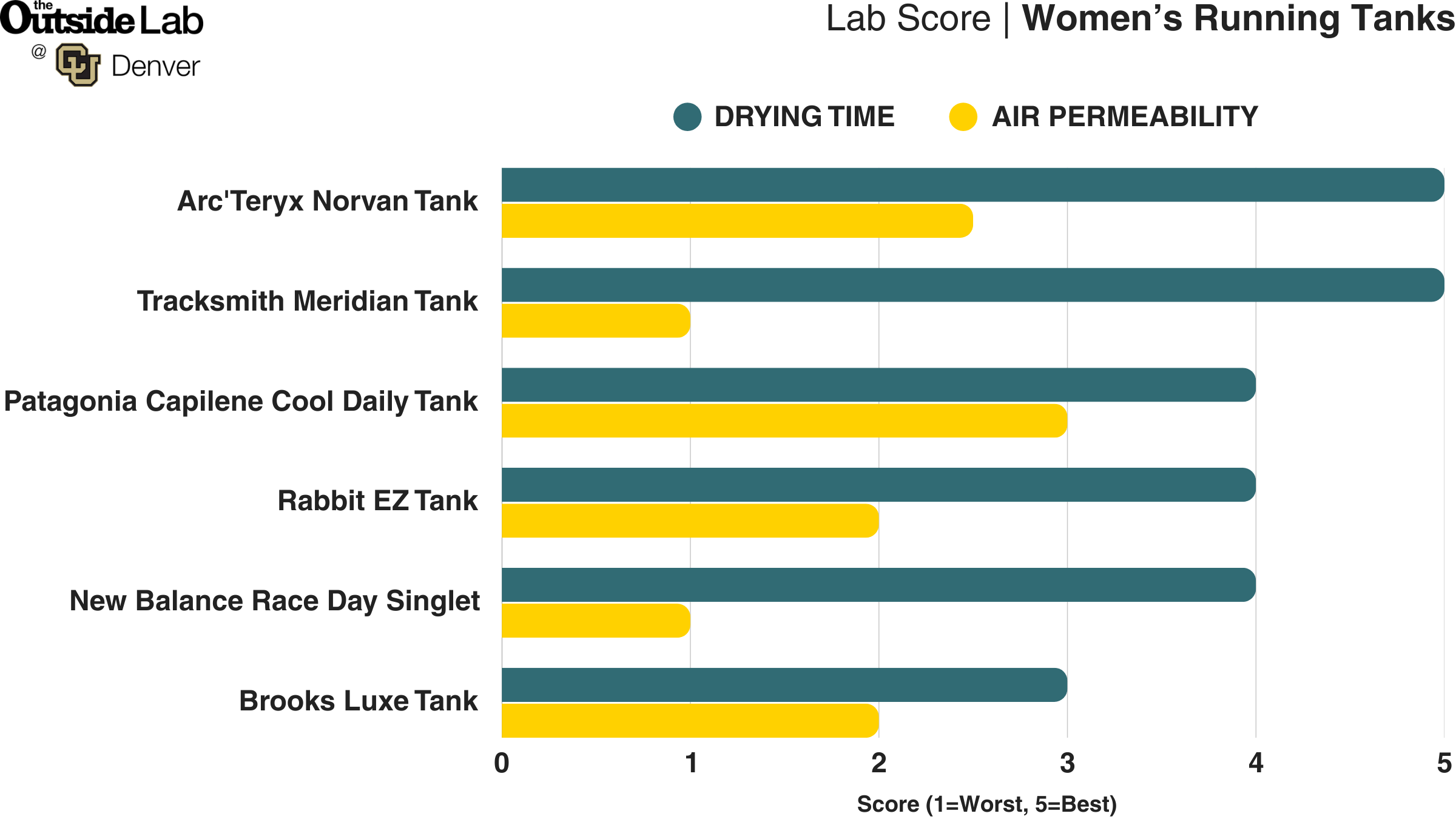
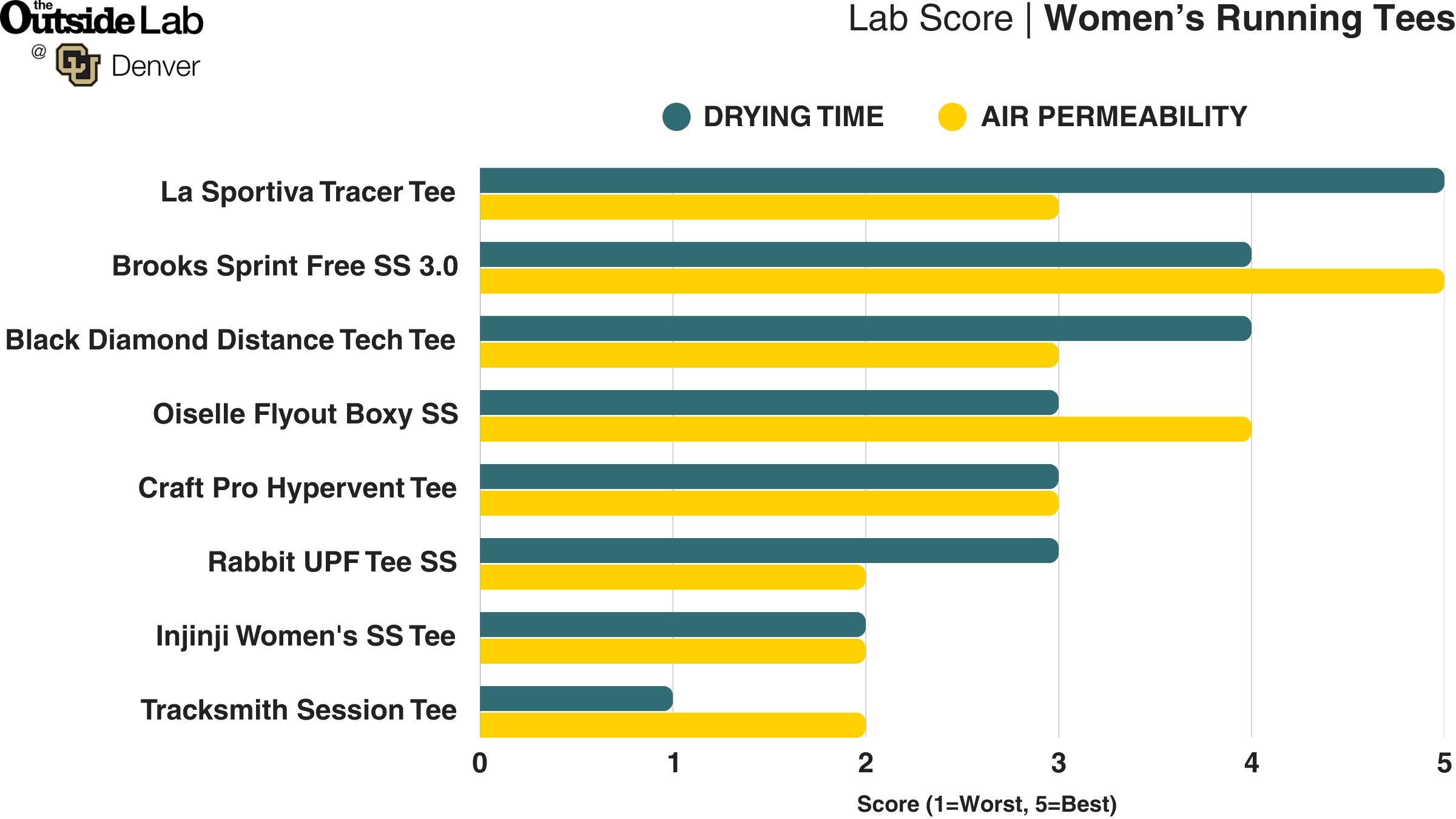
Update October 2025: For this season’s update, we selected five new category winners and added runner-ups in two categories. We again called upon the Outside lab for measurements on air permeability and dry time to help you select the best running top for you. Be sure to read the “How We Test” section below for more details on our methodologies and how to interpret the lab data.
At a Glance
Best Running Tank Tops
- Best Value Running Tank: Patagonia Capilene Cool Daily Tank ($39)
- Most Versatile Tank: Brooks Luxe Tank ($45)
- Best Tank for Hot Weather Running: Tracksmith Meridian Tank ($85)
- Best Raceday Tank: New Balance Race Day Singlet ($55)
- Best Trail Running Tank: Arc’teryx Norvan Tank ($80)
- Softest Tank: Rabbit EZ Tank ($48)
Best Running T-Shirts
- Best Value Running Tee: injinji Women’s Short Sleeve Tee ($40)
- Most Versatile Tee: Tracksmith Session Tee ($75)
- Best Tee for Hot Weather Running: Rabbit UPF Tee S/S ($55)
- Runner-Up, Best Hot Weather Tee: Craft Pro Hypervent Running Tee 2.0 ($60)
- Best Wicking Tee: Brooks Sprint Free Short Sleeve 3.0 ($45)
- Best Trail Running Tee: Black Diamond Distance SS Tech Tee ($65)
- Runner Up, Best Trail Tee: La Sportiva Tracer Tee ($55)
- Softest Tee: Oiselle Flyout Boxy Short Sleeve ($72)
Best Women’s Running Tanks
Best Value Running Tank
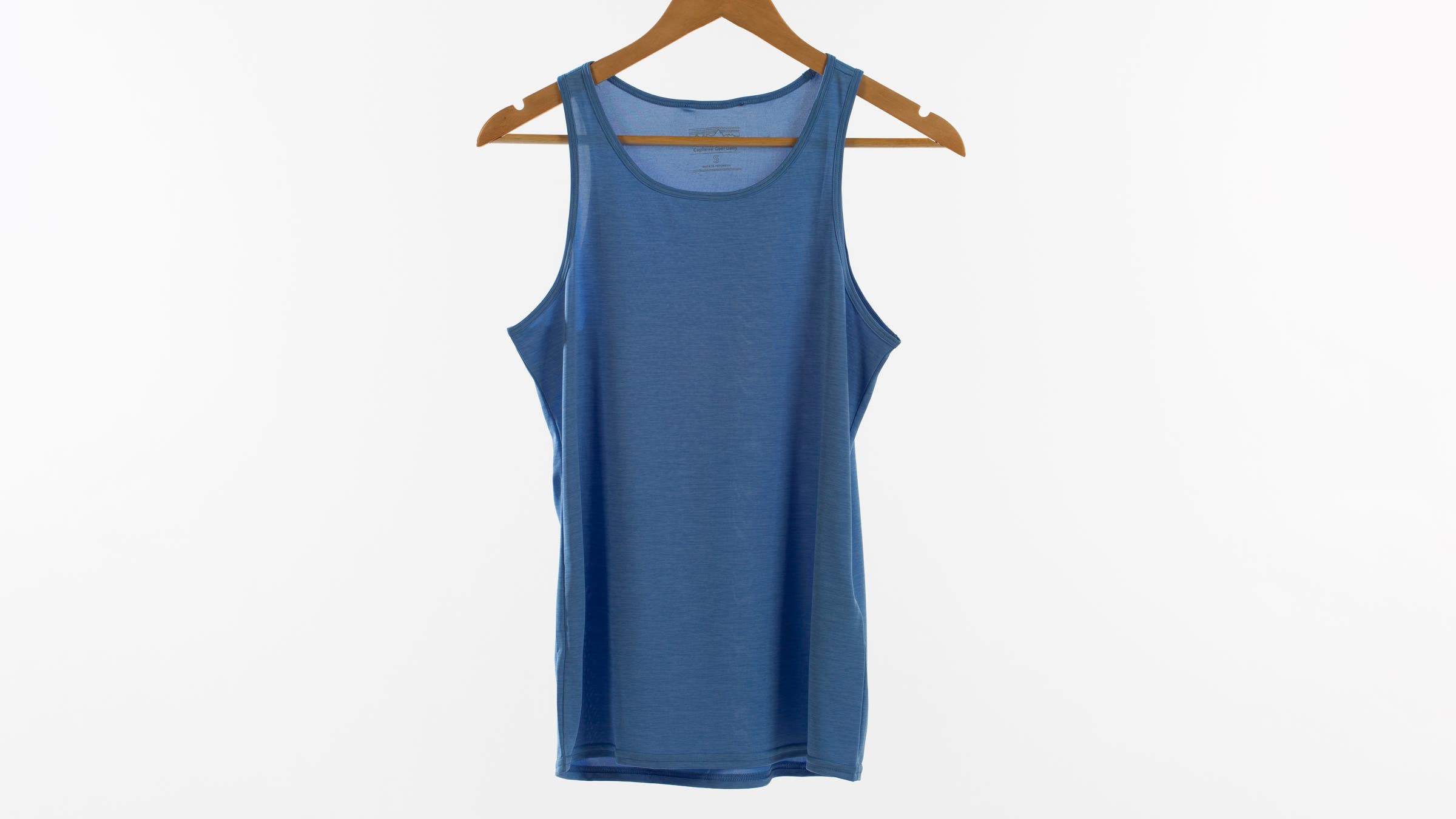
Patagonia Capilene Cool Daily Tank
Sizes: XS-XL
Lab Dry Time: 4 (1=worst; 5=best)
Lab Air Permeability: 3 (1=worst; 5=best)
Pros and Cons
+ Extremely lightweight
+ Minimal branding allows versatility
– Runs large
It may be surprising to find Patagonia in a “Best Value” category, but the versatility and function of this running tank makes the Capillene Cool Daily Tank well worth the just-under-40-bucks price tag.
We loved the feel of this workout tank for everything from warm-weather runs in Colorado to high-humidity hikes in the Caribbean. Testers described the recycled polyester Capilene Cool fabric as “extremely lightweight” and said it helped them “maintain comfort while sweating.” The thin fabric dries quickly, whether on the run, during water sports like stand-up paddleboarding, or while traveling.
Like most Patagonia apparel, the fit of this running tank runs a little large, but we liked the relaxed shape. It’s one tester’s go-to shirt while wearing compression-style running shorts. “I like the coverage of the longer cut,” she said. We also loved the versatility of the tank’s styling—the only visible branding is a tiny Patagonia tag at the bottom seam, so it doesn’t look overly athletic and out of place off the trail.
ADVERTISEMENT
Most Versatile Tank
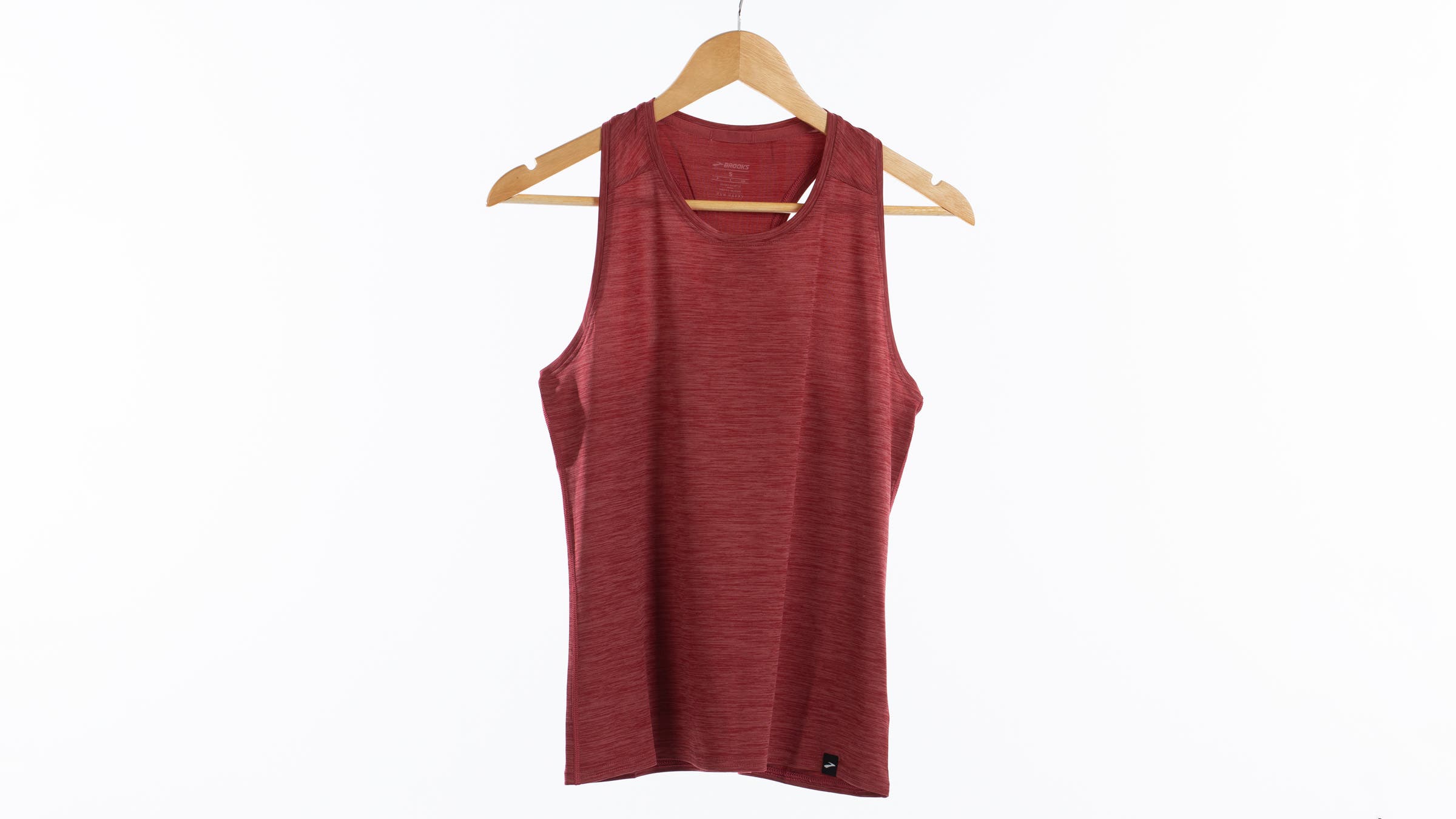
Brooks Luxe Tank
Sizes: XS-XXL
Lab Dry Time: 3 (1=worst; 5=best)
Lab Air Permeability: 2 (1=worst; 5=best)
Pros and Cons
+ Super soft
+ Minimal branding
– Underarm seams can rub (but don’t chafe)
This soft, breathable, minimally branded running tank looks so good we’ve worn it casually to run errands around town, but the stylishness doesn’t compromise how well it feels and moves on the run. The cut is slightly long and loose, which makes it comfortable, flattering, and adds to its versatile appeal—it can work both tucked in or left out. “So soft and breathable,” said a tester, while another marveled at how lightweight the material felt against her skin.
A couple testers noted the underarm cut was a tad high, making the non-flat seams rub their armpits, but it was more of an irritation than a run-ruining situation—no chafing. That minor complaint was easy to overlook, given the workout tank’s versatility. “This tank is great to layer under a long sleeve for a morning run when it starts cool and will warm up,” said one tester. “I also love it for a short run, when it can double as a casual tank to run errands in before or after.”
Best Tank for Hot Weather Running
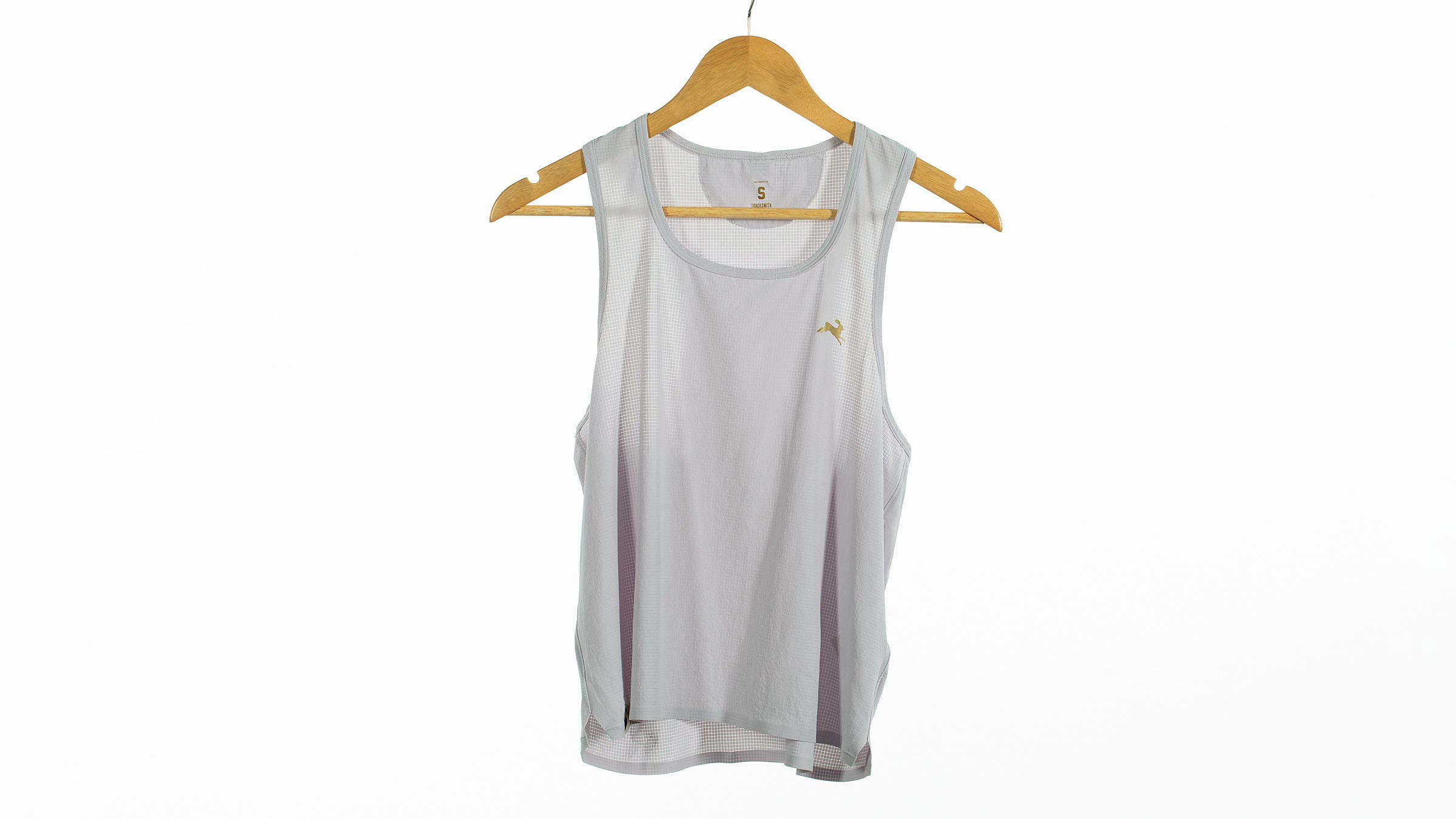
Tracksmith Meridian Tank
Sizes: XS-2XL
Lab Dry Time: 5 (1=worst; 5=best)
Lab Air Permeability: 1 (1=worst; 5=best)
Pros and Cons
+ Great styling
+ Airy, no-cling material
– Cropped cut might not work for some
We love the airy feeling of this super lightweight running tank. The nylon/spandex blend wicks moisture extremely well, never clinging to our sweaty bodies and drying quickly (it earned the highest lab mark for drying time). The fabric itself doesn’t let wind through, but the slightly cropped style aids airflow. The wide shoulder straps and a back side that provides more coverage than a traditional racerback allow this tank to remain comfortable under hydration packs and protect from the beating sun. We also love that the material is both stretchy and retains its shape well.
Best Raceday Tank
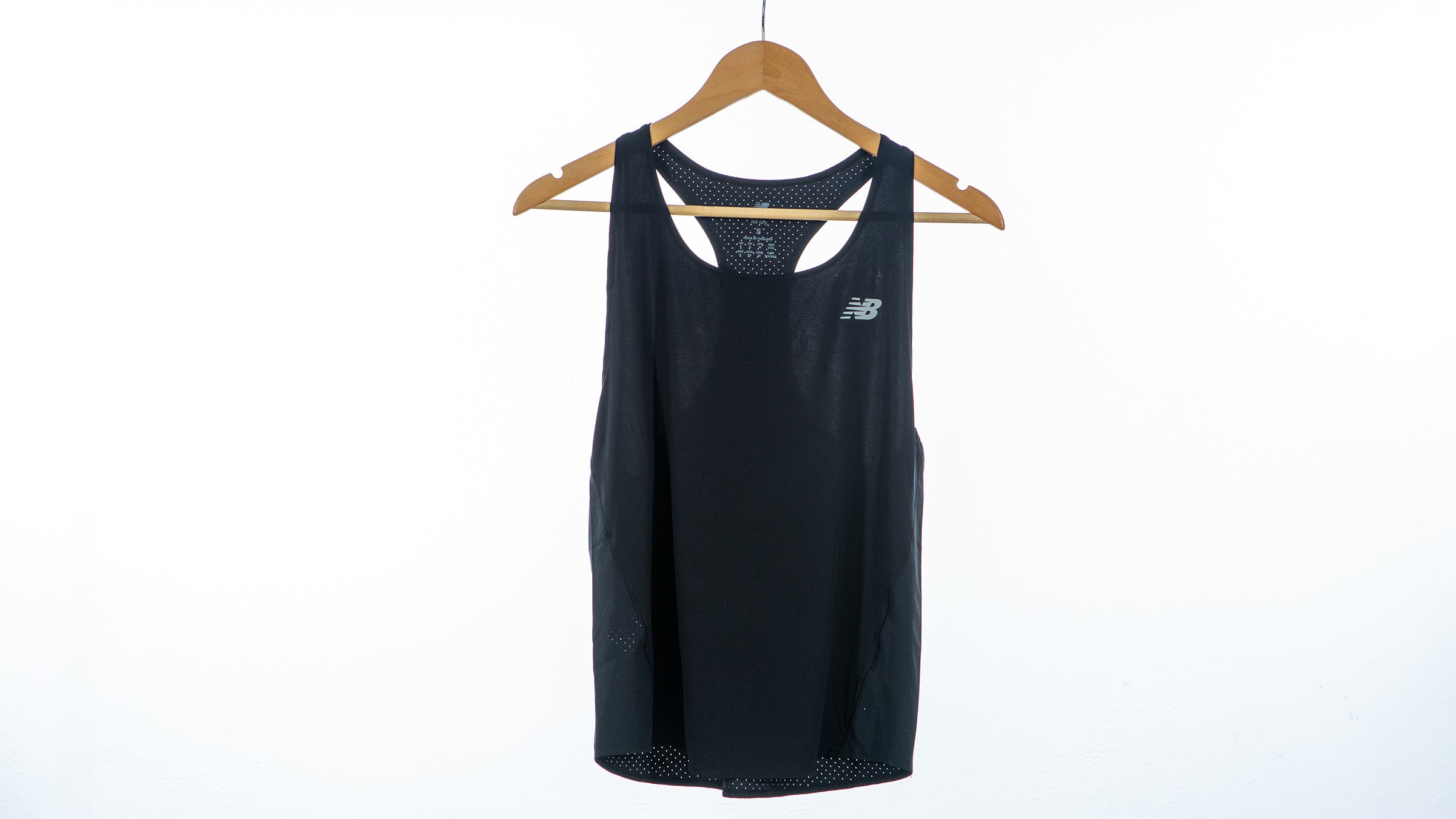
New Balance Race Day Singlet
Sizes: XS-2XL
Lab Dry Time: 4 (1=worst; 5=best)
Lab Air Permeability: 1 (1=worst; 5=best)
Pros and Cons
+ Extremely lightweight
+ Wide armholes provide ample airflow
– Might be too minimal on the backside for some
This running tank has a singlet-like fit, with wide armholes and a true racerback cut. The effect is an airy feel and a race-ready vibe. The front side of the Race Day singlet is smooth and silky (that dries quickly but doesn’t let a lot of air through), while the back is made of perforated material (called “NB Dry”) that testers found wicked moisture and heat away from the skin effectively. The seam that connects the two different materials creates a flattering line that doesn’t chafe, and the simple seams at the arm holes and neckline maintain the material’s lightweight, free-flowing functionality.
Best Trail Running Tank
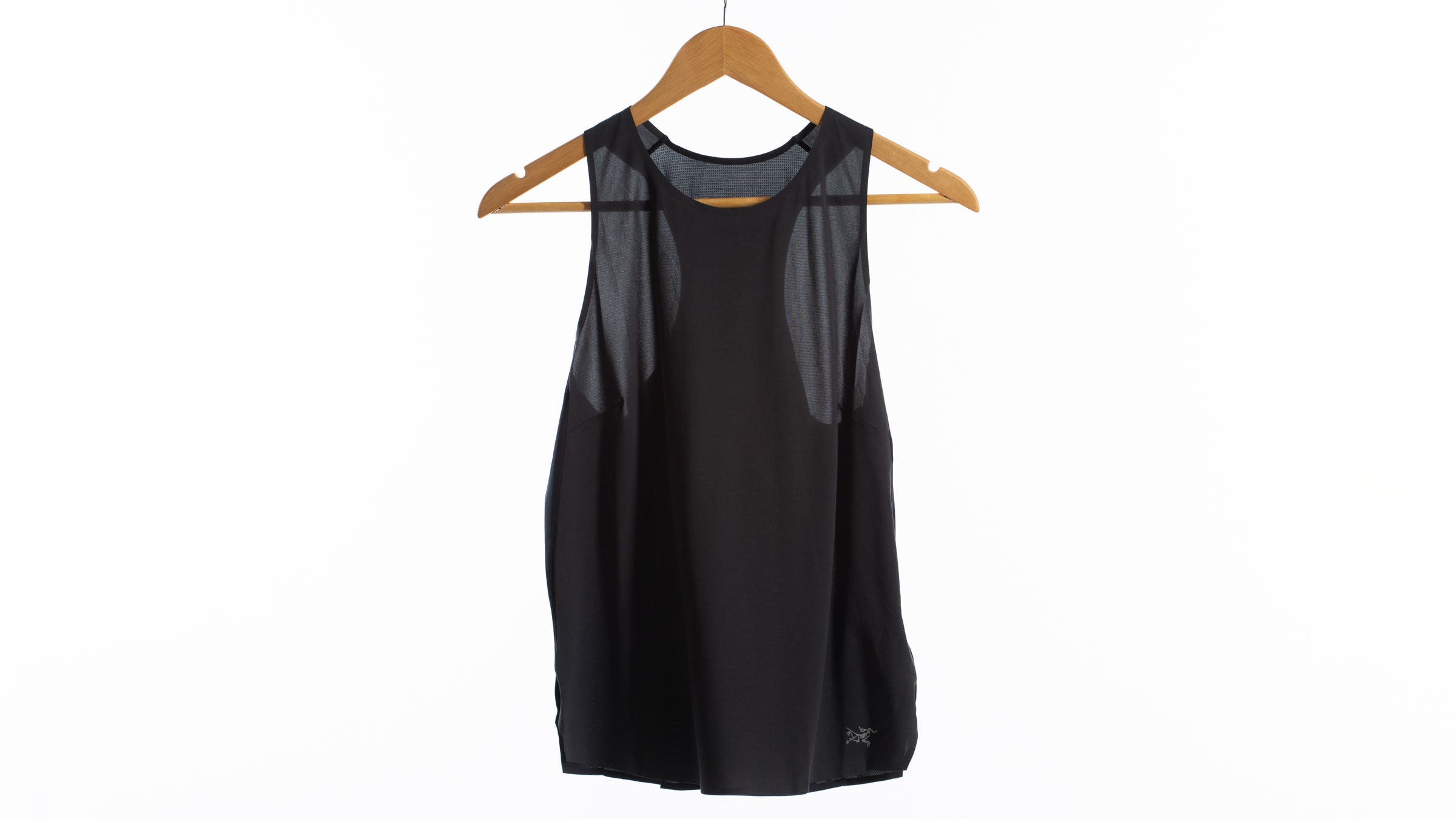
Arc’teryx Norvan Tank
Sizes: XXS-XXL
Lab Dry Time: 5 (1=worst; 5=best)
Lab Air Permeability: 2.5 (1=worst; 5=best)
Pros and Cons
+ Wide shoulder straps work well under a pack
+ Lightweight, airy, and quick-drying
– 80 bucks is a lot for a running tank
Some tank top shoulder straps can start to rub underneath a hydration vest or running pack straps, but the Norvan workout tank doesn’t have this issue. A wider cut at the shoulders means the straps stayed flat and in place under a pack during hours of mountain running in Colorado’s Indian Peak Wilderness.
This is a looser-fitting running tank, which we loved for its forgiving fit all around and slightly longer cut. The material—a softer polyester frontside with a meshy backside—feels great against the skin, breathes well, and dries quickly (the fastest-drying of all the tops here, according to the lab). All seams remained comfortable over hours of wear as well—no chafing here.
Softest Tank
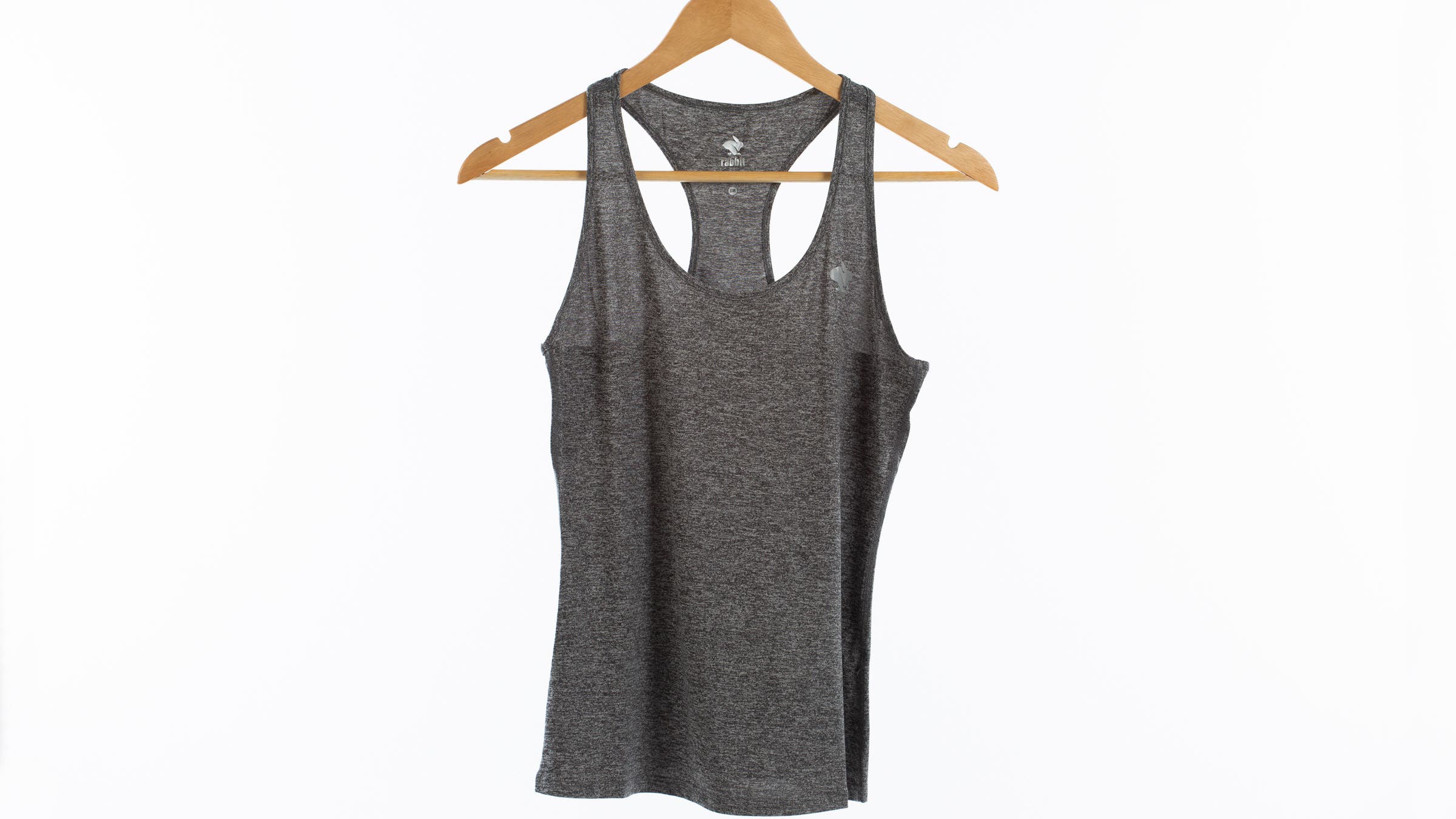
Rabbit EZ Tank
Sizes: XXS-XXL
Lab Dry Time: 4 (1=worst; 5=best)
Lab Air Permeability: 2 (1=worst; 5=best)
Pros and Cons
+ Super soft and comfortable
+ Bonded seams
– Runs small (size up!)
Talk about buttery soft. This running tank is made from the brand’s recycled polyester/spandex blend that feels like your favorite old cotton t-shirt, softened in the wash after decades of use. But unlike cotton, this material dries quickly after being soaked in sweat. While the material might not be as breathable as some other techier-feeling tanks or running tees in this roundup, it feels fantastic on the skin and still performs even when damp. Bonded seams around the armholes and neckline remained soft and proved irritation-free for our team of testers.
“The softness and overall comfort made up for the lack of breathability,” said a tester. “It’s become one of my favorites. It’s just very ‘ez’ to wear.” We find ourselves reaching for this tank, and the Rabbit EZ Tee, for lounging; it’s that comfortable.
Best Women’s Running Tees
Best Value Running Tee
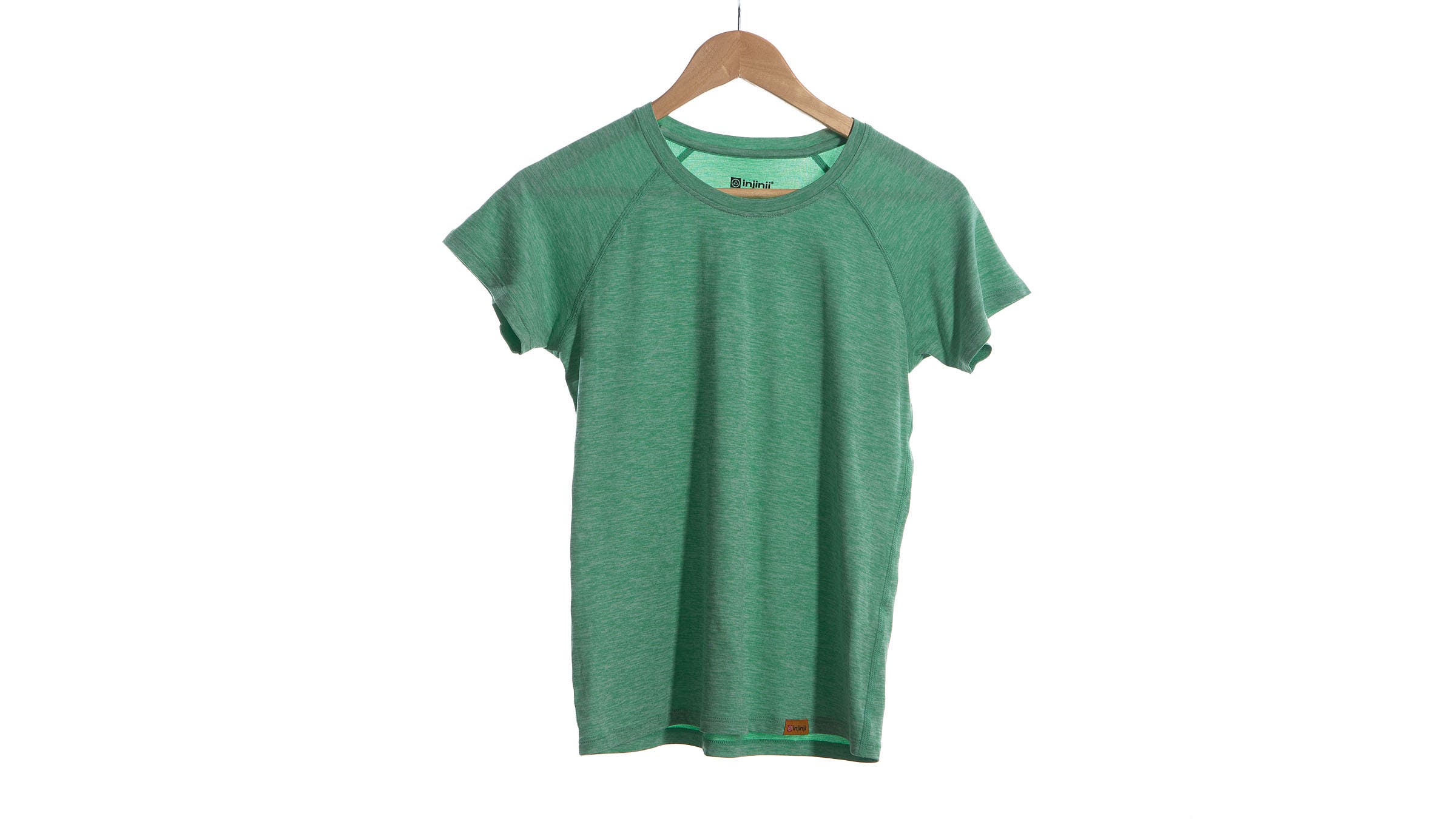
injinji Women’s Short Sleeve Tee
Sizes: XS-XL
Lab Dry Time: 2 (1=worst; 5=best)
Lab Air Permeability: 2 (1=worst; 5=best)
Pros and Cons
+ Crossover ability
+ Soft, cotton-like feel
– Not as breathable as some others
This $40 running tee works across a range of activity (and inactivity). We loved it for everything from runs in warm temps to a 12-hour car ride, hiking, yardwork, and running errands. The Injinji tee feels soft against the skin, like cotton, but we didn’t find it breathed as well as others we tested. Still, the 95% polyester, 5% spandex tee was comfortable in all but the hottest conditions, and we loved its crossover ability, as well as its price tag. “This is a dependable, easy t-shirt that is super versatile,” said a tester.
Most Versatile Tee
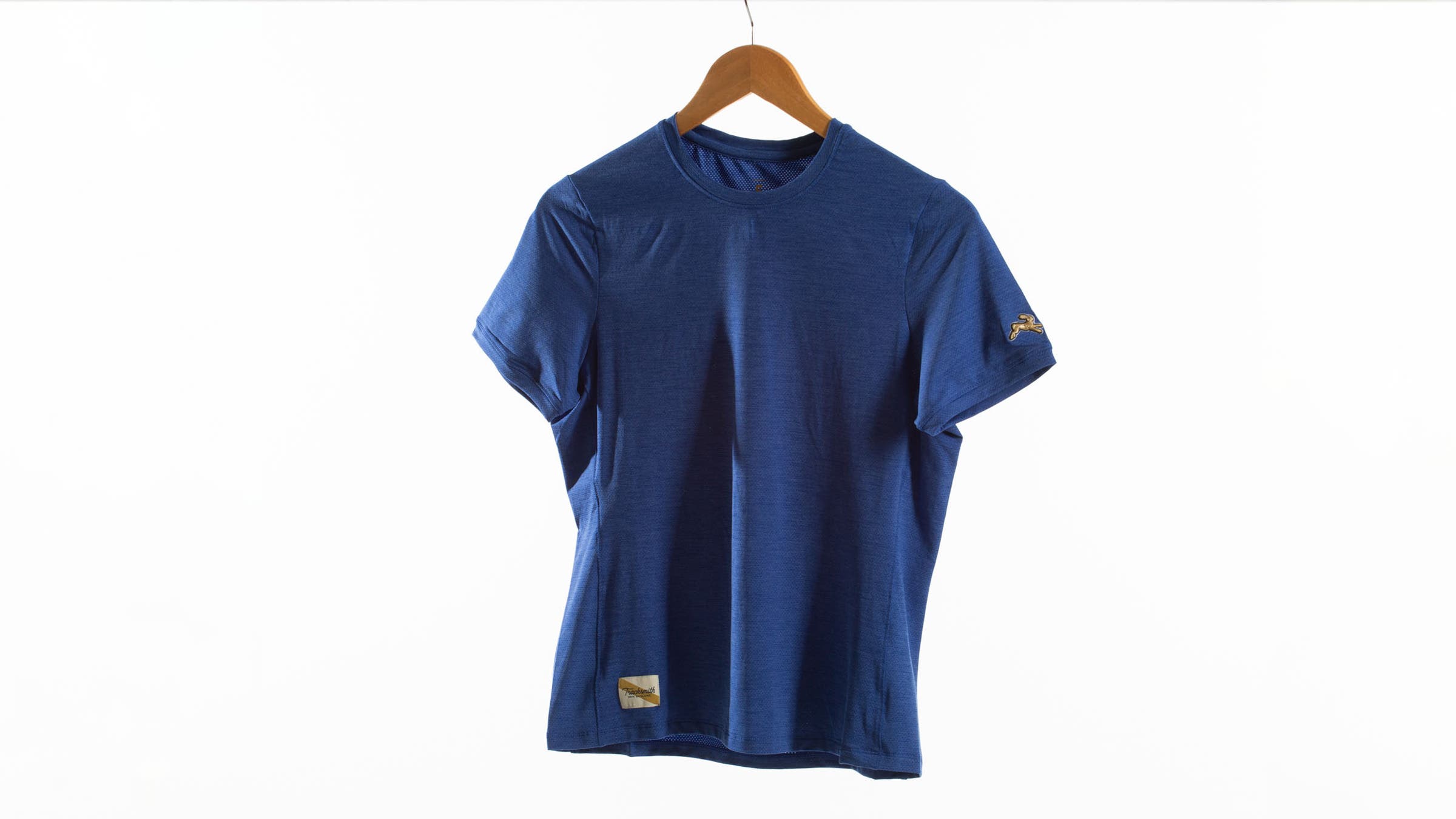
Tracksmith Session Tee
Sizes: XS-XL
Lab Dry Time: 1 (1=worst; 5=best)
Lab Air Permeability: 2 (1=worst; 5=best)
Pros and Cons
+ Versatile for any setting
+ Soft and stretchy
– Runs slightly large
We’ve used this as a go-to running tee and an all-day tee—wearing it casually throughout the day then on an evening run. One tester even slept in it. Made of 84 percent polyester and 16 percent spandex, the Session Tee is exceptionally stretchy. It’s also finished with an odor-resistant treatment that seems to work: We’ve worn it for multiple runs without washing and swear that we’re not offending trail partners. (They concur.) The Session Tee dries slower and is less airy than other high-performance tops—so it isn’t the best choice for the hottest days—but makes up for that in soft comfort and style.
“I’m in love with everything about this shirt: the fit, the fabric, the performance,” said a tester. “It felt like a hang out shirt that I could run in!” another raved, “I forgot about this shirt during the run because it was so comfy and has the most perfect fit!”
Best Running Tee for Hot Weather
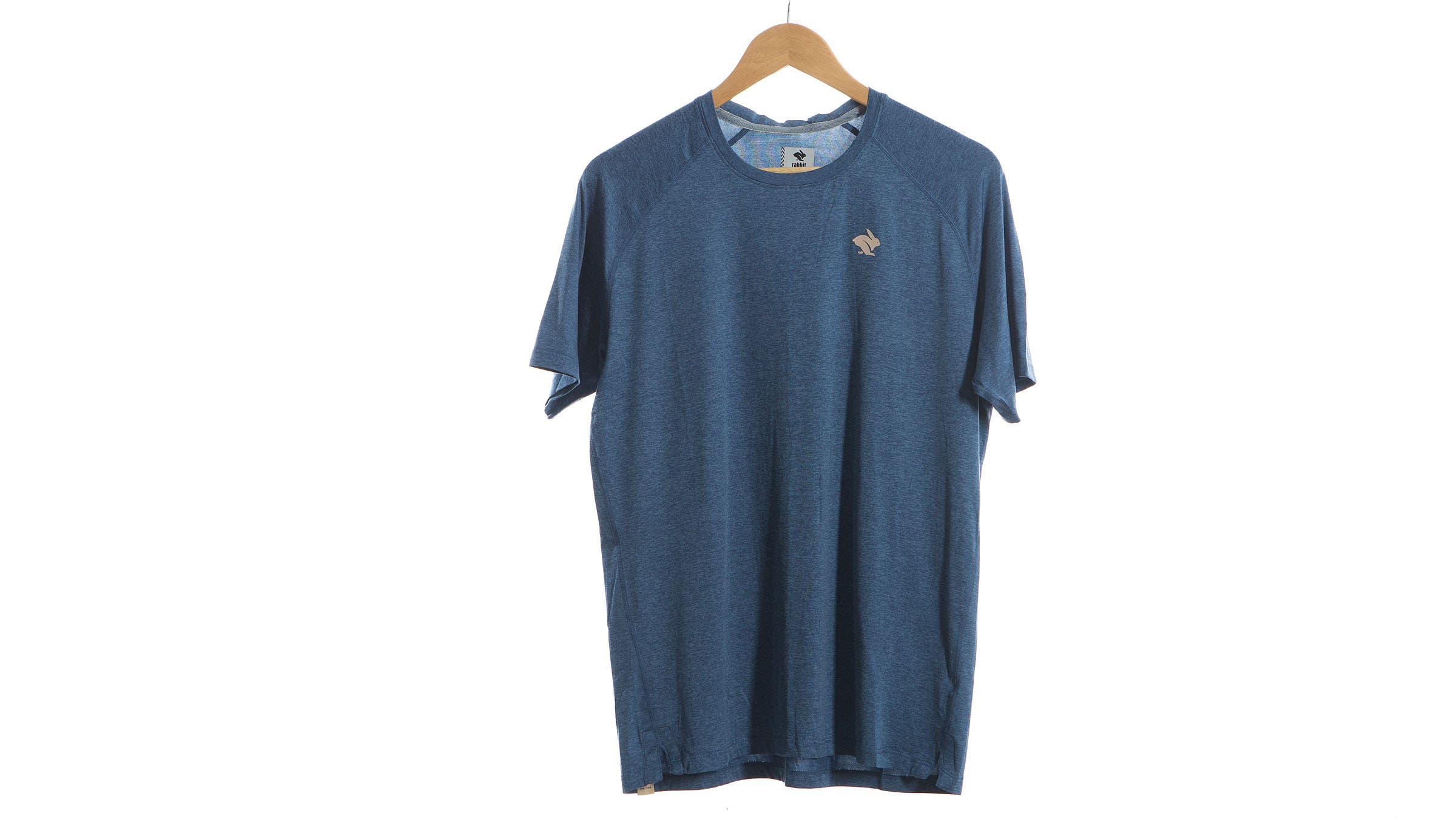
Rabbit UPF Tee S/S
Sizes: XS-XL
Lab Dry Time: 3 (1=worst; 5=best)
Lab Air Permeability: 2 (1=worst; 5=best)
Pros and Cons
+ UPF 50 sun protection
+ Lightweight and breathable
– Falls short at the waist
This lightweight, seemingly simple running tee from Rabbit takes over the top spot in this category, mostly because it offers UPF 50 protection from the sun that testers reported worked well, leaving them with farmer’s tans as proof. They also loved the feeling of the fabric, a polyester/spandex blend that they described as “luxurious,” “soft and silky,” and “cooling.” This running t-shirt kept us comfortable in everything from swampy conditions in the Mid-Atlantic to hot and dry summer days in Colorado.
“I love how light it feels and how quickly it dries when I am suffering in the heat. I especially liked that it wasn’t clingy at all,” said a tester. Underarm perforations and a loose (albeit, slightly short) fit aided airflow. All testers who wore the UPF tee ranked it among their favorites of the lot. “This shirt is phenomenal,” exclaimed one.
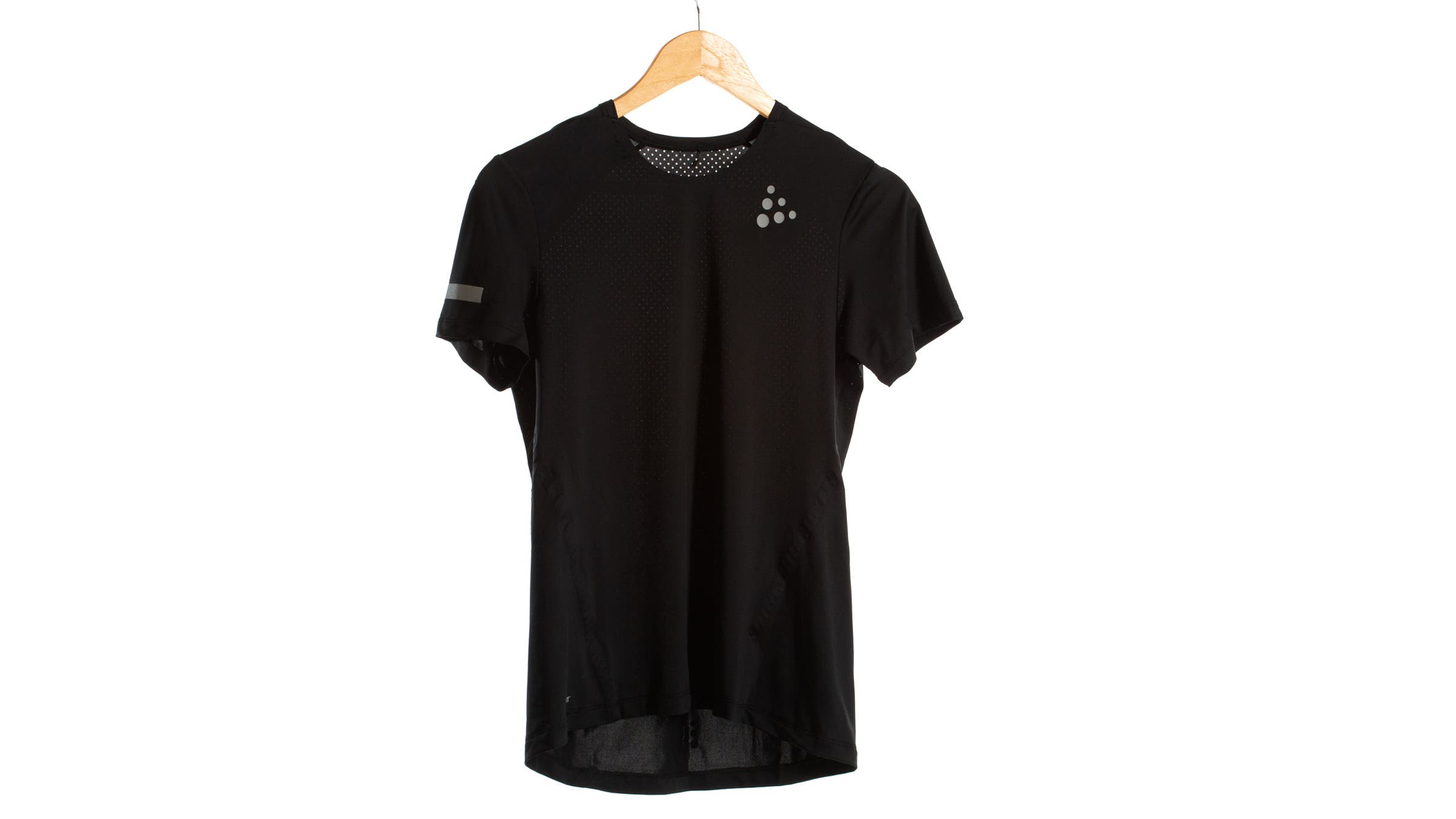
Runner Up, Best Hot Weather Tee
Craft Pro Hypervent Running Tee 2.0
Sizes: XS-XL
Lab Dry Time: 3 (1=worst; 5=best)
Lab Air Permeability: 3 (1=worst; 5=best)
Pros and Cons
+ Extremely lightweight
+ Seamless comfort
– Shows sweat
In summer heat, a running shirt that feels barely there and still provides shoulder coverage is a godsend, and the Craft Hypervent Tee 2.0 delivers. It’s made of a super-lightweight recycled polyester/elastane blend that isn’t the fastest drying or airiest, but it’s silky smooth against the skin, with a mesh back that breathes well while still shielding us from the sun. “It’s great for summer heat because it’s so lightweight—it flitters like an aspen leaf,” raved a tester.
Taped seams at the neck and sleeves are comfortable (no chafing) and add to the shirt’s feminine silhouette. The sleeves are cut longer than regular tees and add coverage, while the raglan design allows unrestricted arm movement. “No seams is a huge plus for me,” said a tester who also loved the lack of a papery tag rubbing the back of her neck. “This was a shirt I didn’t have to think about while running,” said another.
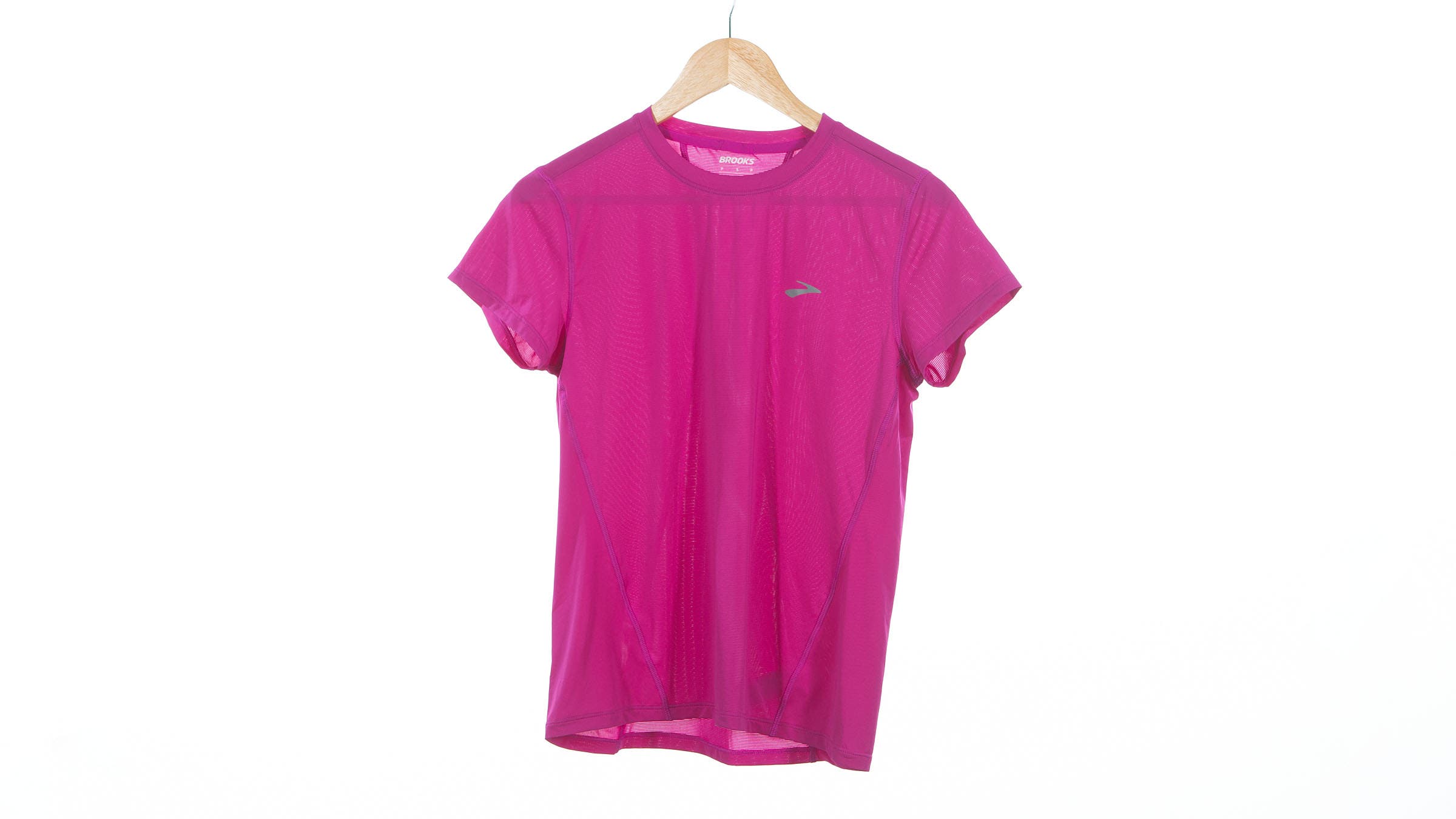
Best Sweat-Wicking Tee
Brooks Sprint Free Short Sleeve 3.0
Sizes: XS-XL
Lab Dry Time: 4 (1=worst; 5=best)
Lab Air Permeability: 5 (1=worst; 5=best)
Pros and Cons
+ Semi-fitted style feels athletic
+ Odor-resistant
– Tighter than some across the neck and shoulders
This lightweight, breathable, stretchy t-shirt topped our lab charts for air permeability, earning a rank among the best running shirt we tested for hot-weather running. “It performs well when I’m super sweaty, pulling moisture away from my skin,” said a Virginia-based tester. “It kept me cool in 80-plus-degree temps with 70 percent or higher humidity.” All testers found this shirt to have a flattering silhouette that falls in between loose and fitted, and reported zero chafing. Bonus: The Brooks Sprint Free Short Sleeve 3.0 comes in high-visibility colors.
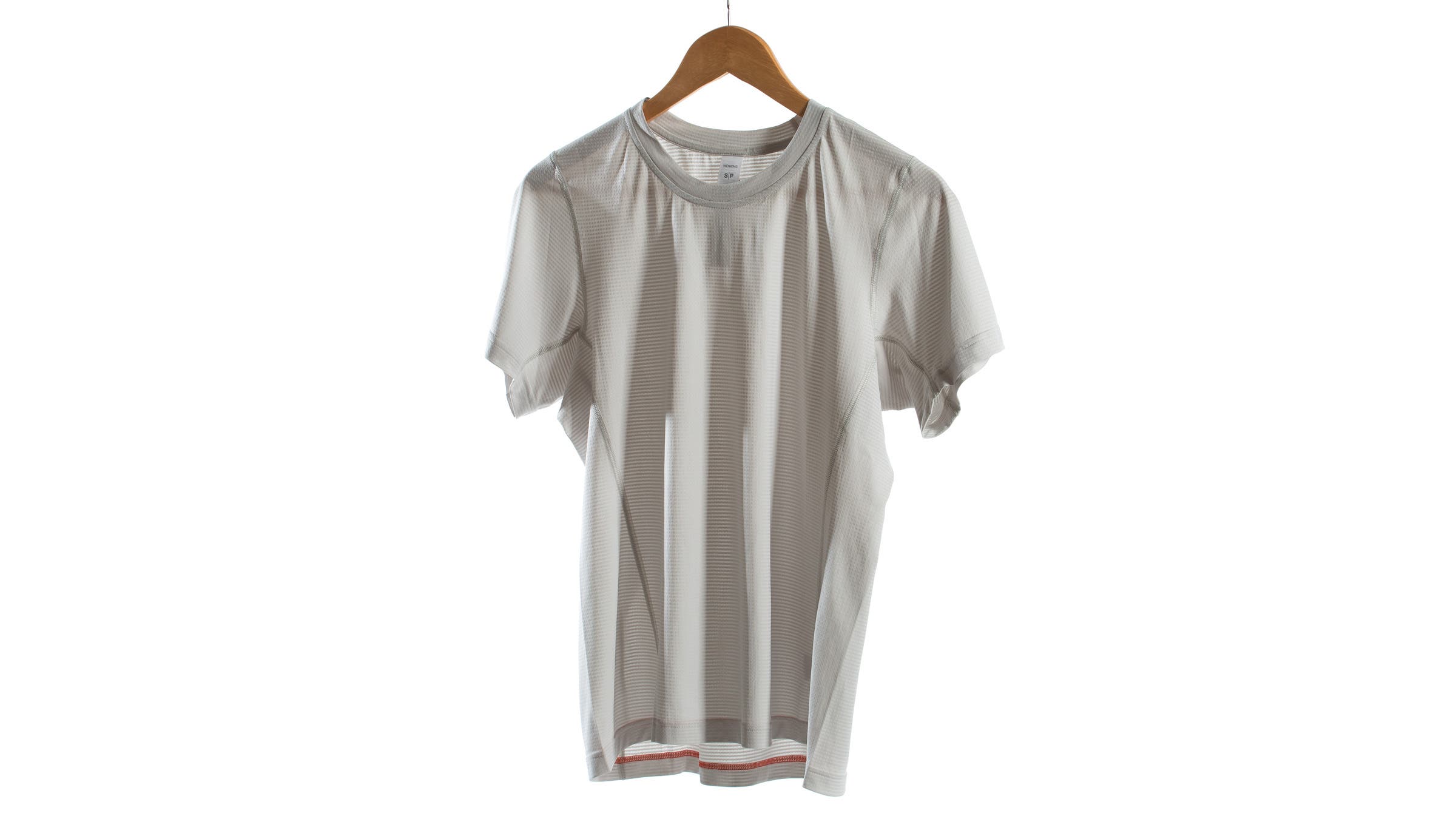
Best Trail Running Tee
Black Diamond Distance SS Tech Tee
Sizes: XS-XL
Lab Dry Time: 4 (1=worst; 5=best)
Lab Air Permeability: 3 (1=worst; 5=best)
Pros and Cons
+ Extremely lightweight, breathable, and quick drying
+ Zero irritation over long wear
– Not as cottony feeling as some others
We’ve worn this running t-shirt under a pack over multi-day runs from hut to hut in the White Mountains of New Hampshire, as well as on multiple short runs around the Boulder Foothills and neighborhood suburbs. This shirt performs: It’s super-quick-drying, moisture-wicking, highly breathable polyester jersey material with a “Quick Dry” finish that never feels bogged down with sweat. The Anti-Odor finish also proved effective—did we mention that multi-day, multi-wear hut trip? We got no complaints from our running mates. Flat lock seams, a flat hem, and lack of a tag add to overall comfort, as does this shirt’s ridiculously lightweight feel on the body.
“Loved the material. It’s loose, super ventilated and fits well throughout,” raved a tester. “Excellent performance,” said another.
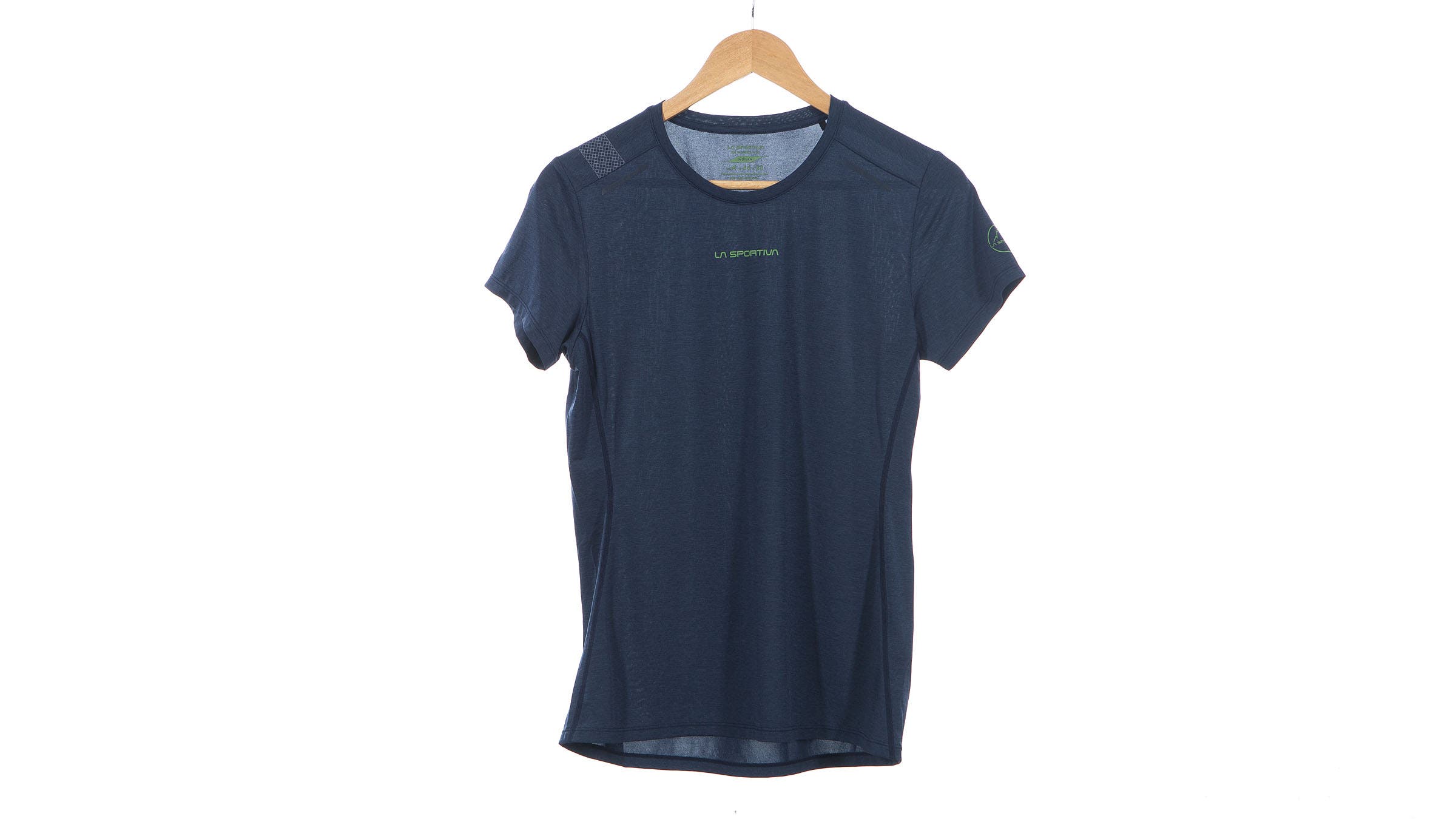
Runner Up, Best Trail Tee
La Sportiva Tracer Tee
Sizes: XS-XL
Lab Dry Time: 5 (1=worst; 5=best)
Lab Air Permeability: 3 (1=worst; 5=best)
Pros and Cons
+ Flat seams
+ Anti-odor technology
– Slim fit might not work for some
This thin, lightweight running tee feels great against the skin and dries extremely quickly (the best running t-shirt in the test according to the Outside Lab). The slim fit had testers reporting that it made them “feel like a legit alpine athlete” and “fast” on the trail. We loved the comfort of the flat seams—no chaffing while wearing the shirt with or without a pack—and how their placement helps create shape in the shirt. “I love that such a technical shirt is still flattering and feminine in its lines,” said one tester. The Tracer also uses an anti-stink technology derived from coffee beans that seems to work well.
Softest Tee
Oiselle Flyout Boxy Short Sleeve
Sizes: 2-14
Lab Dry Time: 3 (1=worst; 5=best)
Lab Air Permeability: 4 (1=worst; 5=best)
Pros and Cons
+ Great combo of style and function
+ Great range of sizing
– Takes longer to dry than some
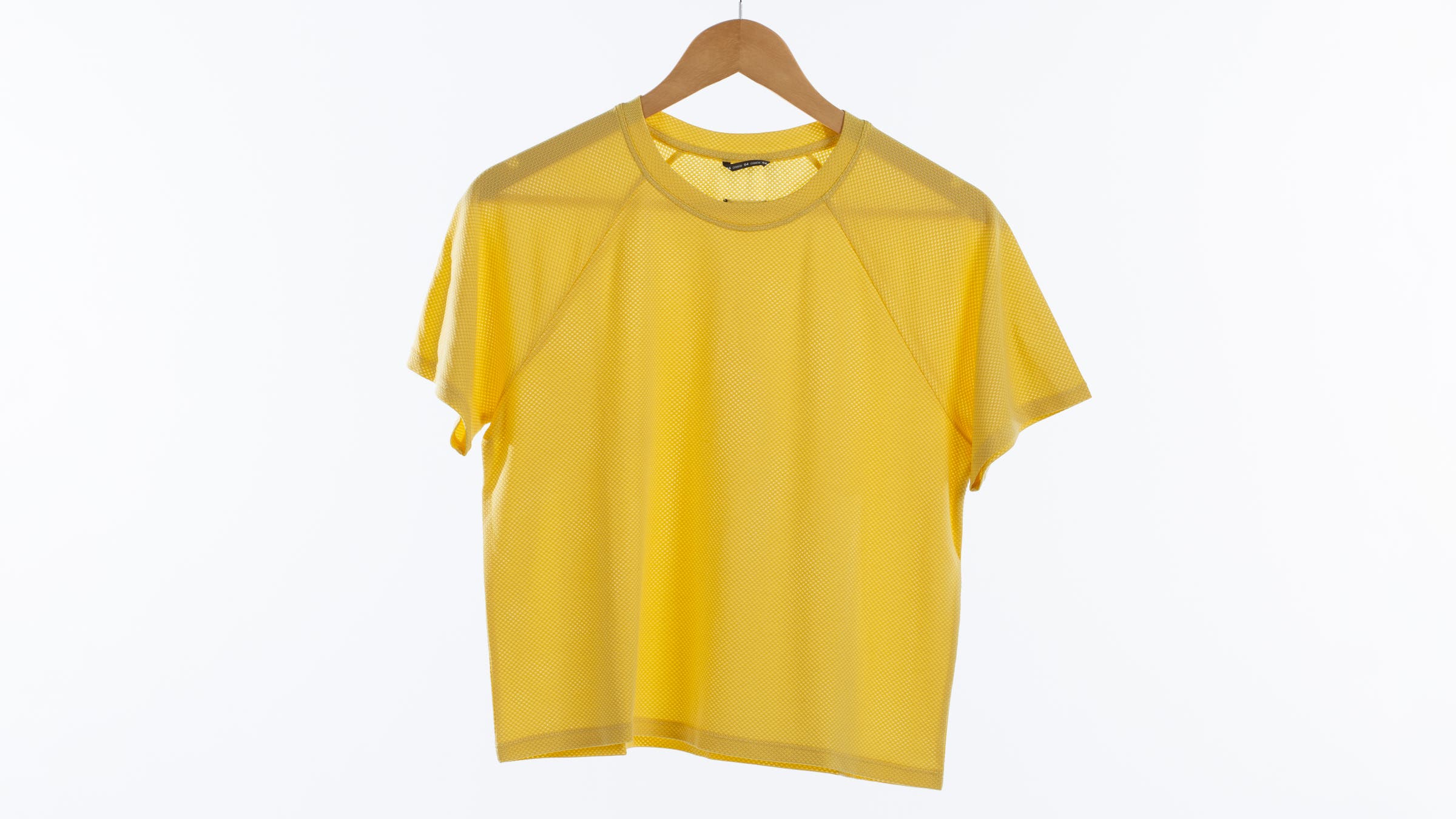
This comfortable, functional running t-shirt converted more than one non-crop-top-wearing tester into big fans. The polyester/lyocell/spandex fabric felt fantastically soft next to the skin and kept us dry when we sweat—the fabric effectively moves moisture to the outer layer where it evaporates. (While the sweat doesn’t stay against the body, it does seem to remain on the shirt’s fabric for longer than some quick-dry materials.)
The boxy, crop-style cut adds airflow. We loved it when paired with high-rise thin tights and appreciated the cut for gym workouts. “I liked how I could see my toes in a plank!” said one.
How To Choose the Best Running Top
When it comes to summer running shirts and tanks, look for comfort, breathability, moisture-wicking, and a chafe-free fit.
Comfort
Aside from chafe-free seams and a cut that allows full arm movement without restriction, consider how the tank or tee makes you feel. Are you comfortable wearing the top both on a run and stopping for coffee afterward? Are you looking for a tank that makes you feel fast on race day? Do you want a tee that also makes you feel comfortable—both in function and style— in the gym?
ADVERTISEMENT
Materials
Breathable, sweat-wicking materials are essential, as is how the material feels against your skin. While some fabric blends prioritize breathability and quick-drying, others provide a more cotton-like feel—the latter sometimes stay wet from sweat longer than the former, but the tradeoff can be worth it. All tops in this round up perform great on the run.
Fit
The fabric, cut, and seam placement should not restrict your arm movement or your breathing. The best-fitting tops make you forget that you’re wearing them. Some will fit looser or boxier around the middle, while some have a more streamlined fit. Consider what you’re after and shop from there. (Our guide describes the fit of each top.)
ADVERTISEMENT
Tanks vs Tees
T-shirts provide more coverage and therefore more sun protection, and they can also deliver more of a cooling effect, depending on the fabric and fit. Tank tops are typically less restricting and more breathable, because of their lack of sleeves. That doesn’t mean all tank tops have freedom of movement. Some fit more streamlined around the midsection than others, while some are looser. The looser ones tend to allow airflow, while the more narrow silhouettes rely on their fabric for breathability. In addition to fit, consider how much skin exposure and coverage you’re comfortable with, and how the tank interacts with your sports bra and running vest, if you’ll be wearing one. And consider all the settings where you’ll want to wear the top, both athletic and casual.
How We Test Running Tops in the Field
- Number of testers: 10
- Number of products tested: 75
- Number of miles logged while testing: 2,500
We tested the best running tanks and tees through the summer of 2025, comparing them to top-rated items that we’d already tested and are still on the market, to find the best of the best. Our testers ranged in age from 20 to 55, each with more than a decade of running experience and at least one ultramarathon under their belt. We evaluated products by comfort first, which includes breathability, chafe-free seaming, and fit, followed by style, utility (ability to multitask as casual wear was a big plus), and durability.
How We Tested Running Shirts in the Outside Lab
Air Permeability
Air permeability is a measure of how much air (in volume) is able to move through a fabric. It is not the same as “breathability” which measures how moisture vapor (sweat) moves through a fabric. The more air permeable, the more the cooling breeze makes it through your shirt and reaches your skin directly. To test this in the Outside Lab @ CU Denver, we use a James Heal AirPro, a machine that uses a vacuum pump to pull air through fabric clamped between plates with a specific diameter opening to measure the flow rate at a pre-set pressure. The greater the volume of air getting through, the more air permeable. This lab test only evaluates the material itself, and can’t account for how the cut and design of a garment aids its airiness.
ADVERTISEMENT
Dry Time
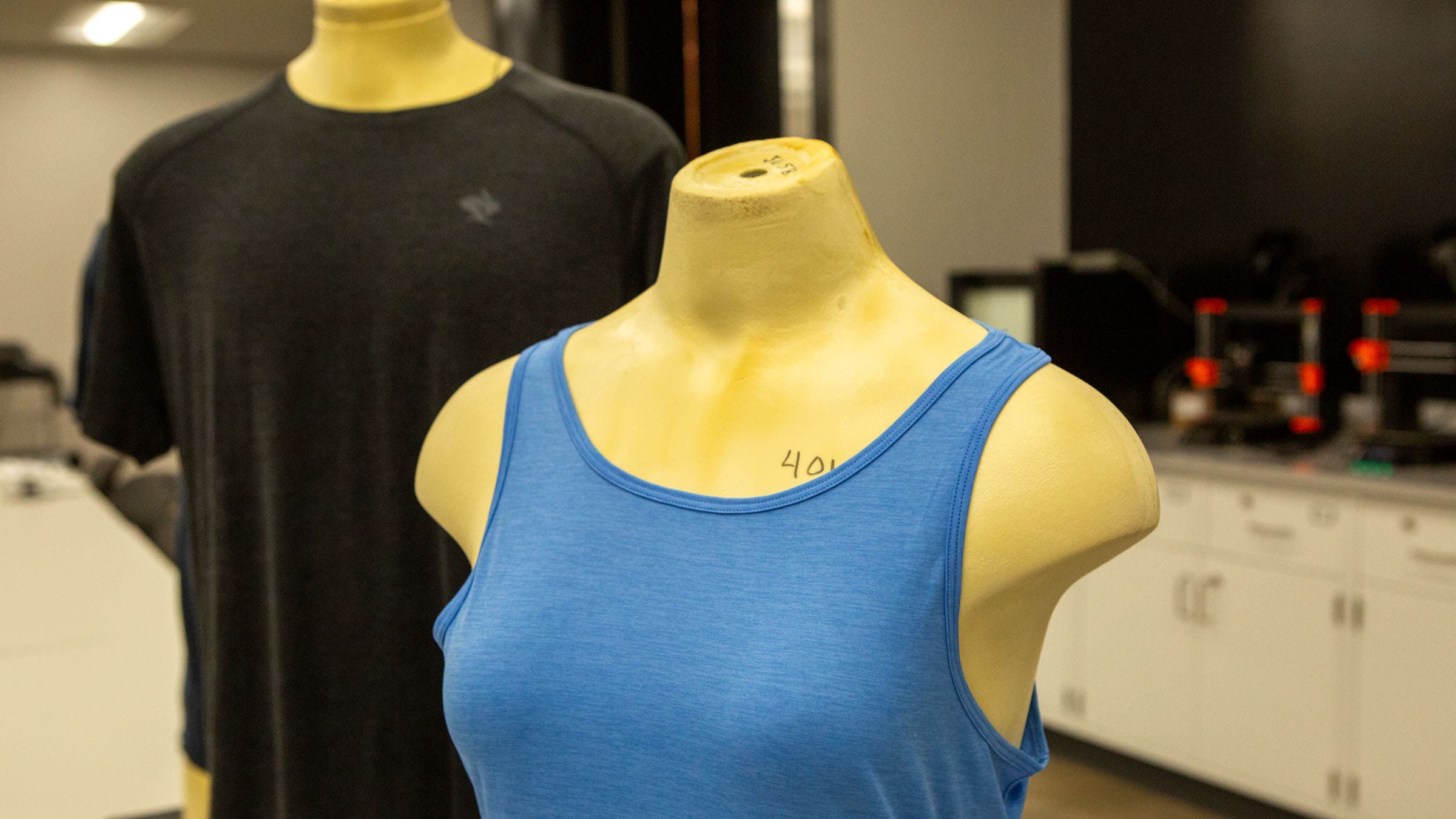
The lab tested drying time by soaking each shirt and then recording how long each needed to dry. Each shirt was weighed while dry, then soaked in tap water until fully saturated. After soaking, they were hand wrung until all excess water stopped releasing from the fabric, leaving a fully saturated, but not soaked, shirt. The saturated shirts were weighed again to get the “wet” starting point and then put on a mannequin to dry. Weight was recorded every hour to start and then every 15 minutes as they approached dryness, stopping when the sample was within 4 percent of the original dry value. Allowing for 4 percent of weight gain (a few grams) takes into account any dirt particles that could be introduced from the tap water or environment, and small hemmed areas of the shirt that may hold a little moisture, even though the overwhelming majority of the shirt is dry.
ADVERTISEMENT
We compiled the raw data into groups of similar values for each measure to obtain scores of 1 to 5, worst to best, relative to all the t-shirts and singlets tested.
Meet Our Lead Tester
Lisa Jhung writes, runs, and generally adventures from her homebase in Boulder, Colorado. Raised as a California beach kid, she also makes it back to the coast—any coast, but primarily the Pacific—as often as possible. She’s been testing gear for Outside for a couple of decades and co-manages the road and trail running shoe tests, along with managing the women’s running apparel, sports bras, and running hydration vest tests.
