Published August 28, 2013 12:00AM
Plantar Fasciitis Causes, Symptoms, and Treatment
A few simple exercises can cure plantar fasciitis
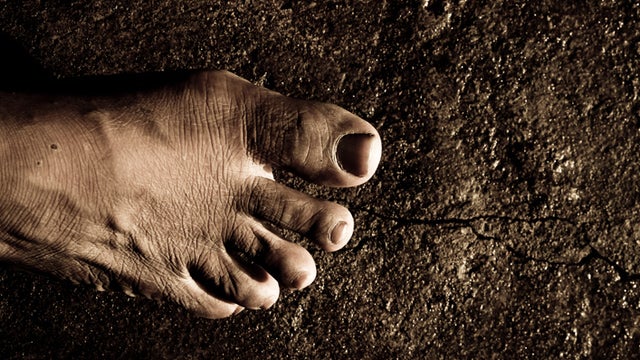
According to the U.S. National Library of Medicine, Plantar fasciitis (PF) is a painful inflammatory process of the plantar fascia, the connective tissue on the sole of the foot, that affects around 2 million Americans each year.
Dr. David Pierson, Chiropractic Physician, DC, CCSP, ICSSD, FICC and former president of the International Federation of Sports Chiropractors, says in athletes, bad core, foot, or knee mechanics can cause a muscular imbalance, and that most commonly PF manifests in people who practice high impact sports—runners, gymnasts, parachutists, and athletes who train on artificial surfaces.
“Combine pounding, a tight shoe with limited arch support and a hard surface, and you have problems, “ says Pierson.
The imbalances Pierson describes can be sports-related, like tight calves from running. But there could be physiological predispositions, like high arches, collapsed arches or bunions. Or, they could be environmental factors, like stress or carrying a few extra pounds.
ADVERTISEMENT
Under load from any of the above factors, the foot’s fascia, which forms a tent between the heel and the base of the five toes to support the medial arch, can get micro-tears. When the body starts to heal those tears, small adhesions, almost like scabs, can form between the fascia and adjacent tendons, muscles or other tissue. The adhesions cause pain, usually felt in the heel, when the foot is under pressure walking or running. Over time, the fascia becomes shortened, ropy and fibrotic. And the condition can become chronic and debilitating if not treated.
Dr. Miles Colaprate, DC at Balance Chiropractic and Acupuncture in Shelburne, Vermont says, “many people try to treat PF with minor stretching and denial. They roll their foot on a golf ball, or ice and heat their foot, neither of which are the correct therapy.
But, both Pierson and Colaprete agree that you can treat PF at home, particularly if you catch it early.
“The first step is to strengthen the supporting muscular system,” says Pierson. “Quit doing what irritates it. If it hurts when you run more than 10 miles, don’t. Break up adhesions with stretching and strengthening.”
ADVERTISEMENT
Stretches to Treat Plantar Fasciitis
- “Toe Yoga.” Standing on a flat surface, lift just your big toe. Drive your other toes into floor and hold for five seconds. Then, drop your big toe, and lift the other four toes. Do three sets of ten on each foot.
- Marble pickup. Use your big toe and second toe to pick up marbles from the floor by curling your toes over the marbles—small stones will also work. With yor toes, deposit the marbles/stones into a different location. Repeat 10-15 times.
- Towel scrunch. Place a dishtowel on the floor. With your heel on the ground, scrunch the towel up with your toes. Repeat 10 times per foot.
- Toe breaker posture. On the floor on all fours, tuck your toes under, then sit back onto your heels. Breathe deeply, sitting back further as you become more comfortable in the posture. Release for 30 seconds. Repeat three times.
- Self foot massage. Using your thumbs, with one leg crossed over the other so that you can easily access the sole of your sore foot, press into bottom of your foot while wiggling your big toe up and down. Move your thumbs up the center of your foot looking for sore spots. Pay particular attention pain adhesions between your fourth and fifth toe.
- Shin massage. With your sore foot crossed over your good leg, work your thumbs along the top of your shinbone with your leg crossed. Press on tender areas with your thumbs, while flexing your foot back and forth. Then, rub your shin muscles like you’d rub oil into a baseball mitt—work them to make them more pliable.
- Stair stretch. Standing on one foot with your heel hanging off a stair, raise up onto your toes, then drop down with your heel below the stair. Count to four with each raise and each drop. Repeat 15 times.
If strengthening and stretching along with modifying activity don’t fix the problem, says Pierson, seek a specialist trained in the biomechanics that are perpetuating the imbalance—foot mechanics, knee mechanics, or gait—and break the faulty pattern. Your specialist should be able to provide assessment, exercises, advice, manipulation, soft tissue work, and possibly a brace or injections. You might be glad to hear, surgery is always the last option with PF, and it’s usually not a good one, as it removes the foot’s natural support system.