Published January 12, 2024 09:43AM
Originally posted onTrail Runner Magazine
This North African Stew Is Straight Endurance Fuel
Moroccan trail-running star Elhousine Elazzaoui knows how to top up his tank for reaching the highest podiums in the sport
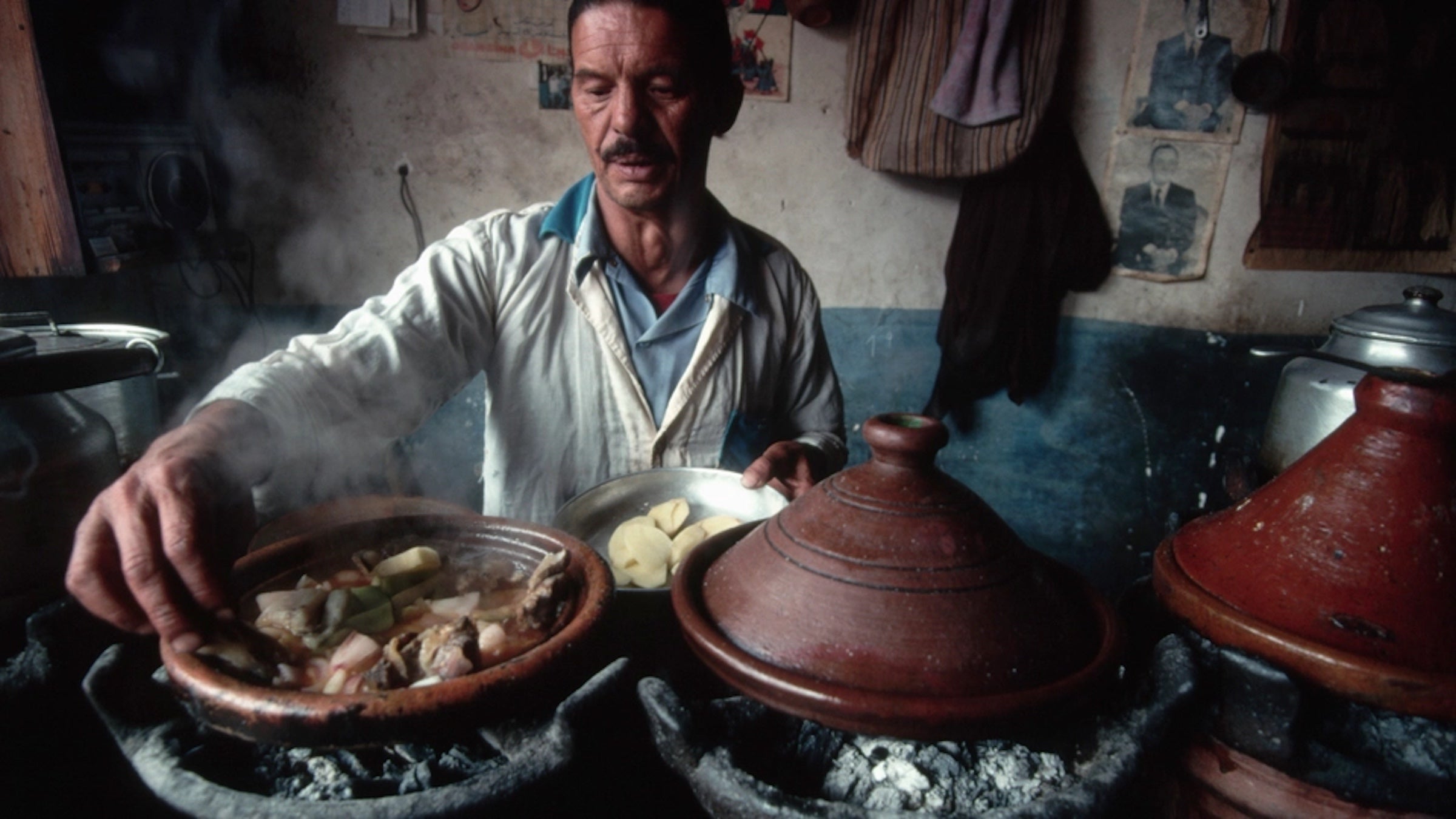
(Photo: Getty)
When Elhousine Elazzaoui crossed the finish line at the Golden Trail Series final in the foothills of the Italian Riviera in October, there’s a good chance the Moroccan sensation was following his stomach.
“After a long race or a run, I’ll eat a tagine,” said the 31-year-old nomadic tour guide. The Zagora-born son to a Berber family confirmed his love of tagine, while training in Switzerland, where he splits his time between the Alps and Morocco.
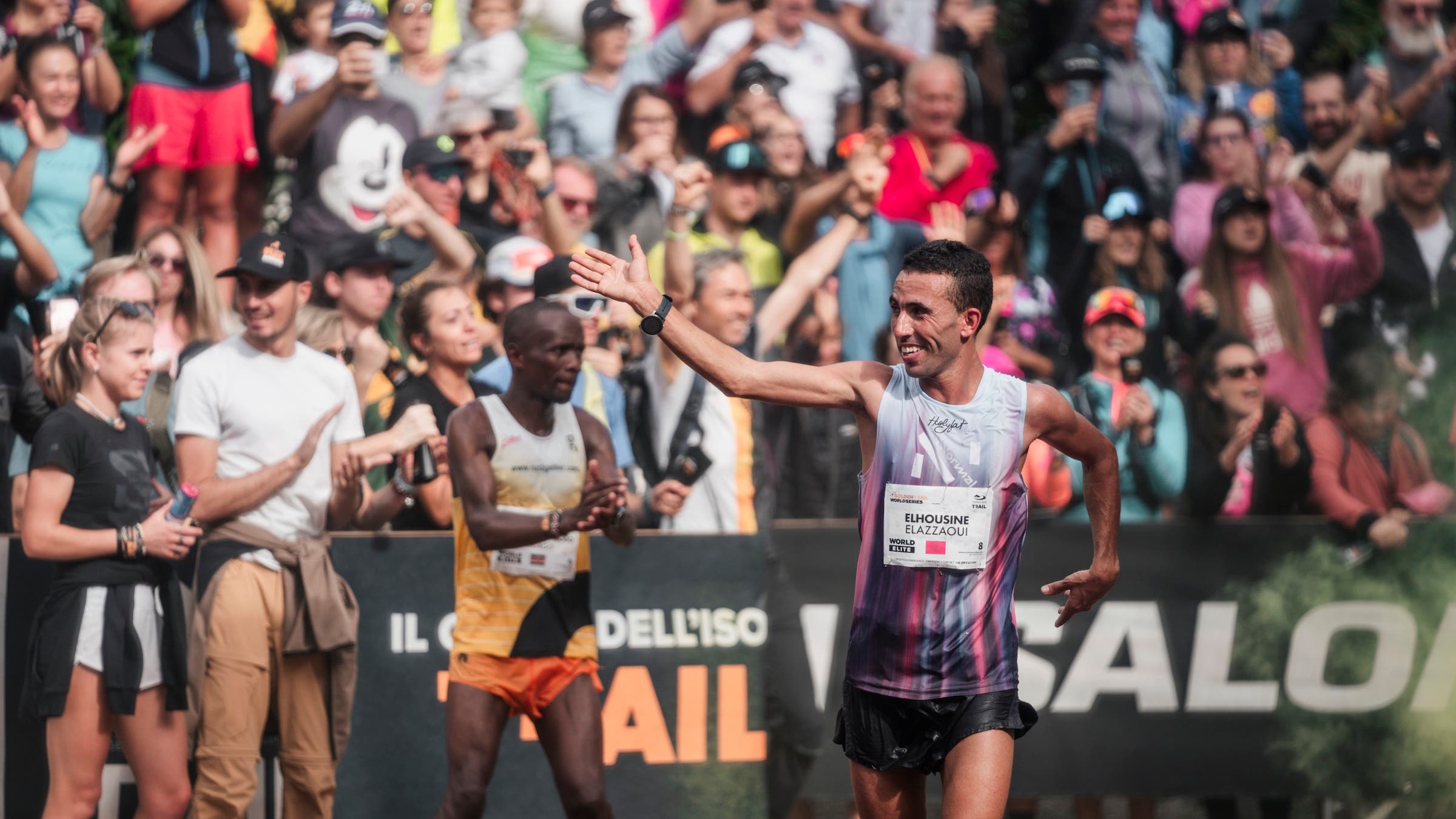
Although Elazzaoui’s strong performances can be attributed to his alpine training, from his win at the 2018 80K Morocco Race to his course record at the Skyrace Loredino-Lavertezzo a year later, it all began for him where he was born.
ADVERTISEMENT
As a 14-year-old teenager, Elazzaoui happened upon a local race at the Zagora market and decided to join. He won. Ever since, Elazzaoui has never been far from the podium. In a photo finish, he grabbed third place at the DoloMyths Run of the Golden Trail World Series. He followed that with a second-place finish at the La Veia Skyrace and went on to dominate the Swiss Alpine Marathon 43K race, a solid 10 minutes ahead of the next competitor.

What Is Tagine?
Tagine is a North African stew, typically slow-cooked in a distinctive earthenware pot of the same name. The tagine pot has a unique design that allows for slow and even cooking, with the conical lid trapping steam and condensing it back into the food. This helps to keep the dish moist and flavorful.
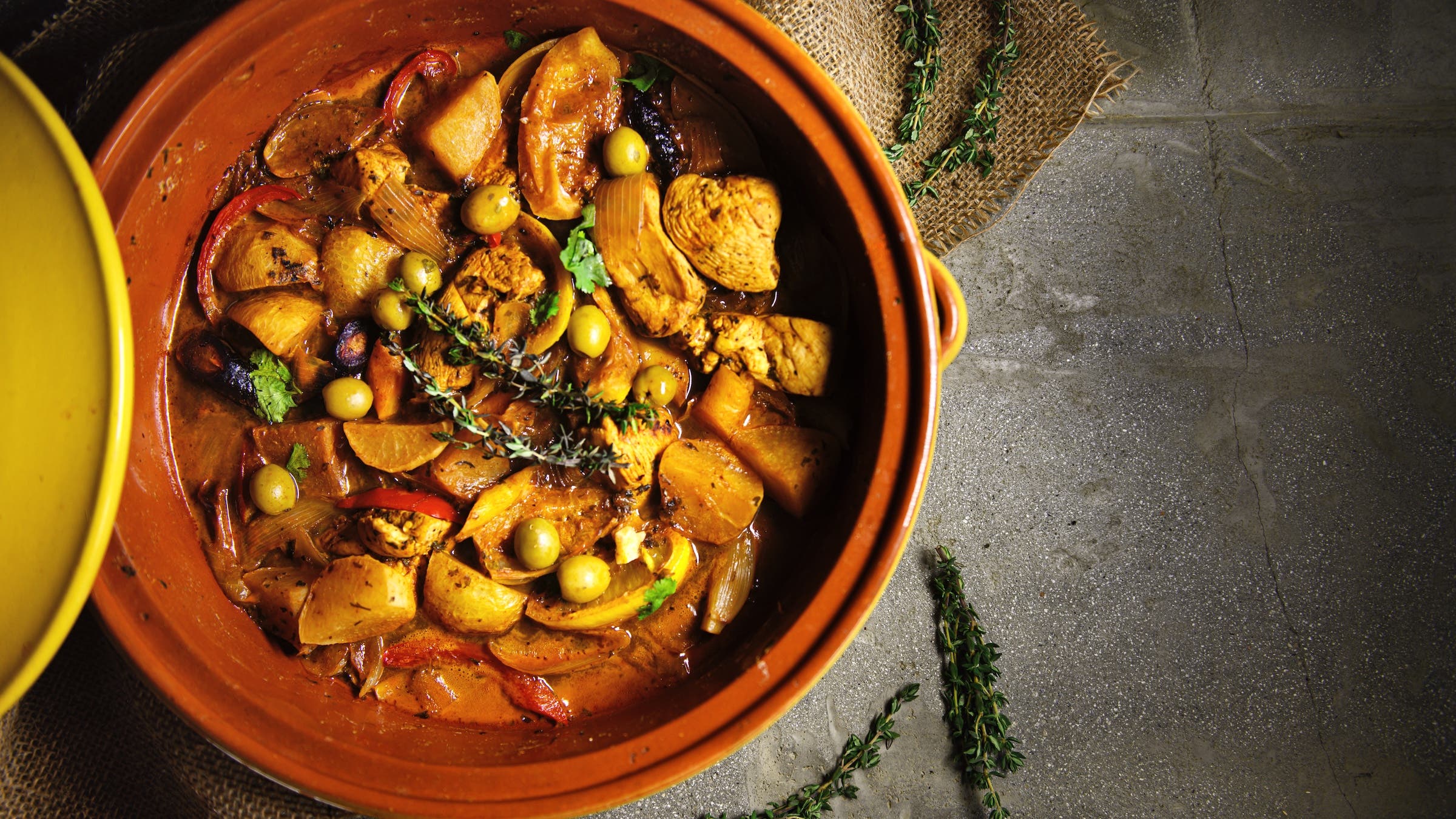
Aromatic spices like cumin, coriander, cinnamon, ginger, and paprika blend with the sweetness of dried fruits such as apricots, dates, or raisins, fresh herbs, and crunchy nuts for a bit of texture. Savory broth is the medium to meld all the flavors together.
Root vegetables like carrots, potatoes, and butternut squash are typical tagine ingredients alongside tomatoes, zucchini, bell peppers, onions, garlic, chickpeas, and eggplant. These vitamin-rich veggies is precisely what draws Elazzaoui to the dish.
ADVERTISEMENT
“I’m used to always eating organic,” he says, emphasizing the importance of quality ingredients in a tagine. Although the fresh veggies may vary, couscous is a necessity. Traditionally, it’s served with some kind of meat, like lamb. Elazzaoui is partial to chicken. But these days, vegetarian, even vegan tagines, are all the rage.
Moroccan-American Ultra Fuel
Ultrarunner Yassine Diboun, from Portland, Oregon, makes his tagine using a recipe from Rainbow Plant Life. Diboun, 45, is the co-owner of Wy’east Wolfpack and has Moroccan roots.
Diboun agrees with Elazzaoui that tagine is a great celebratory dish for after a big race—an opportunity to indulge while replenishing glycogen stores. But he also sees it having carbo-load potential before the race with all of the root vegetables and couscous.
Although Diboun says he grew up without a significant cultural connection to Morocco, he credits some of his success to his North African running genes. His father came to the U.S. from Casablanca in the 1970s, met an American woman, and Diboun wasn’t far behind.
RELATED: Diboun Runs Through the Night to Confront the Darkness of Substance Addiction
Initially, his running was limited to soccer and basketball. Running as a sport never interested him. It wasn’t until his late 20s that he started running, but only as part of triathlons.
ADVERTISEMENT
“I was kind of average in the water, a decent cyclist, and then I would just catch everyone on the runs,” he says. Others told him he’d be unstoppable once he fine-tuned his swimming and running. “Or I could just go run and it would be a lot simpler and a lot cheaper.”
Diboun took to trail running while living around the Finger Lakes of upstate New York near Ithaca, where he found that he could transfer his speed from roads to trails. Trail and ultrarunning was just taking off, and it was perfect timing for Diboun to grow alongside the sport.

“I just started crushing races,” he says. “I was in central New York, so I was kind of a big fish in a small pond and made a name for myself in the local trail running and ultra running scene.”
ADVERTISEMENT
In 2009, Diboun’s wife got a job in Portland, Oregon, and the pair moved to what he calls the mecca of trail running. From there, his career really took off. He set the course record at the Leona Divide 50K with a time of just over four hours, and besides a few Western States finishes (once in the top 10), he won silver for the U.S. at the 2015 IAU World Trail Championships in Annecy, France.
So much of what draws Diboun to trail running is the spirit of the community and opportunity to connect with nature. That said, food is especially close to his heart as well. He calls food and trail running a “match made in heaven,” and recalls traveling decades earlier to Casablanca, to visit his grandmother, who showed him how to make tagine. Sitting among her “old school” pots and pans, he took notes.
“I sat there with a notebook and watched her make tagine,” he says. “I wrote down exactly what she did and how she did it.” For Diboun, tagine is a comfort dish for social occasions. “You can share tagine with one person or a whole family,” he says. “It’s the quintessential Moroccan dish.”
How to Make Tagine
“It’s all about the seasoning,” says Diboun. Like his grandmother taught him, he recommends using Ras el hanout, a Moroccan spice mix of cardamom, turmeric, nutmeg, allspice, cumin, and cinnamon. Different blends range from 40 to 100 ingredients.
Timing plays an important role, too, in terms of cooking the vegetables and the meat, if you’re going with a traditional recipe. Since Diboun is a vegan, he substitutes meat for chickpeas or tempeh.
ADVERTISEMENT
“I use fermented tempeh patties diced up into chunks,” he says. “And I’ll use that as a substitute for lamb or chicken.”
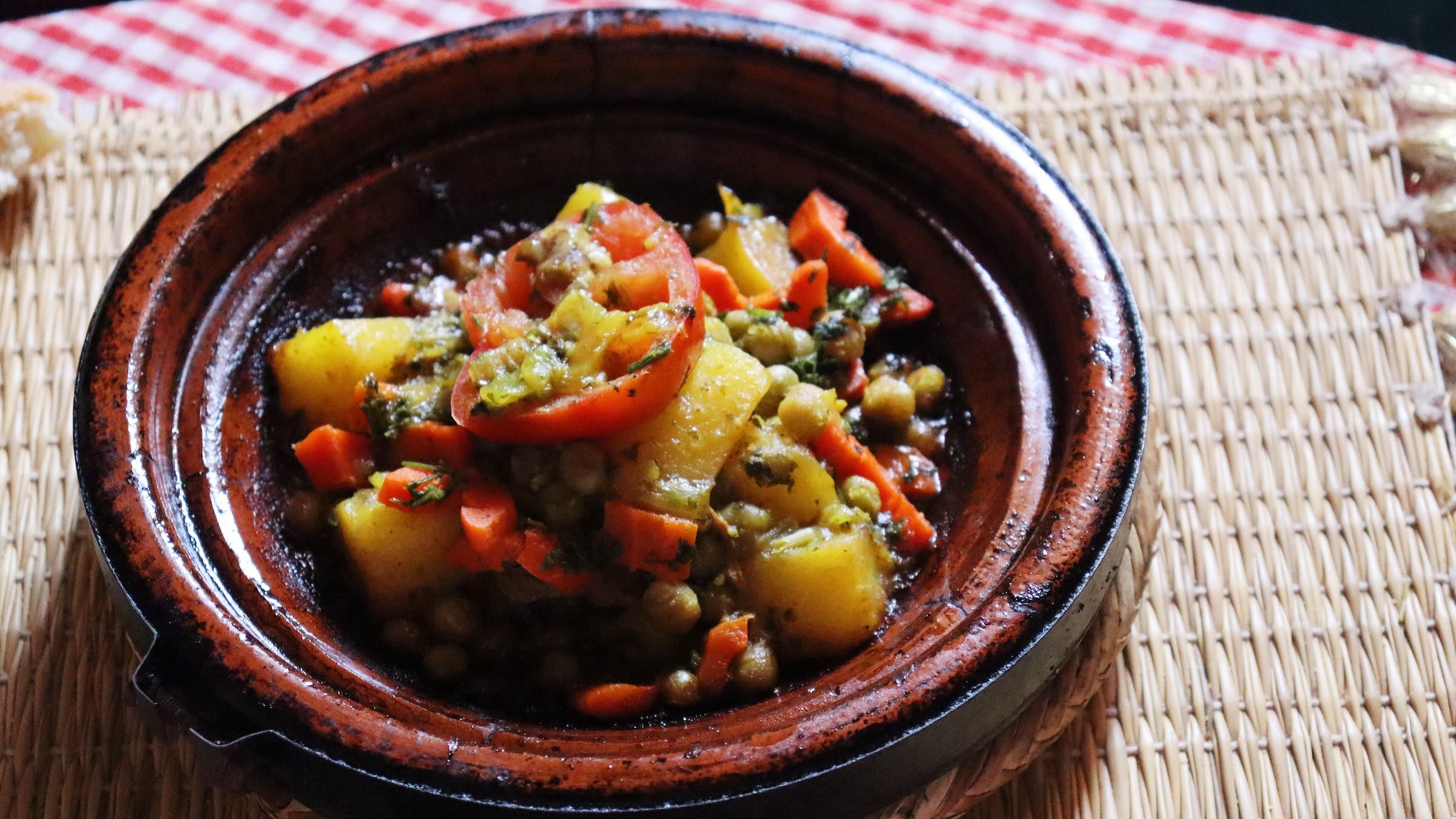
Recipe: Vegetarian Moroccan Endurance Tagine
Ingredients
Serves: 4 people
- 2 Tbsp. extra virgin olive oil, plus more for drizzling
- 1 Tbsp. of tomato paste
- 1 medium yellow onion, diced
- 1 medium red bell pepper, chopped
- 6 garlic cloves, finely chopped
- 1 large carrot
- 1 large zucchini
- 1 cup (240 mL) vegetable broth
- 1 medium sweet potato, peeled and roughly chopped
- 1 can (400g) chickpeas, drained and rinsed
- 3 cups tempeh, cut into 1/2-inch cubes
- 1 tsp. kosher salt, more to taste
- 1 can (500g) crushed tomatoes
- 95g dried dates, chopped
- 1 medium lemon, zested and juiced
- 1 handful of flat-leaf parsley or cilantro leaves and stems, chopped (about 10 – 15 grams)
- 300g of couscous, cooked
Spice Mix
- 1 Tbsp. ras el hanout
- 1 Tbsp. harissa
- 1 tsp. ground coriander
- 1 tsp. ground cinnamon
- 1 tsp. cayenne pepper
- ½ tsp. ground cumin
- ½ tsp. ground turmeric
- ½ tsp. ground ginger
- A pinch of saffron
Instructions
- Preheat the oven to 350ºF/175ºC. Arrange an oven rack to fit a tagine (or dutch oven, if you don’t have access to a tagine).
- Heat the 2 tablespoons of olive oil in the tagine over medium-high heat. Once hot, add the onions and season with a pinch of salt. Cook until golden brown, 7 to 8 minutes, adding a splash of water as needed to deglaze the pan and prevent the onions from burning.
- Meanwhile, stir together the spices for the Spice Mix. After the onions are cooked, add the garlic and spice mix. Cook for 3 minutes, stirring frequently. Add splashes of water to deglaze the tagine and avoid drying out the onions.
- Add the tomato sauce and incorporate with the onions for a minute or two. Turn off the heat and add the red bell pepper, carrot, zucchini, sweet potato, tempeh, and chickpeas to the tagine followed by the vegetable broth (or water in a pinch). Do not overfill the tagine, otherwise it will overflow when the lid is put on. Top with salt and a glug of olive oil.
- Transfer to the oven. Bake for 60 minutes, or until the sweet potatoes, zucchini, and carrot are tender.
- When the sweet potatoes are tender, remove the tagine from the oven. Mix in the chopped dates, parsley or cilantro, lemon zest, and leave lemon rinds on top of the tagine. Cover and let cool for 15 to 20 minutes.
- Meanwhile, make the couscous following package instructions.
- Serve in bowls topped with extra chopped parsley or cilantro, chopped dates, and a drizzle of extra virgin olive oil.
