Published April 22, 2020 06:20PM
Three Essential Running Exercises
If you only have a few minutes a week for strength work, do these exercises to improve running economy and reduce injuries.
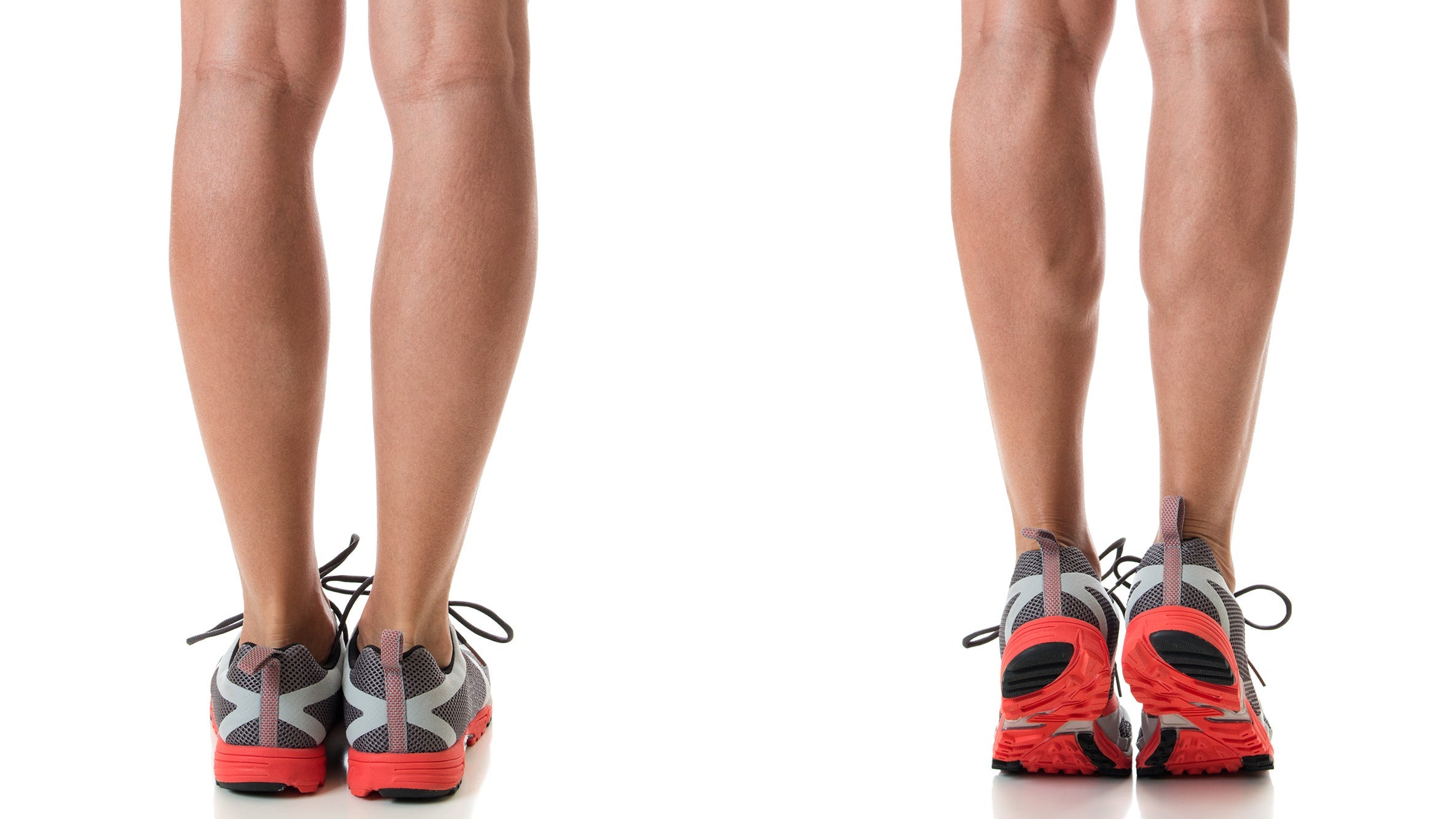
photo: Shutterstock
Studies show strength training improves running performance, specifically running economy. Despite knowing this, runners often avoid strength training.
We get it. Finding time to strength train is a challenge. Running plus daily commitments are obstacles. And, let’s admit it, we’d rather be running: Flowing down a road or trail on a beautiful spring day versus lifting heavy things in a stuffy gym isn’t much of a choice.
Even if we buy into weight training, we’re often confused. Which exercises should we do? How much weight should we lift? For how many reps?
ADVERTISEMENT
The good news is that it doesn’t take much time or work to benefit from strength training. While you can find a galaxy of exercises, many of them highly beneficial, the time-crunched runner can’t do them all. It’s imperative to narrow down the choices. The following exercises require no equipment (though equipment may enhance the exercises) and they strengthen running muscles, bones, and connective tissue in running-specific ways. If you do only three strength exercises, do these.
Single-leg squat
The specificity of training principle says that for an exercise to transfer to our activity, the exercise should closely resemble that activity. Running entails a continuous series of hops from one leg to the other. A single-leg squat is thus an ideal strength exercise for runners, strengthening key balancing and support systems.
The simplest version of the single-leg squat may be done with no load at all. While you’ll find several options on what to do with your lifted leg, pulling it up under your body most closely resembles what the swing leg does during running at the point in the stride when the stance leg is directly below you—as it is during the squat exercise. Keep your knee behind your toes and aligned with the foot while you lower your torso one quarter of the way to a full, thigh-parallel-to-the-ground squat.
The simplest version of the single-leg squat may be done with no load at all. While you’ll find several options on what to do with your lifted leg, pulling it up under your body most closely resembles what the swing leg does during running at the point in the stride when the stance leg is directly below you—as it is during the squat exercise. Keep your knee behind your toes and aligned with the foot while you lower your torso one quarter of the way to a full, thigh-parallel-to-the-ground squat.
Loading is a good option though and the exercise may be loaded in several ways:
- Single-leg tubing squat
- Hold any form of weight (dumbbells, kettlebells, bags of anything: rocks, sand, doorknobs) in your hands.
- Hold any form of weight in one or the other hand to create an offset load. (I’m a big fan of this one.)
- Put a barbell on your back.
- Wear a weight vest or a backpack with weight in it.
It’s important to go to a high level of exertion. Do as many reps as you can to failure, which occurs when you can no longer maintain posture and your knee strarts collapsing inward or outward. If adding load to the exercise then try to reach a high level of muscular exertion in 5-10 reps. Try doing three to five sets of five to 10 reps twice a week.
ADVERTISEMENT
Heel raise
The heel raise, also called calf raise or calf extension, is an important exercise for two reasons. First, the Achilles tendon is a major player in running: It acts as a powerful spring that stores energy from impact then transmits most of that energy back into the ground. Strengthening the calf muscles and the Achilles tendon will therefore result in better running efficiency.
Second, lower-leg problems are rampant among runners. Achilles tendon pain, plantar fasciitis, stress fractures, and calf strains are some examples of common lower-leg and foot problems. The simple heel raise, done in a full range of motion, is an excellent way to both strengthen virtually the entire lower leg and foot and increase or maintain mobility of the ankle joint. The heel raise can help eliminate pain and protect against future injury.

This is a strength exercise, not an endurance workout. The Achilles tendon responds best to high loads. Thus, you should reach a high level of muscular exertion in 5–10 reps. The easiest heel raise is done on two legs with a 50/50 weight distribution on each foot. Stronger runners may do a single-leg heel raise. Make sure to perform a full range of motion for each rep.
Runners who find the 50/50 version too easy and the single-leg version too hard can use one leg to help the other leg by doing a 60/40, 70/30, 80/20, or 90/10 weight distribution through the legs. This means one leg does most of the work while the other leg helps in varying amounts. In this way, you’ll add resistance to one leg and you won’t need any equipment to do it. Alternatively, you may add weight along the lines described in the single-leg squat instruction.
Runners who find the 50/50 version too easy and the single-leg version too hard can use one leg to help the other leg by doing a 60/40, 70/30, 80/20, or 90/10 weight distribution through the legs. This means one leg does most of the work while the other leg helps in varying amounts. In this way, you’ll add resistance to one leg and you won’t need any equipment to do it. Alternatively, you may add weight along the lines described in the single-leg squat instruction.
It’s a good idea to vary the weight and rep scheme. Do three to five sets of five to 10 reps twice a week.
ADVERTISEMENT
Three-dimensional hops
Hopping builds on the calf raise by adding an explosive, power element to the exercise. Hopping and other plyometric/jumping activities make tendons more efficient at absorbing and transmitting energy. The impact of hopping also stimulates bone growth and should protect against stress fractures.
Both hopping and running happen via the stretch-shortening cycle which is the rapid, spring-like stretch and rebound process. Three-dimensional hopping offers movement variability which loads the muscles, bones, and connective tissue in ways different than straight-line running, thus building supportive strength. Hopping also builds movement skill and general agility.
The 3D, two-legged hopping matrix is low-intensity and should be safe for injury-free runners. These are short, low and quick hops, forward and back, side to side, and in a twisting, rotational movement.
The 3D, two-legged hopping matrix is low-intensity and should be safe for injury-free runners. These are short, low and quick hops, forward and back, side to side, and in a twisting, rotational movement.
If you’re new to plyometrics then take this test to see if you’re ready to start. Reps and sets are different for this exercise than the two prior exercises. Plyometric training volume recommendations are:
- Beginner: 80–100 foot contacts
- Intermediate: 100–120 foot contacts
- Advanced: 120–140 foot contacts
A jump and land on two feet equals two contacts. A jump and land on one foot equals one contact, so you do half as many for each leg.
ADVERTISEMENT
For the 3D hops, beginners might start with 10 jumps in each direction for a total of 30 contacts for one set. Repeat that three times for 90 total foot contacts.
Hop quickly and keep your feet on the ground as briefly as possible. If you’re able to do the two-legged version then you may advance to the single-leg version. It’s exactly the same as the two-legged version, just done on one leg at a time.
Spend a few minutes 2–3 times per week to do these exercises and watch your running improve.