Published March 18, 2019 12:00AM
If you buy through our links, we may earn an affiliate commission. This supports our mission to get more people active and outside.Learn about Outside Online's affiliate link policy
Three Vegan Backpacking Recipes Anyone Can Make
Spice up your on-trail diet with these creative vegan recipes
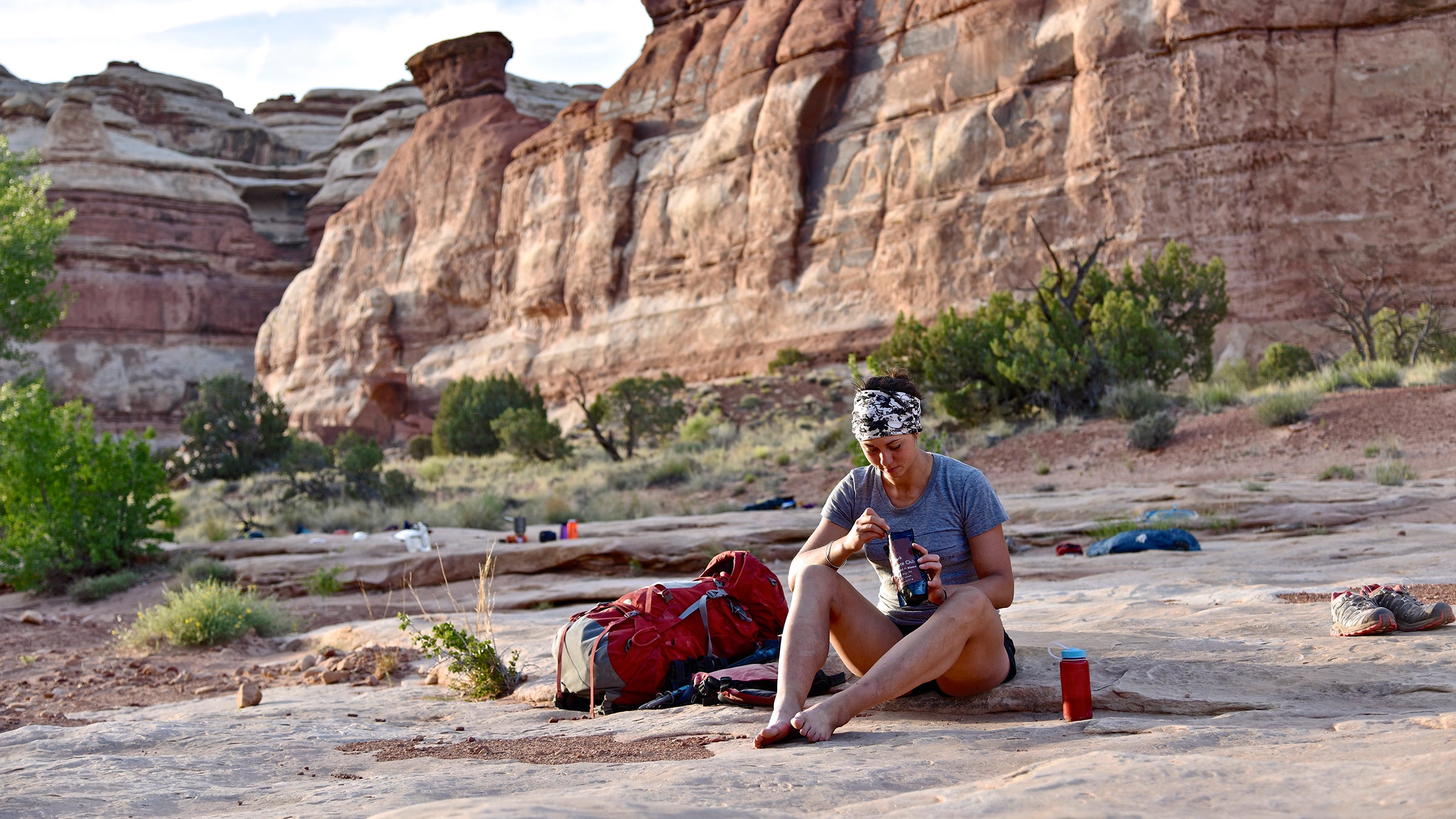
A backpacker in Canyonlands National Park, Moab, Utah
Whether you’re going on an overnight hike or a weeklong adventure, backpacking as a vegan can be tricky. Many dehydrated foods include animal products, like powdered eggs or dried meat. But with a bit of forethought and preparation, you can enjoy delicious, plant-based meals along the trail.
Vegan thru-hiker Cotezi, who runs a popular YouTube channel and Instagram account, always plans ahead. When she hiked the Pacific Crest Trail, she researched restaurants and gear shops on her route ahead of time to ensure they had vegan options. “That way you can supplement your boxed food for any given stretch with foods and snacks picked up in town,” she says. Cotezi also carries greens powders on the trail to make sure she’s getting plenty of vitamins and minerals.
“Dehydrated meals for vegans have come a long way, and new options are popping up all the time,” says hiker and British Columbia-based traveler Mikaela Gregory. “My advice for packaged food is that it’s best to have a mix of ones you’ve tried and know you love, plus a few new options, since there can be some big misses. That can be a huge letdown after a long day of hiking.”
The best way to ensure you’re going to eat well on trail, though, is to prep your own dehydrated meals. Here are three great options to make before you head out.
ADVERTISEMENT
DIY Oatmeal Packets
After two years of eating prepackaged, artificially flavored quick-cooking oats, Gregory considered giving up the breakfast staple for good. “But I was hard-pressed to think of a better breakfast food that provides long-lasting energy and good fiber,” she says.
The solution she came up with was homemade oatmeal packets with flavor profiles she enjoys, like mocha or blueberry maple. “I found the variety really helpful for longer hikes and was able to sneak in lots of healthy ingredients, including hemp hearts, chia seeds, and coconut sugar,” Gregory says. This recipe makes four servings.
Ingredients
- 3 cups quick-cooking oats
- 1/3 cup chia seeds
- 1/3 cup hemp hearts
- 3 tablespoons coconut sugar
- 1/8 teaspoon salt
Flavor-Enhancing Combos
- Blueberry maple: 4 tablespoons dried blueberries and 4 teaspoons maple sugar
- Chocolate cherry: 4 tablespoons vegan dark-chocolate chips and 4 tablespoons dried cherries
- Peanut butter chocolate: 4 tablespoons powdered peanut butter and 4 tablespoons vegan chocolate chips
- Mocha: 4 teaspoons instant coffee and 4 tablespoons chocolate chips
Directions
Combine ingredients for the big-batch recipe: the oats, chia seeds, hemp hearts, coconut sugar, and salt. Add your preferred flavorings. Divide into four separate freezer bags. When you're ready to eat, heat over a camp stove with 1.5 cups of water per serving (or six cups of water for the entire batch).
ADVERTISEMENT
Simple Vegan Ramen Bomb
This recipe from Cotezi is a bit more involved than standard beans and rice. She recommends it for short-distance hikes that allow for extras like fresh vegetables, or try it right after you’ve restocked at a trailhead on a thru-hike. The salty, tasty ramen bomb swaps clear soup broth for a thick stew packed with flavor and calories, giving your taste buds something different from typical trail fare.
Ingredients
- 1 package vegan ramen noodles
- 1 vegetable bouillon cube
- 1 serving freeze-dried tofu
- 4 to 5 small, fresh broccoli florets
- 3 to 4 small mushrooms
- 1/4 cup mashed-potato flakes
- Hot sauce (optional)
Directions
Bring 2.5 cups of water to boil. Add ramen noodles, bouillon, tofu, and vegetables. Boil for four minutes (covered, if possible). Slowly stir in mashed-potato flakes until the broth becomes thick. Add optional hot sauce.
Basil Pesto with Tortillas or Rice
Kim Safdy founded Outdoor Herbivore to provide vegan options for backpackers and athletes who need plenty of plant-based calories in easy-to-make packages. She loves this delicious vegan pesto-sauce mix and adds it to noodles, potatoes, rehydrated vegetables, or rice—and it makes a delicious dip, too.
ADVERTISEMENT
Ingredients
- 2 tablespoons chopped walnuts
- 2 tablespoons nutritional yeast flakes
- 2 tablespoons basil flakes
- 2 tablespoons tomato powder or sun-dried tomato flakes
- 1 tablespoon spinach flakes
- 1 tablespoon parsley flakes
- 1 tablespoon thyme
- 1/4 teaspoon rosemary
- 1/4 teaspoon tarragon
- 1/4 teaspoon sea salt
- 1/4 teaspoon garlic powder
- 1/8 teaspoon olive-oil packet (optional)
- Precooked rice or tortilla pieces
Directions
Place dry ingredients in a sealed bag. When on the trail, mix them with 1/4 cup water and the olive-oil packet. Safdy likes to enjoy this as a dipping sauce with plain corn tortillas (crisp the tortillas over the campfire for added crunch), or for a heftier meal, she’ll eat it over rehydrated tofu and rice.
