Published October 2, 2019 12:00AM
If you buy through our links, we may earn an affiliate commission. This supports our mission to get more people active and outside.Learn about Outside Online's affiliate link policy
Long-Term Review: La Sportiva Bushido II
An already excellent shoe gets an upgrade
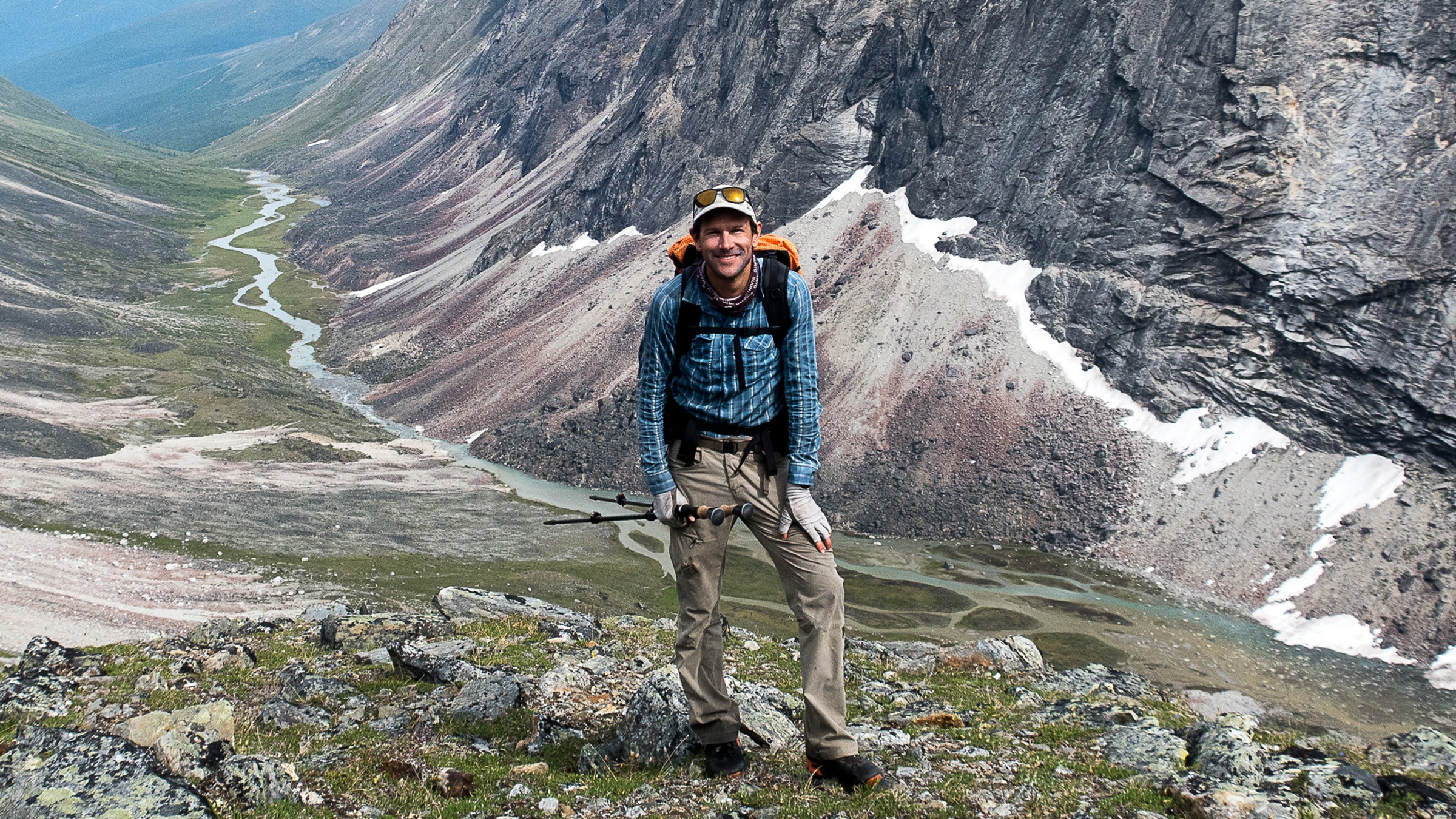
I tested the Bushido II while guiding trips in the Brooks Range and on the Yosemite High Route.
The La Sportiva Bushido II ($130, 10.5 ounces) is designed as an all-mountain trail-running shoe. It may perform well in that application, but I bought a pair earlier this summer to use for hiking in Alaska’s Brooks Range and on the Yosemite High Route in early-season conditions.
Over a five-week period, I put 315 demanding miles on the Bushido II, using it to scramble across granite slabs, hold my edge on steep tundra slopes, scurry over talus and through scree, kick steps into the snow, and push through thick willows, dwarf birches, and alders. For many of those miles, the shoes were soaking wet, due to countless fords, waterlogged ground, and melting snow.
How did the second-generation Bushido perform? And how does it compare to the original Bushido and to other popular backpacking shoes?
The original Bushido (see my long-term review) was a winner for La Sportiva. It was the bestselling women’s trail-running shoe at REI and an employee favorite. Not wanting to ruin a good thing, La Sportiva only made a few tweaks to the second-generation model, which was released in spring 2019.
Like its predecessor, the Bushido II is notable for its:
- Dreamy fit
- Superb traction
- Low center of gravity
- Underfoot stiffness
- Reasonable dry time
- Excellent durability for a 10.5-ounce shoe
With these features and characteristics, the Bushido II excels on high routes, in trailless wilderness areas, and during early-season conditions. Due to its firm and thin midsole cushioning, it’s not well suited for high-mileage on-trail hiking, specifically thru-hiking.
ADVERTISEMENT
Also like the original, the Bushido II fits best on narrow and low-volume feet. It retains the same last, and there are no discernible changes to the fit of the upper, either. This will frustrate some but please the shoe’s loyal fan base.
Key Specs
- Breathable upper made of mesh, synthetic leather panels, and TPU overlays and toe cap
- Grippy, heavily lugged, long-lasting outsole made of dual-density FriXion XT
- Low-volume upper and narrow Racing Lite Ergo last
- Stack height of 25 millimeters at the heel and 19 millimeters at the forefoot, with a six-millimeter drop
- Four-millimeter EVA midsole with a 1.5-millimeter EVA rock guard in the forefoot
- Gusseted, thinly cushioned tongue
- 10.5 ounces for a men’s size nine
- 8.8 ounces for a women’s size seven
- $130 MSRP
- More information
Bushido Versus Bushido II
The original and second-generation Bushidos are more alike than different. I detailed the similarities and changes in my Bushido II preview last year and will summarize them here.
No changes were made to the:
- Last or fit
- Outsole rubber or lug pattern
- Stack height or drop
- Weight
- MSRP
Changes include:
- A redesigned but functionally similar tongue
- Inclusion of a more responsive EVA midsole foam, which went unnoticed while hiking
- The use of more abrasion-resistant material under the arch
- A more breathable mesh in the upper
- A redesign of the toe cap
ADVERTISEMENT
Fit
When reading shoe reviews, context matters. I have narrow and low-volume feet. My go-to running shoe is the Salomon Sense (any of them—the S-Lab, Pro, original Ultra) and the S-Lab Ultra for longer trail efforts. The Hoka One One Speedgoat 2 mostly fits, though I wish its toe box were not so conical. The Clifton 2 fit me better than the 4 and 5. And my feet swim inside the Altra Lone Peak.
La Sportiva carried over the exact fit of the original Bushido. The Bushido II has the Racing Lite Ergo last, and the upper feels identical despite some reengineering of it.
ADVERTISEMENT
Out of the box, the Bushido II is slightly snug on me. But after they pack out, which takes a few miles, I find the fit excellent. My heel stays in place, the wide lacing system and gusseted tongue comfortably cradle my midfoot, and the toe-box volume is just right, enough to prevent pinching and discomfort but not so much that lateral control is compromised.
Durability
High routes, off-trail hiking, and early-season conditions are harder on shoes than conventional on-trail miles. The shoes are subjected to more lateral pressure, more stress on the outsoles, and more abrasion from rock and brush. Also, in such environs, the shoes are constantly getting wet.
After 315 miles on the Bushido II, my test pair still had life left: the uppers were largely intact, and the outsoles still had tread. But I threw them out before my return flight home—I didn’t want their horrendous smell to contaminate my checked luggage or the main cabin.
Based on this experience, I think a reasonable life span for the Bushido II is 400 to 500 high-route miles.
The uppers of the Bushido II are slightly more durable than the original, due to improved construction of the toe cap and arch. The first blowout points now seem to be:
- The mesh panels, which fray, especially in vulnerable spots, like along the outside edge
- Loose thread ends along the lacing system, which I fixed with an application of Aquaseal
ADVERTISEMENT
I also became nervous about the loosening of the liner fabric around the heel cup. It proved immaterial, but I feared it would cause blisters or compromise the fit.
Upper
The upper consists of ripstop mesh, laminated microfiber, and a TPU exoskeleton and toe cap. It strikes a good balance of breathability, drainage, and durability.
The Bushido doesn’t dry as quickly as I would like, but it was better than other La Sportiva and Salomon models. With its simple and minimally padded upper, it just cannot hold onto much water.
The toe box is wrapped with a TPU cap for improved resistance to abrasion and impact, like accidentally kicking rocks or snagging toes on talus. The new toe cap is more durable than the original.
ADVERTISEMENT
Outsole
The Bushido features an aggressively lugged outsole made of a proprietary premium rubber, FriXion. It sticks reliably to bare rock, bites well into vegetated slopes and spring snow, and was on pace to last 400 to 500 miles. Honestly, it’d be greedy to ask for better performance.
ADVERTISEMENT
Midsole
The Bushido II sits low to the ground: including the six-millimeter outsole, it has a stack height of 25 millimeters in the heel and 19 millimeters in the forefoot. This results in a stable shoe, but it’s not adequately cushioned for high-mileage outings.
The forefoot includes a compressed EVA rock plate, and the midfoot has a TPU shank. When new, these features enhance underfoot protection without sacrificing stability, and they add torsional stiffness for improved edging. Over time the rock plate softens, giving up some protection and rigidity.
ADVERTISEMENT
Comparisons
If you like the performance of the Bushido but need a more generous fit, consider these other models.
- La Sportiva Ultra Raptor ($130, 12 ounces) has a lot of structure in the heel and upper, which makes it durable but potentially hard on feet. Its outsole is sticky but less aggressive and long-lasting.
- Salomon X Ultra 3 ($120, 13 ounces) fits and performs similar to the Ultra Raptor. It has an aggressive and hard-wearing outsole and durable upper. But the Quick Laces will fray in gritty environments.
- La Sportiva Mutant ($135, 10.7 ounces) is the widest shoe of this group and the least rigid. The laces should be swapped out immediately, but otherwise the durability is very good. The burrito-style lacing system is excellent.
