Updated July 1, 2025 02:19PM
If you buy through our links, we may earn an affiliate commission. This supports our mission to get more people active and outside.Learn about Outside Online's affiliate link policy
Protein-Dense Skewer Recipes to Try On Your Next Outdoor Adventure
These are easy to make and pack a flavorful punch

(Photo: Ashia Aubourg)
With long weekends and warm weather rolling in, you’ll find me outdoors every chance I get. Honestly, I prefer glamping, but even that takes a little grit and planning. As the go-to foodie, I’m constantly tasked with prepping something hearty to energize myself and those I’m with through any planned outdoor activity. Over the years, I’ve become a massive fan of skewer recipes. They check all the boxes: protein, fats, carbs, and are easy to grill or cook over a campfire.
Beyond their nutritional value, skewers win on simplicity. You can literally put anything on a stick and create endless flavor combinations.
Why High-Protein Skewers Are an Outdoor Adventure Must-Have
Hiking, swimming, kayaking, and camping are exhilarating but exhausting. Increasing your protein intake has several benefits.
Immune Support
As great as being outdoors is, Mother Nature can expose you to some not-so-great things, such as tick-borne illnesses, disease-carrying mosquitoes, or rabid animals. “Protein can support the immune system (amino acids are essential for building immune proteins like cytokines and antibodies), helping protect you from whatever you may be exposed to outdoors,” says Parker Lane, a registered dietitian nutritionist based in Richmond, Virginia.
ADVERTISEMENT
Faster Recovery
Even if you do everything possible to avoid injuries, being out in nature can be unpredictable. If you trip, twist an ankle, or get scraped up, eating high-protein skewers can help support your body’s recovery. “Physical activities such as hiking and camping exert stress on muscles,” says Jessica McAllister, a registered dietitian based in Honolulu, Hawaii. “Protein facilitates muscle repair and recovery, which is crucial for anyone engaging in these [physically] demanding activities.”
Lots of Energy
Eating meals high in protein provides a steady release of energy, says McAllister. “This helps maintain stamina during prolonged periods of exertion,” she says. You’ll benefit from having a high-protein skewer before kicking off your camping adventures—or even at dinner to help you recharge for the next day, she says.
4 Hearty, Protein-Dense Skewer Recipes
It’s easy to toss random fridge scraps on a stick and call it a skewer. But with a little intention, you can build flavorful combos that keep you full and fueled for every step of your adventure.
ADVERTISEMENT
I’ve put together four skewer recipes that, aside from being utterly delicious, will help you meet your protein needs. I also checked in with nutrition pros to back up how these handhelds can help power you through your journeys outdoors.
The best part? You can prep them ahead of time. Just pack them in a cooler until you’re ready to cook them at your campsite or outdoor gathering.
Something to keep in mind: when cooking over an open campfire flame, you’ll want to use a grill grate, like this one, or opt for a portable grill. If you need some cooking tips, check out Backpacker‘s guide for outdoor cooking.
1. Coconut-Turmeric Chicken and Butternut Squash Skewers
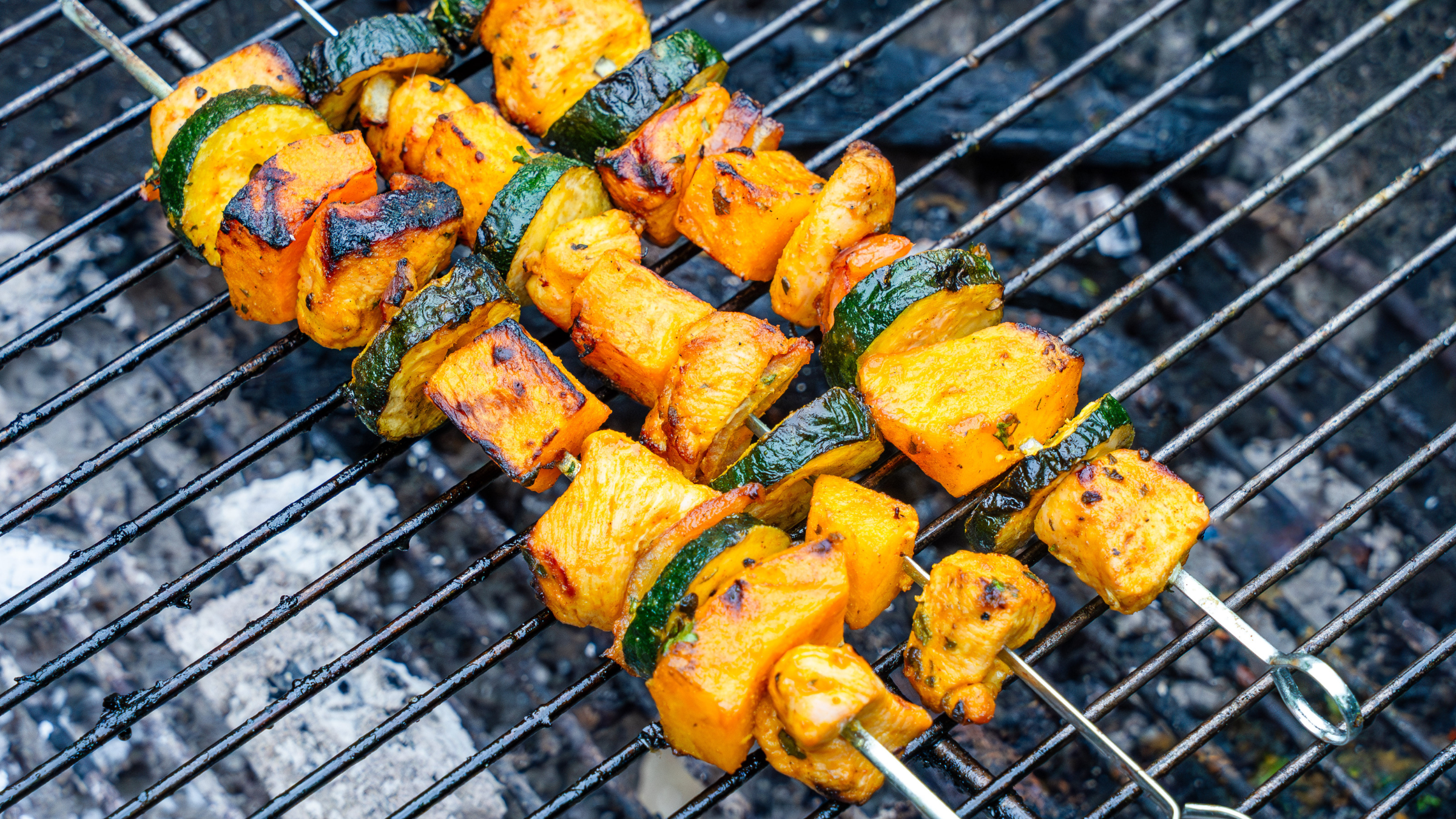
Servings: 6 skewers
Duration: 30 min (plus 30 minutes of marinating)
ADVERTISEMENT
Ingredients
- 1 pound chicken breast (cut into one-inch pieces)
- 1 1/2 cups butternut squash (cut into thin chunks)
- 1 red onion (cut into large chunks)
- 2 medium zucchinis (sliced into ½-inch-thick rounds)
- 1/2 cup coconut oil (melted)
- 2 tablespoons fresh parsley (minced)
- 2 tablespoons agave
- 2 tablespoons turmeric
- 3 tablespoons curry powder
- 2 teaspoons Kosher salt
- 2 teaspoons pepper
- 2 teaspoons garlic powder
- 2 tablespoons hot sauce
- 2 limes (juiced)
Recipe
- Whisk together all the ingredients (except the chicken, butternut squash, zucchini, and red onion) in a small bowl until well combined.
- Place the chicken, butternut squash, zucchini, and red onion in a gallon-sized storage bag or sealable container. Pour in half of the marinade, reserving the rest for later.
- Let everything marinate for at least 30 minutes in the fridge.
- Once marinated, thread the chicken, squash, and red onion onto pre-soaked wooden or metal skewers, alternating between the ingredients.
- Grill the kebabs over medium-high heat, turning occasionally and brushing with the remaining marinade, until thoroughly cooked and slightly charred—about 10 minutes on each side.
A Nutritionist’s Verdict: Protein-Rich and Full of Fiber
You’ll get around 23 grams of protein by filling your skewers with at least three ounces of chicken breast, says Mackenzie Burgess, registered dietitian nutritionist based in Denver, Colorado. And if you want to bump that protein intake up even further, you can pair it with a Greek yogurt dipping sauce, says Lane.
The veggies add even more nutritional perks, too, says Burgess. “The butternut squash adds fiber to support digestion and vitamin A to promote healthy vision and immune function, plus a hint of natural sweetness to round it all out.”
2. Citrus-Honey Glazed Halloumi, Tomato, and Zucchini Skewers
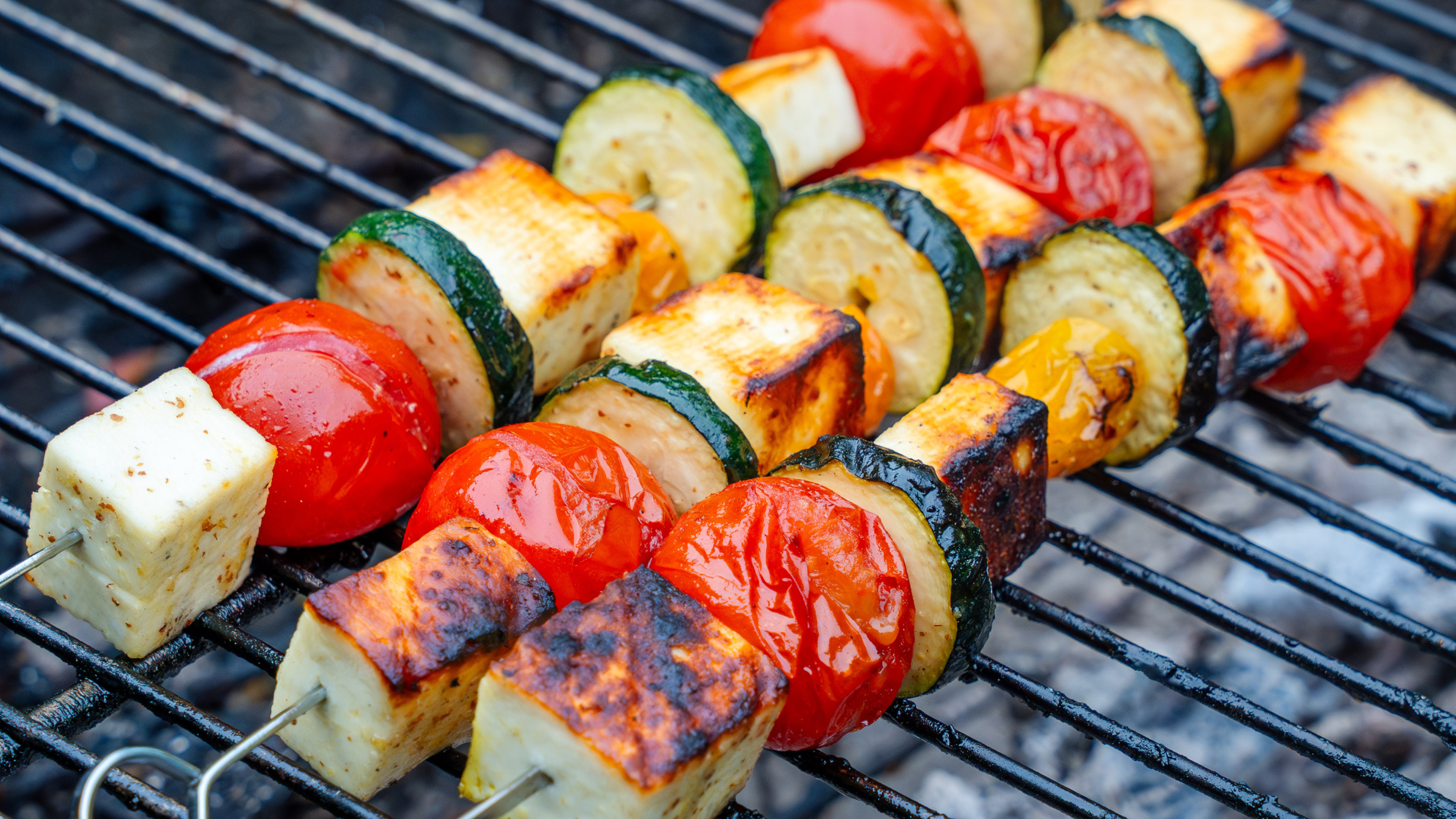
Servings: 6 skewers
Duration: 15 min (plus 30 minutes of marinating)
ADVERTISEMENT
Ingredients
- 16 ounces Halloumi cheese (cut into 1-inch cubes)
- 2 medium zucchinis (sliced into ½-inch-thick rounds)
- 1 1/2 cups cherry tomatoes
- 1/2 cup orange juice
- 1/2 cup lemon juice
- 2 teaspoons Kosher salt
- 1/4 cup whole grain mustard
- 1/4 cup honey
- 1/2 cup olive oil
Recipe
- In a small bowl, whisk together the orange juice, lemon juice, salt, mustard, and honey until everything is well blended.
- Slowly drizzle in the olive oil while whisking constantly, until the vinaigrette is smooth and fully combined.
- Place the Halloumi, zucchini, and tomatoes in a gallon-sized storage bag or sealable container. Pour in half of the vinaigrette, reserving the rest for later.
- Let everything marinate for at least 30 minutes in the fridge.
- Once marinated, thread the Halloumi (handle it gently so it doesn’t fall apart), zucchini, and tomatoes onto pre-soaked wooden or metal skewers, alternating the ingredients.
- Grill the kebabs over medium heat, turning occasionally and brushing with the reserved vinaigrette. Cook for about five minutes per side, or until grill/char marks appear and the zucchini is tender.
A Nutritionist’s Verdict: Protein Powerhouse and Great for Immunity
Just one ounce of Halloumi provides seven grams of protein, says Burgess. Lane recommends adding three to four one-ounce pieces of Halloumi per skewer, which provides about 21 to 28 grams of protein per stick. “Halloumi provides protein for muscle repair and energy, along with calcium for bone and muscle health, which helps support physical activities like hiking and carrying gear,” says McAllister.
The vegetables also play a helpful role. Zucchini’s fiber supports digestion, says McAllister, while tomatoes contribute vitamin C and K to boost the immune system, she says.
3. Spicy Garlic Shrimp and Creamy Avocado Skewers
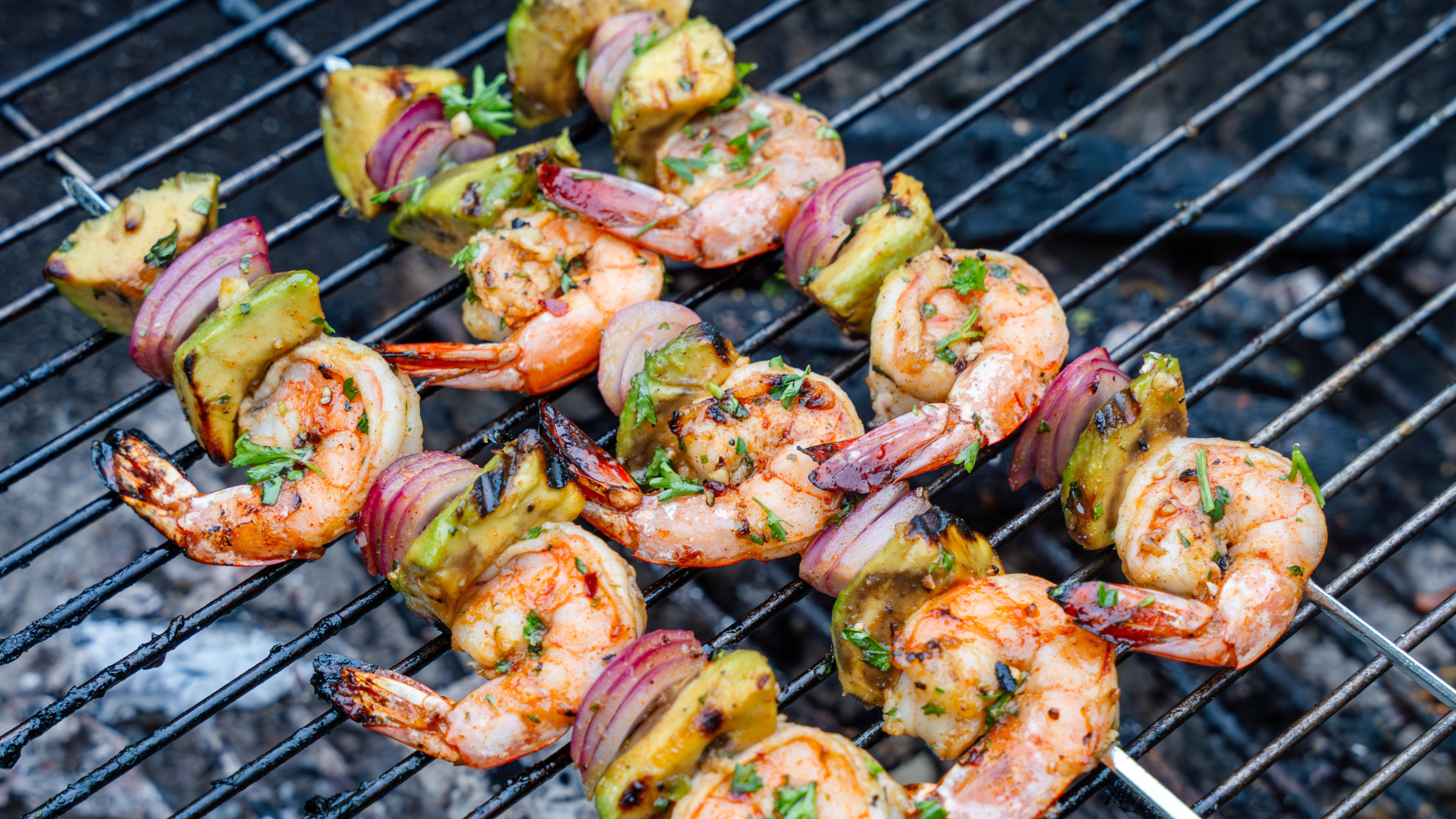
Servings: 6 skewers
Duration: 15 min (plus 30 minutes of marinating)
ADVERTISEMENT
Ingredients
- 1 pound shrimp (peeled and deveined)
- 3 avocados (cut into large chunks)
- 1 red onion (cut into large chunks)
- 2 limes (juiced)
- 3/4 cup avocado oil
- 1/4 cup maple syrup
- 2 tablespoons fresh parsley, minced
- 4 garlic cloves, minced
- 2 teaspoons Kosher salt
- 2 teaspoons cayenne pepper
- 1 teaspoon red pepper flakes
Recipe
- Mix all the ingredients together (except the shrimp, avocado, and red onion) in a small bowl to create a marinade.
- Place the shrimp, avocado, and red onion in a gallon-sized storage bag or sealable container. Pour in half of the marinade, reserving the rest for later.
- Let everything marinate for at least 30 minutes in the fridge.
- Once marinated, place the shrimp, avocado, and red onion onto pre-soaked wooden or metal skewers, alternating the ingredients.
- Grill the kebabs over medium heat, turning occasionally and brushing with the remaining marinade, until the shrimp is cooked and slightly charred—three minutes on each side.
A Nutritionist’s Verdict: Heaps of Protein and Loaded with Healthy Fats
Three ounces of shrimp pack nearly 20 grams of protein, says Burgess. “It’s a high-protein seafood that cooks fast,” says McAllister, perfect when you want quick, fire-ready ingredients.
Avocado brings even more to the table, says McAllister, offering healthy fats for lasting energy, fiber for digestion, and vitamin E to support immune health. Together, this skewer delivers big on flavor, nutrition, and fuel.
4. Sticky Maple Ginger Tofu and Pineapple Skewers
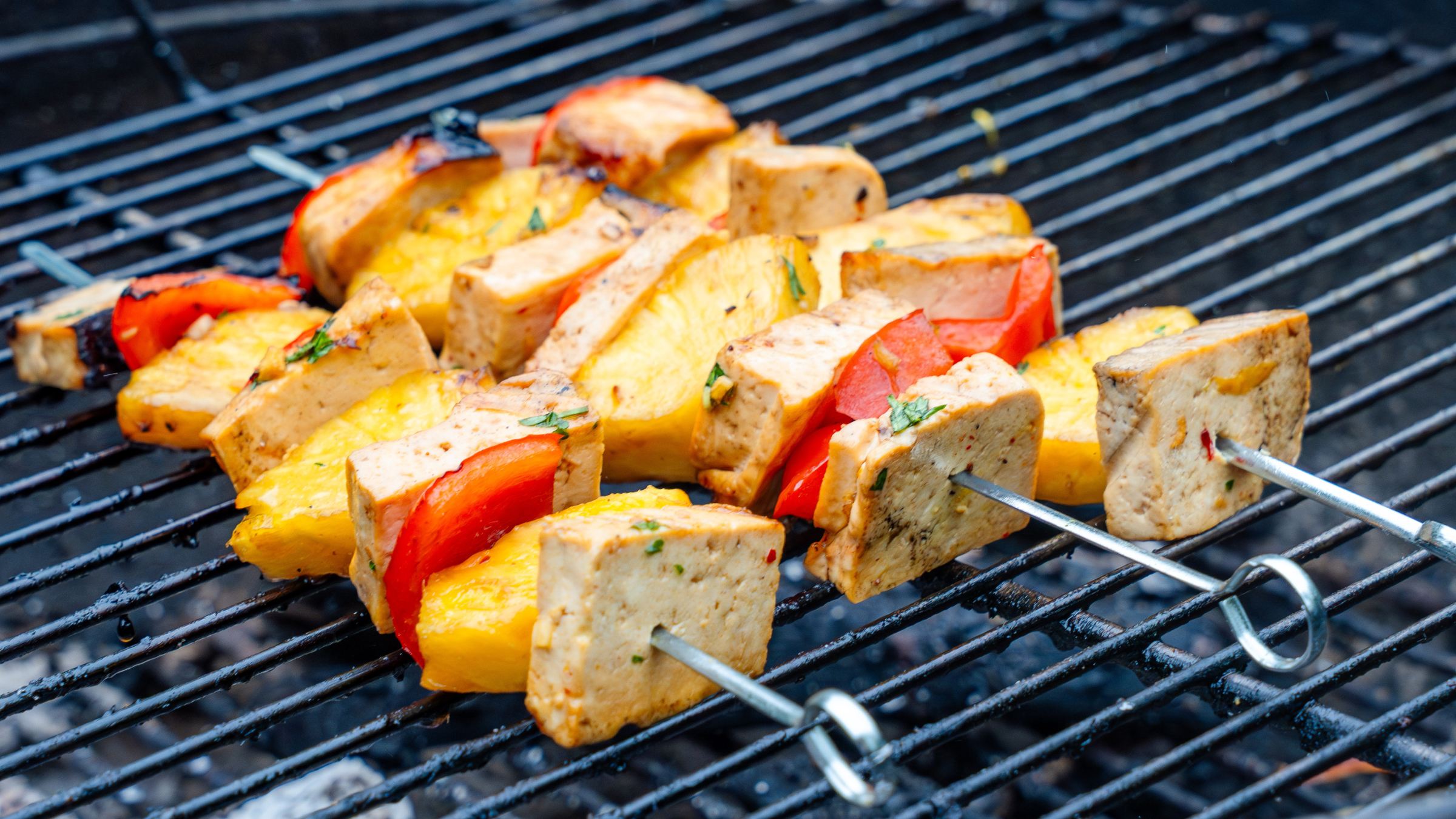
Servings: 6 skewers
Duration: 15 min (plus 30 minutes of marinating)
ADVERTISEMENT
Ingredients
- 32 ounces firm tofu (cut into 1-inch cubes)
- 1 ½ cups fresh pineapple (cut into 2-inch pieces)
- 1 red bell pepper (cut into large chunks)
- 1/2 cup avocado oil
- 2/3 cup coconut aminos or soy sauce
- 2 tablespoons fresh ginger (minced)
- 2 tablespoons fresh parsley (minced)
- 2 tablespoons garlic (minced)
- 1/3 cup maple syrup
- 2 teaspoons red pepper flakes
- 1 teaspoon nutmeg
- 1 teaspoon ground cloves
Recipe
- Mix all the ingredients together (except the tofu and pineapple) in a small bowl.
- Place the tofu and pineapple in a gallon-sized storage bag or sealable container. Pour in half of the marinade, reserving the rest for later.
- Let everything marinate for at least 30 minutes in the fridge.
- Once marinated, place the tofu and pineapple onto pre-soaked wooden or metal skewers, alternating the ingredients.
- Grease the grill with oil to prevent sticking. Grill the kebabs over medium heat, turning occasionally and brushing with the remaining marinade, about seven minutes on each side.
A Nutritionist’s Verdict: An Excellent Source of Vegan Protein and Fiber
Hikers who follow plant-based diets should definitely try this recipe, says McAllister. “Tofu provides vegan protein (nearly 6 grams per ounce), calcium, and healthy fats, which support muscle and bone health,” she says. “Pineapple offers vitamin C for immunity and fiber for digestion.”
Ginger brings an added bonus, says McAllister, thanks to its anti-inflammatory properties, which may help reduce pain and swelling from physical activity. Lane recommends packing a container of cooked quinoa for an extra protein boost—one cup has about 8 grams—to serve on the side.
To help spread your protein intake throughout the day, nutritionists typically recommend aiming for 20 to 30 grams per meal, says Lane. On average, if you’re adding at least two ounces of meat or seafood per skewer, two skewers will get you into that range. He says you’ll usually need about three skewers per serving to hit that target for plant-based protein sources like tofu.
ADVERTISEMENT
“Of course, everyone’s protein needs and hunger levels vary,” says Lane, “so feel free to adjust the protein-to-veggie ratio based on your preferences.”
Want more of Outside’s Health stories? Sign up for the Bodywork newsletter.
